




Why STEM Applications Should Start with Choosing a Career Direction
Время чтения:
0 мин
0 мин


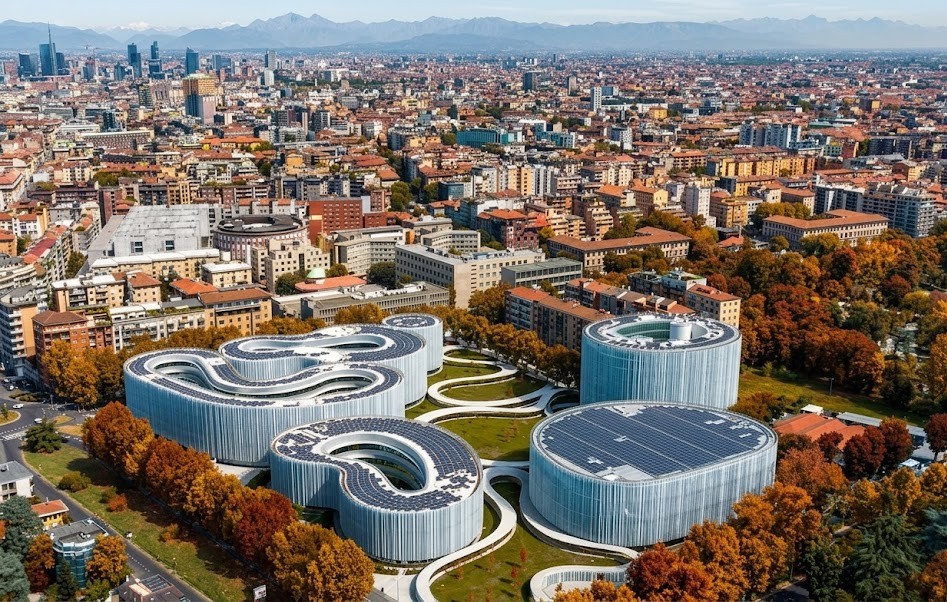
 Milan, Italy
 If you're considering a career in business, finance, or international management, Bocconi will sooner or later appear on your list of universities. This is a university whose diploma opens doors to the largest investment banks, consulting firms, and international corporations, without an MBA or ten years of work experience.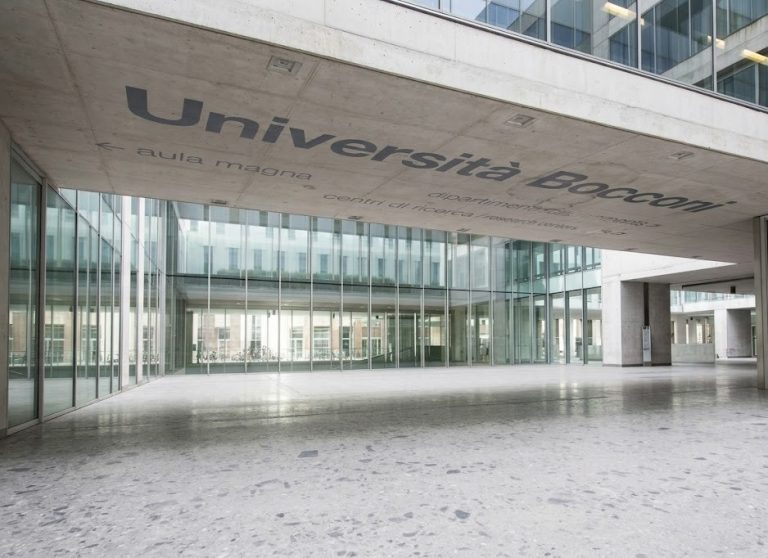
| Degree of study | Bachelor's, Master's, and PhD |
| Percentage of accepted students | 33% |
| Probability of employment after training | 86% |
| Scholarships | University and external grants are available, with international students eligible for partial or full assistance, but funding is limited and highly competitive. |
| Directions | International Economics and Management, Economics and Management in Arts, Culture and Communications, Economic and Social Sciences |
| Type | private university |
| Size of the student campus | 14,428 students |
| % of international students | 30–35% |
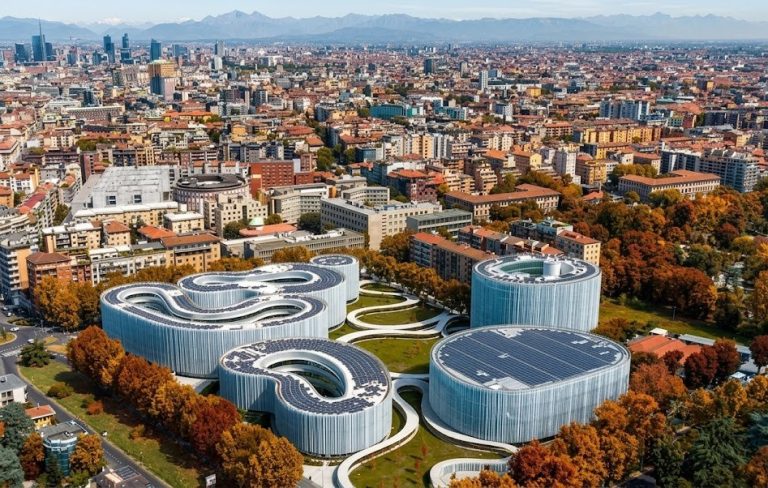
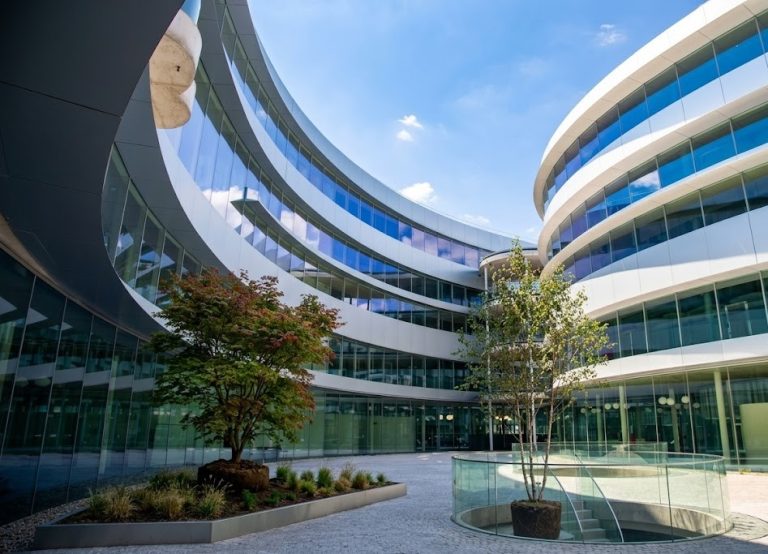
| Student town | It includes modern buildings, dormitories, sports facilities, and green spaces integrated into the urban environment. The campus was designed with sustainability and energy efficiency in mind. |
Università Bocconi is located in Milan, Italy’s financial capital and one of Europe’s leading business centers. The university boasts over 120 years of history, approximately 16,000 students from over 100 countries, and a strong position in global rankings.
According to the QS World University Rankings 2025, Bocconi is among the top 10 universities in the world for Business & Management Studies and 12th in the Social Sciences & Management category. The Global Employability University Ranking places the university 58th in the world for graduate employability—one of the best results among European business schools.
Bocconi University attracts students from all over the world for several compelling reasons, including its academic environment, career prospects, and international study context.

Bocconi was built as a meeting point between academia and real-world business. The faculty consists of researchers who publish in leading international journals, and the curricula are regularly updated to meet market demands.
The undergraduate program offers a solid mathematical foundation—this distinguishes Bocconi from many European business schools, where quantitative methods remain largely unexamined. The programs are structured so that graduates can apply theory to real-world cases. Partnerships with the Milan business community and international companies are integrated directly into the curriculum: case studies, internships, and guest lectures by top managers are part of the program, not optional.
According to the university, 94% of graduates find employment within one year of graduation. Of these, 33% found work outside Italy—in London, Frankfurt, New York, Dubai, and other financial centers.
The Bocconi brand is well-established in investment banking and consulting: the university is among the few European universities whose graduates consistently find jobs at Goldman Sachs, McKinsey, BCG, and JP Morgan.
The internal JobGate platform is updated daily with job offers from employers, and Bocconi’s alumni network functions as a vibrant professional community—one of the assets that graduates value most.
For applicants from outside Italy, it’s important that most undergraduate and graduate programs at Bocconi are taught in English. This makes the university truly accessible to non-EU students without the need to learn Italian before admission.
The campus environment is truly international: students from over 100 countries, regular exchange programs with leading global universities (LSE, Sciences Po, Columbia), double degrees, and joint tracks. For those planning an international career, this environment becomes part of the education itself.
Bocconi Milan offers two levels of programs: undergraduate and graduate. Each level has its own selection process and candidate profile requirements.
Bachelor’s degree programs last three years and cover economics, international management, finance, political science, and law. Most programs are taught in English.
The selection process considers not only grades but also how informed the applicant’s choice of specialization. A well-motivated candidate with clear goals and an interest in the program’s profile is more convincing than one with formally high grades but no clear understanding of why they need the program.
At the master’s level, the choice is wider: programs in finance, management, marketing, business analytics, data science, accounting, and international economics. The duration is typically two years.
Programs with a strong quantitative component (Finance, Quantitative Finance, Data Science & Business Analytics) require undergraduate experience with mathematics and statistics. The career path you describe in your application documents should logically continue with your previous studies—sequencing is important.
Before submitting documents, it is worth answering yourself five questions:

Why this program and not a related one? Your answer must be specific.
Is your previous educational experience sufficiently relevant to the program requirements?
Is your English level confirmed by an official certificate?
Are you considering programs with the best funding opportunities?
What do you want to do in 5 years and how does this program get you closer to your goal?
The cost of studying at Bocconi University consists of several components, and it’s important to understand the overall picture even at the program selection stage, long before receiving an offer.
The basic tuition for the 2025-2026 academic year is €16,700 per year for undergraduate programs and €18,200 per year for master’s programs. This includes costs for accommodation, food, transportation, health insurance, and course materials.
Milan is one of the most expensive cities in Italy, and this should be taken into account when planning your budget. Rent and living expenses average between €800 and €1,500 per month, depending on the type of accommodation and the student’s lifestyle.
Bocconi uses a progressive fee scale linked to the financial situation of the student’s family: those who meet the criteria pay significantly less than the base rate.
Scholarships—both internal and external—can cover from 20% to 100% of tuition. For many international students, the actual cost of tuition is significantly lower than the nominal cost. This is why it’s important to begin financial planning while preparing your documents, rather than after receiving an offer.
Below are the main costs to consider when planning your studies at Bocconi Milan.
| Expense item | Comment |
| Tuition | Depends on program level; may be reduced through scholarships |
| Housing (rent/hostel) | One of the key expenses; varies depending on the type |
| Nutrition | Campus, supermarkets or cafes have a significant impact on the outcome |
| Transport | Milan public transport; student discounts available |
| Educational materials | Books, subscriptions, software |
| Medical insurance | Compulsory for non-EU students |
| Personal expenses | Depends on lifestyle |
Scholarships at Bocconi University are a real advantage for international applicants. With the right funding strategy, tuition fees can be significantly reduced.
Bocconi offers several types of funding, and it’s important to understand how they work.
Bocconi scholarships are competitive, and you won’t be able to win one without preparation. Several factors influence the outcome.
Starting early increases your chances: most scholarship deadlines coincide with admissions deadlines, and those who apply in the first round statistically receive better offers. The quality of your documentation is also critical: your motivation letter, CV, and proof of family financial status must be carefully prepared. For merit-based scholarships, not only your final grade is important, but also your academic performance, the difficulty of your courses, and your achievements outside of school.
Most mistakes are trivial but costly:
Admission to Bocconi University Italy requires an understanding of the selection process. The university looks beyond grades; it considers the candidate’s overall profile.
Bocconi doesn’t publish a strict minimum GPA, but the selection process is transparent: the university seeks candidates with consistent academic performance in their core subjects, primarily mathematics. For undergraduate programs, the university’s high school trajectory over the past three years is important, with the academic difficulty of courses and an upward trend in grades being particularly valued.
For undergraduate admission, SAT scores (a minimum of 1400 is required, with a score of 1500+ considered strong), ACT scores, or the Bocconi Test are accepted. The Bocconi Test consists of 50 questions covering mathematics, critical thinking, numerical analysis, and text comprehension. It lasts 75 minutes, and errors are penalized. For graduate programs, the GMAT or GRE may be required, depending on the specialization.
Language requirements vary by program. Generally, IELTS, TOEFL iBT, PTE Academic, and Duolingo English Test are accepted. Exact cutoff scores vary and should be verified on the official website of the program you’re applying to.
If your previous diploma or certificate was issued by an institution where instruction was conducted in English, a language certificate may not be required, but this should be confirmed in advance rather than relying on general guidelines.
Bocconi devotes significantly more attention to this section of documents than many European universities. The motivation letter is part of the selection process. The university wants to understand why you chose this program, your academic and professional trajectory, and how Bocconi fits into your long-term goals.
A CV should reflect not only your academic background but also your extracurricular activities: internships, projects, volunteer work, participation in Olympiads or competitions. Letters of recommendation are valuable when they are specific—not general characteristics, but observations from a specific person about the candidate’s specific achievements.
Applying to Bocconi University isn’t a quick process. The sooner you start, the more tools you’ll have at your disposal by the time you apply.
It’s too early to think about documents at this stage—now is the time to build your profile. Decide on a program and study its requirements in detail. If math is a weakness, start working intensively on it. Consider what extracurricular experiences would strengthen your candidacy: an internship at a company, project work, or participation in economics Olympiads.
At this stage, it’s also worth taking a profile assessment to understand how your current skills align with what Bocconi is looking for. This allows you to adjust your preparation while there’s still time to make changes.
Preparing for the SAT or Bocconi Test is a step many underestimate. At the same time, start working on your motivation letter: the first draft should be ready well before the deadline so you can polish it. Research all available scholarship programs and gather financial documentation in advance.
At this stage, choosing your application round is crucial: the first round typically offers more spots and scholarship funding. Later rounds are a real risk, not a backup plan.
A final review of all documents, final edits to the cover letter, and collection of references. It’s important to take your time at this stage: technical glitches, errors in forms, and missing documents are all solvable, but only if you have time to correct them.
Before submitting, ensure that your cover letter, CV, and references tell a coherent story, not three different versions of your biography.
Bocconi is a competitive university, and good grades alone do not guarantee admission. Here are the most common reasons for rejection:
Admission to Bocconi is a competitive process, requiring professional assistance. SelfStart Global supports you throughout the entire admissions process, from the initial assessment to the final offer.
Profile Assessment. The first step is an honest assessment of your current situation: your academic background, test scores, extracurricular experiences, and career goals. This allows you to understand what works in your favor and what needs to be strengthened before applying.
Admission Strategy. Based on the assessment, a personalized plan is developed: which program best suits your profile, which round to apply in, and which documents require priority attention.
Document and positioning work. Motivation letter, CV, interview preparation (if applicable) – SelfStart Global experts help you craft a cohesive, compelling story that aligns with Bocconi’s search.
Scholarship Strategy. In parallel with the admissions process, all available funding options are explored: Bocconi’s internal programs, external funds, and a combination of both. The goal is to minimize the actual cost of tuition.
Support until the end. Our team works with you every step of the way, from the first draft of your email to the moment your enrollment offer arrives in your inbox.
Below are the most frequently asked questions that applicants ask when preparing to enter Bocconi University.
Private. Università Bocconi is an independent private university founded in Milan in 1902. It is self-funded and is not part of the Italian state university system.
Most undergraduate and graduate programs are taught in English. Some programs are taught in Italian. It’s best to check the language of a specific program on the university website before applying.
The basic tuition for the 2025–2026 academic year is €16,700 per year for undergraduate studies and €18,200 for master’s studies. This amount can be reduced through scholarships and financial aid.
Yes, and for many international students, this is a realistic scenario. Bocconi offers both merit-based and need-based programs, including coverage of up to 100% of tuition. Early and high-quality application submission is key.
Ideally, 18–24 months. 12 months is a stretch. Submitting documents without preparing your profile first significantly reduces your chances.
Yes. Bocconi actively welcomes international students; most programs are taught in English, and the campus is international. Non-EU students are required to obtain a student visa and health insurance.
Academic transcripts, SAT/ACT or Bocconi Test scores, language certificate, motivation letter, and CV. For master’s programs, additionally required are letters of recommendation and, in some cases, GMAT/GRE scores.
It depends on the program. Some master’s programs require the GMAT or GRE, while others do not. Specific program requirements should be verified on the official website.
Yes. Bocconi runs joint programs with universities such as LSE, Sciences Po, and Columbia—a valuable option for those looking to combine two academic environments.
Bocconi is one of the most competitive universities in Europe in its specialization. The winners are those with the most developed profiles, not just the highest grades.
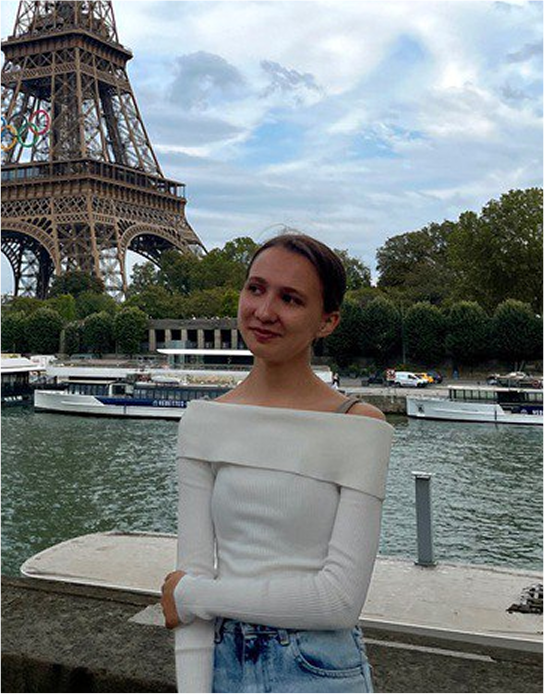
She enrolled in graphic design at universities in France, Italy and Hungary. She received scholarships at all of them and chose the university with the maximum funding — $135,000 for the entire period of study.
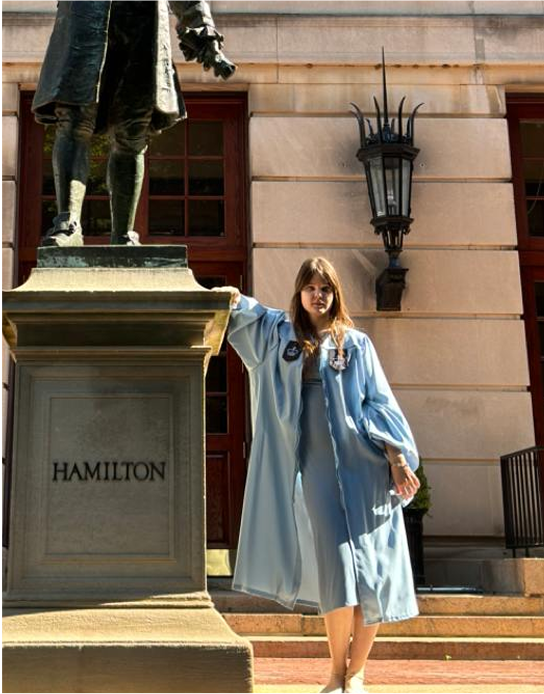
I was accepted to the PhD program at Columbia University on my first try, having strengthened my profile and compiled my achievements into a strong application.

He entered a master’s program in the USA at two universities at once – Brandeis University and Washington University in St. Louis, receiving scholarships totaling $80,000. He chose Brandeis University and went to study on the first try.

She was admitted to three American universities at once: Augustana College, Widener University, and the University of South Dakota. She chose Augustana College, where she received a scholarship of $45,000 per year.

He entered Siena Heights University (USA) for the Theater and Music program with a full scholarship of $170,000. Preparation took less than a year.











«What I liked most was the structure and organization. I am the kind of person who sees the goal, but does not see the path to implementation»

 Video review by Alesya
«If you are in doubt about where to go, worried that it won’t work out, then what are you waiting for? Come for a consultation with an expert»
Video review by Anastasia
«I already had an unsuccessful experience of entering the USA - then it turned out that just good grades are not enough. Now I decided to work with the team»
Alena's video review«I got into a top university thanks to the way I presented myself in my motivation essay, CV, and letters of recommendation»
Video review by DariaI entered a top university thanks to the correct presentation of me in a motivational essay, CV, and letters of recommendation.
Video review from Daria«I’m an ordinary girl, but I managed to get into 2 Ivy League universities, get a 100% scholarship from the University of Chicago (top 6 in the USA), which is just like a dream come true»
Video review from Victoria
«I didn’t know what I wanted to study for, and I was given an appointment with a career guidance counselor. We chose medicine, which I am very happy about»
Video review of Diora
«My minus is that I often don’t meet deadlines. But with SelfStartGlobal, I always knew that they would help me and that we would do everything in time»
Camilla's video review
«There were many questions during the process, but they helped me in everything, supported me and convinced me that I was on the right path. I think this is the most important thing»
Video review from Kamola
«Perhaps I would have done it myself, but I would not have been able to receive such generous funding as with SelfStartGlobal. Don't be afraid! Take risks, take action, and everything will work out»
Video review by Karina