




 Deadlines, Exams, and Scholarships: Your Guide to Studying in the USA, Europe, and Asia


She enrolled in Fashion PR programs at five US universities


Austin, Texas, USA · The University of Texas at Austin is the largest and most prestigious public university in Texas and ranks among the top 30 national universities in the United States. For international applicants, UT Austin offers a rare combination: top-30 academic standing, tuition costs significantly lower than those of comparable private institutions, and a location in Austin—one of the fastest-growing technology and business hubs in the U.S. The acceptance rate for international students is approximately 10%. The Cockrell School of Engineering ranks among the top 15 engineering schools in the U.S., while the McCombs School of Business ranks in the top 10. According to QS Subject Rankings, UT Austin has held the #1 spot globally in Petroleum Engineering for five consecutive years—an all-time record for the field.
The University of Texas at Austin was founded in 1883 and is the flagship university of the University of Texas system. It is located in the center of Austin on 431 acres in the heart of one of the fastest‑growing cities in the United States. UT Austin is a large research university in the R1 category and a member of the Association of American Universities (AAU): more than 55,900 students, 18 schools and colleges, and over 170 undergraduate programs.
Austin — “Silicon Hills” USA: Apple, Google, Amazon, Tesla, Meta and Oracle have opened large campuses and research centers here. UT Austin students have direct access to one of the country’s largest technology ecosystems without moving to San Francisco or New York. Over the past five years, Austin has become one of the main destinations for technology companies and startups on the East and West Coasts.
According to the QS Subject Rankings, UT Austin has been ranked #1 in the world for Petroleum Engineering for 5 consecutive years — an absolute world record for this field. McCombs School of Business is ranked #6 in the USA. Cockrell School of Engineering is in the top 15 nationally. For the class of 2029, UT Austin received a record 90,690 applications (+24% year‑on‑year) — more than any other public university in the USA in this cycle.
Among the notable graduates of UT Austin are Michael Dell (founder of Dell Technologies), Roger Clemens (baseball player), Jamie Lee Curtis (actress), and Drew Houston (co‑founder of Dropbox, who studied on an exchange program).
The main financial advantage of UT Austin for international students is that the cost is significantly lower than at private universities of comparable level.
Bachelor’s program (non‑resident / international students, 2026–2027):
Tuition: from $42,554 to $51,106 per year (depending on the program; engineering and business programs are higher)
Master’s program (non‑resident, 2026–2027): from $25,720 to $61,214 per year, depending on the program.
Doctoral program: many PhD programs are fully funded through fellowships and TA/RA positions.
For comparison with private universities: the COA at UT Austin ($64,200–72,900) is $20,000–30,000 per year less than at Vanderbilt, Duke, or Northwestern, which have comparable academic programs. For families who pay for tuition themselves without financial aid, the difference over 4 years amounts to $80,000–120,000 in favor of UT Austin.
UT Austin unites 18 schools and colleges:
One of the best engineering schools in the USA: top 15 nationally. Petroleum and geosystems engineering (#1 in the world, QS 2026), electrical engineering, computer engineering, chemical engineering, aerospace engineering, civil engineering, biomedical engineering, industrial engineering, and operations research. Direct partnerships with ExxonMobil, Shell, ConocoPhillips, and hundreds of other companies in the oil and gas and technology sectors.
#6 in the USA for business education. Bachelor’s degree in business administration (BBA), MBA, Executive MBA, Master of Science in Finance, Master of Science in Marketing, Master of Science in Business Analytics, and other specialized master’s programs. Close ties with the financial and technology sectors of Austin and Texas as a whole.
Biology, chemistry, physics, mathematics, computer science (CS), neuroscience, astronomy, biochemistry. UT Austin is one of the largest centers for training CS specialists in the country; the Computer Science Department consistently ranks in the top 15 nationally.
Journalism, advertising, PR, Radio-TV-Film, communication studies. One of the strongest communication schools in the USA with direct ties to the country’s media and advertising companies.
It is among the top 25 law schools in the United States. It is particularly strong in Texas law, intellectual property, and technology law.
One of the leading policy schools in the USA, named after President Lyndon B. Johnson. Public policy, public administration, international relations with a focus on practical public administration.
Music, theater, dance, visual arts. One of the largest and most active arts faculties among research universities in the United States.
One of the most innovative medical schools in the United States, built from scratch with a focus on solving healthcare problems through technology and data.
Social work, public health, counseling.
The UT Austin campus in downtown Austin is a vibrant mix of historic buildings from the early 20th century and modern research buildings. The main symbol of the campus is UT Tower, a 94‑meter‑high tower around which student life is centered and which lights up orange when the Longhorns sports teams win. The campus covers 431 acres within walking distance of downtown Austin.
Austin is one of the most popular student cities in the USA: a vibrant music scene, restaurants for every taste and budget, parks, lakes (Lake Austin, Barton Springs Pool), and tech offices literally right next to the campus. Within a few miles are the offices of Tesla (headquarters), Apple ($1 billion campus), Google, Amazon, Dell Technologies, and hundreds of startups and tech companies. SXSW (South by Southwest) — the world’s largest technology and music festival — takes place every year right in the heart of Austin.
UT Austin guarantees housing for freshmen on campus. Student residences are 14 residential buildings around the campus. The cost of living in university dormitories is about $10,000–14,000 per year (double or single room, including meals). Many upperclassmen rent accommodation in West Campus, a residential area directly adjacent to the university.
The campus features more than 1,300 student organizations, one of the largest student unions in the United States (the Texas Student Union), as well as the Texas Memorial Museum, the Blanton Museum of Art, and the Performing Arts Center.
The Texas Longhorns sports teams are among the most famous in U.S. college sports. UT Austin participates in the NCAA Division I Big 12 Conference. American football at Darrell K Royal‑Texas Memorial Stadium, with a capacity of 100,000+, is an event that draws an audience comparable to that of professional NFL teams.
For international students, UT Austin is a competitive process with an acceptance rate of about 10%. The overall acceptance rate of 22.2% for the class of 2029 includes a large pool of automatically admitted Texas residents, so the actual competition among international students is significantly higher. Applications are submitted via the Common App.
For Texas residents, there is an automatic admission system: top 5% of the class = automatic admission to UT Austin (not necessarily to a specific program). International students are admitted exclusively through holistic review — a general pool without automatic admission.
The student enrolls in a specific school or college: Cockrell Engineering, McCombs Business, Liberal Arts, Natural Sciences, Communication, and others. The acceptance rate varies significantly by program: McCombs BBA and Computer Science are the most competitive (~4–8%); Liberal Arts and Natural Sciences are somewhat more accessible. The competition for each program is published in the UT Austin Common Data Set.
Starting with the 2025–2026 cycle, UT Austin has reinstated mandatory standardized tests. Minimum: SAT 1100 (recommended 1350+), ACT 22 (recommended 30+). Competitive range of accepted students: SAT 1330–1530, ACT 30–34.
UT Austin asks its own additional questions through the Common App. One of the key questions is about the community and what unique contribution the student will make to enrich UT Austin. The Texas context and connection to Austin are important elements of a compelling essay.
Two from subject teachers, one from the homeroom teacher.
TOEFL minimum 79 iBT; IELTS Academic 6.5. Students from a number of countries (where English is the official language of instruction) may be exempt from this requirement — check the official website admissions.utexas.edu.
Early Action — October 15 (early decisions by January 15). Regular Decision — December 1 (decisions by February). EA is non‑binding — you can simultaneously apply to other universities via EA or RD.

75% of seats in the freshman class are reserved for Texas residents under Texas state law. International students compete for the remaining approximately 25% of seats, a significant portion of which also goes to students from other states. The acceptance rate for international students is about 10% — significantly lower than the overall rate of 22.2%.
This is especially important for international students: UT Austin uses holistic review for everyone who does not qualify for auto‑admit. This means that essays, extracurricular achievements, letters of recommendation, and motivation actually influence the admission decision — not just academic scores.
Financial aid for international students is limited. UT Austin’s largest program, the Texas Advance Commitment (free tuition for families with an income of up to $100,000), is available only to Texas residents. For international students, separate merit‑based scholarships are available through the LASSO Portal, as well as departmental scholarships. It is recommended to study the specific scholarship programs on the website of the particular school (Cockrell, McCombs, and others).
Texas Advance Commitment (TAC) is a program for families with an income of up to $100,000: full tuition coverage without debt. Available exclusively to Texas residents. Not available for international students.
International Education Fee Scholarship is a partial scholarship funded by a special fee paid by all UT Austin students to support international activities. Open to international students.
Departmental Scholarships — many schools and departments offer their own scholarships, some of which are open to foreigners:
Graduate funding: most PhD programs in engineering, Natural Sciences, and Computer Science offer TA/RA (Teaching/Research Assistantship) with tuition coverage and a monthly stipend. This is especially relevant for international students planning an academic or research career.
Median earnings 10 years after graduating from UT Austin — $75,121 (College Scorecard). Graduation rate — 87.6%. Approximately 95% of graduates are employed or continue their education within six months.
Austin as a career platform is one of the main arguments in favor of UT Austin for international students. Over the past five years, major companies have moved to or opened large offices in Austin: Tesla (moved its headquarters), Apple ($1 billion campus), Google, Amazon, Oracle, Dell Technologies, Samsung Semiconductor, CBRE. UT Austin students intern at these companies while they are still studying — often starting in their second or third year.
In addition to the technology sector, Austin is a major center for the oil and gas industry: Petroleum Engineering graduates find jobs directly at ExxonMobil, Shell, ConocoPhillips, Chevron, and other leading companies in the industry even before they complete their bachelor’s degree.
The UT Austin alumni network — with more than 600,000 graduates worldwide — is one of the largest among American universities. The Longhorn Network is an active alumni organization with strong career programs and a network of mentors.
UT Austin is one of the largest research universities in the United States, with annual external research funding exceeding $1 billion. By
QS Subject Rankings 2026: Petroleum Engineering — #1 in the world for 5 years in a row; Environmental Sciences — top 30; Computer Science — top 60 globally.
Texas Advanced Computing Center (TACC) is one of the largest supercomputing centers in the USA and the world, managed by UT Austin. The Frontera supercomputer (and its successor, Horizon) is among the most powerful academic computing systems in the world. Students and researchers at UT Austin have priority access to TACC’s computing resources.
Dell Medical School (2016) is one of the most innovative medical schools in the country. It was created from scratch as a model of medicine focused on data, preventive technologies, and systemic healthcare. Partnership with Seton Healthcare Family provides a clinical foundation for research.
UT Energy Institute is a major research center focused on clean energy, electrification, and energy security. It publishes the annual UT Energy Poll — one of the most cited surveys on Americans’ attitudes toward energy technologies.
The Instituto de Ciencias del Mar (ICM) and other geological and climatic research centers at UT Austin are world‑class.
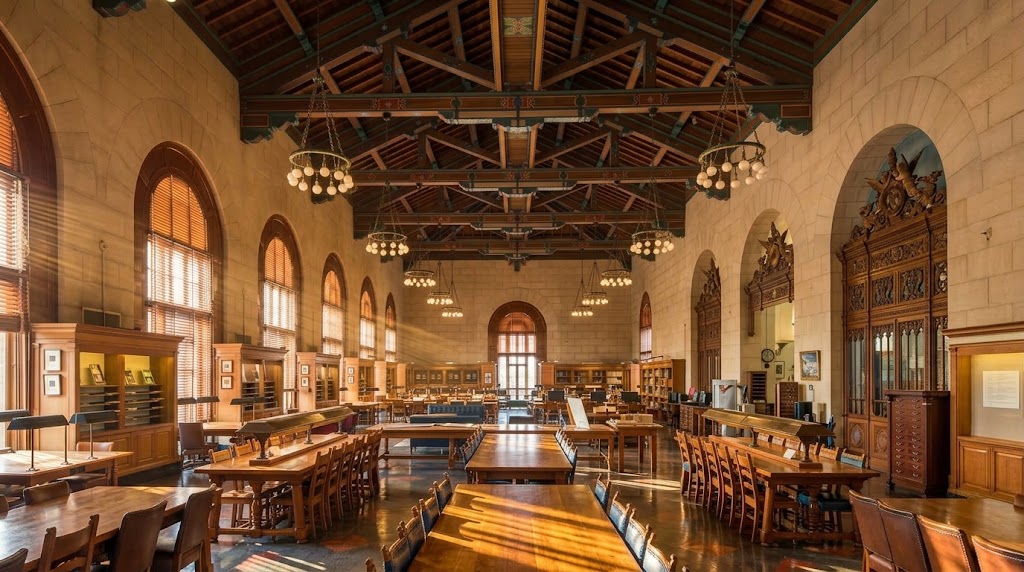
UT Austin received 90,690 freshman applications for the class of 2029 — a record in the university’s history and one of the highest figures among all American public universities. Growth of 24% year‑on‑year and 51% since 2022.
#1 in the world for Petroleum Engineering (QS) — 5 years in a row. For students planning a career in the oil and gas, energy, or mining industry, this is one of the strongest academic arguments in the world.
The Darrell K Royal-Texas Memorial Stadium, with a capacity of 100,000+ seats, is one of the largest in the USA. Texas Longhorns games in American football have long become a cultural phenomenon that extends far beyond the college community.
SXSW (South by Southwest) is the world’s largest combined technology, music, and film festival; it takes place annually in Austin right next to the campus. UT Austin students traditionally actively participate in its business and creative program.
UT Tower tradition: When the UT Austin sports teams win an important match, the 94—meter-high main tower of the campus is illuminated in orange – one of the most famous student traditions in American higher education.
UT Austin is the only public university in the US that is in the top 10 of the US News rankings and is located in a city where major operations centers of Tesla, Apple, Google, Amazon, and Oracle have been opened over the past five years.
Getting admitted as an international student to UT Austin requires a clear strategy: choosing the right program with realistic chances, applying through Early Action (the deadline is October 15 — earlier than most American universities), writing a strong essay, and submitting language documents on time.
At SelfStartGlobal, we help:
Our students have already received scholarships worth more than $35 million.
Want to get into the University of Texas at Austin and start a career in the heart of Silicon Hills? Come to a free consultation. Let’s explain how this works in your specific case.
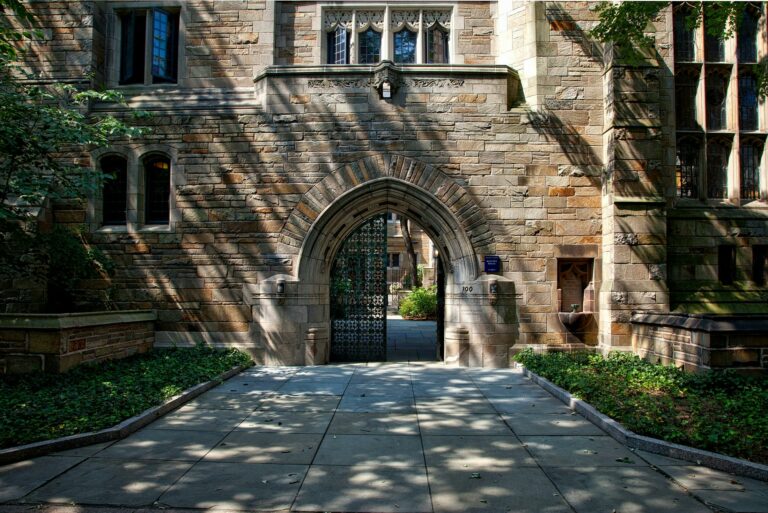



She enrolled in Fashion PR programs at five US universities

He entered Siena Heights University (USA) for the Theater and Music program with a full scholarship of $170,000. Preparation took less than a year.

She entered graduate school at Kent State University and Ohio University. At Ohio University, she won a Graduate Teaching Assistantship with full funding of $37,774, covering tuition, insurance, and living expenses.

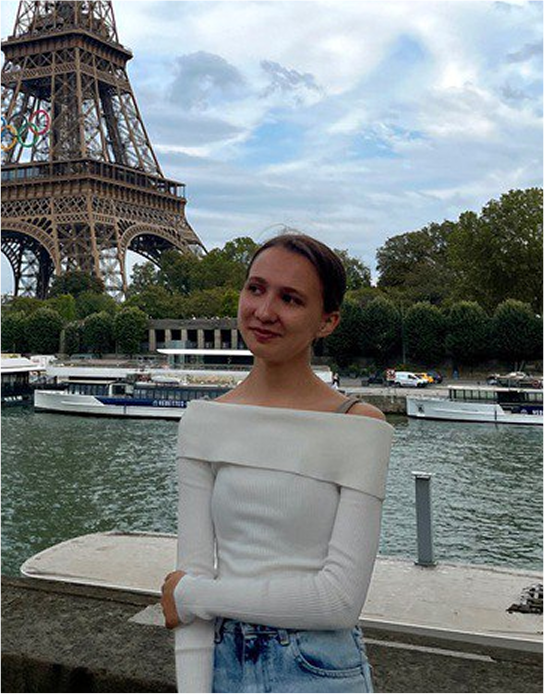
She enrolled in graphic design at universities in France, Italy and Hungary. She received scholarships at all of them and chose the university with the maximum funding — $135,000 for the entire period of study.

Got accepted to NYU Abu Dhabi on the first try (acceptance rate 4%) with a scholarship of $217,000. Also received offers from Lynn and Drexel University.


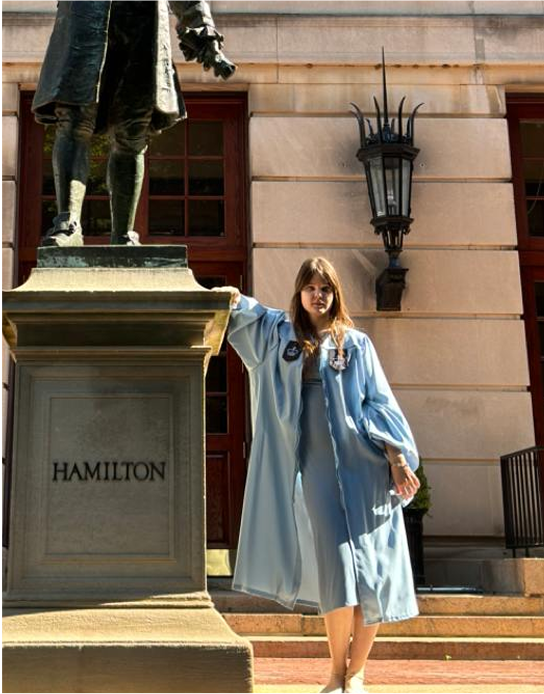
I was accepted to the PhD program at Columbia University on my first try, having strengthened my profile and compiled my achievements into a strong application.

She was admitted to three American universities at once: Augustana College, Widener University, and the University of South Dakota. She chose Augustana College, where she received a scholarship of $45,000 per year.

He entered a master’s program in the USA at two universities at once – Brandeis University and Washington University in St. Louis, receiving scholarships totaling $80,000. He chose Brandeis University and went to study on the first try.
Leave your contacts — our consultant will get in touch
