




 Extracurricular activities for studying abroad


She enrolled in Fashion PR programs at five US universities


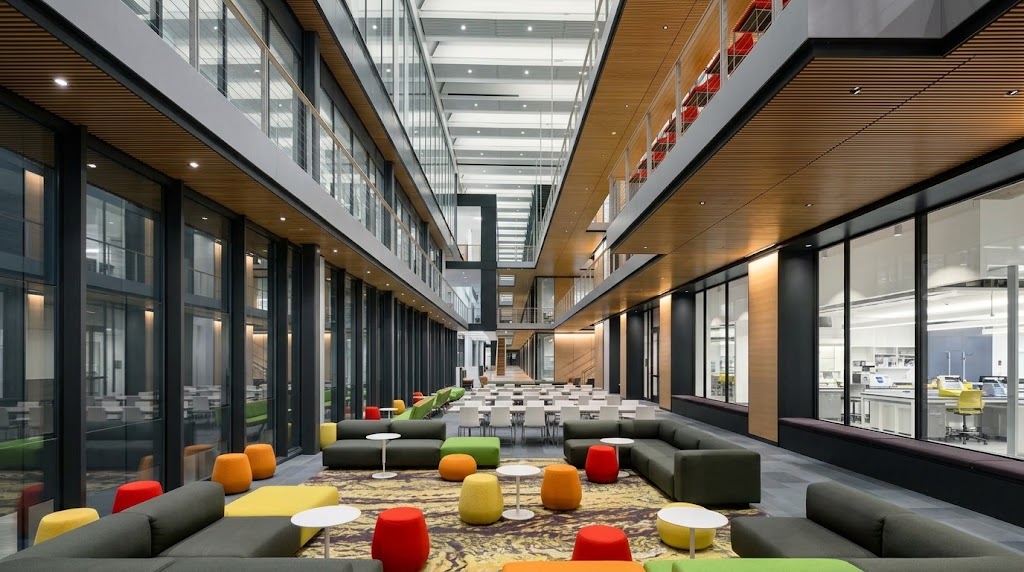
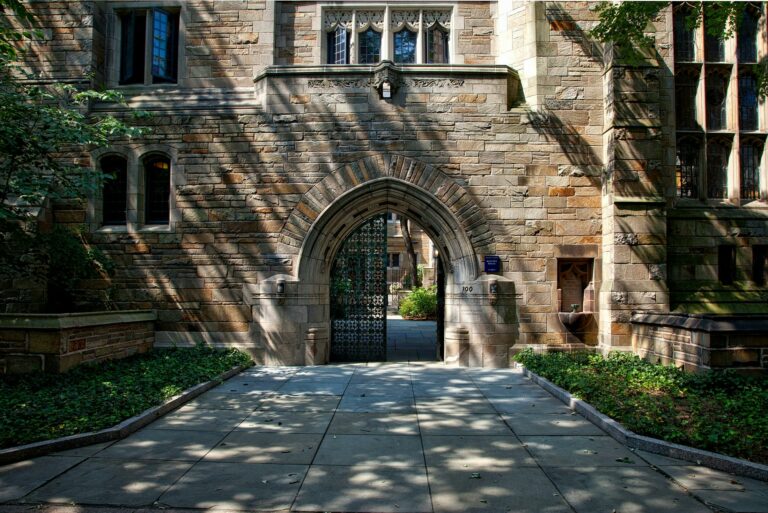
Amherst, Massachusetts, USA · Amherst College is the second-highest-ranked liberal arts college in the U.S. and one of only six institutions worldwide to employ a need-blind admission policy for international students that fully meets demonstrated financial need without the use of loans. For the Class of 2030, the acceptance rate was 6.78%—a record low in the college's history and the lowest among all American liberal arts colleges. The college has a student body of approximately 1,900, a student-to-faculty ratio of 7:1, and an open curriculum that allows students complete freedom in choosing their courses, with no mandatory requirements. In terms of academic quality, Amherst College offers an Ivy League-caliber education within a small-college setting.
Amherst College was founded in 1821 in the small town of Amherst, Massachusetts — in the Pioneer Valley (the Valley of the Five Colleges). It is one of the oldest and most selective liberal arts colleges in the country. There are no required courses or fixed requirements for the curriculum: each student fully shapes their own academic program from more than 800 available courses. This system — the Open Curriculum — is extremely rare in the United States and brings Amherst closer to Brown University in terms of educational philosophy.
A unique feature of Amherst is its membership in the Five College Consortium: students can attend classes at the University of Massachusetts Amherst, Smith College, Mount Holyoke College, and Hampshire College for free. This expands the range of courses from 800 to several thousand without any additional fees.
The 1,000‑acre campus is located in a picturesque area of western Massachusetts. Boston is a 2‑hour drive away, and New York is a 3‑hour drive away. The campus features more than 30 research centers, the Mead Art Museum with a world‑class collection, and the Folger Shakespeare Library — one of the largest collections of Shakespearean manuscripts in the United States.
Among the notable graduates of Amherst College are Calvin Coolidge (the 30th President of the United States), the poet David Foster Wallace, and the lawyer and activist Bryan Stevenson (founder of the Equal Justice Initiative).
Amherst College is one of the most expensive in terms of list price, but at the same time one of the most affordable in terms of real cost after financial aid.
Tuition 2026–2027: $75,230 per year
Full estimated cost (direct charges, 2026–2027): $96,360 per year (tuition $75,330 + housing $10,980 + meals $9,340 + fees $710)
Including additional expenses (personal expenses $1,800, transportation $640–1,220, insurance): approximately $98,000–$100,000 per year
The actual cost for most students:
There are no graduate programs at Amherst — only undergraduate studies. The cost is the same for all students, regardless of their major.
Amherst College is an undergraduate-only institution: there are no graduate or PhD programs. This is a fundamental difference from universities: all resources — financial, administrative, and academic — are directed exclusively at undergraduate students. Professors do not “share” their attention with graduate students.
Academic fields are distributed across departments, but there are no strict departmental boundaries for students — the Open Curriculum means that students can freely combine any disciplines:
The average class size is 12–15 students. The seminar format dominates over the lecture format starting from the first year.
The Amherst campus is located on a hill with a view of the Connecticut River Valley. 1,000 acres of forests, sports fields, and historic buildings create an environment typical of the best small colleges in New England. The nearest Berkshire Mountains are a 30‑minute drive away, and the ski slopes are an hour away.
All Amherst students are required to live on campus for all four years — the university guarantees housing for everyone. This creates an exceptionally close‑knit and cohesive student community: all 1,900 students live, study, and spend their time within the same campus.
The campus features several dining halls, a sports complex with a swimming pool, the Mead Art Museum (with a collection of over 18,000 works), the Beneski Museum of Natural History, and a large university library. The Five College Inter‑Library system allows you to request books from any of the five colleges in the consortium.
Student life revolves around more than 150 student organizations — academic, cultural, sports, and social. The inter‑college transportation system (Five College Bus System) is free for students and connects the campuses of five colleges.
Admission to Amherst College is one of the most competitive processes among liberal arts colleges in the USA. The acceptance rate for the class of 2030 was 6.78% — a record low in the college’s history. Applications are submitted via the Common App.
Amherst does not require students to specify their major upon admission — students choose it in their first or second year. However, the essay must demonstrate intellectual curiosity and specific academic interests.
GPA 3.94–4.00 for most admitted students. Amherst is test‑optional, but competitive applications include SAT 1500–1570 or ACT 33–35.
The college asks its own additional questions. They are aimed at understanding what truly interests you — not in terms of a career plan, but in terms of intellectual curiosity. The admissions committee is looking for students who are ready to make the most of the freedom of the Open Curriculum.
Two from teachers and one from the homeroom teacher. For Amherst, letters describing specific intellectual manifestations of the student in the classroom are especially valuable.
Early Decision — by November 1 (acceptance rate of about 22% — more than three times higher than RD). Regular Decision — by January 3. 43% of the class of 2030 enrolled through Early Decision — ED fills almost half of the class.

For international applicants — transcripts with an official translation, TOEFL 100+ iBT or IELTS 7.0+. Graduates of accredited English‑language schools may be exempted.
Key fact: Amherst College uses need‑blind admission for all students worldwide — including international citizens and undocumented students. The family’s financial situation does not influence the admission decision. After admission, the college covers 100% of the confirmed financial need without loans.
Amherst is one of six universities in the USA with such a policy for international students: Harvard, Yale, Princeton, MIT, Bowdoin, and Amherst. This makes Amherst an alternative to the Ivy League not only in terms of quality but also in terms of financial guarantees.
Amherst College does not offer merit-based scholarships — all financial aid is exclusively need-based. This means that the amount of your grant is determined solely by the family’s financial situation, not by academic achievements.
Key parameters of financial aid (2026–2027):
Amherst College Textbook Solution (ACTS) is an additional program: all necessary textbooks and learning materials are provided to each student free of charge each semester. This reduces the hidden costs of education.
Despite its relatively small size—about 1,900 students—Amherst College graduates are disproportionately successful in the most competitive fields: academia, medicine, law, finance, and public administration. Amherst consistently ranks in the top 5 among colleges in terms of the proportion of graduates who earn doctoral degrees.
Among the specific indicators: Amherst graduates go on to top‑tier medical, law, and business schools at rates comparable to Harvard and Princeton. The alumni network comprises approximately 25,000 graduates — it is small in size but exceptionally engaged: Amherst’s alumni level of donations and mentoring activity is among the highest in the United States.
The proximity of the Five College Consortium creates connections with several thousand students at UMass, Smith, Mount Holyoke, and Hampshire, expanding the professional and social network beyond Amherst itself.
Despite its status as an undergraduate-only college, Amherst engages in active research activities in collaboration with UMass Amherst and through the Five College Consortium. Undergraduate students have the opportunity to participate in real research projects starting from their first year — which is atypical for most large universities, where research projects remain the domain of graduate students.
In terms of the number of graduates who have received Fulbright Scholarships, Amherst consistently outperforms most universities of comparable size. The college is among the top 5 liberal arts colleges in terms of the proportion of graduates who continue their studies in PhD programs at leading research universities.
Amherst College is #1 in terms of acceptance rate among liberal arts colleges in the USA in 2026: 6.78% for the class of 2030 — this is more competitive than most Ivy League universities in this cycle.
Open Curriculum without mandatory courses — the student chooses all disciplines without exception. No mandatory subject, no mandatory distribution across fields of knowledge.
Amherst is one of six US universities that offer need‑blind admission to international students: Harvard, Yale, Princeton, MIT, Bowdoin, and Amherst.
The Five College Consortium provides Amherst students with access to several thousand additional courses at four neighboring colleges—at no cost.
Amherst College Textbook Solution (ACTS) — all textbooks and learning materials are free for every student each semester. There are no hidden study‑related expenses.
Calvin Coolidge, the 30th President of the United States, was a graduate of Amherst College in 1895.
Admission to Amherst requires a special approach to essays: the college seeks intellectually curious students who are ready to embrace the freedom of the Open Curriculum. This is not a standard “why this university” question — it’s a conversation about who you are as a thinker. We at SelfStartGlobal help:
Our students have already received scholarships worth more than $35 million.
Want to get into Amherst College and receive a grant of up to $82,000+ without loans? Come to a free consultation.



She enrolled in Fashion PR programs at five US universities


She was admitted to three American universities at once: Augustana College, Widener University, and the University of South Dakota. She chose Augustana College, where she received a scholarship of $45,000 per year.

He entered a master’s program in the USA at two universities at once – Brandeis University and Washington University in St. Louis, receiving scholarships totaling $80,000. He chose Brandeis University and went to study on the first try.
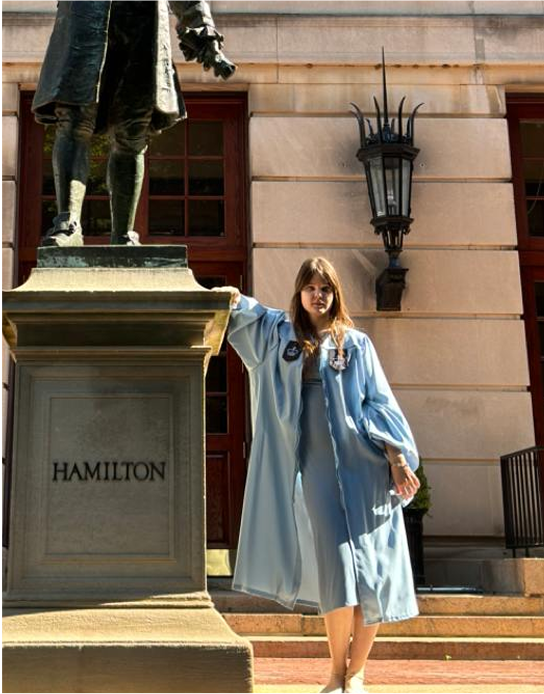
I was accepted to the PhD program at Columbia University on my first try, having strengthened my profile and compiled my achievements into a strong application.

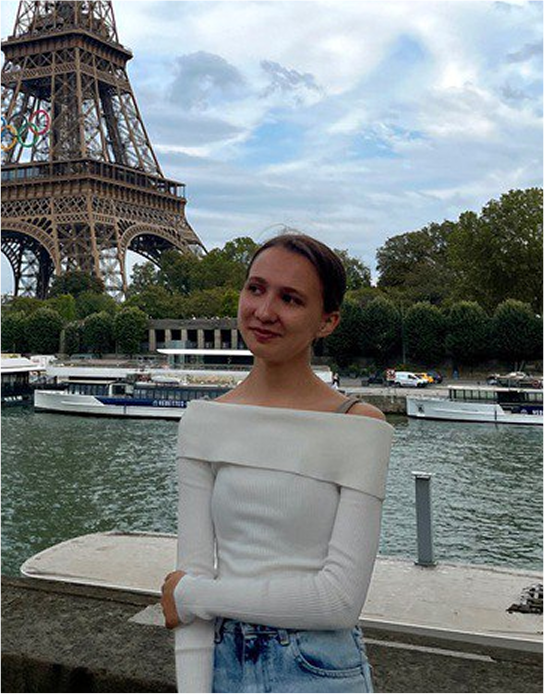
She enrolled in graphic design at universities in France, Italy and Hungary. She received scholarships at all of them and chose the university with the maximum funding — $135,000 for the entire period of study.


She entered graduate school at Kent State University and Ohio University. At Ohio University, she won a Graduate Teaching Assistantship with full funding of $37,774, covering tuition, insurance, and living expenses.

He entered Siena Heights University (USA) for the Theater and Music program with a full scholarship of $170,000. Preparation took less than a year.

Got accepted to NYU Abu Dhabi on the first try (acceptance rate 4%) with a scholarship of $217,000. Also received offers from Lynn and Drexel University.
Leave your contacts — our consultant will get in touch
