




 How to find a scholarship to study abroad

She enrolled in Fashion PR programs at five US universities



Stanford, California, USA · Stanford University is one of the three or four best universities in the world according to all key ratings. Located in the heart of Silicon Valley, 50 kilometers from San Francisco. It was here that Google, Netflix, Yahoo, HP, LinkedIn, Instagram were founded - Stanford graduates and students changed the way the modern world is structured. Entering Stanford University is extremely difficult: the university accepts about 3.6% of applicants. But for those who approach it systematically and with the right strategy, this is not an unrealistic goal.
Stanford University was founded in 1885 by Leland and Jane Stanford in memory of their only son. From the very beginning, the university was conceived as a practically oriented institution — a place where knowledge is put into practice. This philosophy defined the spirit of Stanford for a century and a half to come.
The campus in Stanford, California, is one of the largest in the world: about 3,300 hectares. Buildings in the Spanish‑mission style, palm‑lined avenues, open spaces, and a Mediterranean climate. Within a 30‑minute drive of the campus, you’ll find the headquarters of Google, Apple, Meta, Tesla, and Nvidia — as well as hundreds of companies founded by graduates.
In the QS World University Rankings 2026, Stanford ranked No. 3 in the world, jumping three spots from No. 6 last year. This is one of the most notable jumps among top universities in this cycle. According to Times Higher Education 2026, it is ranked No. 5 in the world; according to US News National 2026, it is ranked No. 4 in the USA.
Among the graduates of Stanford University are Sergey Brin and Larry Page (Google), Reed Hastings (Netflix), William Hewlett and David Packard (HP), Reid Hoffman (LinkedIn), Nobel laureates William Shockley (physics, 1956), Kenneth Arrow (economics, 1972), and dozens of other scientists.
Bachelor’s degree: $64,890 per year (tuition, 2025–2026); approximately around $69,524 for 2026–2027 (+5.5%)
Master’s degree: around $64,890 per year for most programs (2025–2026); professional programs (GSB MBA, Law School) — higher
Doctoral studies: most PhD programs are fully funded — a stipend, tuition coverage, and insurance through a fellowship or assistantship.
The total estimated cost of attendance (Cost of Attendance) for 2025–2026 is approximately $91,400–$93,500 per year, including tuition ($64,890), housing and meal plan (~$19,922), student fees, study materials, and personal expenses.
Stanford unites seven professional schools and a number of leading research institutes:
The Stanford campus is a world of its own: 3,300 hectares with palm‑lined avenues, fountains, sculpture gardens (including works by Rodin) and buildings in a warm Mediterranean climate. The campus is so large that you can bike around it — and that’s not a metaphor. It’s well connected to Palo Alto, San Jose and San Francisco: the entire Silicon Valley is within easy reach.
The campus features 15 residential buildings and a variety of housing formats: residence halls, apartments, suites, and row houses. Freshmen are required to live on campus; Stanford guarantees housing for all undergraduate students for four years. There are more than 650 student clubs and organizations — from academic societies and debate clubs to entrepreneurial incubators and environmental initiatives.
Stanford participates in the NCAA Division I and has one of the strongest sports programs in the United States: its swimming, track and field, tennis, and gymnastics teams regularly take top spots in national and international competitions. The university has produced hundreds of Olympic medalists.
Admission to Stanford is one of the most competitive processes in the world: about 0.6% of applicants. Applications are accepted via the Common App or the Coalition App.
The student applies to a specific school or program — the logic behind the application, the emphasis in the essay, and the choice of recommenders depend on the chosen path.
Transcripts with grades, AP/IB courses — it’s not just the final grade that matters, but also the choice of subjects, which reflects academic interests.
Stanford offers three short questions and one extended essay. The questions are deliberately unconventional: the university wants to understand who you are as a person — what truly interests you, what concerns you about the world. Templates don’t work.
Two letters from teachers of specialized subjects and one from the class teacher.
Starting with the class of 2030 (Fall 2026), Stanford has reinstated the mandatory SAT or ACT requirement — the class of 2029 was the last test‑optional year. The average accepted range is: SAT 1510–1570, ACT 34–35.
One of the key elements of the application is that Stanford is looking for people who are doing something meaningful outside the classroom. Depth is important, not the length of the list.
Restrictive Early Action (REA) — by November 1 (if you apply to Stanford’s early round, you cannot apply to other private universities in the USA via ED or EA). Regular Decision — by January 4.

For international applicants, the standard package includes transcripts with an official translation, TOEFL results (100+ iBT) or IELTS results (7.0+), essays, and letters of recommendation.
A critically important nuance for international students: Stanford uses need‑blind admission only for U.S. citizens, permanent residents, and undocumented students. For international citizens, admission is need‑aware — the family’s financial situation is taken into account during the selection process. At the same time, all admitted international students who request assistance receive 100% coverage of their confirmed need without loans. International applicants who require significant financial support statistically end up in a more competitive pool.
Research, Olympic, and competitive achievements are especially important for technical and scientific fields. Stanford does not conduct formal interviews as a mandatory stage, but individual programs may request them.
Stanford is among the universities with the most generous financial aid systems in the world:
Stanford does not offer merit-based scholarships for undergraduate studies — all aid is based solely on need. For master’s and PhD programs, the system depends on the program: most doctoral programs are fully funded (scholarship, tuition, insurance), while MBA and professional programs offer separate competitive scholarships.
Stanford’s career fair is one of the most attended in the world. Google, Apple, Meta, McKinsey, and Goldman Sachs actively recruit on campus; many students receive job offers even before completing their bachelor’s degree.
Stanford GSB consistently ranks No. 1 among U.S. MBA programs in the Bloomberg Businessweek ranking. According to the QS 2026 Employer Reputation, Stanford is among the top 2 universities in the world in terms of graduate employability (with the highest score, alongside Harvard, MIT, and a number of other universities).
StartX — the Stanford student accelerator — has launched more than 600 companies with a total capitalization of over $10 billion. Entrepreneurial culture here is not an option, but part of the environment: some GSB graduates start companies instead of joining corporations.
Stanford attracts more than $1.5 billion in external funding for research each year. More than 85 Nobel laureates are affiliated with the university — among current faculty members, researchers, and alumni.
Among the key research institutions are: Stanford Artificial Intelligence Laboratory (SAIL) — one of the oldest and most authoritative AI centers in the world, founded in 1962; SLAC National Accelerator Laboratory — a national laboratory of the U.S. Department of Energy, managed by Stanford; Hoover Institution — one of the leading think tanks in the field of international relations and public policy (with over 100 years of operation).
Stanford was a pioneer in creating a university technology park: Stanford Research Park, founded in 1951, became the prototype of Silicon Valley. It was here that HP, Varian Associates, and other founding companies of the valley began their history.
Stanford is the first university in the world to create its own technology park (1951). Prior to that moment, the concept of a “university technology park” did not exist.
d.school (Hasso Plattner Institute of Design) is open to students from all departments at Stanford without exception — engineers, doctors, lawyers, and humanities scholars all come here to study design thinking.
The campus is so large (3,500 hectares) that it has its own railway station — the Palo Alto Caltrain — and Stanford provides students with free bicycles to get around the campus.
Stanford GSB has one of the highest yield rates (the percentage of admitted students who actually enroll) among U.S. business schools — more than 90% of those admitted to GSB choose Stanford.
In 2026, Stanford rose in the QS ranking from No. 6 to No. 3 — this is one of the largest jumps among universities in the global top 10 in recent years.
THE 2026 ranked Stanford No. 1 in the world in the fields of Education and Law — even though it ranks 5th overall.
Getting into Stanford is a process that requires a strategy, a clear understanding of what the admissions committee is looking for, and careful preparation of every element of the application. At SelfStartGlobal, we help:
Our students have already received scholarships worth more than $35 million.
If you want to get into Stanford University and receive maximum financial support, come to a free consultation. We’ll explain how it works in your specific case.

She enrolled in Fashion PR programs at five US universities

She was admitted to three American universities at once: Augustana College, Widener University, and the University of South Dakota. She chose Augustana College, where she received a scholarship of $45,000 per year.

He entered a master’s program in the USA at two universities at once – Brandeis University and Washington University in St. Louis, receiving scholarships totaling $80,000. He chose Brandeis University and went to study on the first try.
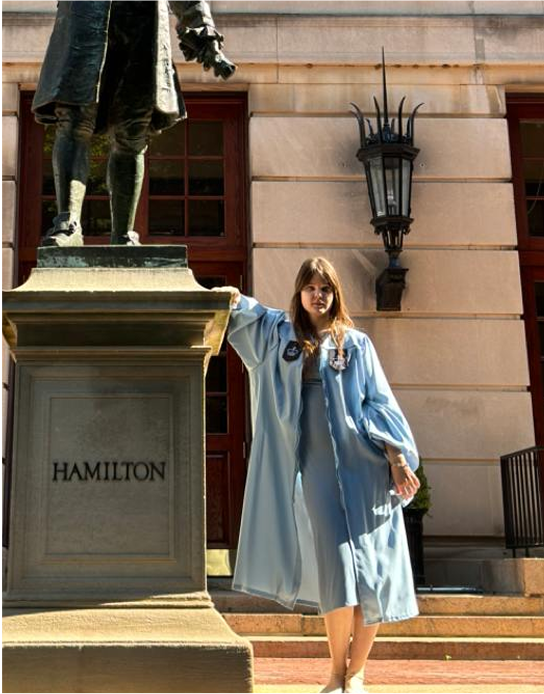
I was accepted to the PhD program at Columbia University on my first try, having strengthened my profile and compiled my achievements into a strong application.

She entered graduate school at Kent State University and Ohio University. At Ohio University, she won a Graduate Teaching Assistantship with full funding of $37,774, covering tuition, insurance, and living expenses.
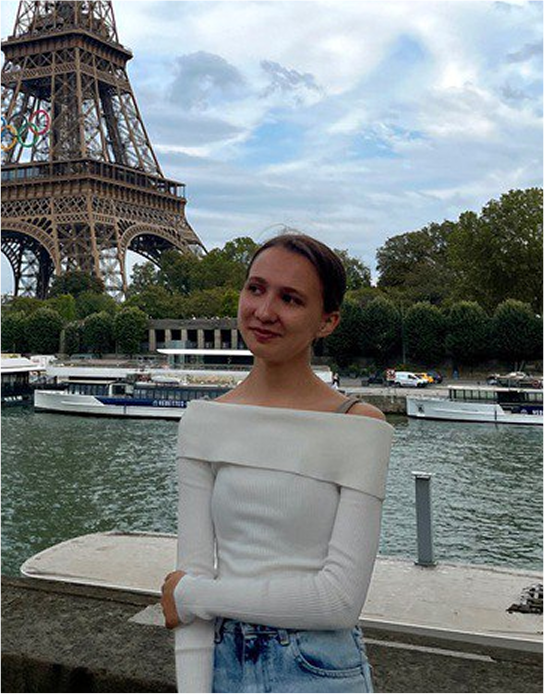
She enrolled in graphic design at universities in France, Italy and Hungary. She received scholarships at all of them and chose the university with the maximum funding — $135,000 for the entire period of study.

He entered Siena Heights University (USA) for the Theater and Music program with a full scholarship of $170,000. Preparation took less than a year.

Got accepted to NYU Abu Dhabi on the first try (acceptance rate 4%) with a scholarship of $217,000. Also received offers from Lynn and Drexel University.
Leave your contacts — our consultant will get in touch
