




Why STEM Applications Should Start with Choosing a Career Direction
Время чтения:
0 мин
0 мин


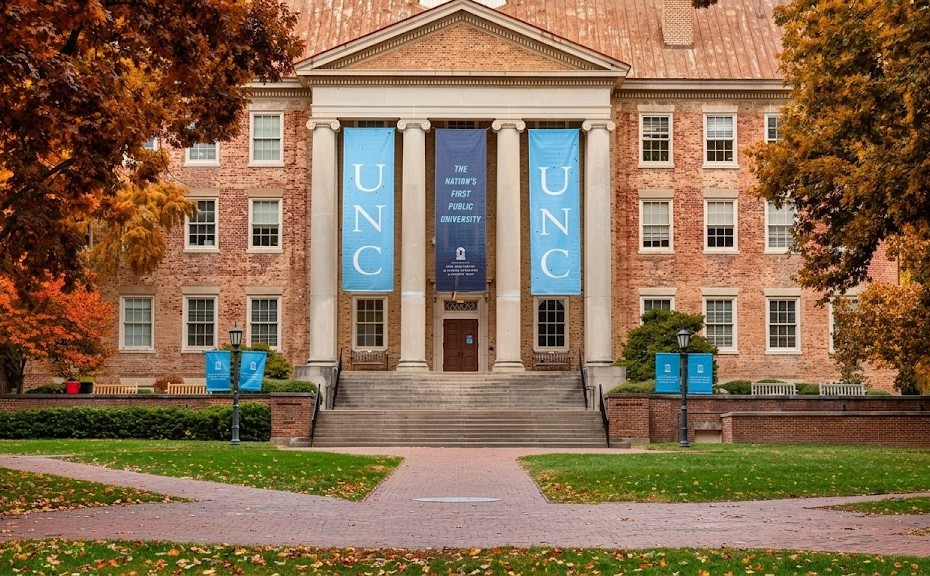
 North Carolina, USA
 The University of North Carolina at Chapel Hill, or UNC Chapel Hill for short, is one of the most renowned public research universities in the United States. It is often referred to simply as UNC, but the Chapel Hill campus is considered the flagship and most prestigious campus in the entire University of North Carolina system.
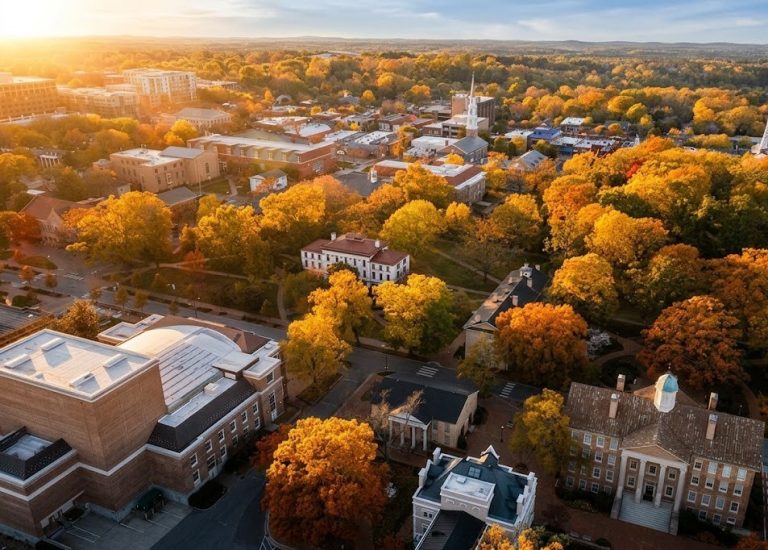
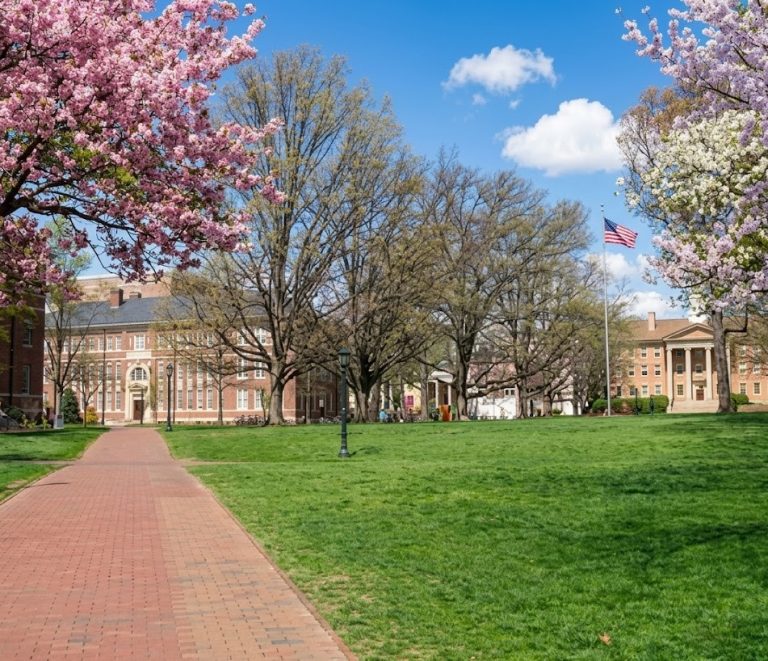
UNC Chapel Hill is located in Chapel Hill, North Carolina. It is a small university town entirely focused on students and the academic environment. The campus is located near Raleigh and Durham, part of the Research Triangle, one of the largest science and technology clusters in the United States.
It is a public research university. It is state-funded, yet its educational standards rival those of the nation’s leading private universities. It boasts a strong academic culture, a developed research environment, and a wide range of international programs.
UNC Chapel Hill is suitable for students seeking:
| Degree of study | Bachelor's, Master's, Doctoral studies |
| Percentage of accepted students | 60% |
| Probability of employment after training | 92% |
| Scholarships | Scholarships are available for international students that cover part or all of their tuition fees. |
| Study specialties | The university offers programs in medicine, business, journalism, law, and social sciences. |
| Type | research university |
| Student campus size | 22,458 students |
| % of international students | 12% |
| Student town | The university's campus is organised into 16 diverse residential communities, ranging from the historic Old East building, built in 1795, to modern complexes and independent student residences such as Granville Towers. |
Confusion often arises between North Carolina’s various universities in Russian and English searches. UNC Chapel Hill and North Carolina State University are particularly frequently confused.
UNC Chapel Hill vs. North Carolina State University (NC State)
These are two different universities with different campuses and focuses.
UNC Chapel Hill has traditionally been strong in:
North Carolina State University is more focused on engineering and applied fields.
UNC Chapel Hill is valued for its strong academic environment. The university actively engages in research, international projects, and academic collaborations. Many programs are built around analytical and research skills, not just theory.
It boasts a strong faculty, numerous research centers, and access to real-world data and case studies.

UNC Chapel Hill is particularly popular for the following majors:
Research Triangle provides access to a wide range of companies, startups, research centers, and nonprofits. UNC Chapel Hill students actively pursue internships while still studying.
Employers value not only grades but also project participation, research, volunteerism, and initiative.
Financial considerations are a key factor for most families. However, many focus solely on tuition, forgetting about other related expenses.
A student’s annual budget typically includes:
Even with the same program, the final cost can vary depending on the accommodation format and lifestyle.
For most international students, funding is a crucial issue. Even at a public university like UNC Chapel Hill, the final cost can be high if you don’t consider financial aid options in advance.
The university offers several types of support, often combined:
It’s important to understand: in the US, funding is always a separate competition, with a strong applicant’s background and overall academic profile increasing their chances.
The most common mistakes:
The admissions process at UNC Chapel Hill is similar to other top US universities: they evaluate the applicant as a whole, not just based on a single number. It’s important to understand in advance what the admissions committee will be looking for.
Academic evaluations look at the applicant’s GPA, the difficulty of the curriculum, and their performance over time. Improved scores over time are usually perceived more favorably than a steady “average.” They also consider relevant subjects and achievements, such as academic competitions, research, strong coursework, and notable projects.
Exam and language requirements vary depending on the program and its policies for the year of admission. SAT/ACT, TOEFL/IELTS, and other requirements may vary, so checking the requirements on the official website is a must.
An essay is a document where you demonstrate your purpose: why you chose a program, what you’ve already accomplished, and how you plan to develop your program. A good essay usually focuses on specifics: decisions, mistakes, conclusions, and your impact on people or a project.
It’s also important to remember about recommendations and supplementary materials. Recommendations should demonstrate real skills and qualities through examples. Additional materials (portfolio, written assignments, interviews) may be required depending on the area of study.
Preparing for UNC Chapel Hill works best as a project with stages. That way, you don’t have to rush a month before the deadline.
| 18–24 months before filing | It's time to build your profile. At this stage, you choose a direction, undertake projects, gain experience, and try out research or volunteer initiatives. This is also where your personal brand is born: what sets you apart from hundreds of strong candidates. |
| 9–12 months | The packaging phase. This is typically the time for testing, initial essay drafts, program selection, and budget calculations. If the goal is funding, it's important not to delay: many opportunities close sooner than expected. |
| 1–3 months before the deadline | The final stretch. Details matter: proofreading, format compliance, correct documents, status monitoring. The most frustrating scenario is a strong candidate rejected over formalities. |
Searching for “universities in North Carolina” usually means comparing several large universities. People want to understand where to apply if quality, budget, and career development are all important.
In brief, here’s how people often share their choices:
When choosing, it’s important to focus not only on a university’s rankings but also on its alignment with your goals: major, career plan, budget, requirements, and campus layout.
Even candidates with excellent grades are rejected if their applications appear unconvincing. The most common reasons for rejection are:
SelfStartGlobal helps with admissions to top universities in the US, Europe, and Asia. We begin with a profile assessment and an honest assessment of your chances, then we develop an admissions strategy and strengthen your personal brand.
Next comes the application process: essays, CVs, recommendations, and, if necessary, additional materials. We also consider funding: where to look for opportunities, what deadlines are critical, and how to make your scholarship application competitive.
Request a free consultation and begin preparing for admission to the University of North Carolina at Chapel Hill or any other university in the world.
No, these are different universities with different campuses and focuses.
It depends on the program and student status, plus you need to take into account accommodation and fees.
Yes, if the profile is strong overall and there is a logical history of achievements.
Depends on the policy for the year of entry and the requirements of the specific program.
Business, public policy, social sciences, data sciences, and life sciences are often chosen.
Optimally, within 12–24 months, especially if financial assistance is needed.
Yes, but this is a competition, and it is important to prepare a separate application for funding.
Look at the goal, focus, and budget; UNC Chapel Hill, NC State, and Duke are the most commonly compared.

She was admitted to three American universities at once: Augustana College, Widener University, and the University of South Dakota. She chose Augustana College, where she received a scholarship of $45,000 per year.
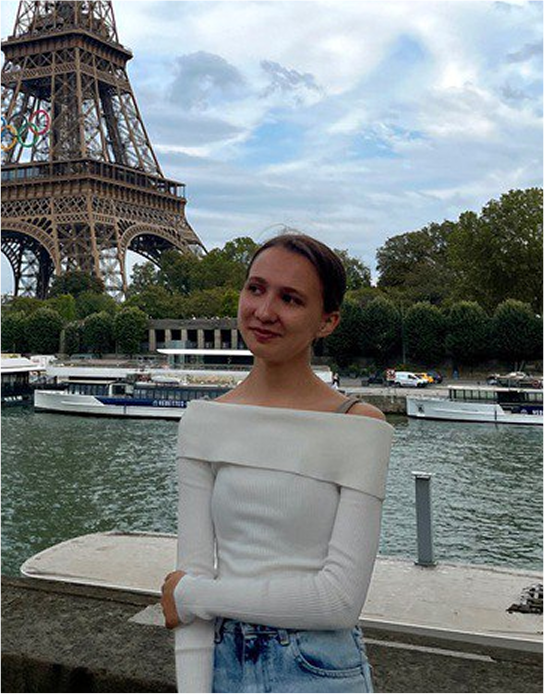
She enrolled in graphic design at universities in France, Italy and Hungary. She received scholarships at all of them and chose the university with the maximum funding — $135,000 for the entire period of study.

Got accepted to NYU Abu Dhabi on the first try (acceptance rate 4%) with a scholarship of $217,000. Also received offers from Lynn and Drexel University.

He entered Siena Heights University (USA) for the Theater and Music program with a full scholarship of $170,000. Preparation took less than a year.

She entered graduate school at Kent State University and Ohio University. At Ohio University, she won a Graduate Teaching Assistantship with full funding of $37,774, covering tuition, insurance, and living expenses.

She enrolled in Fashion PR programs at five US universities

He entered a master’s program in the USA at two universities at once – Brandeis University and Washington University in St. Louis, receiving scholarships totaling $80,000. He chose Brandeis University and went to study on the first try.

















«I already had an unsuccessful experience of entering the USA - then it turned out that just good grades are not enough. Now I decided to work with the team»

 Alena's video review
«What I liked most was the structure and organization. I am the kind of person who sees the goal, but does not see the path to implementation»
Video review by Alesya«It took me a while to realize I'd been accepted. It was an unforgettable experience, one I wish everyone who dreams of studying abroad could experience»
Alina's video review«With SelfStartGlobal support, you will always know: what to do, why to do it and when to do it. This saves a lot of time»
Video review by Igor
«I was looking for information on how to apply to a university and came across many webinars. One of them was hosted by Radmila»
Video review by Leonid
«The main thing is the match with the university. I didn’t look at rankings, but at how well the university fit my profile and goals»
Review by Leila
«Don't waste your time choosing an admissions company; I've done it for you. Just contact SelfStartGlobal – they'll help you»
Video review by Lazizbek«We started preparing a year in advance, and this was not enough. To have a good profile, you need to spend several years being active»
Sabrina's video reviewTo enter American universities in my specialty, good grades (which, by the way, I didn’t have) are not enough; achievements are also needed. Lisa and other curators helped complete the profile.
Video review by Sergei«When I started, I knew absolutely nothing about applying abroad: no deadlines, no documents, nothing!»
Video review by Ruslan Video review from Valeria
«My case is not easy, since I am 29 years old, and my bachelor’s degree is in philology, and I entered the master’s program in psychology»
Tamara's video review«I’m an ordinary girl, but I managed to get into 2 Ivy League universities, get a 100% scholarship from the University of Chicago (top 6 in the USA), which is just like a dream come true»
Video review from Victoria