




 How can I stay and work abroad after completing my studies?

She enrolled in Fashion PR programs at five US universities


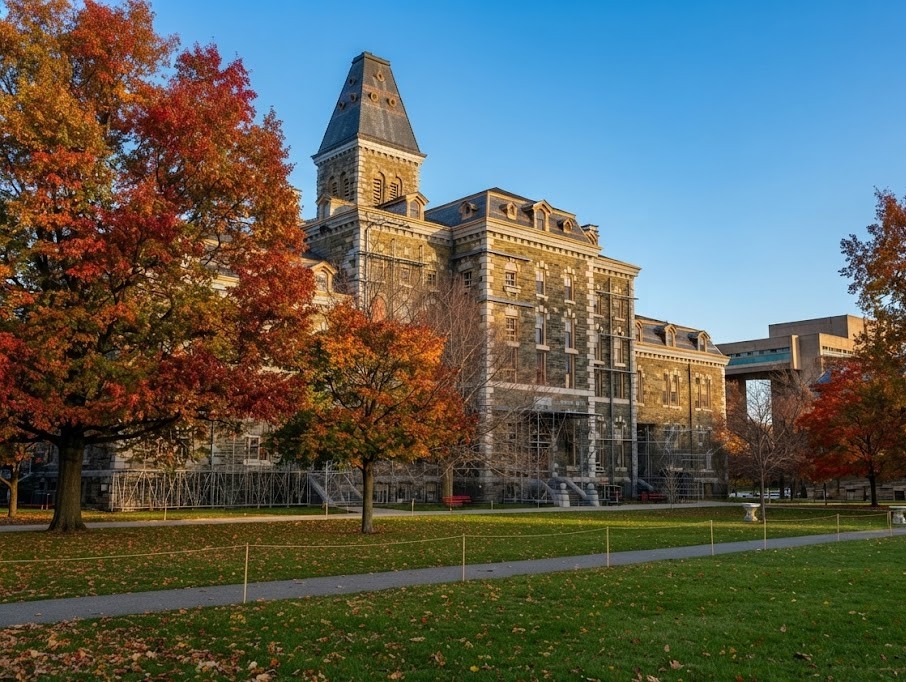
Ithaca, New York, USA · Cornell University is the only Ivy League university founded on the principle of educational access for all. Since its opening in 1865, it has combined research rigor with a practical focus, offering programs ranging from engineering and medicine to hospitality and architecture. Admission to Cornell requires strategy: the competition is fierce, but its application approach is fundamentally different from other Ivy League universities.
Cornell University was founded in 1865 by Ezra Cornell and Andrew Dixon White in Ithaca, New York. The main idea of the creators — “any person, any study” – still defines the philosophy of the university: Cornell remains one of the most diverse Ivy League universities.
Cornell is one of three private universities in the United States with land-grant status, which means special obligations to society and the state of New York. The university has eight undergraduate colleges, three of which (the College of Agriculture and Life Sciences, the College of Human Ecology, and the ILR School) are partially funded by the state.
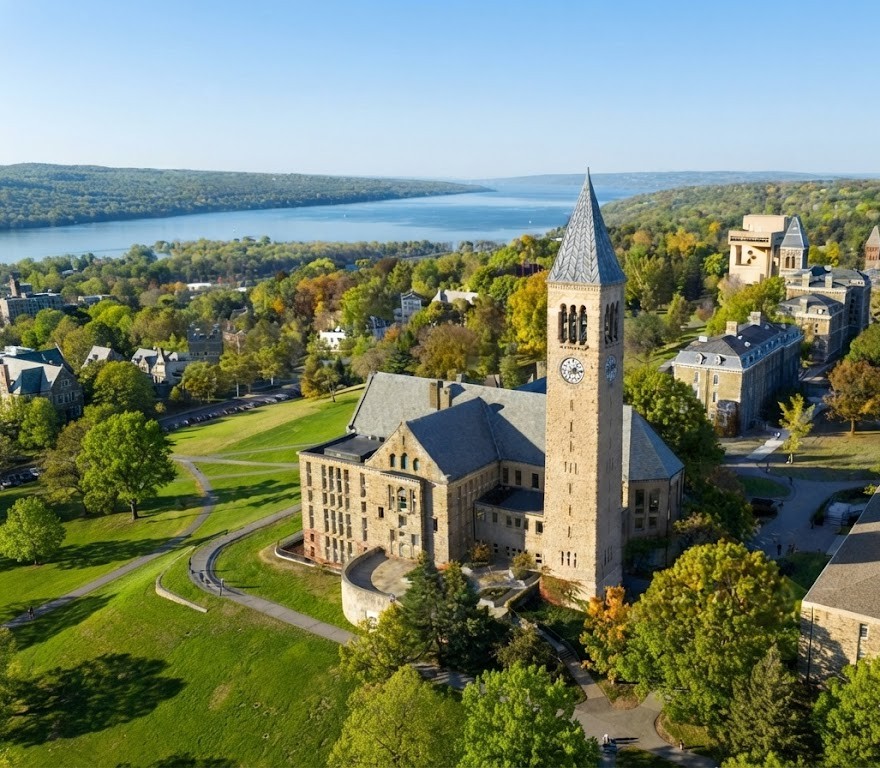
The Ithaca campus occupies 745 acres on a hill above Cayuga Lake, one of the Finger Lakes. In addition to its main campus, Cornell operates Cornell Tech on Roosevelt Island in New York, a technology campus with a focus on entrepreneurship, as well as Weill Cornell Medicine in Manhattan and a medical school campus in Doha, Qatar. The acceptance rate for the Class of 2029 was 8.38%, one of the lowest among all Ivy League universities.
Tuition at Cornell depends on the school chosen and New York State residency status – a fundamental difference from most Ivy League universities with a single fixed rate.
Bachelor’s (Endowed Colleges): around $72,270 per year
Bachelor’s (State Colleges for NY State Residents): around $48,010 per year
Master’s / Doctoral degree: depends on the program and school, ranging from $29,500 to $72,270 per year (most PhD programs are fully funded)
Cornell is one of the most diverse Ivy League universities in terms of its range of programs. There are eight undergraduate colleges, each with its own requirements, admissions process, and academic culture:
College of Engineering – engineering majors, computer science, electrical engineering, biomedical engineering, aerospace engineering.
College of Arts & Sciences – humanities, natural sciences, social sciences, mathematics, physics, biology, economics, history, philosophy.
SC Johnson College of Business – business, finance, management, marketing. The Charles H. Dyson School of Applied Economics and Management and the Johnson Graduate School of Management (MBA) are also worth mentioning.
The College of Architecture, Art, and Planning (AAP) offers programs in architecture, urban planning, and regional planning, as well as fine arts.
The College of Agriculture and Life Sciences (CALS) focuses on life sciences, ecology, biology, food technology, and sustainable development.
The College of Human Ecology offers programs in design, health policy, social sciences, and nutrition science.
School of Hotel Administration (SHA) – one of the best programs in the world in the field of hotel business and management of service industries.
ILR School (Industrial and Labor Relations) – labor relations, organizational behavior, labor economics, human rights.
At the master’s and doctoral level, the following are added:
The Ithaca campus occupies 745 acres on East Hill, a hill overlooking the city and Cayuga Lake. The territory is bordered by two picturesque gorges: Fall Creek Gorge and Cascadilla Gorge. Cornell Botanic Gardens is located next to the campus, a 2,800—acre botanical garden with cultivated gardens, an arboretum, and natural areas.
First—year students live on the North Campus, a dedicated residential cluster for their first year of study. First—year dormitories include Clara Dickson Hall (the largest residential community on campus) and Barbara McClintock Hall, named after graduate and Nobel laureate Barbara McClintock. Undergraduates move to the West Campus or South Campus, to one of the five West Campus Houses (residences in the residential college format), to Collegetown, a student area near the campus walls, or to off—campus apartments.
Two other student campuses, Cornell Tech on Roosevelt Island in New York City and Weill Cornell Medicine in Manhattan, provide students with access to the country's largest business and cultural center.
Cornell is regularly ranked among the top 10 universities in the United States for food quality, with over 30 dining options and restaurants on campus. Student life includes over 1,000 organizations and clubs, and the Cornell Big Red athletic team competes in NCAA Division I in 36 sports.
An important feature of Cornell is that students do not apply to the university as a whole, but rather to a specific college or school. This fundamentally changes the approach to the application process, as the requirements, essays, and competition vary depending on the chosen field. Applications are submitted through the Common App.
It is important to note that starting with the class of 2030, Cornell has reinstated the mandatory SAT or ACT test for all applicants.
You need to decide on a specific college in advance: College of Engineering, College of Arts & Sciences, SC Johnson College of Business, or another. Each school has its own requirements and evaluates applications differently. It is possible to change schools after enrollment, but it requires a separate transfer process.
The transcript with grades is the basis of the application. Cornell evaluates the academic trajectory, the difficulty of the courses, and the consistency of the results. The average SAT score of accepted students is 1480-1560, and the average ACT score is 33-35.
In addition to the main essay through the Common App, each Cornell school has its own additional questions. These questions are designed to understand why the student chose this particular program and what they plan to do with their education. Standard answers do not work here.
The standard set includes two letters from teachers and one from a school counselor.
Cornell values the depth of engagement rather than the number of activities.
Early Decision (ED) — until November 1 (binding, ED gives a statistically significant advantage: 18.78% vs. 6.70% for RD for the 2029 class). Regular Decision (RD) — until January 1.
For international applicants, the requirements are the same as for U.S. citizens, with a mandatory confirmation of their English language proficiency. TOEFL, IELTS, or Duolingo English Test scores are accepted.
For certain fields, such as architecture or fine arts, a portfolio may be required. The exact requirements should be checked with the specific school and program.
A key feature of Cornell as a land-grant university is that three of its eight colleges (CALS, Human Ecology, and ILR) are public, which means that their admission standards, competition, and tuition fees differ from those of endowed colleges. The acceptance rate for engineering or business (Dyson) is significantly lower than that of CALS or Human Ecology.
Cornell University offers need-based financial aid to international students, but unlike Brown, Harvard, or Princeton, it does not guarantee full coverage of confirmed need for everyone. In any case, it is worth applying for financial assistance, as some international students receive significant support.

Cornell University is one of the few Ivy League universities that covers 100% of students’ verified financial need and does not require loans as part of its financial package for low- and middle-income families.
Families with incomes up to $75,000 per year typically receive a loan-free aid package that covers the full cost of attendance (tuition, housing, and meals).
Families with incomes of up to $125,000 can apply for grants and scholarships that cover at least the cost of tuition.
The university allocates a record-breaking $459 million per year for institutional financial aid.
Approximately 48% of undergraduate students receive grants or scholarships, with an average aid amount of around $63,849.
It is important to keep in mind that Cornell, unlike most Ivy companies, allows loans to be included in the financial package for middle- and high-income families. The application for financial assistance must be submitted at the same time as the application for admission.
Doctoral students in most programs receive full funding: tuition coverage and a living stipend through research or teaching assistance.
Cornell’s alumni network is one of the broadest among American universities, with over 250,000 living alumni in more than 150 countries. 10 of the Fortune 500’s current CEOs are Cornell alumni, as well as 35 billionaires and 63 Olympic medalists.
Cornell consistently ranks among the top universities in terms of employment, with over 90% of graduates either employed or continuing their education within six months of graduation. The median salary six years after graduation is around $87,830. Key employers regularly hiring graduates include Google, Amazon, Deloitte, Goldman Sachs, McKinsey.
Cornell Tech in New York is designed specifically for those who want to build a career at the intersection of technology and business: the campus is located on Roosevelt Island and offers direct access to the New York tech and financial ecosystem.
As of 2024, 64 Nobel laureates are affiliated with Cornell, including faculty, researchers, and alumni. The laureates represent all key fields, including physics, chemistry, medicine, economics, literature, and the Nobel Peace Prize. Prominent names include physicist Richard Feynman (who taught at Cornell from 1945 to 1950), Nobel laureate in literature Toni Morrison (a 1955 graduate), and Nobel laureate in economics Robert Shiller.
Cornell operates the Cornell Lab of Ornithology, one of the world’s leading centers for bird and biodiversity studies, with a database (eBird) that contains over 1 billion bird observations worldwide. The research program includes more than 100 research centers, including the Atkinson Center for Sustainability and the Cornell High Energy Synchrotron Source (CHESS). In the field of artificial intelligence, Cornell is known as one of the founders of arXiv.org, an open repository of scientific preprints with over 2 million articles.
Cornell was the first university in the United States to offer a degree in journalism, and the first to teach modern East Asian languages.
The slogan of founder Ezra Cornell — “I would find an institution where any person can find instruction in any study— – remains the official motto of the university to this day.
Cornell is the only Ivy League university with a veterinary school (Cornell College of Veterinary Medicine).
The Ithaca campus is surrounded by more than 150 waterfalls and gorges — students call it one of the most picturesque in the US. The tradition of Dragon Day, when students of the architecture department build and solemnly burn a huge dragon, has existed since 1901.
Cornell has produced and employed: U.S. Supreme Court Justice Ruth Bader Ginsburg, TV host and science communicator Bill Nye (“Bill Nye the Science Guy”), actor Christopher Reeve (Superman), author Toni Morrison, and astronomer Carl Sagan (who taught at Cornell for over 20 years).
Admission to Cornell requires a clear understanding of which school the candidate is applying to and why. A universal application does not work here — each college reads its own essays and evaluates the applicant’s profile in its own way. At SelfStartGlobal, we help you:
If you want to apply to Cornell University and receive maximum financial support, come for a free consultation. We will tell you how it works in your specific case.
She enrolled in Fashion PR programs at five US universities

She was admitted to three American universities at once: Augustana College, Widener University, and the University of South Dakota. She chose Augustana College, where she received a scholarship of $45,000 per year.

He entered a master’s program in the USA at two universities at once – Brandeis University and Washington University in St. Louis, receiving scholarships totaling $80,000. He chose Brandeis University and went to study on the first try.
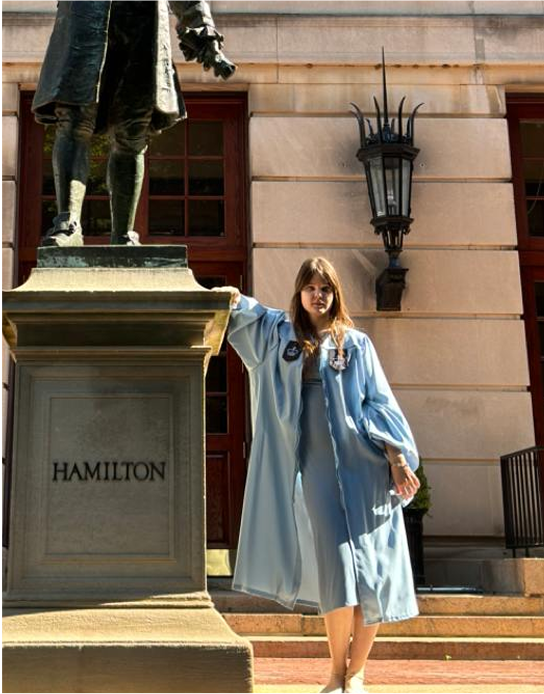
I was accepted to the PhD program at Columbia University on my first try, having strengthened my profile and compiled my achievements into a strong application.
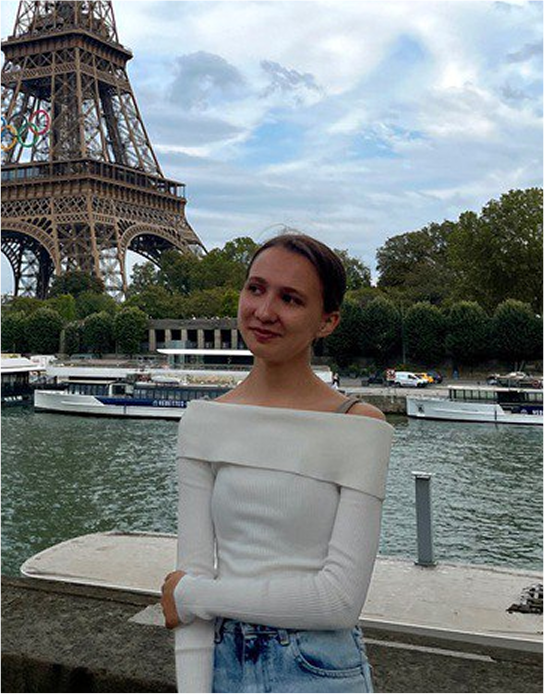
She enrolled in graphic design at universities in France, Italy and Hungary. She received scholarships at all of them and chose the university with the maximum funding — $135,000 for the entire period of study.

She entered graduate school at Kent State University and Ohio University. At Ohio University, she won a Graduate Teaching Assistantship with full funding of $37,774, covering tuition, insurance, and living expenses.

He entered Siena Heights University (USA) for the Theater and Music program with a full scholarship of $170,000. Preparation took less than a year.

Got accepted to NYU Abu Dhabi on the first try (acceptance rate 4%) with a scholarship of $217,000. Also received offers from Lynn and Drexel University.




Leave your contacts — our consultant will get in touch
