


 Deadlines, Exams, and Scholarships: Your Guide to Studying in the USA, Europe, and Asia


She enrolled in Fashion PR programs at five US universities


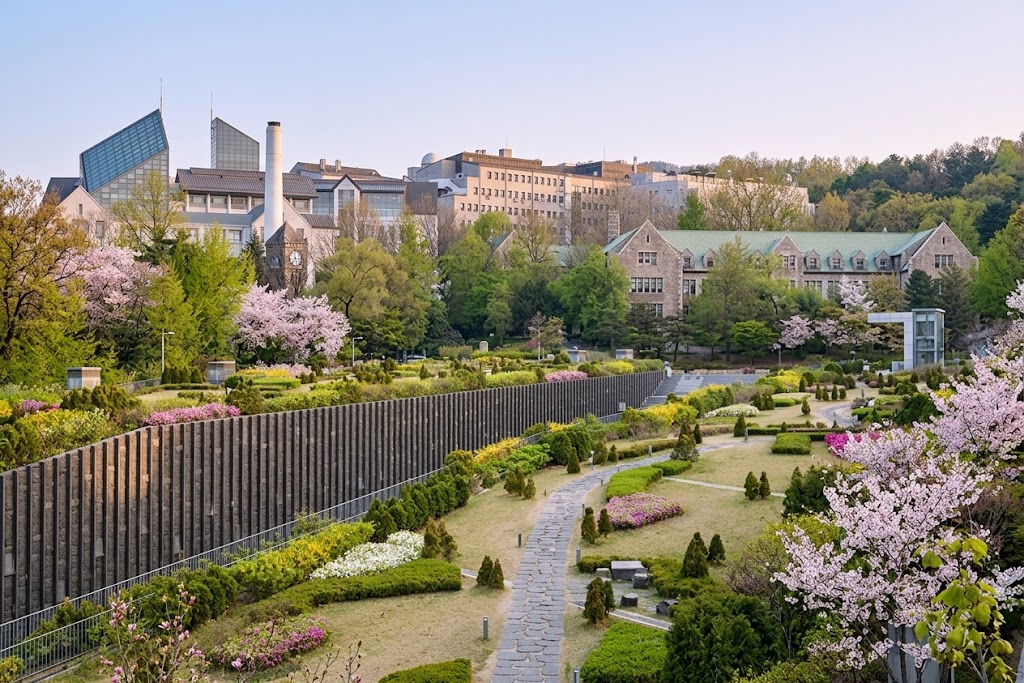
Seoul, South Korea · Ewha Womans University is the world's largest women's university, founded in Seoul in 1886. In 1946, it became the first institution of higher education in South Korea to receive government accreditation. Today, it is a private research university with over 16,000 female students, 11 colleges, 15 graduate schools, and 66 research institutes. According to the university itself, Ewha produces the highest number of female executives among Korea's top 100 companies. Its alumnae include Park Geun-hye, South Korea's first female president. For international students with no knowledge of Korean, the Division of International Studies (DIS) offers a direct pathway to a full bachelor's degree program taught in English in Seoul.
The history of Ewha Womans University begins in 1886, when the American missionary Mary F. Scranton began giving lessons to women in Seoul — then the capital of the Korean kingdom. The name “Ewha” (이화) means “Pear Tree Flower”; the word “Womans” in the singular is a deliberate decision that emphasizes the individuality of each student. The university was named by the Korean king Gojong himself.
From the first 15 female students in 1910, the university grew into one of the most recognizable universities in Asia. In 1946, Ewha became the first university in South Korea to receive state accreditation. In 2007, it founded Scranton College — the first undergraduate program in Korea with an independently designed specialization.
The campus is located in the Seodaemun‑gu district in the western part of Seoul, a few minutes’ walk from the Ewha Womans University metro station (Line 2). This means direct access to the business and cultural center of the Korean capital.
According to the university, Ewha is among the most prestigious universities in Korea, with nearly 25,000 female students, 987 faculty members, 11 colleges, 15 graduate programs, and 66 research institutes.
The cost depends on the faculty and the level of study. Approximate data (2024 academic year):
Registration fee: 150,000 KRW per semester — for all female students
Bachelor’s degree (standard faculties): 7,645,000–10,000,000 KRW per semester (~5,600–7,300 USD) — that is, approximately 15,000–20,000 USD per year
Medicine and pharmaceuticals: up to 12,896,000 KRW per semester (~9,400 USD)
Application fee: 150,000 KRW (~110 USD) — non‑refundable
Total: approximately 950,000–1,700,000 KRW (~700–1,250 USD) per month. All amounts are approximate; check the current rates on the official Ewha website.
Ewha unites 11 colleges. For international female students, it is fundamentally important to decide on the language of instruction from the very beginning — this directly affects the admission requirements.
There are 15 graduate schools operating at the master’s and doctoral levels. Some graduate programs accept students regardless of gender — the conditions need to be clarified for each specific program.
Ewha’s only fully English‑language undergraduate program. Areas of study: international relations, global economics, Asian studies. IELTS or TOEFL is required; knowledge of Korean is not mandatory. The main entry point for international female students without knowledge of Korean.
The first program in Korea with self‑designed specialization: the student creates a unique curriculum at the intersection of several disciplines. Scranton College was founded in 2007 and became the first undergraduate program in Korea with a self‑developed specialization. It is named after the university’s founder.
Korean, English, German, French, Spanish, Chinese, and Japanese literature, history, philosophy. Instruction in Korean; TOPIK is required.
Political science, economics, sociology, psychology, media communications, consumer sciences. Korean‑language programs.
Finance, marketing, international business, management. Popular among foreign female students — some courses are available in English, mandatory subjects are mainly in Korean.
Electronic engineering, computer science, chemical engineering, architecture and environmental design. Korean‑language programs with partial English courses.
Mathematics, physics, chemistry, biology, ecology. Korean‑language programs.
Medical and pharmaceutical colleges — with separate, significantly higher admission requirements and tuition costs. Instruction in Korean.
Pedagogical specialties, music college, college of art and design. For certain fields — audition or portfolio.
The Ewha campus is seamlessly integrated into the urban fabric of Seoul — in the Seodaemun‑gu district, a few minutes’ walk from the metro station (Line 2). Around the campus is a student district with cafes, shops, restaurants, cultural venues, and an internship market.
More than 100 student clubs operate on the campus: academic societies, cultural associations, sports teams, and creative groups. Ewha organizes cultural programs for international female students: introductory events, holidays, and trips.
Ewha Museum is one of the oldest university museums in Korea. Ewha Library is a large scientific library with an extensive electronic collection.
Dormitory accommodation is provided for international female students on campus. Cost: from 1,771,500 to 3,002,100 KRW per semester (~1,300–2,200 USD for 4–5 months). A place is not guaranteed automatically — a separate application must be submitted within the established deadlines.
The Career Development Center helps female students find internships, prepare CVs, and receive career counseling. Connections with Korean chaebols and international companies make it possible to start interning as early as the first year of study.
The first and key decision is choosing a language track. DIS (English) or the main program (Korean) are different tracks with different requirements, deadlines, and lists of documents.
Sets: spring (March) and autumn (September).
DIS — English: IELTS/TOEFL is required, Korean is not mandatory. Core programs — Korean: TOPIK is required.
Ewha publishes separate admission guides for the spring (March) and autumn (September) semesters. The requirements are updated annually — use only the current guide for the specific intake.
Certificate + transcript with an official translation, the applicant’s passport and the passports of both parents, language certificate, motivation letter, financial documents for a D‑2 visa. Apostille or consular legalization — depending on the country. This process takes 4–6 weeks: start early.
Through the official Ewha portal. Application fee — 150,000 KRW (~110 USD), non‑refundable. An application without payment will not be considered.
Music, visual arts, certain medical fields — audition or portfolio. For some programs — online interview. Check before submitting.
After enrollment: confirmation + financial documents + health insurance. Processing takes several weeks.

The applicant and both parents must have citizenship of a country other than Korea. The parents must have acquired non‑Korean citizenship before the applicant began studying in a program equivalent to a Korean high school.
Complete secondary education (12 years or equivalent)
TOPIK (specific level — according to the current admission guide; during studies: TOPIK 3 for professional courses, TOPIK 4 before graduation)
IELTS or TOEFL is required.
Motivational letter, financial documents; for creative and medical fields — a portfolio or an audition.
An important feature for applicants from post‑Soviet countries: in some CIS countries, full secondary education lasts 11 years. Ewha requires a 12‑year education — you need to clarify with the admissions office how the certificate will be counted. In some cases, an additional year of university study is accepted.
External programs:
POSCO Asia Fellowships — a full scholarship with a monthly payment of 1,000,000 KRW
Samsung Global Hope Scholarship — coverage of semester expenses
Global Korea Scholarship (GKS) is a government scholarship: full tuition + accommodation + monthly allowance + airfare. There are two routes: through the embassy or the university. The conditions, coverage scope, and deadlines for all scholarships must be checked for the current intake. It is best to prepare the scholarship application in parallel with the main documents.
According to the university itself, in 2013 Ewha ranked 1st among Korean universities in the CWTS Leiden Ranking and also produced the largest number of female leaders among the top 100 companies in Korea.
An Ewha diploma is one of the most recognizable among Korean employers in the fields of law, medicine, finance, and public administration. Graduates work at Samsung, LG, Hyundai, major law firms, government agencies, and international organizations.
Being located in Seoul provides direct access to internships and networking opportunities — the Career Development Center actively helps with finding positions in Korean chaebols and international companies.
In 2011, Ewha became the first Korean university to sign an agreement on university‑industry cooperation with the international chemical corporation Solvay, with a total investment of 21.5 million dollars.
According to the Nature Index (June 2025), Ewha ranks #505 in the academic sector.66 research institutes cover biomedicine, chemistry, materials science, educational sciences, and international studies. Undergraduate students can participate in research projects from their first year.
According to subject-specific rankings, Library & Information Management Ewha ranks #51 worldwide, which is one of the best subject-specific indicators among all the universities we have reviewed in this discipline.
Ewha Womans University is the largest women’s university in the world. Its history dates back to 1886, when missionary Mary Scranton began giving lessons to women in Seoul. The name “Ewha” means “blooming pear.”
In 1946, Ewha became the first university in South Korea to receive state accreditation.
Park Geun‑hye is the 11th President of the Republic of Korea and the country’s first female president; she is an alumnus of Ewha.
Scranton College was founded in 2007 as the first undergraduate program in Korea with a self‑developed specialization. It is named after the university’s founder.
The word “Womans” in the title is a deliberate spelling in the singular form. It emphasizes that each student is perceived as an individual.
Ewha was the first Korean university to sign a scientific cooperation agreement with Solvay Corporation, with an investment of $21.5 million.
Admission to Ewha requires choosing the right language trajectory, properly prepared documents, and a clear scholarship strategy.
At SelfStartGlobal, we help you build this process in a systematic way:
Our students have already received scholarships worth more than $35 million.
Want to enroll at Ewha Womans University and get the maximum financial support? Come to a free consultation. We’ll explain how it works in your specific case.
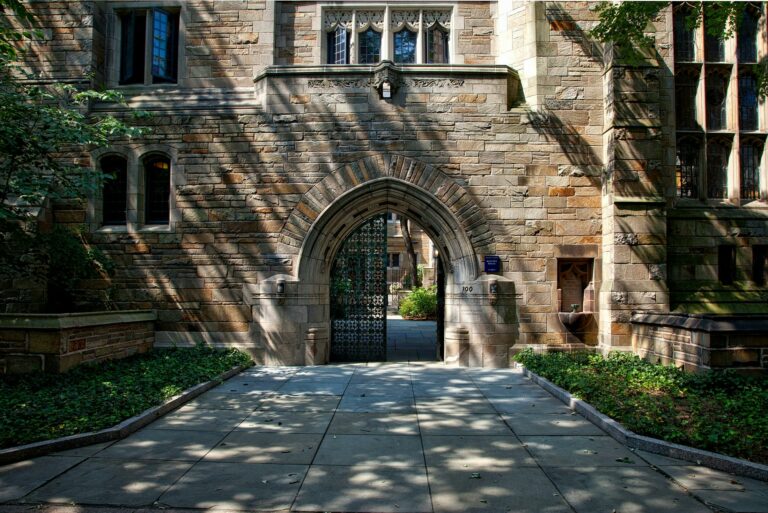



She enrolled in Fashion PR programs at five US universities

She was admitted to three American universities at once: Augustana College, Widener University, and the University of South Dakota. She chose Augustana College, where she received a scholarship of $45,000 per year.

He entered a master’s program in the USA at two universities at once – Brandeis University and Washington University in St. Louis, receiving scholarships totaling $80,000. He chose Brandeis University and went to study on the first try.
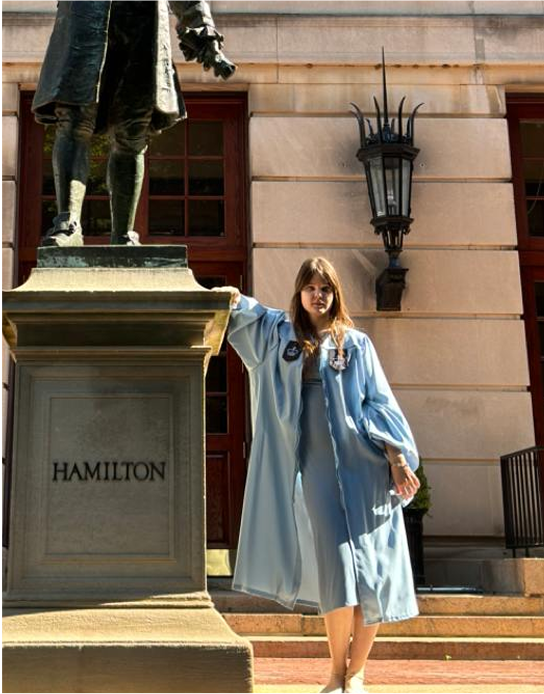
I was accepted to the PhD program at Columbia University on my first try, having strengthened my profile and compiled my achievements into a strong application.

She enrolled in graphic design at universities in France, Italy and Hungary. She received scholarships at all of them and chose the university with the maximum funding — $135,000 for the entire period of study.
She entered graduate school at Kent State University and Ohio University. At Ohio University, she won a Graduate Teaching Assistantship with full funding of $37,774, covering tuition, insurance, and living expenses.

He entered Siena Heights University (USA) for the Theater and Music program with a full scholarship of $170,000. Preparation took less than a year.

Got accepted to NYU Abu Dhabi on the first try (acceptance rate 4%) with a scholarship of $217,000. Also received offers from Lynn and Drexel University.
Leave your contacts — our consultant will get in touch
