


Head office: Netherlands, Haarlem+31 23 205 00 88hello@selfstartglobal.comTelegramWhatsApp

Erasmus University Rotterdam

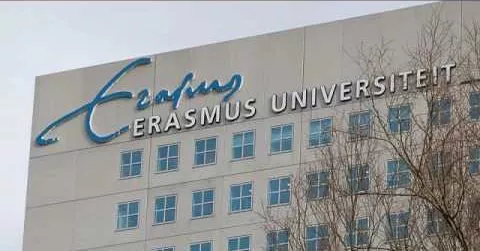
Rotterdam, Netherlands · Erasmus University Rotterdam is a renowned research university in the Netherlands, a favorite among applicants focused on economics, business, social sciences, and data analytics. The university is located in Rotterdam, one of Europe's most international and business-focused cities, home to major corporate headquarters, financial institutions, and logistics hubs. Admission to Erasmus University Rotterdam is open to both EU and non-EU students.
  • Bachelor's degree: €11,400 – €14,000 per year
  • Master's degree: €19,950 – €25,800 per year
  • PhD: around €8,000 per year
Apply to this university
Top 100 in the worldQS World University Rankings
Top 25 Private Universities in the USU.S. News

About the university

Princeton University was founded in 1746 and is one of the oldest and most prestigious universities in the United States. Located in Princeton, New Jersey, it is a member of the Ivy League, which unites elite educational institutions. The university provides funding for undergraduate and doctoral studies, and some master’s programs are completely free.

Degree of study
Bachelor's, Master's, Doctoral studies
Percentage of students accepted
6%
Probability of employment after training
about 84% of graduates find employment or continue their education within six months of graduation
Scholarships
a wide range of financial assistance for foreigners
Directions
a multidisciplinary university with a wide range of programs
Type
private university
Student body size
about 9,000 students
% of international students
12%
Student town
The location in the small American town of Princeton Limits cultural and entertainment opportunities compared to large cities, but the town's infrastructure is well developed and represents a whole student "city"

What makes Erasmus University Rotterdam special?

Erasmus University Rotterdam is located in the Netherlands, in Rotterdam—Europe’s largest port and one of the region’s key economic centers. Founded in 1913, the university is now among Europe’s leading research universities.

EUR’s core competencies include economics, business, management, social sciences, medicine, and data science. The university actively participates in international research and collaborates with European institutions and major corporations.

Erasmus University Rotterdam is well suited for those considering an academic career, work in international companies, consulting, finance, analytics, and public policy.

Degree of study
Bachelor's, Master's and PhD
Percentage of accepted students
50%, depending on the faculty and program
Probability of employment after training
After graduation, more than 90% of students find a job or enroll in graduate school within the first six months
Scholarships
Partial/targeted (including for foreign students subject to funding conditions) are available
Directions
Economics, business and management, law, social sciences, medicine and healthcare
Type
Public research university
Student building size
More than 28,000 students
% of international students
About 25-40%
Campus
Own dormitories, laboratories, startup incubators, sports infrastructure

Available programs

Bachelor’s degree
  • Economics, finance and management
  • Business and Management
  • Law and Legal Research
  • Social Sciences and Public Policy
  • Natural sciences and Biomedicine
Master’s degree
  • Economics, finance and management
  • Business and Management
  • Law and Legal Research
  • Social Sciences and Public Policy
  • Natural sciences and Biomedicine
Doctoral studies
  • Economics, finance and management
  • Business and Management
  • Law and Legal Research
  • Social Sciences and Public Policy
  • Natural sciences and Biomedicine

EUR and Rotterdam Universities: An Important Difference to Avoid Mistakes

One of the most common problems applicants face is confusion between the various universities in Rotterdam. Erasmus University Rotterdam and Rotterdam University of Applied Sciences are particularly often confused.

Erasmus University Rotterdam is an academic research university. It focuses on theory, science, analytics, and preparation for Master’s and PhD programs. Rotterdam University of Applied Sciences is a university of applied sciences. It is more focused on practical professions, applied programs, and rapid entry into the labor market.

The difference is fundamental:

  • EUR is suitable for academic and research tracks.
  • RUAS is for professional and applied programs.
  • Admission requirements, study formats, and career prospects differ significantly.

What do people usually mean when searching for “rotterdam university”? When users type “rotterdam university” or “rotterdam university,” they most often mean Erasmus University Rotterdam, but sometimes they end up on websites for applied universities.

Therefore, it is always important to check the full name of the university and the type of program to avoid submitting documents to the wrong place and receiving a completely different education format.

Why choose Erasmus University Rotterdam

Reputation and the international environment

Erasmus University Rotterdam is renowned for its strong international environment. Students from over 100 countries study at the university, and most programs are taught entirely in English.

EUR actively participates in European research consortia and collaborates with universities in Germany, France, the UK, and Scandinavia.

Strong areas and faculties

The most competitive programs at Erasmus University Rotterdam are:

- Economics and Economic Theory
- Business and Management
- Finance and Accounting
- Social Sciences
- Public Policy and Governance
- Data Science and Analytics
- Medical and Health Sciences

These are the fields in which EUR is most often chosen by applicants from around the world.

Careers and Internships in the Netherlands

Rotterdam is one of Europe's main business hubs, home to offices of international companies in logistics, finance, consulting, and trade.

For students, this means access to internships, part-time work, and professional contacts while still studying. It's important to consider the language factor and employment regulations for international students.

Want to know what actually fits you?

Leave your contacts — a consultant will review your profile and map out the shortest path to admission

Get a Consultation

Erasmus University Rotterdam: Tuition and Student Budget

Cost is a key issue when choosing the Netherlands as a study destination. Unlike the US or UK, education here is significantly cheaper, but it still requires financial planning.

A student’s budget in euros consists of two main components: tuition fees and living expenses. Mandatory items include:

  • program tuition
  • registration and administrative fees
  • rent
  • meals and transportation
  • health insurance
  • study materials

Even with relatively low tuition, living expenses account for a significant portion of the budget.

How do costs differ for EU/EEA and non-EU students?

In the Netherlands, there is a fundamental distinction. Students from EU countries pay significantly less, as part of their tuition is subsidized by the state. Non-EU students pay the full cost of the program. Below are approximate figures for the 2026–2027 academic year:

Tuition fee:

  • EU/EEA students: approximately €2,600–€2,700 per year for most programmes
  • Non-EU students: approximately €13,500–€14,000 per year for undergraduate programmes, €21,000-€25,800 per year for master’s and business programmes

Housing and living expenses:

  • Housing: approximately €800–€1,000 per month (including utilities), depending on the type of accommodation
  • Insurance: approximately €650–€800 per year
  • Food, transport, and other expenses: approximately €400–€600 per month

For students requiring a residence permit, the university requires proof of financial means, including living expenses of approximately €1,150 per month.

For EU students, tuition is relatively inexpensive (around €2,600 per year), while for non-EU students, tuition costs can be four to eight times higher. The total annual budget for a foreign student can easily exceed €20,000–30,000, especially for large programs and master’s degrees.

How to apply to Erasmus University Rotterdam: requirements and documents

Admission to Erasmus University Rotterdam is fairly straightforward, but it varies greatly depending on the specific program. There’s no single “template” for all universities in the Netherlands, so you should always check the requirements on the page for your chosen program.

In general, EUR admissions evaluates not only formal criteria but also the applicant’s profile and the chosen program.

Academic requirements
The main criteria are academic performance and the relevance of previous education. For undergraduate programs, it is important that the school curriculum corresponds to the level of preparation recognized in the Netherlands. For master's programs, it is crucial that the degree profile matches the chosen program.
English level
Most programs at Erasmus University Rotterdam are taught in English. Admission requires proof of English proficiency, most commonly through IELTS or TOEFL.
Motivation letter, CV, recommendations, portfolio
A motivation letter plays a key role, especially for master's programs. This is where the admissions committee assesses whether the candidate understands the purpose of the program and how it fits into their career plan. A CV should highlight not only their education but also practical experience, internships, projects, and volunteer work. Recommendations and a portfolio may be required for certain programs, particularly in business, analytics, and social sciences.
Deadlines and Applications: How to Avoid Wasting a Year
One of the most common mistakes is missing deadlines. In the Netherlands, most programs close quite early, especially for non-EU students who still need time to secure a visa and accommodation. On average, it's best to apply at least 9-12 months before the start of your studies. Applying late almost always reduces your chances and limits your access to funding.

Scholarships and funding at Erasmus University Rotterdam

Although studying in the Netherlands is cheaper than in the US or UK, funding remains a critical issue for many families.

What types of funding are available:

University scholarships

The NL Scholarship is a state-funded partial scholarship (often around €5,000–€10,000 for the first year of study) for students from outside the EEA. These national grants help cover tuition or part of the costs.

European programs

Erasmus+ Grant is a European grant for internships and studies abroad (as part of exchange programmes), with payments depending on the host country and travel allowance coverage.

Private and corporate foundations/external grants

The university provides access to a number of external funds and programs (for internships, research, and exchange):

  • A.A. van Beek Funds, Cultural Agreements, and Cultuurfonds – assistance for study abroad;
  • Fulbright Center, ICWA Fellow Scholarship – international opportunities for master’s students/researchers;
  • International Mobility Grant, as well as grants and funds from the student’s home countries (e.g., BECAS MOB Mexico, COLFUTURO, CSC for Chinese PhDs, GETFund, etc.).

University scholarships

The Erasmus School of Economics Scholarship offers a partial tuition fee reduction (approximately €10,000 for top non-EEA undergraduate students, reducing tuition fees). It’s highly competitive

The Erasmus Trustfonds Scholarship provides partial funding for Master’s programs (approximately €17,500, covering part of the tuition and living expenses).
The university also offers an Emergency Fund for students with temporary financial difficulties and Board grants for members of student organizations

A step-by-step plan to prepare for admission to EUR in 6–18 months

Preparing for Erasmus University Rotterdam requires a systematic approach and time:

12–18 months: strategy, program selection, profile strengthening

At this stage, the foundation of the future application is formed:

  • defining goals and priority areas
  • selecting programs and universities
  • participation in projects and internships
  • development of an academic and professional profile
6–9 months: tests, draft documents, list of scholarships

The active phase begins:

  • IELTS/TOEFL preparation
  • writing initial versions of motivation letters
  • CV preparation
  • gathering information about scholarships
1–3 months: final submission

Final stage:

  • Proofreading all documents
  • Checking requirements for each program
  • Submitting applications
  • Deadline monitoring
Interviews and additional materials

Some programs may require an interview or portfolio, especially at the Master’s and PhD levels.

Common reasons for refusal and how to avoid them

Even strong candidates are regularly rejected. The reasons are usually similar and consistent, for example:

  • incorrectly chosen program and profile mismatch
  • weak motivation without specific goals
  • lack of proven achievements
  • late start of preparation
  • errors in documents and formalities
  • ignoring EU/Non-EU status
  • lack of a funding strategy

Each of these issues can be corrected with an early start and competent support.

How SelfStartGlobal helps you apply to Erasmus University Rotterdam

We assist with admission to European, American, and Asian universities using a proprietary methodology. Our experts begin with a profile assessment, then develop an admissions strategy, help select programs, strengthen the profile through projects, and properly prepare documents.

Our work includes:

  • analysis of the candidate’s strengths and weaknesses
  • selection of programs based on goals and budget
  • preparation of motivation letters and CVs
  • financing strategy
  • support until the desired outcome

Our goal is to create a strong, competitive candidate image that will stand out from hundreds of other applications.

Get a Consultation

Related articles

Get a free consultation

Leave your contacts — our consultant will get in touch

    How should we contact you?