





 Study Abroad: How to Apply and What to Expect After Graduation



Service payment
Fill out the form and continue to payment via Stripe

USA, Massachusetts, Cambridge · For many applicants, the word Harvard is practically synonymous with "impossible." In fact, getting into Harvard University is possible; this school annually opens its doors to talented and motivated students from all over the world. Yes, an invitation from Harvard is the result of a well-thought-out strategy: a strong academic foundation, a compelling essay, a well-compiled application package, and an understanding of how the Harvard admissions system works. When our experts are asked, "Is it possible to get into Harvard?" they honestly answer, "Yes, it is!" It's difficult, and the competition is fierce, but for candidates with a strong profile and competent support, this goal is achievable, and admission is possible with a partial or full scholarship.

Princeton University was founded in 1746 and is one of the oldest and most prestigious universities in the United States. Located in Princeton, New Jersey, it is a member of the Ivy League, which unites elite educational institutions. The university provides funding for undergraduate and doctoral studies, and some master’s programs are completely free.
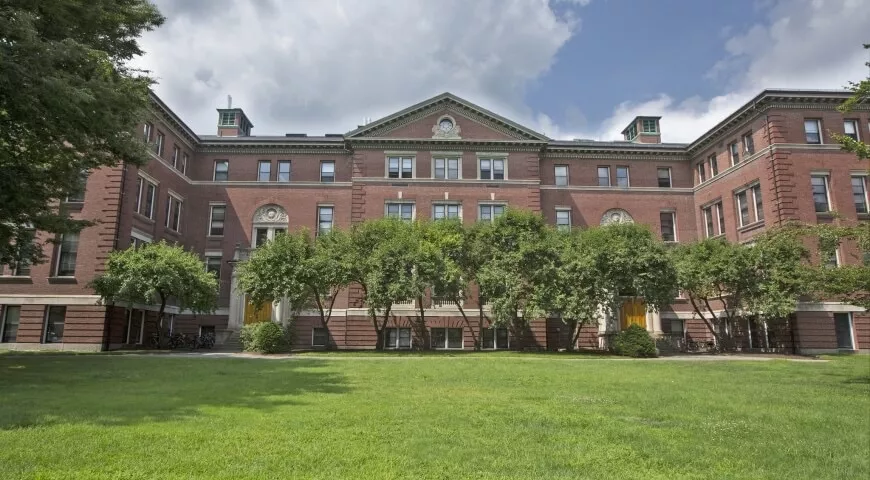
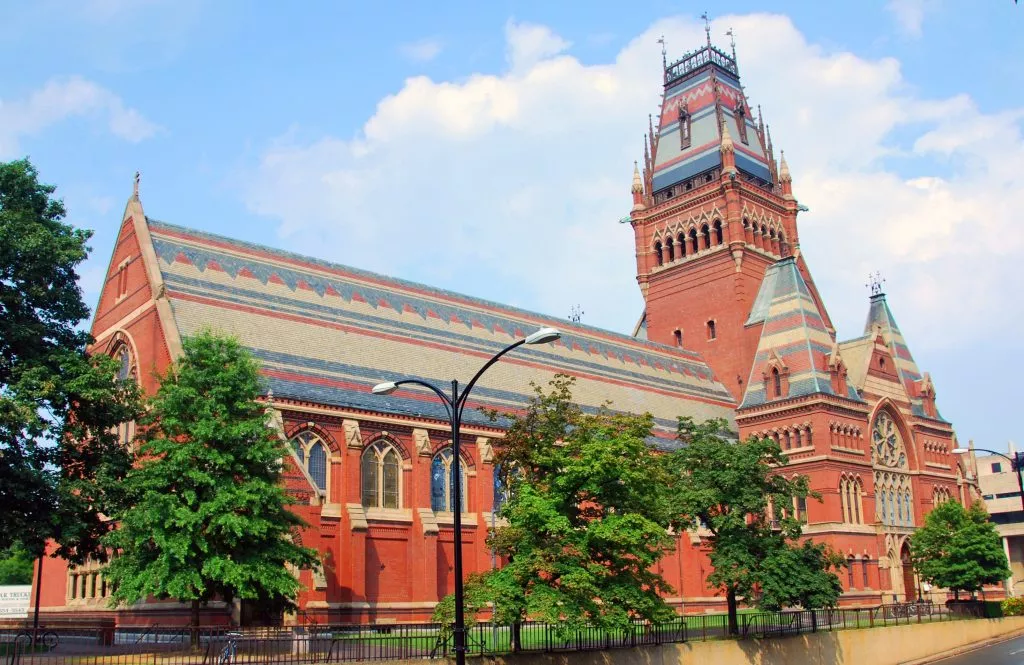
Harvard University is one of the oldest and most prestigious in the world. Founded in 1636, it is a member of the Ivy League, a group of the highest-ranked US universities. Its campus is located in Cambridge, Massachusetts.
Harvard’s alumni are renowned worldwide. U.S. presidents, founders of major companies and corporations, Nobel laureates, leaders of international organizations, and Supreme Court justices have studied here.
Here are a few more reasons why a Harvard degree is considered the benchmark:
Programs are constantly updated, and students work with the latest and most current research.
Laboratories, public policy centers, and business incubators set trends in science, economics, and education.
Harvard University alumni create a powerful community around the world, providing valuable contacts, internships, and career opportunities.
Attending Harvard University means gaining access to the best resources and radically changing the trajectory of your life.
The question “How to get into Harvard” seems overwhelming until you break it down. The step-by-step admissions process looks like this:
First, you need to decide on your level of study:
Admission to Harvard requires a high GPA, placements in academic competitions and Olympiads, participation in, and possibly the creation of research projects. Let’s be honest—A’s alone aren’t enough; it’s important to demonstrate who you are, your goals, and your plans for studying at your chosen university.
Undergraduate programs typically require the SAT/ACT, TOEFL, or IELTS. Graduate programs typically require the GMAT, GRE, LSAT, and other tests, depending on the program.
The admissions committee needs to understand who you are as a person: what you believe in, what problems you want to solve, and what you’re already doing to achieve them. A motivational essay is a story about you. The answer to the question “How to get into Harvard University” depends 50% on how you tell your story.
In addition to the essay, you will need a resume, a portfolio (not for all programs), and letters of recommendation from people who actually know you: teachers, academic supervisors, and employers.
Applications must be submitted through the Harvard Admissions Portal. Some stages involve an interview with an alumnus or university representative, where the applicant’s motivation, maturity, and potential are assessed.
For undergraduate studies at Harvard College, the following are traditionally considered: GPA (grade point average) from your high school diploma or transcript; SAT or ACT (general academic test).
For graduate and professional schools: GRE (for master's and PhD programs); GMAT (for some Harvard Business School programs); LSAT (for Harvard Law School).
TOEFL/IELTS for international students.
Letters of recommendation that highlight your success, dedication, and leadership qualities.
The main document that reveals your personal history, demonstrates your goals and ambitions.
Demonstrates your real achievements, experience and developments.
It’s impossible to say for sure whether Harvard has a passing score, as there’s no universal “minimum.” However, the average scores of admitted students are usually in the top 5-10% of all applicants. This means you should aim for very high scores.
The logical next question is: “Can I get into Harvard on a budget?” There’s no traditional “budget” system, like in some countries. However, there is a need-based financial aid system, through which the university can cover up to 100% of tuition and living expenses.
Important! Aid is calculated individually, taking into account family income, number of children, country of residence, and other factors.
This means that a student with a strong academic profile and a strong application can enroll at Harvard and pay significantly less tuition or even study for free.
We help our students:
There are cases where students from families with typical incomes received 80% to 100% of their funding at Harvard.

How much does it cost to study at Harvard? Officially, the annual undergraduate tuition at Harvard ranges from $55,000 to $65,000. Additional expenses include:
In total, the cost of studying at Harvard without financial aid can reach $75,000 to $80,000 per year. This is a significant sum, and for this reason, we often receive inquiries about admission to Harvard on a scholarship or, as we’ve already discussed, on a scholarship.
Harvard is a network of faculties and schools. The university offers over 140 programs of study, including undergraduate, graduate, and PhD programs.
Popular Harvard University faculties:
Economics, biology, computer science, history, psychology, international relations and others.
Prepares researchers and managers in the field of education.
One of the most prestigious business schools in the world, it trains future entrepreneurs and leaders of major corporations.
Graduates serve as U.S. Supreme Court justices and attorney generals around the world.
A flagship in medical research, biotechnology and public health.
Future ministers, diplomats and UN experts are trained here.
Studying at Harvard for a master’s degree is a dream for many. Programs are designed for those who already have a bachelor’s degree and want to advance in academia, business, science, or public administration.
Harvard Master’s Program Features:
Popular master’s programs:
Harvard’s master’s degree is valued not only for its high-quality education but also for its social mobility. Graduates gain access to a global alumni network and career opportunities at world-class corporations such as Google, Goldman Sachs, and the UN.
You can study at Harvard without leaving your home country. Harvard Extension School, an official division of the university, offers distance learning.
Harvard Extension School programs include:
This opportunity is suitable for students who want to experience a Harvard education in practice, improve their English, and strengthen their portfolio for application to the main program.
Cambridge is a small town with a lot of energy. The spirit of scholarship is literally in the air: on Harvard’s campus, you’ll find students from all over the world, and MIT is just down the street.
What makes student life unique here:
Studying at Harvard University is a place where students learn to think big and have the opportunity to choose their future.

Leave your contacts — our consultant will get in touch
