



Why STEM Applications Should Start with Choosing a Career Direction
Время чтения:
0 мин
0 мин


 Singapore
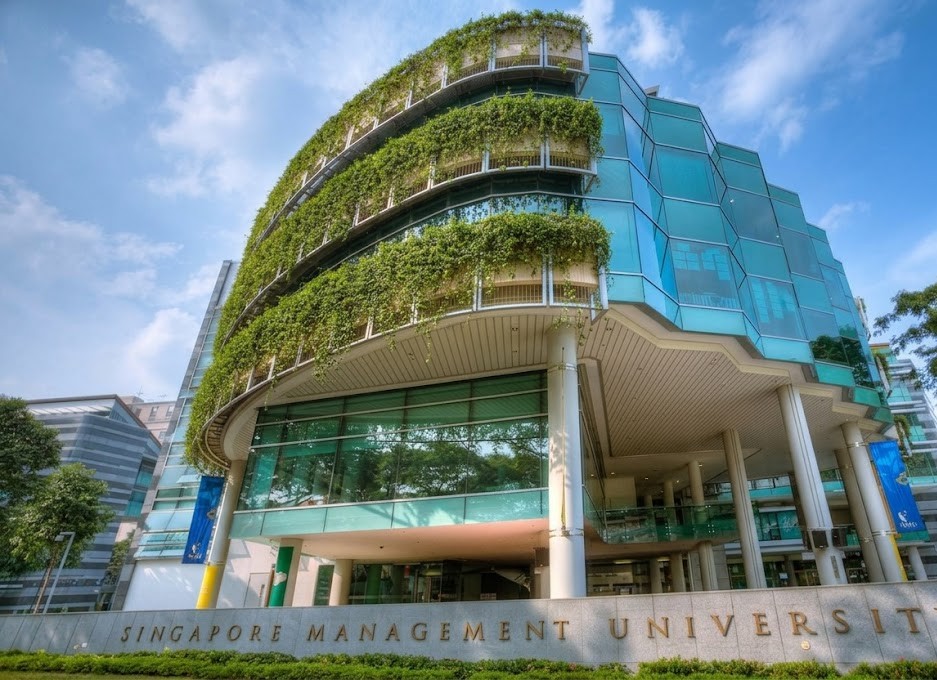
 Singapore Management University (SMU) is a public university in Singapore, founded in 2000. It is the youngest of the country's three leading autonomous universities and the only one built from the ground up as a specialized university focusing on business and law. In March 2026, SMU was recognized as the most improved university in the world among institutions with 10+ ranked subject areas (QS Subject Rankings 2026): eight out of ten subjects rose in the global rankings. SMU focuses on specific areas—business, finance, economics, law, information systems, and computer science—and in these areas, it competes with the best universities in the world.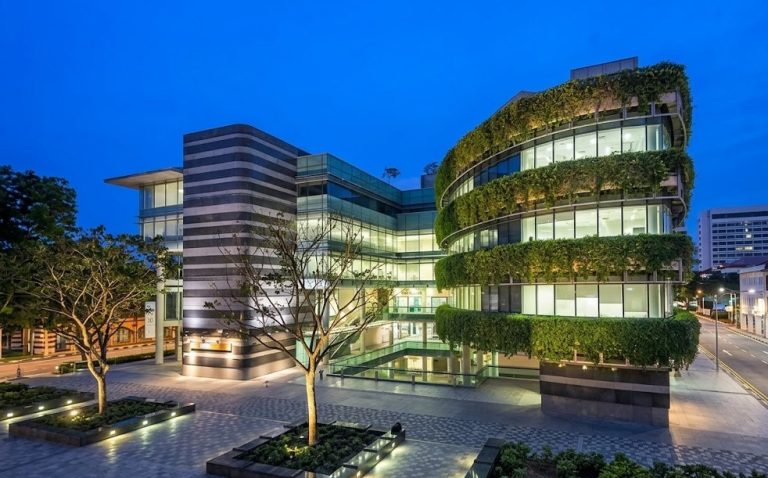
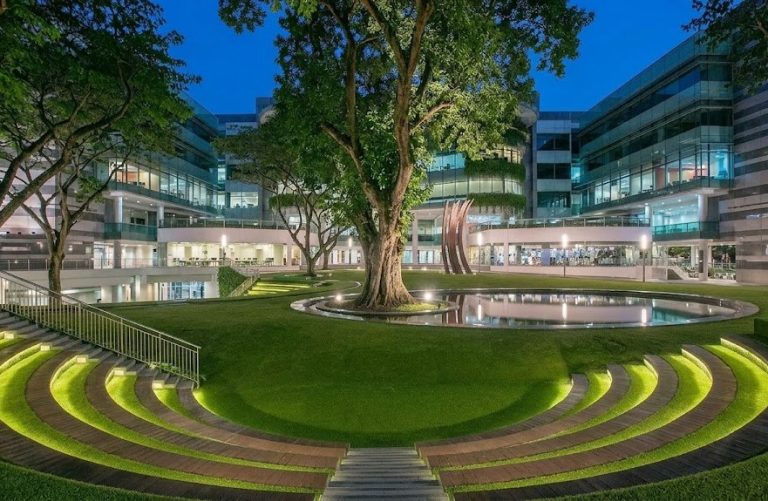
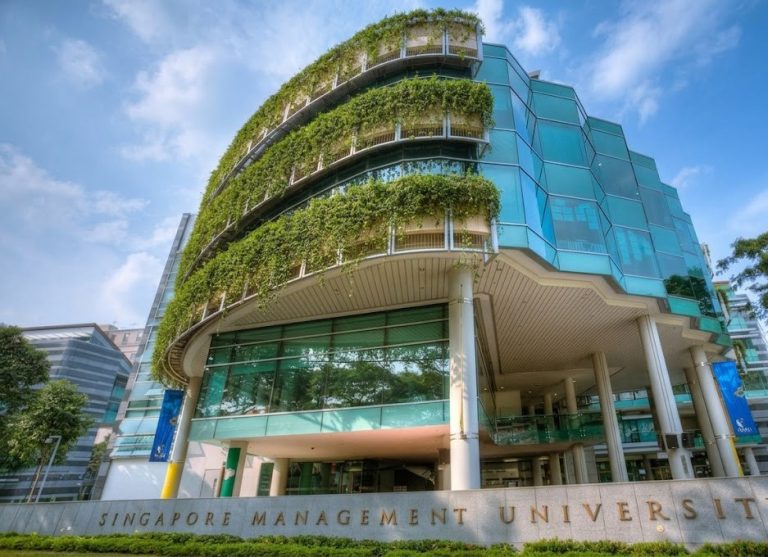
Singapore Management University was founded in 2000 with the support of the Government of Singapore and The Wharton School (University of Pennsylvania) as a specialized business university. Over the past 25 years, SMU has become one of the leading universities in Asia in its key fields: according to the QS Subject Rankings 2016, it is among the world’s top 60 in four subjects simultaneously — Business & Management, Accounting & Finance, Economics & Econometrics and Law.
SMU’s city campus is located in the business heart of Singapore — near Marina Bay, Raffles Place, and the country’s largest financial institutions. From the academic buildings, you can see the offices of Goldman Sachs, JP Morgan, KPMG, and other companies that deliberately recruit SMU graduates. This is not a metaphor — it is a key competitive advantage.
SMU uses a seminar format of teaching in small groups (a maximum of 45 students) instead of traditional lecture‑based classes. This develops communication skills, critical thinking, and the ability to work in a team — qualities that are especially in demand in business and law.
| Degree of study | bachelor's degree, master's degree, PhD |
| Year of foundation | 2000 — the youngest of Singapore’s leading universities. |
| Type of university | a public university, specialized (business, law, technology) |
| Language of instruction | English — for all programs |
| Key areas | business, finance, economics, law, information systems, computer science |
| Scholarships | SMU International Scholarship, ASEAN Undergraduate Scholarship, MOE Tuition Grant (competitive selection) |
| Student body size | Approximately 11,500 students (9,144 bachelor’s students + 2,477 graduate students) |
| % of international students | about 8% at the bachelor’s level; 58% at the postgraduate level |
| Campus | The city campus in the center of Singapore is within walking distance of the financial and business district |
Bachelor’s degree with MOE Tuition Grant: 26,200 SGD per year — a single rate for all non‑Law undergraduate programmes (unlike NUS and NTU, where the cost varies by faculty)
Bachelor’s degree without MOE Grant: significantly higher; check the official SMU website for details
Master’s degree: MBA — 65,000 -75,000 SGD for the full course; MSc Finance — about 40,000 – 50,000 SGD; other MSc — according to the program
Doctoral studies: Most PhD programs are funded through government grants
Mandatory annual fee: 290 SGD — for all students, regardless of financial aid
SMU unites eight schools:

SMU’s flagship school. Bachelor’s degree in Business Management with specializations in: management, marketing, organizational behavior and HR, strategy and entrepreneurship. QS 2026 Business & Management: #39 in the world, top‑40 globally.
A specialized accounting program with a focus on auditing, taxation, and corporate governance. QS 2026 Accounting & Finance: #50 in the world, top 50 globally.
Economic theory, econometrics, public policy. QS 2026 Economics & Econometrics: top 60 in the world.
One of the two law schools in Singapore. QS 2026 Law: #56 in the world — an increase of 45 positions in one year, the best result among all law programs in Singapore in this cycle. The LL.B. program is competitive, with a separate admission process and interview.
Information systems, computer science, data management. Particularly strong at the intersection of technology and business: fintech, consulting, data management, entrepreneurship.
MBA, Executive MBA, MSc Finance (#33 в мире, QA, 2025), Master in Business Analytics.
Interdisciplinary programs for candidates with non‑standard academic interests at the intersection of several disciplines.
PhD programs in key academic fields.
SMU’s city campus is a fundamental difference from NUS and NTU. Instead of a large green campus on the outskirts of the city, there are several academic buildings right in the heart of Singapore, near City Hall and the National Museum. There are no separate student dormitories — most students live in city apartments.
This creates a unique student environment: classes end, and you’re already in Singapore’s business district. Many SMU students start internships in their 1st or 2nd year precisely because of this proximity to employers. Financial, legal, and consulting companies in the region recruit on campus in the literal sense — some offices are within a 5‑minute walk.
100% of students have the opportunity to participate in international exchange programs — partnerships with more than 200 universities around the world. The seminar format (small groups of up to 45 people) creates a close‑knit academic community, despite the urban location.
It is recommended to start preparation 4–5 months before the deadline.
Online application via the SMU Admissions portal. Main deadline: February–March for the August intake. SMU considers international qualifications: A-Level, IB, SAT, and national certificates.
A mandatory element for most undergraduate programs. This is a fundamental difference from NUS and NTU: SMU assesses communication skills, motivation, and leadership potential directly. Preparing for the interview is part of the admission strategy.
Bachelor’s degree diploma with transcript, CV, essay (statement of purpose), letters of recommendation (usually two). For MBA: GMAT or GRE + a minimum of 2 years of work experience. Language requirements: IELTS 6.5–7.0 or TOEFL 100+ iBT.
It is funded through government subsidies; the duration is typically 4 years.
The competition is high, especially for Law and Business. SMU is looking for students with a clear profile: not “broad interests,” but specific motivation and an understanding of why SMU is the right choice for them.
The MOE Tuition Grant at SMU is a competitive selection process, not an automatic right, as in NUS/NTU. SMU explicitly states that the number of grants for international students is limited, and the selection is based on academic achievements. Accepting the grant requires working for 3 years for a company registered in Singapore (ACRA). SOA is signed in October before the start of the academic year.
What really affects the chances: strong academic results in core subjects, a compelling interview with clear motivation, real leadership and extracurricular experience, and a concrete understanding of why SMU and this particular program are the right choice.
SMU International Scholarship is a key scholarship for international undergraduate students. Criteria: strong academic results, personal qualities, co‑curricular achievements, and financial need. It may cover the full or partial cost of tuition, taking into account the MOE Tuition Grant. It is considered automatically during the admission process; shortlisted candidates undergo an interview.
ASEAN Undergraduate Scholarship is for citizens of ASEAN countries (excluding citizens of Singapore). Criteria: outstanding academic results, leadership potential, co‑curricular achievements.
Sectoral and corporate scholarships — from SMU partners in the fields of finance, technology, and consulting. Availability depends on citizenship and profile.
MOE Tuition Grant — a government subsidy that reduces tuition fees. At SMU: competitive selection with a limited number of places for international students; a 3‑year work commitment in Singapore; SGD 26,200 per year with a grant for non‑Law undergraduate programmes.
SMU’s city campus provides direct access to employers in Singapore’s financial district while students are still in the process of their studies. Goldman Sachs, JP Morgan, KPMG, Deloitte, McKinsey, BCG — all of them actively recruit SMU graduates.
QS Master in Finance 2025: #33 in the world — SMU finance graduates work in investment banking, asset management, and corporate finance across the region. The seminar format of training develops communication and teamwork skills, which are especially highly valued in consulting and the financial sector.
Singapore is the regional headquarters for hundreds of global corporations. For SMU graduates, this means a career start in an environment where finance, law, and technology intersect in one place.

SMU was founded with the support of The Wharton School (University of Pennsylvania) — one of the best business schools in the world. This defined the university’s academic DNA from its earliest days.
In March 2026, SMU was officially recognized as the most improved university in the world according to the QS Subject Rankings — a rare distinction for any university, especially one with a 25‑year history.
The seminar format with groups of up to 45 students is a unique feature of SMU among all the universities considered in our series. Neither NUS, nor NTU, nor any of the American universities apply this systematically to all bachelor’s degree programs.
100% of students have the opportunity to participate in international exchange programs — this is one of the highest rates among Asian universities.
SMU is the only university in Singapore that has located its entire campus in the city’s business center: its closest competitors — NUS and NTU — are located on the outskirts. This is a deliberate strategic decision that integrates the business environment into the educational process.
Yong Pung How School of Law is celebrating its 20th anniversary in the 2026–2027 academic year — and it was this year that it rose 45 places in the global ranking, reaching #56.
Getting into SMU is not just about good grades. It’s about having a clear personal brand, a strong interview, and the right application strategy. At SelfStartGlobal, we help you build all of this in a systematic way:
Our students have already received scholarships worth more than $35 million.
If you want to enroll at Singapore Management University, come to a free consultation. We’ll explain how it works in your specific case.

She enrolled in Fashion PR programs at five US universities

He entered a master’s program in the USA at two universities at once – Brandeis University and Washington University in St. Louis, receiving scholarships totaling $80,000. He chose Brandeis University and went to study on the first try.

She was admitted to three American universities at once: Augustana College, Widener University, and the University of South Dakota. She chose Augustana College, where she received a scholarship of $45,000 per year.

I was accepted to the PhD program at Columbia University on my first try, having strengthened my profile and compiled my achievements into a strong application.
She enrolled in graphic design at universities in France, Italy and Hungary. She received scholarships at all of them and chose the university with the maximum funding — $135,000 for the entire period of study.

He entered Siena Heights University (USA) for the Theater and Music program with a full scholarship of $170,000. Preparation took less than a year.

She entered graduate school at Kent State University and Ohio University. At Ohio University, she won a Graduate Teaching Assistantship with full funding of $37,774, covering tuition, insurance, and living expenses.

Got accepted to NYU Abu Dhabi on the first try (acceptance rate 4%) with a scholarship of $217,000. Also received offers from Lynn and Drexel University.