




 7 steps to guarantee your admission to a university abroad


She enrolled in Fashion PR programs at five US universities


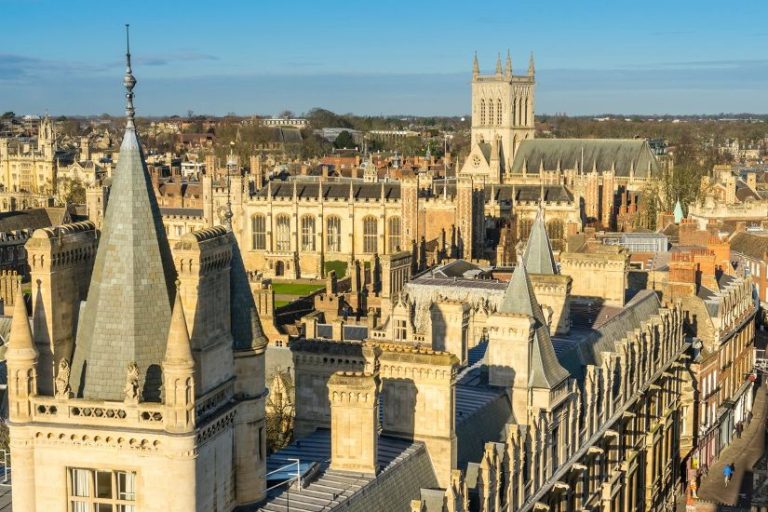
Philadelphia, Pennsylvania, USA · The University of Pennsylvania (UPenn) is one of eight Ivy League universities, founded in 1740 by Benjamin Franklin. It is the only Ivy League university originally conceived as a practical institution: Franklin created it to prepare people capable of solving real-world problems. In the US News Class of 2026 ranking, UPenn ranked #7 among national universities, moving up three spots from last year. The acceptance rate for the Class of 2029 was a record-low 4.87%. Getting into UPenn is challenging, but for those who prepare systematically, it is a realistic goal.
The University of Pennsylvania is located in the western part of Philadelphia. The campus covers 299 acres, including the so-called Locust Walk, a pedestrian alley that surrounds the main academic buildings. The architecture is eclectic, ranging from Georgian historic buildings to modern research complexes. Philadelphia is an important center for medicine, finance, pharmaceuticals, and law, and New York City is an hour away by Amtrak.
UPenn is one of the most productive research universities in the Ivy League. The annual volume of external research funding exceeds $1.4 billion. It was here that the mRNA technology was developed, which formed the basis for the next generation of vaccines against COVID-19. This development is a clear example of UPenn’s corporate identity: academic rigor coupled with practical application.
The main distinguishing feature of UPenn is the Wharton School, the world’s first business school at a university (founded in 1881). Wharton is ranked in the top 3 globally by most rankings and is the only Ivy League institution that offers a full-fledged business specialization at the undergraduate level.
Notable alumni include Elon Musk (entrepreneur, Tesla and SpaceX), Noam Chomsky (linguist and philosopher, BA/MA/PhD, all from UPenn), Warren Buffett (studied at Wharton from 1947 to 1949), Donald Trump (45th President of the United States, Wharton, 1968), and Andrea Mitchell (NBC News anchor).
Official data confirmed by the Penn Board of Trustees (March 2026):
Bachelor’s degree: $73,978 per year (tuition $65,670 + fees $8,308, 2026-2027)
Bachelor’s degree + accommodation and meals: $94,582 per year (tuition + fees + room $13,644 + meal plan $6,960)
Master’s: depends on the program – Wharton MBA is about $90,000 per year; Penn Law is about $80,000 per year; Graduate School of Education and other programs are between $35,000 and $65,000 per year
Doctoral: Most PhD programs are fully funded – scholarship, tuition coverage, and insurance
UPenn brings together 12 professional schools:
The UPenn campus is seamlessly integrated into the western part of Philadelphia, with no fences or enclosed areas. The Locust Walk connects the academic buildings into a single pedestrian route, lined with cafes, bookstores, and student spaces. The University City neighborhood, popular among students from all over Philadelphia, is located near the campus.
Penn guarantees housing for all first-year students for four years. Students live in University College Houses, residential communities with academic programs, mentorships, and cultural events. There are more than 600 student organizations on campus, including student-run investment funds, entrepreneurial clubs, debate societies, cultural associations, and volunteer organizations. Wharton provides a particularly vibrant business student environment.
Undergraduate students participate in real-world research projects through the Penn Undergraduate Research Mentoring Program (PURM). The proximity to New York (an hour by train) and the presence of major employers in Philadelphia, such as Johnson & Johnson, Comcast, and Lincoln Financial Group, offer ample opportunities for internships.
UPenn accepts about 4.87% of applicants (class of 2029 — 72,544 applications, a record-breaking pool in Penn history). Applications are submitted through the Common App.
A student enrolls in a specific school: Wharton, College of Arts and Sciences, School of Engineering and Applied Science, School of Nursing. Each school has its own criteria. If you are interested in a double degree (for example, Wharton + Engineering), you must specify this when applying.
Full transcript, GPA, and course difficulty. Mathematics and STEM courses are particularly important for Wharton and Engineering.
Common App essays + Penn’s own questions, including “why UPenn and this particular school.” For Wharton, separate essay questions focused on business understanding and leadership experience.
Two from subject teachers, and one from the class teacher.
Starting with the class of 2030, UPenn has reinstated the mandatory SAT or ACT test, and the test-optional policy has been discontinued. The average SAT score of accepted students is 1500-1580, and the average ACT score is 34-36.
For Wharton, entrepreneurial thinking, business competitions, and financial projects. For medicine, volunteering in medical facilities and research work.
Early Decision — until November 1 (binding). Regular Decision — until January 4. ED gives a statistical advantage: the historical acceptance rate for ED is about 12–14% compared to 2–3% for RD.

According to the official website srfs.upenn.edu, "financial aid resources for international undergraduate students are limited, and Penn practices need-aware admissions for students who are [international]." This means that for international applicants who request financial aid, the family's financial situation will be considered in the admissions process. Penn is need-aware for international students, unlike Harvard, Yale, Princeton, MIT, Dartmouth, Northwestern, Brown, and Amherst. At the same time, all accepted international students who have been enrolled with a request for assistance receive 100% coverage of their needs without loans.
International applicants are required to submit transcripts with translation, TOEFL (100+ iBT) or IELTS (7.0+), essays, and letters of recommendation. Interviews are conducted at the university’s discretion or at the applicant’s request.
UPenn provides $347 million in financial aid each year for undergraduate students (+3.8% from last year). The university covers 100% of the verified financial need without loans, a policy that has been in place since 2008.
Key parameters (2026-2027):
The median salary for UPenn graduates after six years is $90,555 per year (US News), one of the highest among all the universities reviewed. Wharton students traditionally receive offers from Goldman Sachs, JPMorgan, McKinsey, Bain, and BCG before graduating from undergraduate school.
UPenn’s alumni network spans over 375,000 individuals worldwide. The dual degree system produces graduates with a unique profile at the intersection of business, technology, or medicine, which is highly valued by employers in the financial sector and biotechnology. Philadelphia is a major center for pharmaceuticals (Johnson & Johnson, Merck, GlaxoSmithKline) and medicine, and it is an hour away from New York by train.
A key discovery in recent years related to UPenn is the development of mRNA technology in the Perelman School of Medicine’s laboratories. Catalin Carico and Drew Weissman, who worked at Penn, received the 2023 Nobel Prize in Medicine for their discovery, which laid the foundation for COVID-19 vaccines and ushered in a new era in drug development.
UPenn attracts over $1.4 billion in external research funding annually. Penn Medicine, one of the leading medical complexes in the United States, combines a clinic and a research base into a single structure. Key centers include the Penn Center for Innovation, the Penn Institute for Urban Research, and the Leonard Davis Institute of Health Economics.
UPenn is the only Ivy League university founded not by a religious organization, but by a secular thinker, Benjamin Franklin (1740). His slogan, “Without virtue and freedom, there is no happiness,” is still the official motto of Penn.
Wharton School (1881) is the oldest business school in the world and the only Ivy League business school with a full bachelor’s degree.
The dual degree system is Penn’s institutional practice that allows students to study at two schools simultaneously: for example, Wharton + Engineering, or Nursing + Arts & Sciences.
The 2023 Nobel Prize in Medicine was awarded to Penn scientists Katalin Karikó and Drew Weissman for their development of mRNA technology. This is one of the most practically significant scientific discoveries of the 21st century.
Penn is one of the few Ivy League universities that announced a record-breaking number of applications (72,544 for the class of 2029) while simultaneously having a record-low acceptance rate (4.87%).
Noam Chomsky, one of the most widely cited scholars in history, earned all three degrees (BA, MA, and PhD) from the University of Pennsylvania.
Admission to UPenn requires a clear strategy: choosing the right school, well-thought-out essays with a focus on a specific program, and a well-structured financial application. At SelfStartGlobal, we help you:
Our students have already received scholarships worth more than $35 million.
If you want to apply to the University of Pennsylvania and receive maximum financial support, come for a free consultation. We will tell you how it works in your specific case.

She enrolled in Fashion PR programs at five US universities

She was admitted to three American universities at once: Augustana College, Widener University, and the University of South Dakota. She chose Augustana College, where she received a scholarship of $45,000 per year.

He entered a master’s program in the USA at two universities at once – Brandeis University and Washington University in St. Louis, receiving scholarships totaling $80,000. He chose Brandeis University and went to study on the first try.
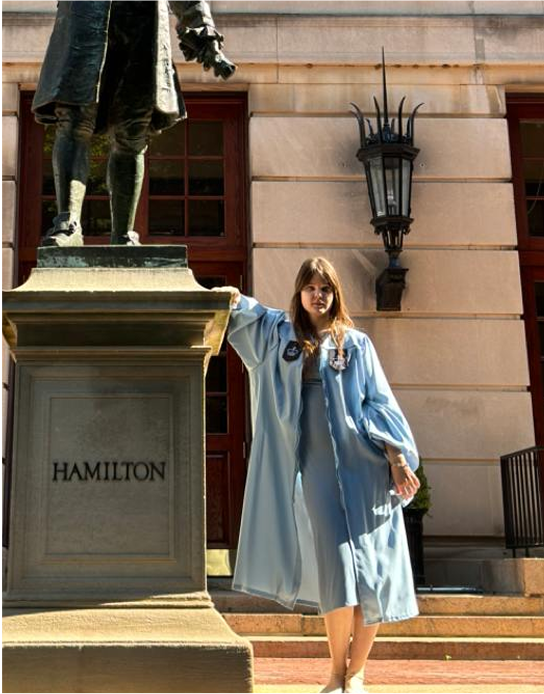
I was accepted to the PhD program at Columbia University on my first try, having strengthened my profile and compiled my achievements into a strong application.
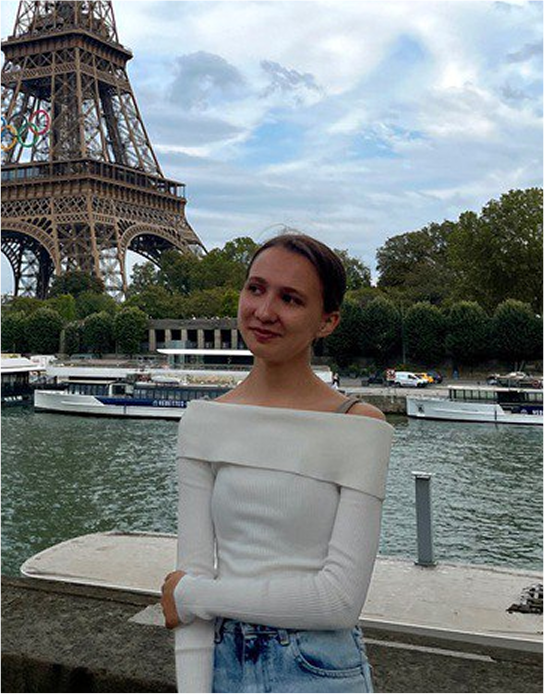
She enrolled in graphic design at universities in France, Italy and Hungary. She received scholarships at all of them and chose the university with the maximum funding — $135,000 for the entire period of study.

She entered graduate school at Kent State University and Ohio University. At Ohio University, she won a Graduate Teaching Assistantship with full funding of $37,774, covering tuition, insurance, and living expenses.

He entered Siena Heights University (USA) for the Theater and Music program with a full scholarship of $170,000. Preparation took less than a year.

Got accepted to NYU Abu Dhabi on the first try (acceptance rate 4%) with a scholarship of $217,000. Also received offers from Lynn and Drexel University.

Leave your contacts — our consultant will get in touch
