


Which US universities can you enter without the SAT and ACT?

The SAT and ACT used to be mandatory. That’s changed. Now, it’s possible to get into the Ivy League or top public universities in the US without the SAT!
Universities’ approach to assessing applicants has changed. Admissions committees understand that a short exam doesn’t reveal a person’s full talents. Universities have begun setting their own requirements: completely waiving test scores or submitting scores voluntarily.

Get a Consultation

Is it possible to get into a US university without the SAT and ACT?

You can apply to a prestigious university without test scores. The university will then carefully review your remaining documents. To decide whether to waive the exam, evaluate your high school grades and the quality of your portfolio in advance. Currently, admissions policies in the US vary, from completely waiving test scores to voluntarily submitting them.

What are test-optional, test-blind, and test-flexible?

To effectively develop a strategy, it’s important to clearly distinguish between three key terms that define university testing policies.

Test-optional

This is the most popular category. Test-optional US universities allow applicants to choose whether to submit SAT or ACT scores. If you’re satisfied with your test score, it should be included with your application. If your score is low or you’ve decided not to take the exam at all, you can submit your application without it. The university undertakes not to penalize you for missing scores and will consider your application equally with others.

Test-blind

This policy is even more radical. At test-blind US universities, admissions committees categorically do not consider standardized test scores, even if you submit them. Your scores will not be visible to the decision-making officer. This equalizes the applicants’ chances.

Test-flexible

In some cases, universities are flexible. This means they may accept other metrics instead of the SAT/ACT. For example, AP (Advanced Placement) exam results, IB (International Baccalaureate) results, or high scores on national final exams in your country.

What types of US universities can you apply to without the SAT and ACT?

Liberal Arts Colleges

Liberal arts colleges often implement progressive admissions systems. They prioritize the student’s personality and contribution to the community. US colleges in this category, which do not require the SAT or ACT, emphasize essays and interviews.

Private Universities with Flexible Policies

Large private universities, such as the University of Chicago or NYU, have flexible policies. They want to attract talented students from different countries. They understand that international applicants often struggle to find resources to prepare for exams. Eliminating tests helps applicants gain admission on equal terms with others.

Public Universities

The rules here vary greatly. For example, the University of California (UC) system has switched to a test-blind policy. Universities in Florida and Georgia may still require tests. Check the current requirements for your specific campus.

Community Colleges

Admission to community colleges in the US without the ACT or SAT is standard practice. Tests are not required, and after two years of study, students can transfer to a prestigious four-year university with American grades, not just high school test scores.

Who is the SAT/ACT-free admission strategy really for?

It’s important to understand: waiving tests is a strategic decision. This strategy is ideal for:

  • Students with a very high grade point average (GPA).
  • Applicants with a unique extracurricular profile.
  • Those who experience significant exam stress—if your knowledge is objectively superior to what you demonstrate under tight test timing.

In such cases, applying to the US without standardized tests is justified: you don’t waste time studying for the test, but focus on the quality of your essays and projects.

When is it better to take the SAT or ACT?

Despite the universities’ leniency, a high SAT score remains a powerful tool. You should take the test if:

  1. Your GPA is lower than desired and you need to prove your academic worth.
  2. You are applying for scholarships in the US without the SAT or ACT at universities where merit-based aid is tied to academic achievement.
  3. You are attending a school with an unknown or poor reputation. A high SAT score will confirm your grades on your transcript.

What becomes especially important in an application without the SAT and ACT

When test scores are removed from the equation, the weight of the remaining components increases. To understand how to strengthen your application without the SAT, consider the following:

Academic performance

GPA is becoming the primary indicator. The admissions committee will look not only at your overall score but also at the difficulty of your chosen courses. If you took challenging courses and mastered them, this is your best argument.

Extracurricular activities

Extracurricular activities should be active. Club leadership, volunteering, personal projects, and winning competitions—all of this should demonstrate that you’re a part of society.

Essay

The Personal Statement and supplementary questions are your voice. Without tests, your essay must be flawless. This is your chance to tell your story and explain why you’re a good fit for this university.

Recommendations

Teacher reviews provide important information to the admissions committee. Universities want to know how you conduct yourself in the classroom, whether you think critically, and whether you work in a team.

Is it possible to get a scholarship without the SAT and ACT?

The stereotype that tests are required to qualify for funding is a myth. You can receive financial aid even without the SAT and ACT.

  • Need-based aid: Need-based aid is not dependent on test scores at all. Universities like Harvard award funds based on your family’s income.
  • Merit-based scholarships: Merit-based scholarships may require you to provide scores. However, more and more universities are considering them as optional.

How to Choose US Universities If You Don't Take the SAT and ACT

When compiling your list of universities, follow this algorithm:

  • Check the rules. Make sure the university doesn’t require tests for international students. Rules for domestic and international students vary.
  • Analyze the statistics. Find out how many admitted students submitted applications without scores (the university’s Common Data Set). If 80% of admitted students submitted scores, it might be worth looking for a more flexible institution.
  • Evaluate grants and funding. Look for universities that openly state that the lack of test-taking doesn’t affect grant distribution.

Want to know what actually fits you?

Leave your contacts — a consultant will review your profile and map out the shortest path to admission

Get a Consultation

Mistakes Applicants Make When Applying Without the SAT and ACT

Test-optional admissions (TAOs) are often mistakenly considered an easy path to college admissions in the USA. In reality, this approach requires significant preparation. Let’s look at the main mistakes applicants make:

Expecting simple requirements. Without SAT scores, universities evaluate your school grades and essays more strictly. The requirements for the quality of your documents only increase.

Outdated information. Admissions policies may change annually. It is important to check the current requirements on the university website before each application.

A weak portfolio. If you don’t have exam results, you must stand out through other achievements. Your application must demonstrate a unique talent or leadership qualities.

How to Improve Your Chances of Admission to the US Without Standardized Tests

Here’s a checklist for strengthening your application without using tests:

  • Start early. Begin preparing your documents and portfolio at least eighteen months to two years before admission.
  • Develop a project. Focus on one unique achievement or hobby that will set you apart from others.
  • Work on your essay. Carefully review every sentence in your texts to ensure they fully reveal your personality.
  • Balance your list. Choose universities of varying levels that value personal qualities, not just numbers.

Who can benefit from the Community College and Transfer pathway?

If you’re unsure of your English or academic skills, two-year US colleges without SAT and ACT scores are an ideal starting point. They’re cheaper and easier to apply for, and offer the opportunity to transfer to a top university after two years. SAT scores are not required for the transfer system, as success at the college itself is more important.

Want to know which US universities are best for you to apply to without the SAT or ACT?

Applying to America is a complex process where every step requires careful consideration. If you’re unsure whether the SAT is necessary for admission to the US or how to create a competitive list of universities without unnecessary exams, we can help:

  • Assess your current profile (GPA and activity level).
  • Choose a list of universities with a test-optional policy that works in your favor.
  • Develop a scholarship strategy without the SAT/ACT.
  • Create outstanding essays that will set you apart from thousands of applicants.

Schedule a consultation today to build your personalized path to an American degree!
Universities

USA
A private research university in the United States, founded in 1636. Considered one of the most prestigious universities in the world, it is known for its strong programs in law, business, medicine, engineering, and social sciences, its high student selection rate, and its robust financial aid system.
Bachelor's degree: $80,000 – $87,000 per yearMaster's degree: $62,000 - $70,000 per yearDoctoral studies: from $30,000 - $60,000 per year
USA
A prestigious Ivy League university located in the heart of New York City. Offers strong programs in business, journalism, international relations, and engineering, as well as broad career opportunities
Bachelor's degree: about $60,000 per yearMaster's degree: average $58,000 per yearDoctoral studies: free*
USA
The University of Michigan at Ann Arbor is the "Michigan" people usually think of when they think of one of the strongest public universities in the United States.
USA
Bachelor's degree: $62,982/yearMaster's degree: $43,000/yearPhD: $40,000 - $60,000/year
USA
USA
A leading U.S. research university and a global leader in medicine, biotechnology, and international relations. Distinguished by a strong focus on research, practice, and interdisciplinary studies
Bachelor's degree: $63,340 per yearMaster's degree: $65,956 per yearDoctoral studies: about $65,000 per year
USA
Georgetown University is a prestigious private research university in Washington, DC, USA, known for its strong programs in international relations, business, law, politics and social sciences, with a vibrant international student environment and a campus in the historic Georgetown district.
Bachelor's degree: $74,520/yearMaster's degree: $60,000–68,000/yearPhD: $33,000–35,000/year
USA
The University of North Carolina at Chapel Hill, or UNC Chapel Hill for short, is one of the most renowned public research universities in the United States.
South Korea
Seoul National University is South Korea’s leading national university, founded in 1946 by the merger of ten educational institutions in Seoul. It is part of the unofficial SKY trio, along with Korea University and Yonsei University. It attracts international students with strong programs in engineering, computer science, natural sciences, pharmacy, and international studies.
Bachelor's degree: $4,700 to $6,500 per yearMaster's degree: from $5,500 to $8,000 per yearDoctoral studies: from $4,500 to $7,000 per year
USA
Brown University is often called the most liberal university in the Ivy League—there are no required general education courses, and students design their own curriculum. This attracts applicants seeking not just a prestigious degree, but also the opportunity to pursue an unconventional academic path. The competition is also one of the most competitive in the…
Bachelor's degree: $74,568 per yearMaster's degree: from $9,320 per course (approximately $74,560 per year with a standard course load of 8 courses)Doctoral degree: from $9,320 per course (approximately $74,560 per year for a standard 8-course course load)
USA
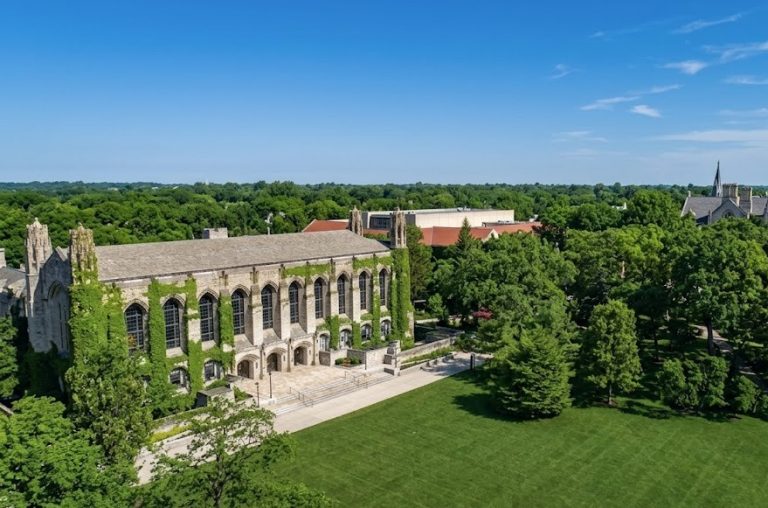
Northwestern University is one of the leading private research universities in the United States, located in Evanston, a 20-minute drive from Chicago. This combines a university environment with full access to the opportunities of one of North America’s largest business and cultural centers. Northwestern is particularly renowned for its programs in journalism, engineering, music, and…
Bachelor's degree: $69,375 per yearMaster's degree: from $62,000 to $82,000Doctoral studies: Most PhD programs are fully funded
USA
University of California, Los Angeles is one of the best public universities in the USA and the world. UCLA receives more applications than any other university in the country: more than 145,000 applicants annually — more than the combined contingent of all Ivy League universities. The location in Los Angeles gives students unique access to…
Undergraduate: $55,976 per hourMaster's degree: from $17,550 to $32,652 per hourDoctoral studies: most PhD programs are fully funded
USA
Stanford University is one of the three or four best universities in the world according to all key ratings. Located in the heart of Silicon Valley, 50 kilometers from San Francisco. It was here that Google, Netflix, Yahoo, HP, LinkedIn, Instagram were founded – Stanford graduates and students changed the way the modern world is…
Bachelor's degree: $64,890 per hourMaster's degree: about $64,890Doctoral studies: most PhD programs are fully funded

Countries

USA

A popular destination for studying abroad. Prestigious universities, a flexible education system, a wide selection of programs, and broad career prospects
Related articles

Get a free consultation

Leave your contacts — our consultant will get in touch