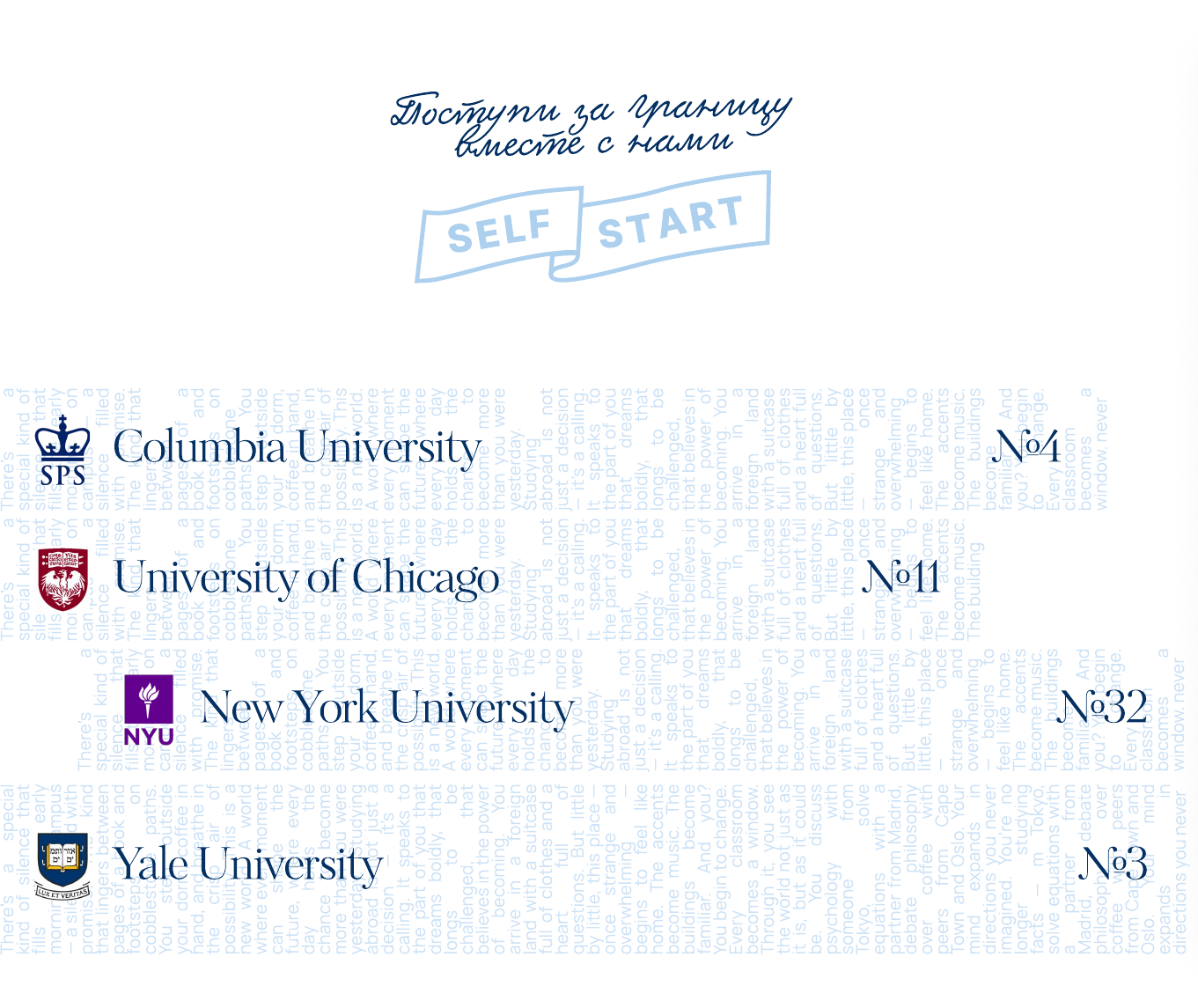
Top 4 universitiesU.S. News & World Report
Top 29 research universitiesForbes
A little about the University of Virginia (UVA)
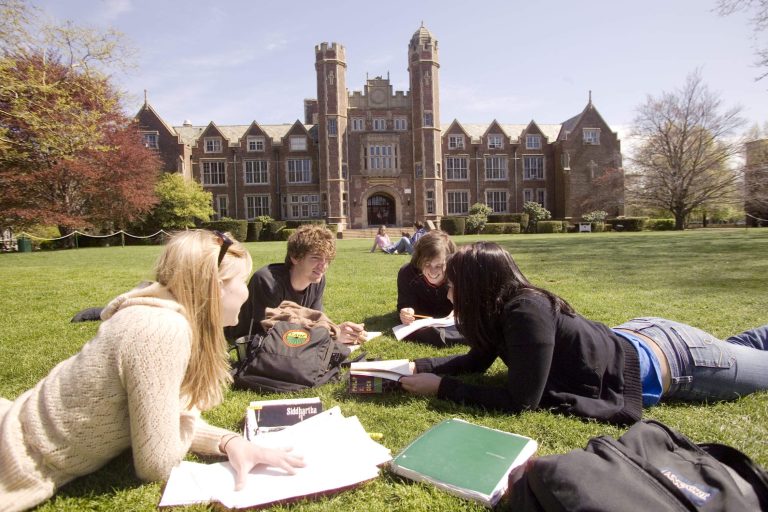
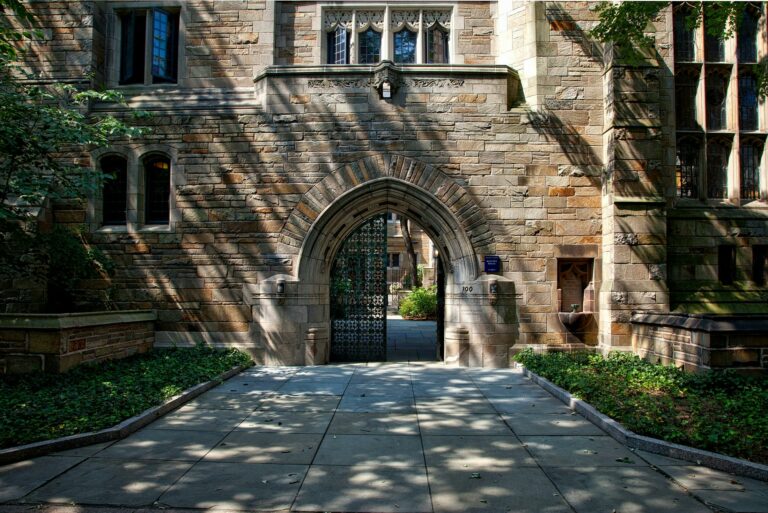
The University of Virginia is located in Charlottesville, Virginia. It is a traditional campus university, where most students live and study in a single environment: academic buildings, libraries, residence halls, research centers, and athletic facilities are all located on the same campus.
UVA is a public research university. This means it is state-funded, actively engages in research projects, and enrolls a large number of students at both undergraduate, graduate, and doctoral levels.
The university is suitable for those who:
- plan to continue their education in an academic environment;
- want a strong foundation for a career in the US or international companies;
- are considering programs where analytical skills and research experience are essential.
UVA is often chosen by students seeking a balance between a high-quality education, an active student life, and internship opportunities.
Degree of study
Bachelor's, Master's, Doctoral studies
Percentage of accepted students
16,81%
Probability of employment after training
According to a 2024 study, 96% of graduates were successfully employed or in further education within three months of graduation.
Scholarships
Scholarships are available for international students that cover part or all of their tuition fees.
Directions
The University of Virginia offers a broad range of academic programs, integrating fundamental research in the humanities and sciences with applied professional training in business, engineering, law, medicine, and architecture.
Type
state research university
Student body size
26,409 students
% of international students
about 8.4%
Student town
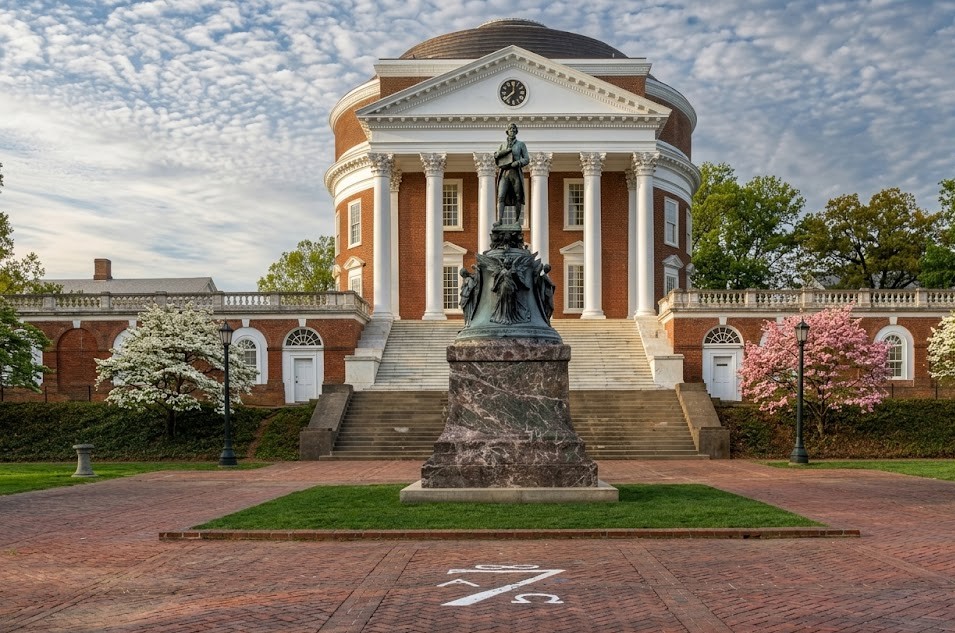
A UNESCO World Heritage Site designed by Thomas Jefferson, the complex combines neoclassical buildings, intimate gardens, and a central lawn.
Available programs
Bachelor’s degree- Business and Management
- Economics, finance and management
- Law and Legal Research
- Engineering
- Social Sciences and Public Policy
Master’s degree- Business and Management
- Economics, finance and management
- Law and Legal Research
- Engineering
- Social Sciences and Public Policy
Doctoral studies- Business and Management
- Economics, finance and management
- Law and Legal Research
- Engineering
- Social Sciences and Public Policy
Why Choose the University of Virginia
Academic reputation and student environment
The University of Virginia is known for its strong academic culture. The focus here is not only on lectures but also on student participation in projects, research, and discussions. Many programs are built around small group work, which allows for increased feedback from faculty.
The student environment at UVA is quite competitive, and students are expected to demonstrate initiative, independence, and a willingness to work on long-term projects.
Popular areas of study
The most popular areas of study at UVA are:
- Business and economics;
- Law and pre-law;
- Public policy and international relations;
- Social sciences;
- Engineering and computer science;
- Natural sciences and the medical track.
These fields are in demand not only within the university but also in the labor market, making UVA attractive for careers after graduation.
Careers and Internships
The University of Virginia actively engages with employers. Many students complete internships during their studies, and some graduates remain in the United States or continue their studies in top master’s and PhD programs. Career opportunities largely depend on the student: their participation in projects, their proactive approach, their choice of internships, and their ability to build professional networks.
UVA's Majors and Schools: What to Choose
The University of Virginia consists of several schools and colleges, each with its own focus. Choosing a school is important because requirements and curriculum can vary greatly.
Basic schools and colleges
The most common programs at UVA are:
- College of Arts & Sciences — humanities and natural sciences;
- McIntire School of Commerce — business and finance;
- School of Engineering and Applied Science — engineering and technology;
- School of Education and Human Development — education and psychology;
- School of Public Policy — public administration and policy.
Each school prioritizes its own specialization. For example, business and economics schools look at analytical skills and projects, engineering schools look at technical background, and social science schools look at research interests and data skills.
How to choose a program
When choosing a program, it’s important to consider not only prestige but also realistic parameters:
- personal interests and strengths;
- subjects already studied at school or university;
- specific program requirements;
- study format and workload;
- career goals after graduation;
- budget and funding options.
A common mistake is choosing a program based on rankings, without understanding how it fits with previous experience and future plans.
University of Virginia Tuition and Student Budget
Financial considerations are a key factor when applying to UVA, especially for international students.
Even if tuition seems reasonable, housing and living expenses can account for a significant portion of the budget.
For Virginia residents, the cost is lower, as part of the costs are covered by state taxes. Non-residents and international students are charged a different rate, which can be significantly higher. This is standard practice at most public universities in the US.
A student’s final budget consists of several components:
Student budget
Tuition — basic tuition;
mandatory university fees;
accommodation (dormitory or rent);
meals;
health insurance;
transportation and personal expenses.
Scholarships and Funding: How to Reduce the Cost of Tuition
For most international students, studying at the University of Virginia without financial aid is a significant investment. Therefore, scholarships and grants should be considered separately.
At UVA, you’ll encounter two main types of support. The first is need-based aid, which is calculated based on the family’s financial situation. The second is merit-based, which awards scholarships for achievements, both academic and extracurricular.
In addition to university programs, there are external foundations and private organizations that provide grants for study in the United States. These grants typically provide partial coverage, but when combined with other sources, they can significantly reduce the final budget.
Want to know what actually fits you?
Leave your contacts — a consultant will review your profile and map out the shortest path to admission

How to Apply to the University of Virginia (UVA): Requirements and Documents
Admission to UVA is highly competitive. It’s important to understand that it’s not just the student’s grade that is evaluated, but also their overall academic and personal profile.
Academic requirements and profileUVA evaluates high school or university grades in the context of the program’s complexity. Not only the GPA is important, but also the course load, academic performance, and the presence of advanced courses.
Additional advantages include:
- participation in Olympiads and competitions;
- research projects;
- relevant courses outside of high school or university;
- academic publications or conferences.
Exams and languageSAT or ACT requirements depend on the university’s current policies and specific programs. These rules are subject to change, so it’s always important to check UVA’s official websites.
For international students, proof of English proficiency through TOEFL, IELTS, or equivalent tests remains mandatory. Both the score and overall language proficiency, demonstrated through essays and recommendations, are important.
Essays and activitiesThe essay is one of the key elements of the application. It’s where the committee understands who you are as a candidate and why you want to apply to UVA.
Strong essays typically:
- show real-world experience rather than abstract goals;
- explain the connection between your past and your future program;
- demonstrate initiative and responsibility;
- don’t appear as a one-size-fits-all template.
Extracurricular activities also play a role if they are related to your chosen program or demonstrate leadership and independence.
Recommendations and additional materialsLetters of recommendation should highlight your strengths. One strong recommendation from a professor who knows you personally is better than three neutral ones from “famous” people.
Some programs may also request a portfolio, written work, or an interview. These requirements are always individual.
A step-by-step plan to prepare for admission in 12–24 months
For 18-24 months
At this stage, a strategy is formed. A direction is defined, requirements are analyzed, and a profile is developed through projects, research, and academic activities.
In 9-12 months
The paperwork begins. Tests are taken, initial essays are written, recommendations are collected, and a list of programs and potential scholarships is compiled.
1–3 months before the deadline
Final proofreading of all materials, compliance checks, applications are submitted, and technical details are checked.
Why are strong applicants rejected?
Even good candidates are regularly rejected.
The most common situations include:
- a weak application history and lack of a clear positioning;
- a mismatch between the chosen program’s activities and the chosen program;
- an essay lacking specifics and personal context;
- a late start to preparation;
- formal errors in the documents;
- unrealistic funding expectations;
- superficial references.
How SelfStartGlobal Helps You Get into the University of Virginia
First, we conduct a profile assessment and evaluate your chances. Then, we develop a personalized plan: which areas are suitable, which elements need to be strengthened, which projects are worth adding.
Next, we work with documents: essays, CVs, recommendations, and additional materials. We also develop a funding and budget optimization strategy.
We continue to support you until you achieve your goals and help you avoid the common mistakes made by independent applicants.
Submit a request for a free consultation and receive a personalized roadmap for admission to this or any other university worldwide with a scholarship.
FAQ: Questions and Answers
Are UVA and UvA the same thing?No, they are different universities: UVA is in the USA, UvA is in Amsterdam.
Where is the University of Virginia located?The university is located in Charlottesville, Virginia.
How much does tuition cost for foreigners?The cost varies by program and status, but is higher for non-residents than for state residents.
Is it possible to enroll without perfect grades?Yes, if the profile as a whole is strong and the application is well-structured.
Do you need the SAT or ACT now?Requirements vary depending on current university and program policies.
What are the most popular destinations?Business, economics, law, public policy, engineering and social sciences.
When is the best time to start preparing?Optimally, 12–24 months before the planned admission.
Is it possible to get funding?Yes, but this is a separate competition and requires a strong strategy.







 Business Management: What is this specialty, what jobs are available, and how to apply for the program?