




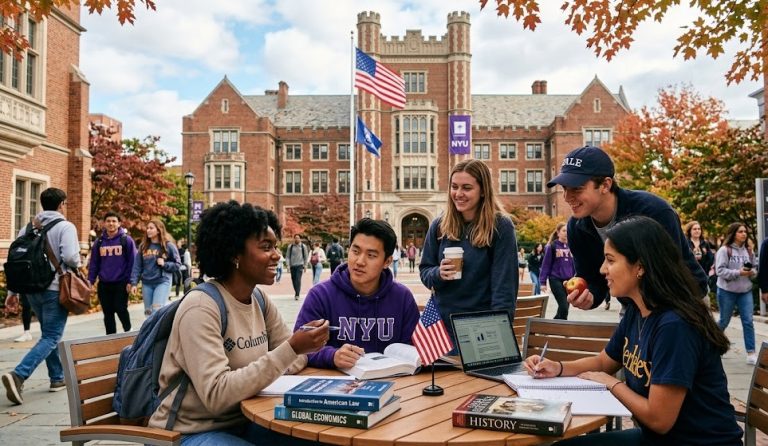
 Studying in the USA: What you need to know before applying

She enrolled in Fashion PR programs at five US universities


Houston, Texas, USA · Rice University is one of the leading private research universities in the United States. Small in size (approximately 4,789 undergraduate students), but with a global reputation in engineering, natural sciences, architecture, and music. Located in Houston, the fourth-largest city in the United States, it is close to the world's largest medical complex and NASA Johnson Space Center. Enrolling at Rice University means entering an environment where academic rigor meets genuine university community.
Rice University was founded in 1912 according to the will of Houston entrepreneur William Marsh Rice. From its early years, the university focused on fundamental research and rigorous academic training. Today, Rice is a member of the Association of American Universities (AAU) — an elite association of 71 leading research universities in the United States and Canada — and ranks No. 5 among the best universities in terms of value for money (Best Value Schools, US News 2026).
The Houston campus covers about 300 acres of green spaces with Spanish‑Italian architecture in a subtropical setting — one of the most beautiful in the country. Houston is the fourth‑largest city in the United States and one of the main centers of the energy industry, biomedicine, and aerospace industry. Rice is located 10 minutes from the Texas Medical Center — the largest medical complex in the world — and in close proximity to the NASA Johnson Space Center. For students in engineering, medical, and natural sciences, this means direct access to internships and world‑class partner programs.
Another distinctive feature of Rice is its college housing system. Each undergraduate student belongs to one of 11 residential colleges for the entire duration of their studies. These are not just dormitories: each college is a self‑governing community with its own culture, traditions, and collective way of life. Among the Nobel laureates and Rice alumni are chemists Robert Curl and Richard Smalley (Nobel Prize in Chemistry 1996 for the discovery of fullerene), as well as Graham Weston, the founder of Rackspace.
Bachelor’s degree: $71,140 per year (tuition + fees, 2026–2027, for 1st–3rd years); $65,280 for upper‑year students
Master’s degree: from $57,030 per year (standard rate for Graduate School); professional programs at Jones Business School — higher
Doctoral studies: most PhD programs are fully funded — scholarship, tuition coverage, and insurance
For the 2026–2027 academic year, Rice announced a 6.5% tuition increase for students in their 1st–3rd years (from $66,540 to $71,140) and a ~4% increase for upper‑class students. On‑campus housing and meals have risen to $20,530 per year (+4.8%). The total estimated Cost of Attendance for 2026-2027 will be about $92,000-$95,000 per year, including all expenses.
Rice University unites eight schools:
The Rice campus spans 300 acres in the heart of Houston, near the Houston Museum District and the Texas Medical Center. Spanish‑Italian architecture, century‑old oaks, and subtropical vegetation create an environment that is atypical for a large urban university.
The center of student life is a system of 11 residential colleges, unique among American universities of this level. Each freshman is assigned to one of the colleges at random and remains a member for all four years. Students from different majors and years live together, eat in the same cafeteria, and participate in common activities. There are no fraternities or sororities (fraternities/sororities) — the residential colleges fulfill all the social functions. More than 70% of undergraduate students live on campus.
The median class size at Rice is 14 students, which provides a rare combination of a research university and the format of a small liberal arts college. The campus features its own concert hall (Shepherd School of Music), world‑class research laboratories, and student clubs and organizations (more than 250). The unique Baker 13 tradition — a nighttime student run across campus in a painted state — symbolizes the informal spirit of Rice.
Rice University accepts approximately 7.8% of applicants (class of 2029). The university seeks individuals with clear motivation, specific interests, and the ability to contribute to the community. Applications are submitted via the Common App.
Rice consists of several schools, and the student is a member of one of them: George R. Brown School of Engineering, School of Natural Sciences, School of Humanities, School of Social Sciences, Shepherd School of Music, School of Architecture, Jones Graduate School of Business. Each has its own selection logic.
The university evaluates the average grade and the difficulty of the courses taken. AP, IB, and similar advanced-level programs significantly strengthen an application — especially for engineering and natural science fields.
In addition to the main Common App essay, Rice asks its own questions. One of them traditionally concerns the college residential system and how it fits into your expectations of university life. The answers are read carefully — they give the admissions committee an understanding of the awareness of the choice.
Two letters from teachers in specialized subjects and one from the homeroom teacher.
Rice adheres to a test-optional policy. Approximately 70% of those admitted to the class of 2028 submitted scores; the mid‑50% SAT score range for admitted students is 1500–1570, and the ACT score range is 34–35.
Rice values depth of engagement and concrete achievements — research projects, Olympiads, leadership positions.
Early Decision I — by November 1 (acceptance rate 13.2% for the class of 2029). For the first time in 2025, Rice introduced Early Decision II — deadline January 4 (acceptance rate 6%). Regular Decision — also by January 4 (acceptance rate 0.34%). ED I provides the greatest statistical advantage and is recommended for those who are confident in their choice.
For international applicants, the requirements are the same as for U.S. citizens, with mandatory proof of English proficiency: TOEFL (100+ iBT) or IELTS (7.0+); graduates of accredited English‑language schools may be granted an exception.
Rice University covers 100% of the confirmed financial need of all admitted students — including international citizens — without loans. The financial aid application must be submitted simultaneously with the admission application via the CSS Profile. For ED I, the CSS Profile deadline is November 15; for ED II and RD, it is January 4.
Research and competitive achievements are especially valuable for STEM fields and the School of Architecture. The interview is conducted at the initiative of a Rice alumnus in the applicant’s region — it’s worth taking advantage of this opportunity at the first opportunity.

Rice University is one of the few universities in the United States that covers 100% of the demonstrated financial need of every admitted student without loans — for both U.S. citizens and international students in equal measure.
PhD students in most programs receive full funding: a living stipend, tuition waiver, and insurance.
The median salary of Rice graduates six years after graduation is $79,751 per year (US News). More than 90% of graduates are employed or continue their education within six months.
Houston, as a career platform, has no analogues in the USA for certain industries. Rice students intern at Shell, ExxonMobil, Chevron, NASA Johnson Space Center, major companies in the Texas Medical Center, as well as in the city’s growing technology ecosystem. The Baker Institute for Public Policy — one of the country’s leading think tanks — opens doors to careers in public administration and international organizations.
The Jones Graduate School of Business provides strong connections to employers in finance, consulting, and energy. Rice’s alumni network spans more than 75,000 people worldwide.
The discovery of fullerene (the C₆₀ molecule) was made right here, in the laboratory at Rice University — this earned scientists Robert Curl and Richard Smalley the Nobel Prize in Chemistry in 1996 and marked the beginning of an entire field of nanotechnology. Today, Rice is one of the world’s centers for nanoscience: the Smalley‑Curl Institute continues research in the field of carbon nanotubes, nanomaterials, and the applications of nanotechnology in medicine and energy.
Rice’s annual external research funding exceeds $900 million (with 9,000 students — one of the highest per‑student figures among all universities in the USA). Key research centers include: Rice Space Institute (aerospace), Ken Kennedy Institute (data technologies and computational sciences), Baker Institute for Public Policy, and Kinder Institute for Urban Research.
Rice has Carnegie R1 status — the highest classification for research activity. The student‑to‑faculty ratio of 6:1 means that bachelor’s students have direct access to laboratories and research projects from their very first year.
Rice University was designed to remain small: the first president of the university, Edgar Odell Lavette, proclaimed the principle of “keep the standards up and the numbers down” (“raise standards and keep numbers”) — it is still observed today.
There is an Honor Code on campus: Rice exams are not repeated — students take them without observers. It is one of the oldest and best-preserved academic integrity systems in the United States.
Rice is one of the few top‑20 universities in the United States that offers merit‑based scholarships (Trustee Distinguished Scholarships), which is rare among institutions of this caliber.
In 2025, Rice announced a large‑scale initiative called Rice Nexus — a program to expand engagement with Houston’s technology and energy companies as part of a new research hub.
In 2026, Rice rose 22 positions in the QS ranking — from No. 141 to No. 119. This is one of the largest jumps among American universities in this cycle.
The Shepherd School of Music regularly ranks among the top 10 music schools in the country, and the Rice School of Architecture is among the top 10 architecture programs in the US, according to DesignIntelligence.
Getting into Rice University is a process in which every detail matters: the choice of school, the logic of the essays, the depth of the extracurricular profile, and the financial strategy. We at SelfStartGlobal help:
Our students have already received scholarships worth more than $35 million.
If you want to enroll at Rice University and receive maximum financial support, come to a free consultation. We’ll explain how it works in your specific case.

She enrolled in Fashion PR programs at five US universities

She was admitted to three American universities at once: Augustana College, Widener University, and the University of South Dakota. She chose Augustana College, where she received a scholarship of $45,000 per year.

He entered a master’s program in the USA at two universities at once – Brandeis University and Washington University in St. Louis, receiving scholarships totaling $80,000. He chose Brandeis University and went to study on the first try.
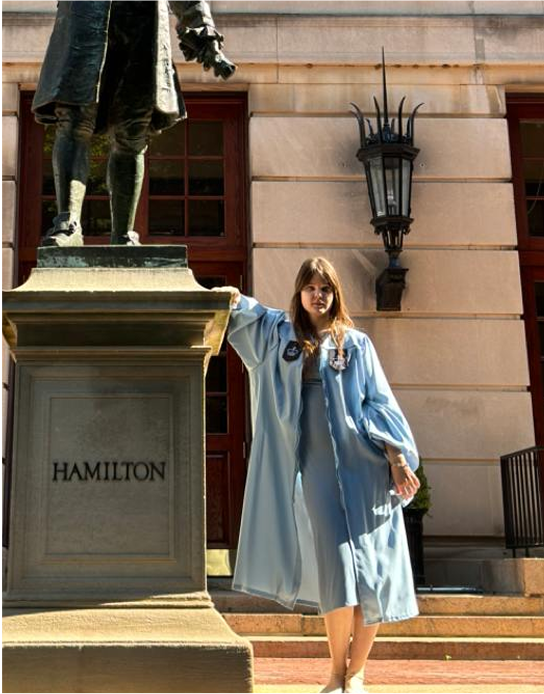
I was accepted to the PhD program at Columbia University on my first try, having strengthened my profile and compiled my achievements into a strong application.
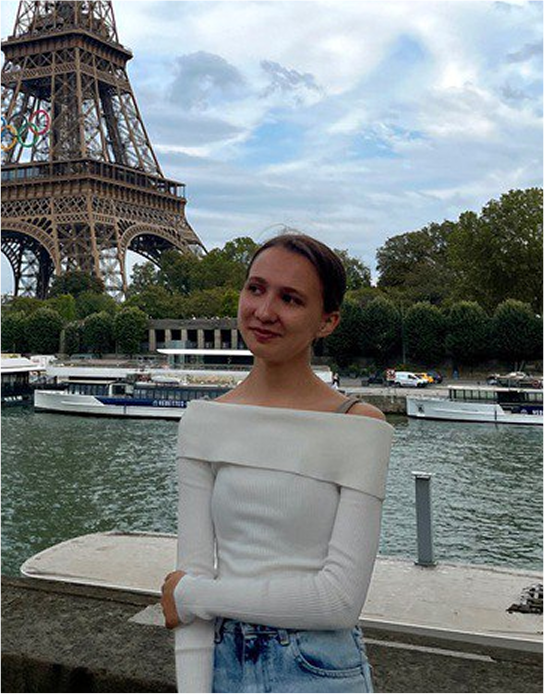
She enrolled in graphic design at universities in France, Italy and Hungary. She received scholarships at all of them and chose the university with the maximum funding — $135,000 for the entire period of study.

She entered graduate school at Kent State University and Ohio University. At Ohio University, she won a Graduate Teaching Assistantship with full funding of $37,774, covering tuition, insurance, and living expenses.

He entered Siena Heights University (USA) for the Theater and Music program with a full scholarship of $170,000. Preparation took less than a year.

Got accepted to NYU Abu Dhabi on the first try (acceptance rate 4%) with a scholarship of $217,000. Also received offers from Lynn and Drexel University.

Leave your contacts — our consultant will get in touch
