




 Top 7 Universities in the World: How to Enter a Prestigious University
She enrolled in Fashion PR programs at five US universities


Hyde Park, Chicago, Illinois, USA · The University of Chicago (UChicago) is one of the most intellectually demanding universities in the world. In the QS World University Rankings 2026, UChicago ranked #13 in the world — jumping 8 spots from #21 last year. UChicago consistently ranks among the world's top 3 in economics and social sciences, and rightfully in the top 5 in the United States. The Chicago School of Economics was formed here - one of the most influential intellectual schools of the 20th century. UChicago is not for everyone: it is an environment of high academic load, independent thinking and non-standard questions. That is why people who come here know why.
The University of Chicago was founded in 1890 with financial support from John D. Rockefeller. From the very first years of its existence, the university was built around the principle of academic freedom — open intellectual discussion without room for dogmatism. This principle is codified in the Chicago Statement on Freedom of Speech, a document joined by dozens of universities around the world.
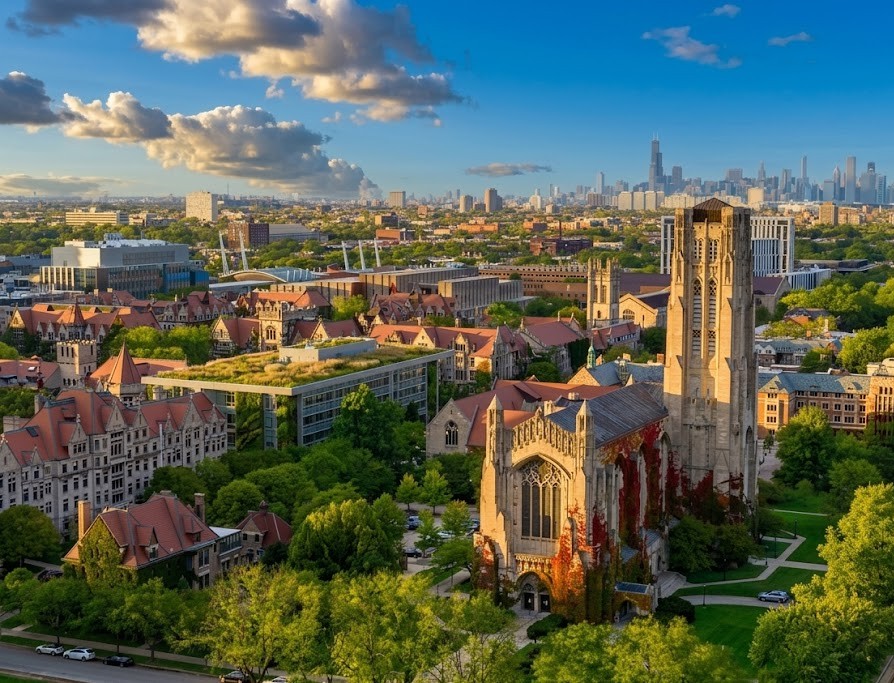
The Hyde Park campus is built in the Neo-Gothic style, deliberately referring to medieval European universities. It occupies about 215 acres in a quiet, intellectual neighborhood on the south side of Chicago, about 30 minutes from the financial district of The Loop. UChicago has a student-to-faculty ratio of 5:1, one of the best in the United States among all major research universities.
UChicago has 101 Nobel laureates associated with it, including faculty, researchers, and alumni. The Department of Economics has produced 34 Nobel laureates, more than any other department in history. Notable alumni and faculty include Milton Friedman (Nobel laureate in economics and founder of monetarism), Saul Bellow (Nobel laureate in literature), Barack Obama (44th President of the United States, who taught constitutional law at the University of Chicago Law School), Carl Sagan (astrophysicist and science popularizer), and Susan Sontag (writer and critic).
Bachelor’s degree: $73,266 per year (tuition + fees, 2025-2026; approximately $77,000 for 2026-2027, assuming a growth rate of ~5.6% per year)
Master’s: about $68,652 per year (Graduate School base rate 2024-25); Law School – $84,825 per year; Pritzker School of Medicine – $64,337 per year; Booth MBA – separately by program
Doctoral: Most PhD programs are fully funded – scholarship, tuition coverage and insurance
At the undergraduate level, students enter the unified University of Chicago College — after two years of the Core Curriculum, they choose a specialization. Professional and research schools:
Hyde Park is one of the most distinctive student neighborhoods in the United States. A quiet, intellectual neighborhood on Chicago’s south side with independent bookstores, museum neighborhoods, and coffee shops. Next door is the Museum of Science and Industry (one of the largest in the world) and the DuSable Black History Museum. The financial quarter of The Loop is 30 minutes away by metro “L”.
All first-year students are required to live on campus for the first two years (a rarity even among top universities). The UChicago House System distributes students into residential houses, each of which forms its own academic and social community. Student life is built around more than 400 clubs and organizations — debate clubs, philosophical societies, entrepreneurial incubators, theater troupes and political organizations.
Proximity to Chicago, the third largest financial center in the United States, provides direct access to internships at Citadel, CME Group, McKinsey, BCG, Morningstar and hundreds of other companies. Booth and Law students are particularly active users of this resource.
UChicago accepts about 4.5% of applicants, one of the most competitive rates in the United States. Applications are accepted through the Common App or the Coalition App.
At the undergraduate level, most students enroll in the University of Chicago College. Master’s and professional programs are offered through Booth, Law School, Harris School, Graham School, and others.
Transcript with grades, course complexity — AP, IB, similar programs. UChicago especially values depth in core subjects.
Essays are the main distinguishing element of the application. In addition to the Common App essays, UChicago offers Extended Essay Prompts, which are the most unconventional among all top universities in the United States. These prompts are intentionally provocative and philosophically open-minded: “Write about what you found when you were looking for something else,” “Describe an imaginary museum that you would create,” and “How has Schrödinger’s cat influenced your life?” The university tests your ability to think outside the box and express your thoughts accurately, rather than producing a formulaic result.
Two letters from teachers of specialized subjects and one from the class teacher.
UChicago adheres to a test-optional policy: SAT or ACT is not required. If you have high scores, it is worth providing them.
Chicago values intellectual depth: Olympiads, science competitions, debates, math competitions, and research projects. The length of the list is not important; the depth is.
Early Decision I is valid until November 1, while Early Decision II and Regular Decision are valid until January 4. ED I offers a statistical advantage, with a historical acceptance rate of around 9-10% compared to 3-4% in RD.

International applicants are required to submit transcripts with translation, TOEFL (recommended score of 104+ iBT) or IELTS (7.0+), essays, and letters of recommendation. Portfolios are required for certain creative fields in the humanities.
A key advantage of UChicago is its need-blind admission policy, which applies to all students, including international applicants. This is the official policy, confirmed on the admissions.uchicago.edu website. UChicago is part of a group of eight US universities with a need-blind policy for international students, along with Harvard, Yale, Princeton, Dartmouth, MIT, Amherst, and Bowdoin.
Academic achievements, such as math, physics, and chemistry Olympiads, publications, and research projects, are particularly important for a competitive application to UChicago.
UChicago is among the universities with the most generous financial aid system in the United States. The university covers 100% of the confirmed financial need of each admitted undergraduate student, regardless of citizenship, without loans.
Most PhD programs are fully funded, including a scholarship, tuition coverage, and insurance. Booth MBA and Law School have separate competitive scholarship systems.
The median salary for UChicago graduates after six years is $80,870 (US News). Chicago, as a financial center in the United States, provides direct access to leading employers such as Citadel, CME Group (the largest exchange in the world), McKinsey, BCG, and Morningstar.
Booth graduates consistently hold top positions in the financial sector, while Law School graduates are employed by leading law firms, government agencies, and international organizations. The Chicago entrepreneurial ecosystem (Silicon Prairie) is actively developing, and the UChicago Polsky Center for Entrepreneurship and Innovation supports students and graduates in starting companies.
There are 101 Nobel laureates affiliated with UChicago, more than any other university in the world in the ratio per student. One of the unique scientific ties of UChicago is Fermi National Accelerator Laboratory (Fermilab) and Argonne National Laboratory, two of the largest national laboratories of the US Department of Energy affiliated with the university.
It was at UChicago in 1942 that the world’s first controlled nuclear reaction, Chicago Pile—1, was launched under the leadership of Enrico Fermi, an event that changed the history of physics and technology. Key research centers include the Becker Friedman Institute for Economics, the Toyota Technological Institute at Chicago (AI research), and the Marine Biological Laboratory (Woods Hole, Massachusetts).
UChicago publishes thousands of peer-reviewed articles annually in economics, law, biology, and the humanities, and is among the most highly cited research universities in the world, particularly in economics and social sciences.
In 1942, the first controlled nuclear reaction in history was launched under the stands of the university stadium (Chicago Pile-1, Enrico Fermi). The historical plaque is still there.
The Core Curriculum, a mandatory general education program for the first two years, covers the sciences, humanities, mathematics, and social sciences. This is the university’s philosophy. UChicago believes that a deep education cannot be achieved without breadth.
The University of Chicago’s Department of Economics has produced 34 Nobel laureates, more than any other department in history.
Extended Essay Prompts are the most unconventional questions among all top universities in the United States. The archive of these questions from all years is stored on the website as a separate cultural artifact.
UChicago is a private university with a quarter system (like Dartmouth) instead of a semester system, which creates a faster and more intense academic rhythm.
Applying to UChicago is a process where Extended Essay Prompts can play a crucial role. At SelfStartGlobal, we help you:
Our students have already received scholarships worth more than $35 million.
If you want to apply to the University of Chicago and receive maximum financial support, come for a free consultation. We will tell you how it works in your specific case.

She enrolled in Fashion PR programs at five US universities

She was admitted to three American universities at once: Augustana College, Widener University, and the University of South Dakota. She chose Augustana College, where she received a scholarship of $45,000 per year.

He entered a master’s program in the USA at two universities at once – Brandeis University and Washington University in St. Louis, receiving scholarships totaling $80,000. He chose Brandeis University and went to study on the first try.
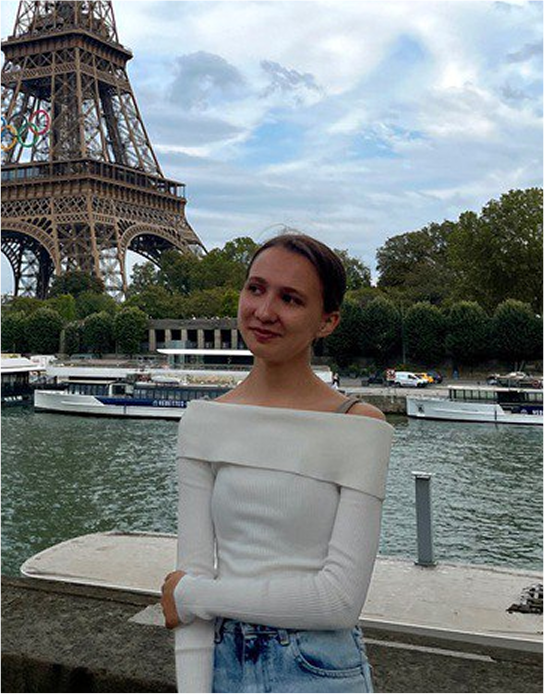
She enrolled in graphic design at universities in France, Italy and Hungary. She received scholarships at all of them and chose the university with the maximum funding — $135,000 for the entire period of study.

She entered graduate school at Kent State University and Ohio University. At Ohio University, she won a Graduate Teaching Assistantship with full funding of $37,774, covering tuition, insurance, and living expenses.

He entered Siena Heights University (USA) for the Theater and Music program with a full scholarship of $170,000. Preparation took less than a year.
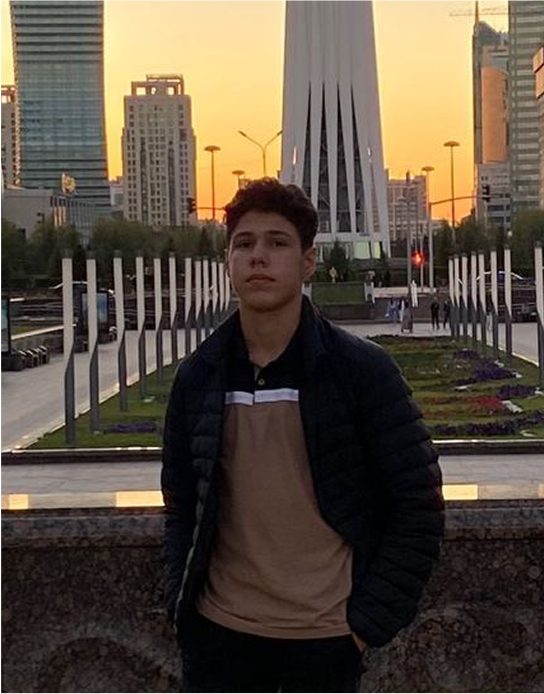
Got accepted to NYU Abu Dhabi on the first try (acceptance rate 4%) with a scholarship of $217,000. Also received offers from Lynn and Drexel University.
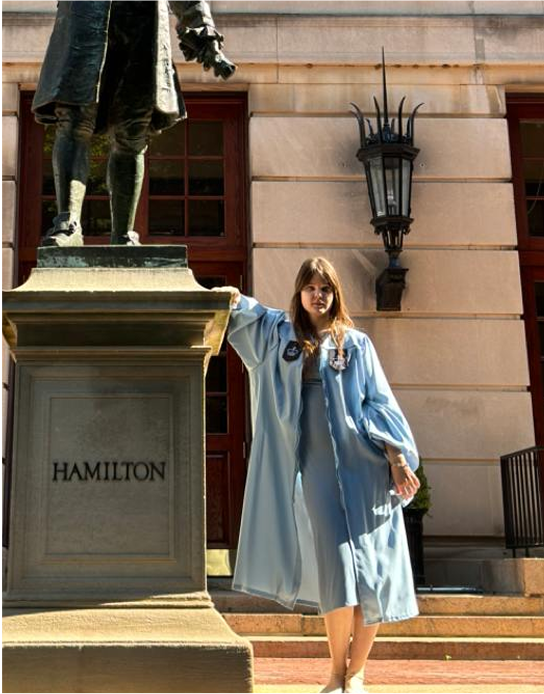
I was accepted to the PhD program at Columbia University on my first try, having strengthened my profile and compiled my achievements into a strong application.

Leave your contacts — our consultant will get in touch
