

 Deadlines, Exams, and Scholarships: Your Guide to Studying in the USA, Europe, and Asia

She enrolled in Fashion PR programs at five US universities


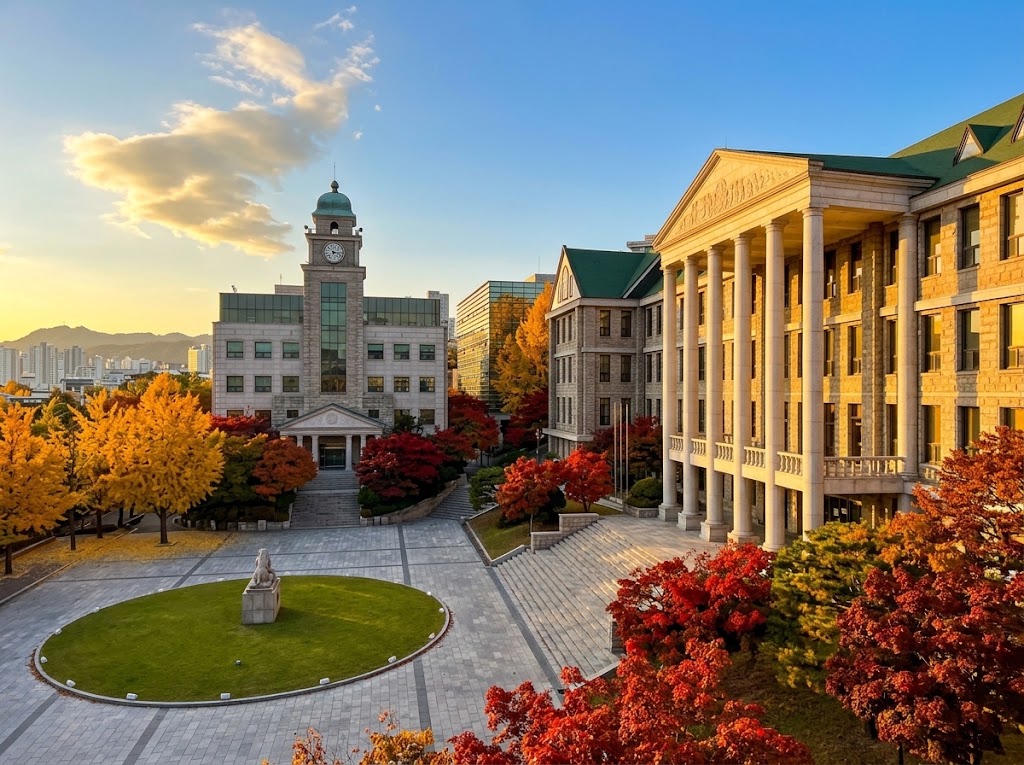
Seoul and Ansan, South Korea · Hanyang University (HYU) is one of South Korea’s leading private research universities, established in 1939 as the country’s first engineering college. Today, it is a major comprehensive university with 37,709 students (as of January 2026), an annual research budget of KRW 465 billion (~$340 million), and one of the highest graduate employment rates among private universities in Korea. Its two campuses—the Seoul Campus in the capital and the ERICA Campus in Ansan—offer distinct academic paths and career opportunities: the former is historically strong in medicine, architecture, and traditional engineering, while the latter excels in robotics, semiconductor engineering, and the startup ecosystem. Admission to Hanyang is a realistic goal; with the right application strategy, the university opens a direct path to careers at major companies such as Samsung, LG, Hyundai, and SK.
Hanyang University was founded in July 1939 by Yong Jun Kim with the sole purpose of providing Korea with its own engineers amid the Japanese occupation and the acute shortage of technical personnel. It was the first private engineering university in the country, and it was also the first to launch architecture programs. Over the course of eight decades, Hanyang has grown from a highly specialized polytechnic institute into one of the most versatile private universities in Asia: 24 colleges, 18 graduate programs, and more than 70,000 scientific publications in international databases.
The name “Hanyang” is the historical Korean name for Seoul during the Joseon dynasty (1392–1897). The university bears the city’s name intentionally: from its founding, its mission has been to serve the capital and the country.
What fundamentally distinguishes Hanyang from other Korean universities is its deep connection with industry. Hanyang has historically been built as a bridge between academic science and production. According to data from 2025, the university submitted 1,217 patent applications and registered 599 patents — an indicator of an active technology policy. In 2009, the Ministry of Education of Korea awarded Hanyang the title of “Best University for Industry‑Academy Cooperation.”
Among the most famous graduates are: Roh Tae-woo — the 9th President of South Korea (1988–1993); during his tenure, the country hosted the 1988 Olympic Games; Chung Mong-gu — former Chairman of the Board of Directors of Hyundai Motor Group; Rain — a singer and actor, one of the first K‑pop artists to have a global career; PSY — the author of “Gangnam Style,” the most-watched video in YouTube history at that time.
The cost depends on the campus, faculty, and level of study.
Bachelor’s degree: 9,535,960–13,622,800 KRW per year (~7,000–10,000 USD) — humanities and social sciences are in the lower range, medicine and pharmacy are at the higher end.
Master’s program: 16,347,360–20,434,200 KRW per year (~12,000–15,000 USD)
Doctoral program: 16,347,360–20,434,200 KRW per year (~12,000–15,000 USD)
Admission fee (graduate): 1,030,000 KRW (~750 USD), paid upon enrollment
Application fee: 80,000–100,000 KRW (~60–75 USD)
Total: approximately 950,000–1,700,000 KRW (~700–1,250 USD) per month. All amounts are approximate — check the current rates via the official website of the relevant campus.
The historical profile of Hanyang — and its main competitive advantage. Seoul Campus: mechanical engineering, electronics and electrical engineering, chemical engineering, materials science, energy engineering, construction, architecture. ERICA Campus: robotics, semiconductor engineering, mechanical and IT engineering.
According to the ARWU 2025 subject rankings, Hanyang is among the world’s top institutions in key engineering disciplines: Textile Science & Engineering — #32 in the world; Chemical Engineering, Materials Science & Engineering, Nanoscience, Metallurgical Engineering — #51–75 in the world; Civil Engineering, Energy, Environmental Engineering, Robotic Science — #76–100 in the world. The engineering programs are accredited by ABEEK (Accreditation Board for Engineering Education of Korea).
Computer science, AI, cybersecurity, data analysis. Some of the most popular fields among international students; some programs are in English, especially at the master’s level.
Hanyang Business School is AACSB‑accredited — one of the few Korean business schools with international accreditation. Bachelor’s and master’s programs in business administration, finance, international business, and economics are offered in both Korean and English tracks.
Seoul Campus Medical College is one of the well‑known colleges in Korea. Clinical medicine, dentistry, nursing, pharmacy. Instruction in Korean; a high level of TOPIK is required. The most competitive programs at Hanyang.
Hanyang founded Korea’s first architecture program in 1939. Today, the Seoul Campus architecture department maintains its historical reputation and is among the leading programs in the country.
Design (industrial, visual, spatial), music, pedagogy, psychology, sociology, international studies (in English via the Division of International Studies).
Choosing a campus is the first and key decision when applying to Hanyang. Each campus has its own programs, its own admissions committee, and its own academic environment. You cannot apply “to Hanyang as a whole” — only to a specific campus.
In practice: ERICA is for those who want to combine their studies with proximity to real production and the startup environment. Seoul Campus is for medicine, architecture, humanities, and traditional engineering majors.
The main campus is located in the Seongdong-gu district of Seoul. There are 16 colleges: engineering, medicine, architecture, business, humanities and social sciences, music, design, pharmacy, and pedagogy. The most competitive medical and architectural programs are here. Direct access to the Seoul labor market — the largest business center in Korea.
30–40 minutes from the center of Seoul by subway. 9 colleges: engineering, IT, design, business, languages, international studies. The campus is deliberately built around an industrial cluster: Korea’s largest business incubator, Technopark, corporate R&D centers right on the premises. ERICA robotics is one of the strongest programs in Korea; semiconductor engineering — direct partnerships with Samsung and SK Hynix.
Dormitory accommodation is available on both campuses. A place is not guaranteed automatically — submit an application separately within the established deadlines. Cost: 300,000–600,000 KRW per month. Seoul Campus library — more than 1.5 million books; ERICA library — more than 1 million.
There are more than 260 student clubs on the campuses: academic societies, sports teams, cultural associations, and entrepreneurial groups. For international students — the Buddy Program: a Korean student partner for adaptation. Hanyang International Summer School conducts all classes in English — a popular program for summer students.
Sets: spring (March) — basic; autumn (September) — also available.
Seoul or ERICA — different admissions committees, different programs, different requirements. The current catalog is available through the Office of International Affairs of the specific campus.
Korean Track: TOPIK 4 or a Hanyang IIE certificate. English Track (International Studies): TOEFL iBT 89+ or IELTS 6.5+. Native English speakers are exempt from the test.
A certificate or diploma with a transcript — an official translation into Korean or English. Depending on the country — an apostille or consular legalization. This process takes 4–8 weeks: start early.
Through the official campus portal. Application fee: 80,000–100,000 KRW. Package: passport, certificate with translation, transcript, language certificate, personal statement or study plan, financial documents.
Most programs — document screening. Medicine, design, music — interview or portfolio. Check before submitting your application.
After receiving the offer: confirmation of enrollment + bank statement (approximately 10,000 USD or equivalent) + health insurance. Processing time — 2–4 weeks.

The applicant and both parents must be citizens of a country other than Korea.
Completed 12‑year secondary education or recognized equivalent.
An average score above 2.5 on a 4.5 scale is the minimum benchmark; competitive programs require significantly higher scores.
TOPIK 4; English Track: TOEFL iBT 89+ или IELTS 6.5+
Personal statement, financial documents; for a PhD — recommendations and a research proposal.
An important nuance for applicants who have completed 11 years of schooling: in a number of post‑Soviet countries, full secondary education lasts 11 years. Hanyang requires a 12‑year education — it is necessary to clarify with the Office of International Affairs how the certificate will be counted. In some cases, an additional year of study at a university or preparatory program is accepted.
About the English Track: the Division of International Studies and a number of graduate programs offer instruction in English. However, a “partially English‑language” program is not the same as a “fully English‑language” program. Before submitting your application, check the actual language requirements for the mandatory disciplines in the specific program.
Full coverage of tuition fees for the most outstanding foreign applicants. The most competitive entry financing option.
TOPIK 6 — 100% tuition coverage
TOPIK 5 — 50% tuition coverage
Direct financial motivation to improve your Korean language skills. One of the most transparent language scholarship mechanisms among Korean universities.
30% discount on tuition for students with a TOEFL iBT score of 90+ or an IELTS score of 6.5+. Available for the English Track.
For students who are already enrolled: scholarships based on academic GPA (not lower than 3.0 for the previous semester) and progress in TOPIK (a one‑time payment of 100,000 KRW for an increase in level, maximum 3 times). Cannot be combined with GKS.
Korea State Scholarship: full tuition coverage + accommodation + monthly allowance + airfare. Two routes: through the embassy or through the university — different deadlines. Eligibility depends on citizenship.
Full financing with a monthly payment of 1,000,000 KRW.
Coverage of semester expenses.
For PhD students. The actual income of a PhD student consists of a base stipend and additional funds from the laboratory.
Hanyang is one of the main suppliers of engineering and technical personnel for the largest Korean corporations. Samsung, LG Electronics, SK Hynix, Hyundai Motor, POSCO, and other chaebols specifically recruit Hanyang graduates — especially in engineering and IT fields. On the ERICA Campus, corporate offices are located right on the campus grounds, which ensures direct contact with employers.
In 2024, the QS Graduate Employability Survey ranked Hanyang among the leading Korean universities in terms of Employer Reputation Score (81.9/100), and in the GEURS (Global Employability University Ranking) it ranked #93 in the world.
The average salary of graduates, according to unofficial data, is about KRW 70 million per year (~$51,000) — a competitive level for Korea’s private sector. Among the notable alumni are the president, the chairman of Hyundai, and world‑renowned stars; the alumni network is active and maintains professional connections through alumni associations.
The annual research budget of Hanyang University is KRW 465 billion (~$340 million, April 2025, Hanyang’s official website). As of May 2024: 1,217 patent applications, 599 registered patents, 100 cases of technology transfer — one of the most active innovation indicators among private universities in Korea.
According to the ARWU 2025 subject rankings: Textile Science & Engineering — #32 in the world (Hanyang’s best score); Chemical Engineering, Materials Science, Nanoscience, Metallurgical Engineering — top 51–75 in the world; Robotics Science & Engineering, Civil Engineering, Energy, Environmental Engineering — top 76–100.
In 2006, Hanyang was included in Brain Korea 21 (BK21) Phase II — a government program supporting world‑class research universities. The university has 12 doctoral programs with full authorization and 35 postdoctoral research stations.
Partnerships with MIT and Cambridge in engineering research provide students with access to joint projects and international academic connections.
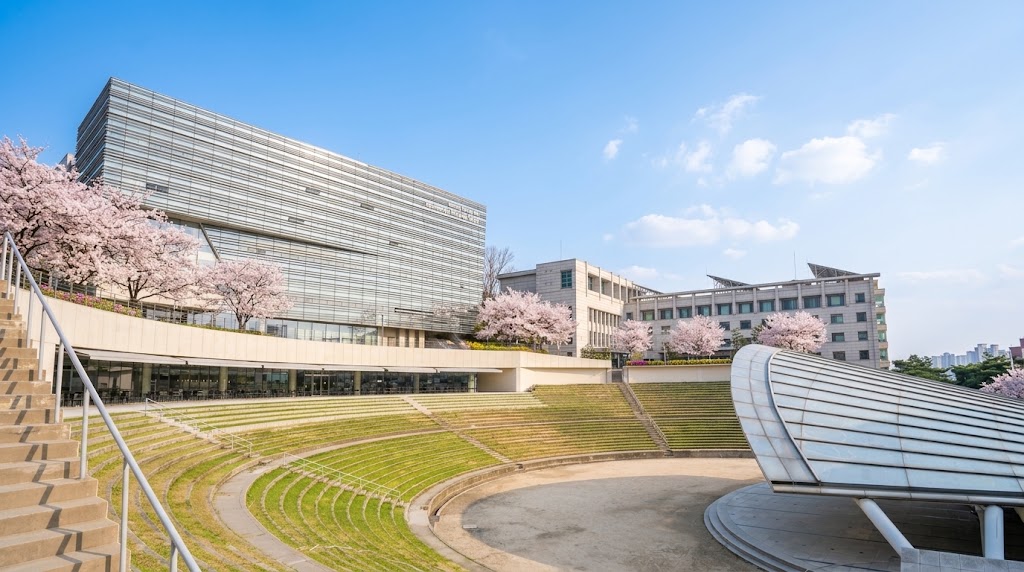
Hanyang was founded in 1939 as Korea’s first private engineering university — and the first to launch an architecture program in the country.
The word “Hanyang” is the historical Korean name for Seoul during the Joseon dynasty (1392–1897). The university deliberately bears the name of the city it has served since its founding.
PSY (“Gangnam Style”) is one of Hanyang’s graduates. The song’s title is a reference to Seoul’s Gangnam business district, which is located a few kilometers from Seoul Campus.
Roh Tae-woo was the 9th President of the Republic of Korea (1988–1993), during whose tenure Seoul hosted the 1988 Olympic Games; he graduated from Hanyang in 1962.
In 2009, the Ministry of Education of Korea awarded Hanyang the title of “Best University for Industry‑Academy Cooperation” — recognition for its historically established ties with the industrial sector.
#32 in the world for Textile Science & Engineering (ARWU 2025) — the best subject‑specific ranking for Hanyang; a specialty rooted in the university’s historical connection with the Korean light industry.
Admission to Hanyang requires making specific choices — the campus, the program, the language track, and the scholarship strategy. A mistake at the selection stage means preparing for the wrong requirements.
We at SelfStartGlobal help you build the process without mistakes:
Our students have already received scholarships worth more than 35 million dollars.
Want to enroll at Hanyang University and get maximum financial support? Come to a free consultation. We’ll explain how it works in your specific case.

She enrolled in Fashion PR programs at five US universities
She enrolled in graphic design at universities in France, Italy and Hungary. She received scholarships at all of them and chose the university with the maximum funding — $135,000 for the entire period of study.
She entered graduate school at Kent State University and Ohio University. At Ohio University, she won a Graduate Teaching Assistantship with full funding of $37,774, covering tuition, insurance, and living expenses.
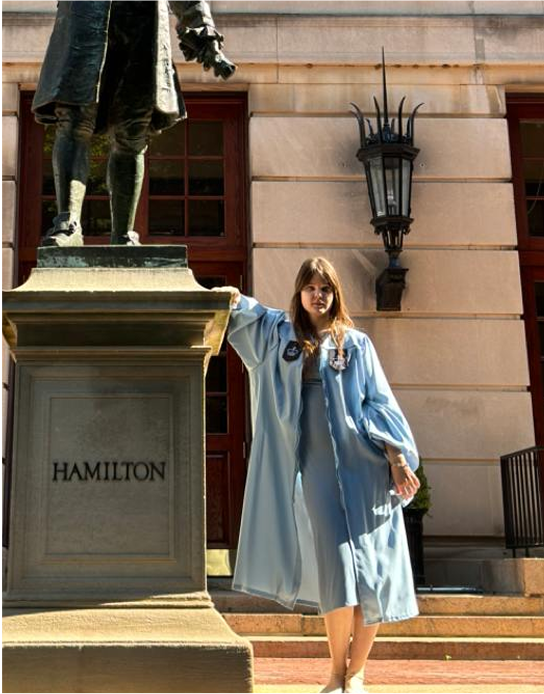
I was accepted to the PhD program at Columbia University on my first try, having strengthened my profile and compiled my achievements into a strong application.
She was admitted to three American universities at once: Augustana College, Widener University, and the University of South Dakota. She chose Augustana College, where she received a scholarship of $45,000 per year.
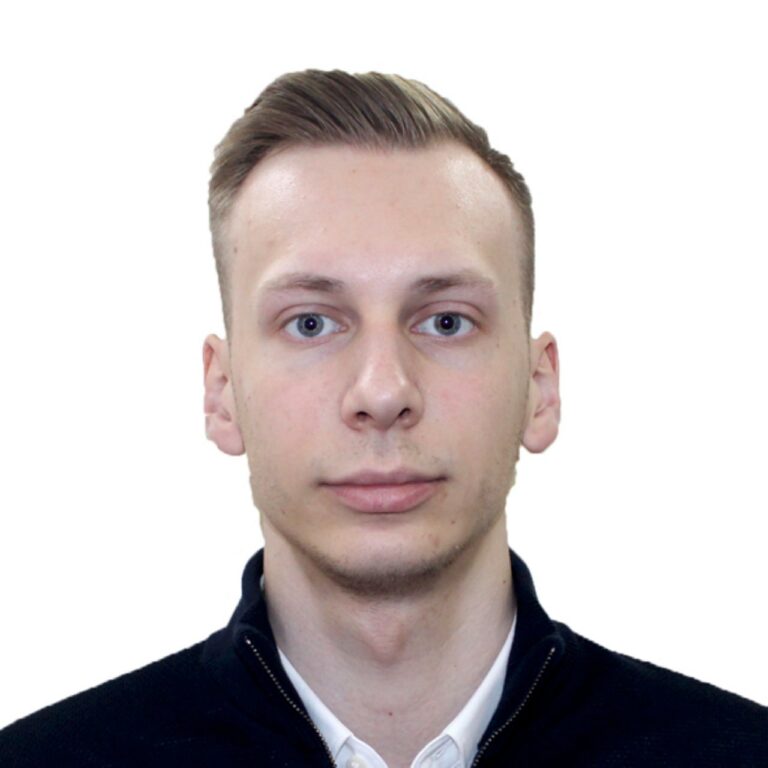
He entered a master’s program in the USA at two universities at once – Brandeis University and Washington University in St. Louis, receiving scholarships totaling $80,000. He chose Brandeis University and went to study on the first try.

He entered Siena Heights University (USA) for the Theater and Music program with a full scholarship of $170,000. Preparation took less than a year.
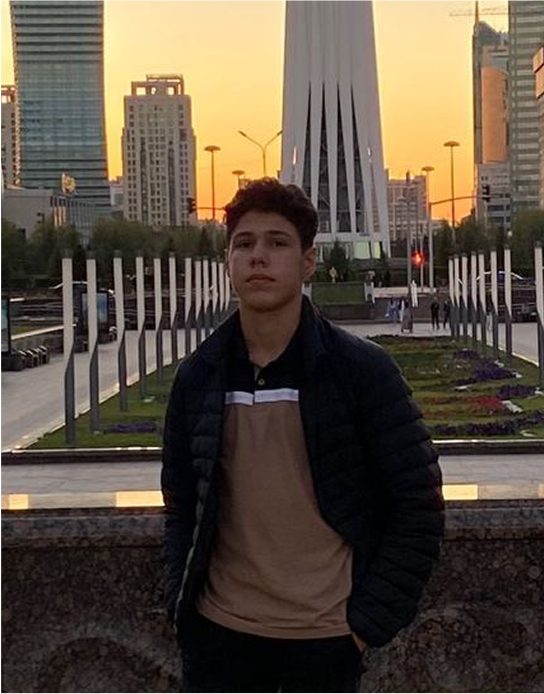
Got accepted to NYU Abu Dhabi on the first try (acceptance rate 4%) with a scholarship of $217,000. Also received offers from Lynn and Drexel University.
Leave your contacts — our consultant will get in touch
