




 How to Apply to the Ivy League / Harvard / Columbia / Yale / Oxford


Service payment
Fill out the form and continue to payment via Stripe


Yes, but the range of opportunities varies greatly from country to country. In Singapore and Hong Kong, English is effectively the main language of instruction at universities. In China and South Korea, there are many English‑language programs, especially at the master’s level, but the choice is more limited at the bachelor’s level. In Japan, there are currently the fewest English‑language programs, although government policy has been consistently expanding their number for more than 15 years.
Before excluding a country from the list due to the language barrier, it’s worth checking the specific programs at specific universities — generalizations don’t work well here.
Singapore’s public universities — NUS, NTU, SMU — conduct their instruction almost entirely in English; this is a historically established feature of the country’s education system. There is virtually no language barrier to admission and studying here: the local language is not required either for lectures or for everyday life, since English is one of the country’s official languages.
The number of programs in English in China has grown significantly over the past decade, especially at the master’s and PhD levels — according to various estimates, we’re talking about more than 2,000 programs in the country. At the bachelor’s level, the choice is more limited, and fully English‑language programs are more commonly found at large universities such as Tsinghua, Peking University, Fudan, and Shanghai Jiao Tong. Many of these programs are specifically aimed at international students and recipients of the CSC government scholarship.
In Korea, English‑language programs are available at all levels, but their share is higher in master’s programs than in bachelor’s programs. Some universities offer so‑called “100% English track” programs, where no Korean subjects are required. At the same time, the Global Korea Scholarship (GKS) — a government scholarship — accepts applicants for both English‑ and Korean‑language programs and does not require TOPIK at the application stage.
Japan has historically been considered a destination where it is difficult to study without Japanese, but the situation is changing. In 2009, the Ministry of Education of Japan (MEXT) launched Global 30 — a program to support internationalization, under which 13 leading universities, including the University of Tokyo, Kyoto University and Osaka University, received funding to create fully English‑language bachelor’s and master’s degree programs. After the main funding for Global 30 ended in 2014, this work continued as part of the Top Global University Project — a later initiative by MEXT with the same logic. Nevertheless, even at these universities, there are significantly fewer English‑language programs than Korean‑ or Japanese‑language courses, and it is more difficult to choose a bachelor’s program in English than a master’s program.
Hong Kong stands out: in its leading universities — HKU, CUHK, HKUST — English is officially recognized as the main language of instruction and assessment. HKUST, for example, explicitly states on its official page that “English is the language of instruction and assessment at the university.” This makes Hong Kong one of the most accessible destinations in Asia for those who do not plan to learn the local language. Additionally, it is worth considering Malaysia and Taiwan, where the number of English‑language international programs is also growing, although there are still fewer of them than in the countries listed above.
The largest number of English‑language programs are concentrated in:
Medicine and some legal fields are more often tied to the local language, as they require working with the local regulatory framework or clinical practice in the country’s language.
In most Asian countries, master’s programs are more accessible in English than bachelor’s programs.
The reason is simple: universities primarily offer English‑language programs where it is easier to attract international researchers and students with an already established academic profile — that is, at the graduate level.
At the bachelor’s level, local universities are more often focused on local applicants, and while there are English‑language programs, the choice is noticeably narrower, especially outside Singapore and Hong Kong.
Most English‑language programs in Asia require an international language certificate — IELTS or TOEFL; the specific threshold depends on the university and the program level. Some universities have internal language tests or interviews instead of (or in addition to) IELTS/TOEFL — this is especially common in China and Korea.
Exceptions are made for students whose previous education was entirely in English — in this case, a language certificate is sometimes not required, but this must be confirmed by an official letter from the previous educational institution, rather than assumed by default.
Academically, as a rule, no, if the program is truly entirely in English. But for everyday life, finding part‑time work, communicating outside the university, and some internships, a basic knowledge of the local language significantly facilitates adaptation, especially outside major international cities like Singapore.
In Singapore and Hong Kong, this problem is practically non‑existent thanks to the ubiquity of English, while in China, Korea, and Japan, the gap between the “academic” and “everyday” language environments is more pronounced — a minimum conversational level of the local language should be considered not as a mandatory requirement, but as a practical advantage.
The wording “program in English” on the university’s website does not always mean that the local language is completely absent from the educational process. Check separately:
Are all mandatory courses taught in English, or are some taught in the local language?
Sometimes lectures are in English, but the exam can only be taken in the local language.
For master’s and PhD programs, this is a separate point that should be clarified in advance.
Some universities require students to complete a certain number of credits in the local language, even if the main program is in English.
It is better to request this information directly from the admissions committee rather than relying solely on the program’s marketing description.
The cost of English‑language programs is usually not significantly different from the cost of similar programs in the local language at the same university — the language of instruction itself rarely becomes the main factor in the price.
The final cost is more influenced by: the country and city, the status of the university, the level of the program, and the specialty. Singapore and Hong Kong are noticeably more expensive than China and Korea, while Japan falls somewhere in between, depending on the type of university. The exact cost of a specific program should be checked on the university’s official page, as the figures change from one intake to another.
The language format of the program, as a rule, does not prevent you from applying for a scholarship — most government programs, including GKS in Korea, CSC in China, and MEXT in Japan, accept applications for both English‑ and local‑language programs.
Additionally, it is worth looking into university scholarships for academic performance and external funds that are not tied to the language of a specific program. Each scholarship has its own conditions and priorities, so before applying, you should always check whether a particular funding program covers the chosen field.
Access to top‑tier universities without years of language training; a faster start to studies; a wider pool of English‑speaking students and faculty around; it’s easier to integrate your diploma and experience into an international context after graduation.
A more limited selection of universities and majors, especially at the bachelor’s level outside Singapore and Hong Kong; it is more difficult to adapt to everyday life and find part‑time work off‑campus; some internships and subsequent employment in the country require at least a basic knowledge of the local language; in certain disciplines — such as medicine and some law programs — an English‑language option may not be available at all.
How to choose a program in English
When making a choice, you should check:
Availability of funding — which scholarships actually cover this particular program.

In most cases, yes, if the program is taught in English, but the requirements vary by university and level. Sometimes, instead of an international test, an internal university exam or proof of previous study in English is accepted — this needs to be clarified individually.
Yes, especially in master’s programs within the Global 30 and Top Global University Project — there you can obtain a degree entirely in English. In the bachelor’s program, the choice of such programs is noticeably narrower, and the number of places is limited compared to courses in Japanese.
It’s not mandatory — in Korea, there are quite a few programs in English at both levels, and the GKS government scholarship accepts applications without TOPIK at the application stage. However, knowing Korean significantly facilitates adaptation and finding part‑time work outside the university.
Yes, most major government scholarships in Asia do not limit applicants to local‑language programs — GKS, CSC, and MEXT accept applications for English‑language programs as well. The exact terms and conditions for a specific funding program should be checked separately.
It depends on the company and the country: international companies and startups often operate in English, while local organizations use the local language. Even with a fully English‑language study program, it’s worth checking the language requirements for internships and job openings in a specific country in advance.

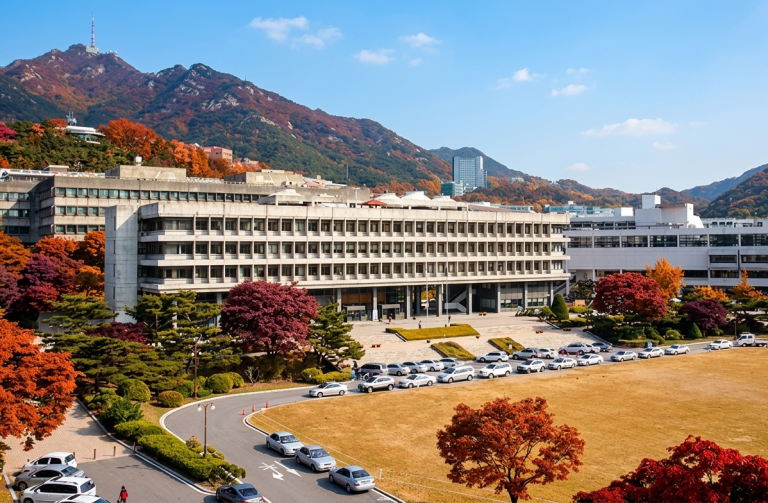
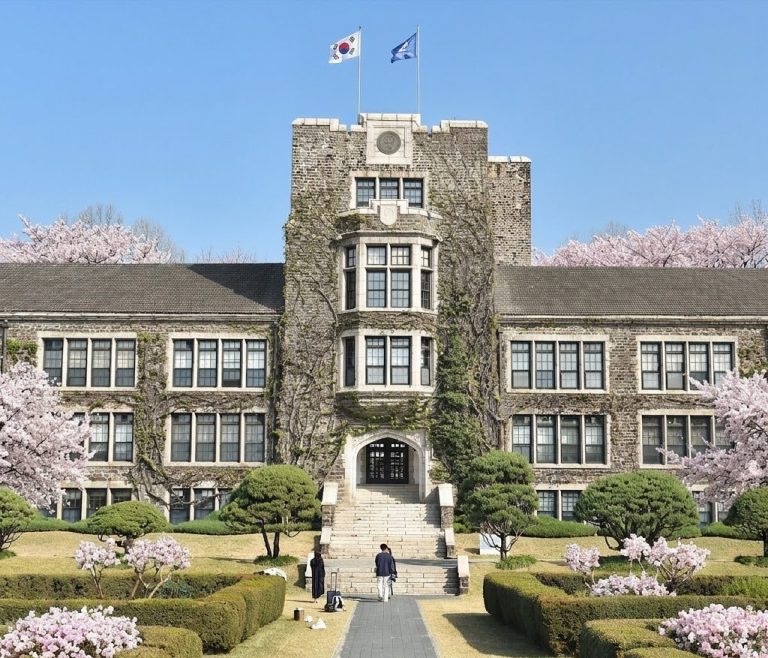


 China
ChinaChinese universities are rapidly rising in world rankings, and the country has turned into one of the largest educational hubs on the planet. Diplomas from leading Chinese universities are recognized by employers around the world, the cost of education is lower than in Great Britain or the USA, and the government actively finances foreign students. On this page - everything you need for admission: universities, cost, scholarships, documents and student visa.
 Singapore
 South Korea
 Japan
JapanJapan is one of the most unconventional destinations for studying abroad. Japanese diplomas are highly valued in the international job market, universities are ranked among the top in the world, and students work with technologies that have not yet been mass-produced in other countries. If you are ready to immerse yourself in a unique culture and a systematic approach to knowledge, this is the right choice for you.
Leave your contacts — our consultant will get in touch
