


 How to get an internship at Samsung, Sony or Tencent as a foreigner
Service payment
Fill out the form and continue to payment via Stripe


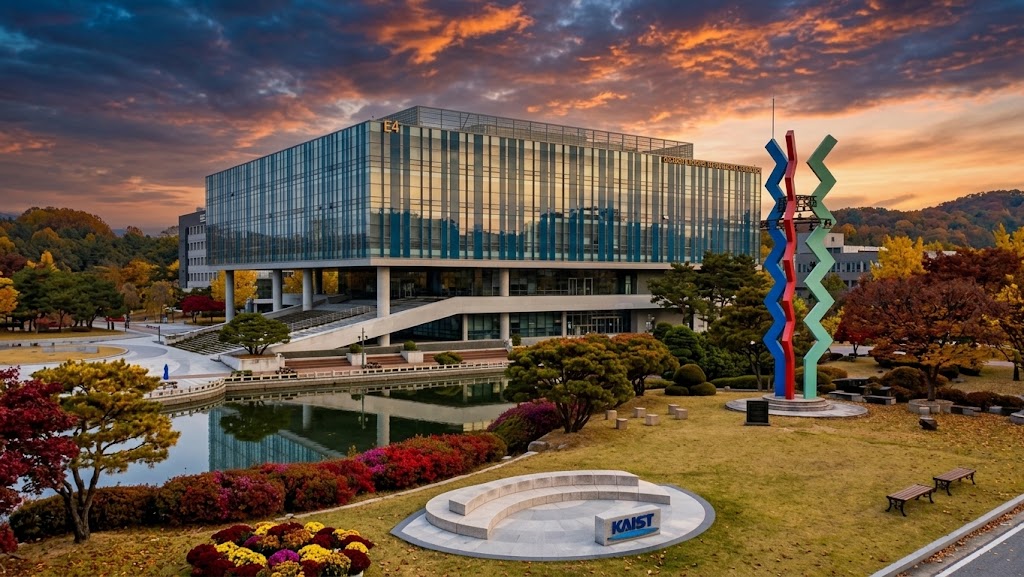
Daejeon, South Korea · KAIST (Korea Advanced Institute of Science and Technology) is a national research university in South Korea, often referred to as the "Korean MIT." It was founded in 1971 with the support of the Korean government and USAID. English is the official language of instruction. All admitted international undergraduate students automatically receive full tuition coverage and a monthly stipend, without the need for a separate competitive application. KAIST is located in Daejeon within Daedeok Innopolis—Korea’s largest science and technology cluster, home to over 1,300 research organizations and the R&D centers of the country's major corporations. KAIST alumni founded Kakao and HYBE (the company behind BTS), and form the core of the R&D teams at Samsung, LG, and SK Hynix.
KAIST was founded in February 1971 as the Korea Advanced Institute of Science — the first graduate‑only research university in Korea, established specifically to train elite scientists and engineers. The university’s structure was developed by an international team that included Frederick Terman, Stanford’s vice president and a key figure in the founding of Silicon Valley. This is no coincidence: KAIST was originally built on the model of American research universities focused on science and technological entrepreneurship.
Initially, KAIST admitted only graduate students; the bachelor’s program was introduced in 1984. Today, it is a large research university with 12,348 students (2024): 4,009 bachelor’s students, 3,767 master’s students, 1,676 students in the integrated MS‑PhD program, and 2,896 doctoral students. More than 70% of bachelor’s students are graduates of Korea’s specialized science lyceums; for international students, this means an exceptionally high academic level of the environment.
The campus in Yuseong-gu, Daejeon, covers 354 acres in Daedeok Innopolis — Korea’s largest science and technology cluster. It is home to more than 1,300 research organizations, government laboratories, and R&D centers of Samsung, LG, Hyundai, SK Hynix, and other corporations. For students, this means direct access to real research projects and internships from their very first years.
Seoul is a 1.5‑hour journey by KTX high‑speed train. KAIST’s endowment is ₩1 trillion (~$878 million, data from 2021).
Among the most famous KAIST alumni are: Kim Beom-su — the founder of Kakao (Korea’s largest IT company, an analogue of WeChat); Bang Si-hyuk — the founder of HYBE and producer of BTS, one of Asia’s most successful music entrepreneurs. In terms of the number of startups founded by alumni, KAIST is among the top 4 in the world (MIT Technology Review, 2021).
KAIST is a public university; the cost of education is significantly lower than that of private universities. At the same time, all admitted international bachelor’s students receive full tuition coverage automatically — the actual expenses are limited to the cost of living and personal needs.
Official tuition fee: about 7,000,000–9,000,000 KRW per year (about 5,000–6,500 USD) — before the scholarship is applied. For KAIST Scholarship recipients (all admitted foreigners): 0 for 8 semesters of undergraduate studies.
Total: 450,000–950,000 KRW (~330–700 USD) per month. The basic scholarship of 350,000 KRW covers about 60–70% of these expenses if living on campus. Daejeon is significantly cheaper than Seoul, which makes KAIST one of the most affordable options for an international student from a financial standpoint.
For graduate students: full tuition coverage + basic stipend + additional funding from the research laboratory (RA/TA). Real monthly income of a graduate student: 700,000–1,700,000 KRW, depending on the department and the academic advisor.
KAIST unites five colleges — all programs are focused on science, technology, and research.
The flagship of KAIST: Electrical Engineering and Electronics (#22 in the world, QS 2025), Mechanical Engineering (#27), Chemical and Biomolecular Engineering (#30), Computer Science (#29), Materials Science (#18 in the world — the strongest position), Aerospace Engineering, Civil and Environmental Engineering, Nuclear and Quantum Engineering, Industrial Design, Industrial and Systems Engineering. The main research laboratories and national centers are concentrated here, along with joint projects with Samsung, SK Hynix, and Hyundai.
#29 in the world, #1 in Korea (QS 2025). Systems programming, machine learning, computer vision, cybersecurity, HCI (human‑computer interaction). In 2019, a separate Graduate School of AI was opened — one of the world’s first specialized postgraduate programs in artificial intelligence. KAIST is actively developing AI as a key strategic direction.
Mathematics, physics, chemistry, Earth sciences. Theoretical and fundamental foundation for a research career. High workload — and direct connection to applied projects through laboratories.
Biochemistry, biomedical engineering, neuroscience, bioinformatics, molecular biology. One of the most actively developing areas at KAIST against the backdrop of global growth in biotechnology. A separate Graduate School of Medical Science and Engineering — the intersection of medicine and technology.
Technological management, entrepreneurship, finance, and innovation management. MBA at the intersection of business and technology is a unique program for graduates of engineering disciplines. KAIST MBA is strong precisely for those who want to combine technical expertise with entrepreneurial skills.
The main campus of KAIST in Daejeon covers 354 acres in Daedeok Innopolis. The modern, compact environment includes research buildings, laboratories, student dormitories, dining halls, sports facilities, and a library, all within walking distance. KAIST is a self‑sufficient scientific campus where research work is literally integrated into everyday life.
Daedeok Innopolis is not just an address: This is a living research ecosystem in which KAIST students intern and conduct joint projects with 1,300+ organizations right outside the campus. It takes 15–20 minutes to get to Daejeon city center. It takes 1.5 hours by KTX to get to Seoul.
The on‑campus dormitory is available to all students. Cost: 100,000–300,000 KRW per month — one of the most affordable among Korean universities. International students are accommodated in separate blocks, many of which are equipped with amenities for international life.
Student life is vibrant: sports teams, creative clubs, international associations. KAIST is widely mentioned in Korean dramas as an “innovation hub” and the “MIT of Asia” — this is part of its cultural identity. The KAIST robotics team has won international competitions, including the DARPA Robotics Challenge 2015.
KAIST evaluates candidates comprehensively: academic grades are a necessary but not sufficient condition. The university is not looking for students with good grades, but for future scientists and researchers.
Major when applying for a bachelor’s degree. You can apply “undeclared” — without choosing a major. The first year consists of general education courses. At the beginning of the second year, the student chooses a specialization without competition or restrictions based on grades within the university.
Two rounds: Early Admissions (deadline — October) and Regular Admissions (deadline — January). Application fee: USD 80 / 80,000 KRW.
Requirements:
Spring intake (deadline — September), Fall intake (deadline — February). Bachelor’s degree + transcript + Statement of Purpose + 3 letters of recommendation + language certificate + research proposal. For PhD — prior contact with the academic supervisor is strongly recommended.

English is the official language of instruction for international students. Most lectures, seminars, and academic communication are conducted in English. Some courses may be in Korean — please check the specific programs.
IMO, IPhO, IChO, IOI significantly strengthen the application. Formally not required — practically expected from strong candidates.
Laboratory projects, scientific publications, technical developments. It is extremely difficult to get into KAIST without them.
Not a biography, but a research argument: what exactly you want to study and why KAIST specifically.
From people who personally know the candidate’s scientific potential. Template letters don’t work.
Bachelor’s program — for all admitted international students automatically:
Master’s program — basic funding: full tuition coverage + a basic stipend of 350,000 KRW per month. Real income — higher: consists of the base amount + RA/TA supplements from the laboratory. Total amount: 700,000–1,700,000 KRW, depending on the department and supervisor.
Competitive graduate programs:
KAIST has graduated more than 69,000 students from 1975 to 2021: 19,457 bachelor’s degree holders, 35,513 master’s degree holders, and 14,418 PhD candidates. These researchers and engineers form the core of the R&D in the Korean industry and work in leading technology companies around the world.
KAIST is ranked #4 in the world in terms of the number of startups founded by its graduates (MIT Technology Review, 2021). The Entrepreneur Program at KAIST actively supports student projects from ideation to market entry. Among the founders of the companies are Kim Beom-su (Kakao) and Bang Si-hyuk (HYBE, the major label of BTS) — both are KAIST graduates.
Samsung, LG, SK Hynix, POSCO, Hyundai, and other Korean corporations actively recruit KAIST students and graduate students — largely because the R&D laboratories of these companies are located in Daedeok Innopolis, literally right next to the campus. Many students start working or interning at these companies even before graduation.
International career opportunities: the KAIST diploma is recognized by leading technology companies and research universities around the world; graduates work at Google, Meta, Apple, MIT, Stanford, and other global institutions.
KAIST’s annual budget is ₩1 trillion (~$878 million). According to the Nature Index 2025, KAIST ranks #76 in the world in the academic sector in terms of research output in leading scientific journals.
KAIST is #1 in Korea in natural sciences (QS 2025). According to EduRank 2026: #18 in the world in robotics, #78 in engineering overall, #2 in Korea in physics, engineering, and chemistry.
Key research achievements:

The structure of KAIST was developed by Frederick Terman — Stanford’s vice president and one of the founders of Silicon Valley. KAIST was built from the outset on the model of American research universities, not traditional Asian ones.
KAIST is ranked #4 in the world for startups founded by its graduates (MIT Technology Review, 2021). For comparison: MIT holds a similar position. Among the founders are Kim Beom-su (Kakao) and Bang Si-hyuk (HYBE / BTS).
The KAIST DRC-HUBO team won the DARPA Robotics Challenge 2015 — the world’s largest robotics competition among government and university teams.
The Graduate School of AI (2019) is one of the world’s first dedicated postgraduate programs in artificial intelligence at a leading university.
English is the official language of KAIST for international students. This fundamentally distinguishes KAIST from most Korean universities, where instruction is conducted in Korean.
All admitted international bachelor’s students automatically receive full tuition coverage — without a separate competition or additional application. This is a standard admission requirement, not a privilege for the chosen few.
Getting into KAIST is a matter of academic positioning: how convincingly your profile and documents create the image of a future scientist or engineer. At SelfStartGlobal, we help you build this systemically:
Our students have already received scholarships worth more than $35 million.
Want to get into KAIST and receive full funding? Come to a free consultation. We’ll tell you how it works in your specific case.
Leave your contacts — our consultant will get in touch
