




 Guide: How to Choose a Country for Admission?


Service payment
Fill out the form and continue to payment via Stripe


Yes, but not on its own — the transition from student status to employment always requires a separate process, usually involving either the employer or the university. The conditions depend on the country, your qualifications, the specific employer, and the type of visa you are applying for. In none of the four countries does a diploma alone grant the right to stay and work — an additional step is required everywhere: a change of status, a separate visa for job search, or direct employment with a work permit.
The final result is determined by several factors:
No single factor alone guarantees employment — they combine to form a overall picture that is assessed by an employer or immigration service.
Singapore is particularly active in hiring in finance, technology, engineering, and logistics — sectors where regional headquarters of international companies are located.
You need to look for a job before applying for a work visa — in Singapore, it is the employer who submits the application for a permit on behalf of the candidate, not the other way around.
The main route is the Employment Pass, which requires a fixed monthly salary of S$5,600 (S$6,200 for the financial sector) and passing the COMPASS system — a scoring system based on several criteria, including salary, qualifications, and contribution to the local labour market. Separately, there is the Training Employment Pass — a short‑term permit for practical training lasting up to three months, with no right to extension, which does not guarantee a subsequent transition to the Employment Pass.
An internship during studies at a Singaporean company significantly simplifies the subsequent job search — local experience and recommendations from a local employer often become a decisive factor in hiring.
In Korea, IT, engineering, the semiconductor industry, and some fields related to the K‑culture industry — from content production to marketing — are in particularly high demand.
The significance of the Korean language
Although some international companies operate in English, knowledge of the Korean language significantly expands the list of available job opportunities, especially in local corporations.
The main tool for graduates without a ready job offer is the D-10 visa (job‑seeking visa), which allows you to stay in the country legally and look for work. The visa is issued based on a points system (usually from 60 points out of more than 100 possible) and is initially issued for 6 months, with the possibility of extension. Upon employment, the D-10 is converted into an E‑7 work visa. The exact points, requirements, and extension periods must be checked on the official HiKorea portal before applying, as the rules change periodically.
Career centers at Korean universities often help students with resume writing and job search, and some corporations run separate hiring programs for foreign graduates of local universities.
Japan is particularly active in hiring engineers, IT specialists, and international relations specialists — the latter category especially values students with bilingual skills.
For most positions in Japanese companies, at least conversational Japanese is required, and for full integration into the corporate culture, a level close to business‑level proficiency is needed. International companies and some technology startups are more flexible on this matter.
The student visa automatically becomes invalid after graduation — it is not possible to remain in Japan with “Student” status in order to look for a job. If a job is not found by the time of graduation, you can apply to change your status to “Designated Activities” (for job search) — this status is issued for 6 months and can be extended once, for a total of approximately one year. To obtain this status, you need a recommendation from the university and proof of active job search; the application must be submitted before the student visa expires. After employment, a specialized work visa corresponding to the position is issued.
Japanese universities actively support students through career centers and recruitment events (job fairs), which often become the main channel for employment for international graduates.
In China, foreign specialists have particularly good opportunities in technology, engineering, international trade, and teaching — although the latter field is heavily regulated by specific requirements.
Working knowledge of Chinese provides a significant advantage in almost all industries, except for positions in fully international teams or foreign offices.
As in Singapore, in China, it is the employer who initiates the process: he receives a work permit from the local Office of Human Resources and Social Security, after which the candidate can apply for a Z work visa at the embassy or consulate. China uses a three-level point classification system for foreign professionals (categories A, B, C): most ordinary graduates without work experience find it difficult to score the necessary points for the standard B category, which usually requires a bachelor’s degree and at least two years of experience, although separate regional programs make it easier for graduate students from well-known universities. After entering the country with a Z visa, you must obtain a residence permit within 30 days.
International companies and joint ventures in Beijing, Shanghai, and Shenzhen remain the most realistic employer for foreign graduates without work experience, as local companies are more often focused on candidates with experience in the Chinese system.
The most in‑demand fields in the region as a whole are:
This does not mean guaranteed employment in these fields — demand largely depends on the specific country, industry, and current labour market situation, and it should be checked in relation to a specific city and year of graduation.
It depends on the industry and the type of employer. International companies, regional headquarters, and some technology startups often operate in English, especially in Singapore and Hong Kong. Local corporations, the public sector, and most positions in Japan, Korea, and China typically require at least a conversational level of the local language — without it, the list of available jobs narrows significantly, even if no formal language requirements are specified in the job posting.
Universities with a well-developed employment infrastructure — partnerships with companies, job fairs, and individual consultations — significantly facilitate the transition from study to work.
Early internship experience with local or international companies creates a network of contacts and practical experience that is valued more highly than just grades on a diploma.
In addition to your main specialty, it’s worth systematically developing your command of the local language, at least to a conversational level — this expands the range of available positions, even in English‑speaking industries.
Professional events, university graduates, and teachers with industry experience — all of this often becomes a source of real job opportunities, not just official announcements.
The format of a resume, the expected length, and the style of presenting experience all vary by country, and adapting to local standards increases the chances of passing the initial screening.
The main challenges for international graduates
International graduates in Asia usually face the same set of challenges:
These factors should be taken into account when planning a career strategy in advance, rather than after graduation.
When making a choice, it’s worth comparing several parameters:
A country with a more complex, yet well‑planned strategy from the outset — language, internships, networking — often yields better career results than a formally “simpler” field without preparation.

In most cases, yes, but it requires a separate visa status — for example, Designated Activities in Japan or D-10 in Korea — which must be obtained before the student visa expires. It is usually not possible to stay in the country in student status after graduation in order to look for work.
Not always, especially in Singapore and some technology companies in other countries in the region. But even in international teams, the local language often becomes an advantage, all other things being equal, and facilitates everyday integration into the team.
Overall, the region offers opportunities in IT, engineering, financial analysis, and business fields, but the exact demand largely depends on the country, city, and current economic situation. A specialty should be chosen taking into account both personal interest and a realistic assessment of the labor market at the time of the planned graduation.
In many cases, yes — career centers, job fairs, and partnerships with companies significantly facilitate the search, especially in Japan and Singapore, where this is part of university culture. But this is not a guarantee of employment; it is a tool that is effective only when actively used by the student.
Yes, in most cases this is possible and even encouraged, but a student visa usually limits the number of working hours and may require a separate permit for the internship — the specific conditions vary by country and need to be clarified before the internship begins.

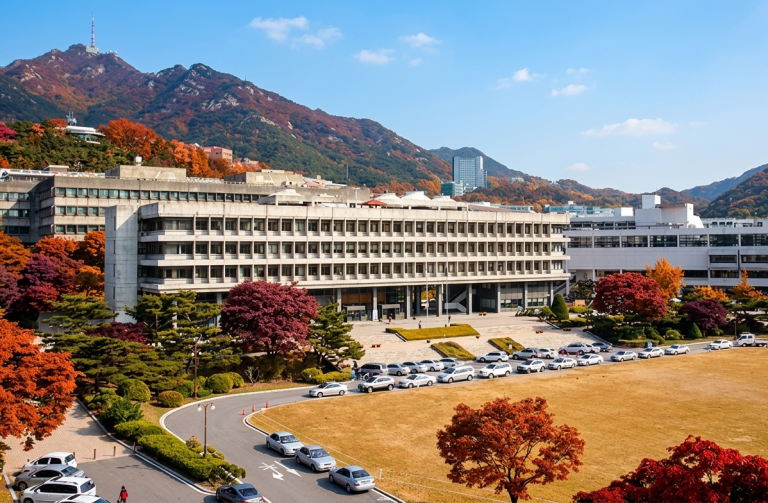
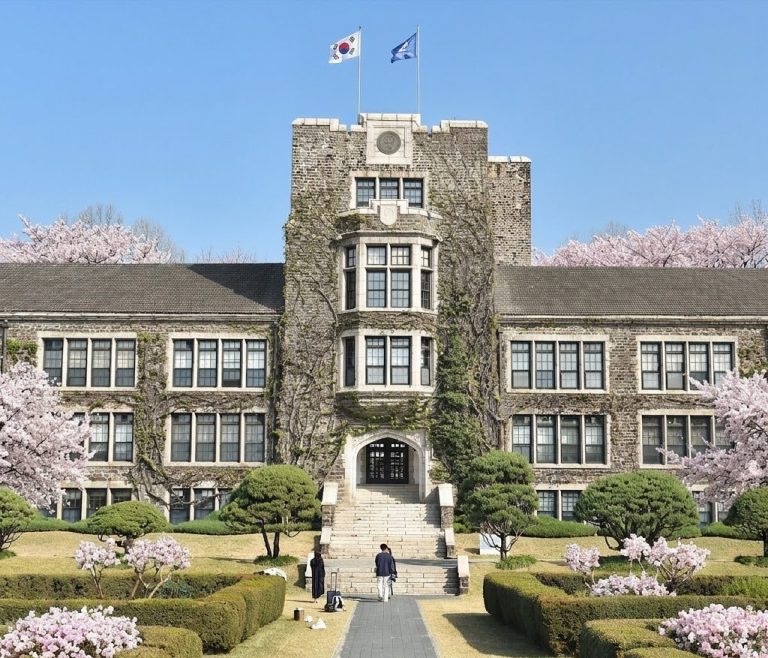

 China
ChinaChinese universities are rapidly rising in world rankings, and the country has turned into one of the largest educational hubs on the planet. Diplomas from leading Chinese universities are recognized by employers around the world, the cost of education is lower than in Great Britain or the USA, and the government actively finances foreign students. On this page - everything you need for admission: universities, cost, scholarships, documents and student visa.
 Singapore
 South Korea
 Japan
JapanJapan is one of the most unconventional destinations for studying abroad. Japanese diplomas are highly valued in the international job market, universities are ranked among the top in the world, and students work with technologies that have not yet been mass-produced in other countries. If you are ready to immerse yourself in a unique culture and a systematic approach to knowledge, this is the right choice for you.
Leave your contacts — our consultant will get in touch
