




 MEXT Scholarship: How to Apply for a Japanese Government Scholarship

She enrolled in Fashion PR programs at five US universities


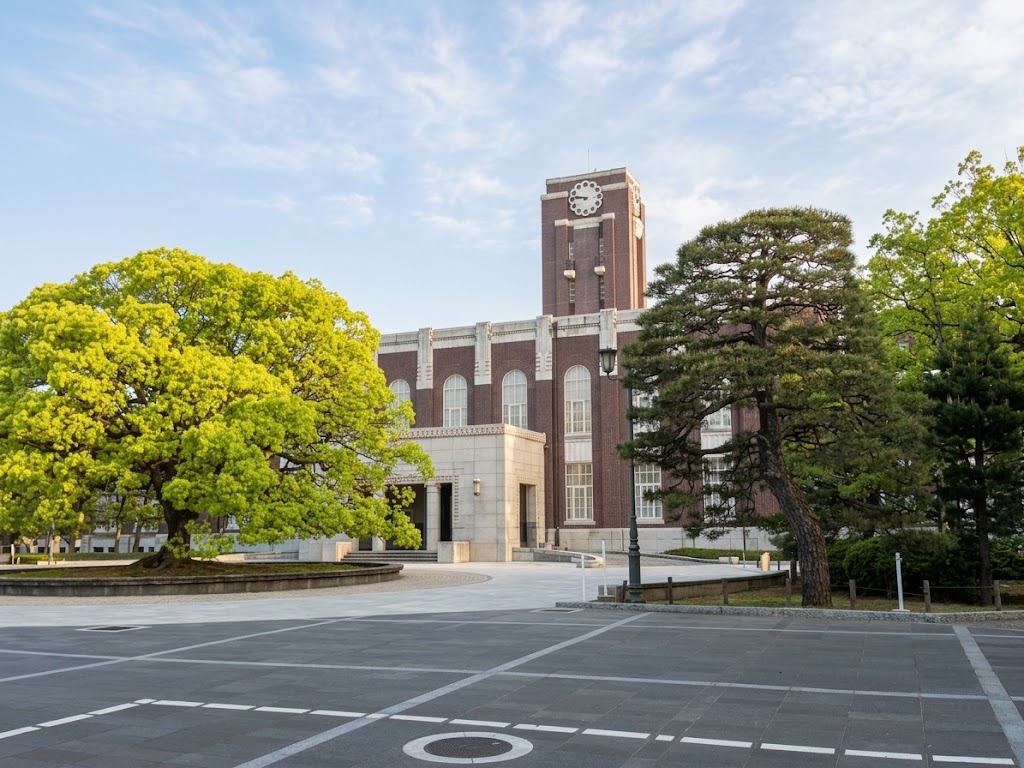
Kyoto, Japan · Kyoto University (Kyōto Daigaku; abbreviated as Kyodai) is Japan's second-oldest national university, established in 1897 in the country's cultural capital. It ranks first in Asia for the number of Nobel laureates—14, including the 2025 prize. In terms of academic reputation, it holds the 21st spot globally according to QS rankings. The THE 2026 rankings placed Kyoto University first in the world for "Industry Income," a metric measuring industry collaboration and technology transfer. For international applicants, the Kyoto iUP program offers a pathway to an undergraduate degree without requiring prior knowledge of Japanese, featuring full coverage of tuition and admission fees for all admitted students.
Kyoto University was founded in 1897 as Japan’s second imperial university — twenty years after the opening of the University of Tokyo. From the very beginning, Kyoto University was built around the principle of academic freedom and independent scientific inquiry. The university’s motto — «freedom of the academic spirit» (自由の学風, jiyū no gakufū) — is not just words: Kyoto University trains not executors, but researchers. Students here are taught to ask the right questions, not to reproduce established answers.
The university is located in Kyoto — a city with a thousand‑year history, where more than 2,000 Buddhist temples and Shinto shrines are concentrated. The main Yoshida campus is within walking distance of the city centre. The academic atmosphere of the city is one of the key reasons for choosing Kyoto University: Kyoto is significantly calmer and more accessible than Tokyo, which creates an optimal environment for focused research work.
Kyoto University ranks #64 according to QS 2027 and #61 according to THE 2026 — consistently #2 in Japan, уступая only to the University of Tokyo. According to QS academic reputation, it is #21 in the world. In chemistry, it is #18 in the world (ARWU 2025); in biology, it is #21 in the world (EduRank 2026); in physics, it is in the top 50 in the world. In 2026, Kyoto University was ranked #1 in the world in terms of Industry Income — recognition for its exceptional level of engagement with industry and the commercialization of research.
Kyoto University is a national university: the cost is the same for Japanese and international students.
Tuition fee: 535,800 JPY per year (~3,600 USD) — for all students regardless of citizenship
Admission fee (one‑time upon admission): 282,000 JPY (~1,900 USD)
Examination fee (graduate): 30,000 JPY (~200 USD); 10,000 JPY for selection based solely on documents.
Kyoto iUP: admission fee and tuition are fully covered for all admitted students — the total savings over 4.5 years amount to more than 2,800,000 JPY (~18,700 USD). No separate funding application is required.
Total: approximately 80,000–160,000 JPY per month (~530–1,070 USD). Kyoto is significantly cheaper than Tokyo, with a comparable quality of life — the cost of rent, food, and transportation is noticeably lower. This is one of the practical arguments in favor of Kyoto University compared to UTokyo.
Kyoto University comprises 10 undergraduate faculties and 18 graduate programs:
Kyoto iUP (Kyoto University International Undergraduate Program) is a separate bachelor’s program designed specifically for international applicants who do not speak Japanese at the time of application. This is not a standard Japanese‑language bachelor’s program with an English focus — it is an independent academic track with its own structure, funding, and conditions.
Program structure. Kyoto iUP is a 4.5‑year program: a six‑month preparatory course (October–March) plus four years of bachelor’s studies. Preparatory course: intensive study of the Japanese language at an academic level + introductory subjects in English. Upon completion, a Qualifying Test is required to move on to the main bachelor’s program. Main study (April–April) is conducted mainly in Japanese, focusing on the chosen specialization. Upon completion, a standard Kyoto University bachelor’s diploma is awarded.
Is Japanese required for admission? No. Knowledge of Japanese is not required. The program is designed specifically for those who are starting from scratch.
Funding for all accepted students (automatically):
Full exemption from the admission fee (282,000 JPY)
Full or partial exemption from the tuition fee (535,800 JPY/year) for the entire study period
Monthly payment of up to 120,000 JPY (~800 USD) during the six‑month preparatory course
Merit-based payments from external funds during the bachelor’s program
No separate scholarship application is required — funding is provided automatically to all admitted students. The total savings over 4.5 years amount to more than 2,800,000 JPY (~18,700 USD).
Number of places. No more than 30 students per year — the competition is very high.
List of available faculties. Limited and updated annually — check the current admission guide for the specific cohort.
How to apply. Online via the official Kyoto iUP portal. Application fee: 9,800 JPY (~65 USD). Recruitment is held once a year, in early October. Deadlines: as a rule, November–December of the previous year.
The Yoshida main campus is located in the center of Kyoto, within walking distance of the historic Gion and Nishiki districts. The campus creates the atmosphere that is described as “academic” — open spaces, libraries with centuries‑old collections, and bicycles at every building. Additional campuses: Uji (engineering and environmental sciences) to the south of Kyoto and Katsura (new technologies) to the west.
Approximately 2,600 international students from more than 110 countries study at Kyoto University. International students participate in exchange programs, seminars, and research projects together with Japanese colleagues. The Office of International Affairs coordinates adaptation, language courses, and cultural programs.
Accommodation: university International Houses and student dormitories on campus; the cost is 20,000–50,000 JPY per month — significantly lower than similar accommodation in Tokyo. There is a well-developed student infrastructure near the campus: cafes, bookstores, and bicycle workshops.
Kyoto as a city has its own unique advantages. More than 2,000 Buddhist temples and Shinto shrines, the traditional Gion and Arashiyama districts, a culinary culture, and festivals. At the same time, Osaka is 15 minutes away, and Tokyo is a 2.5‑hour train ride away by Shinkansen.
Admission to Kyoto University is not a single procedure. The university has 10 faculties and 18 graduate programs, each of which sets its own requirements, exams, and deadlines.
Specifically for international students without Japanese language proficiency. Completed secondary education (12 years or equivalent), strong academic results, SAT/IB/A-Level or national qualification, personal essay, letters of recommendation. No Japanese language proficiency required. Deadline: November–December. Start: october. 30 places.
Requires a high level of Japanese: JLPT N1–N2 and/or EJU (Examination for Japanese University Admission for International Students). Faculty entrance exam. Essentially the same competition as for Japanese students.
The most comprehensive pathway for foreigners: a bachelor’s degree in a relevant field, transcript, statement of purpose, research proposal, recommendations (2–3), language certificate (TOEFL/IELTS or JLPT), written exam, and interview. For a PhD, prior contact with a research supervisor is strongly recommended. Each of the 18 graduate schools sets its own requirements.
The non‑degree status of a research intern at a laboratory. A recognized pathway to postgraduate studies; the MEXT Embassy Track is often associated with this status.

Japanese is not required for submission. English is required for interviews and academic disciplines.
JLPT N1–N2, EJU — mandatory.
TOEFL iBT / IELTS for most English‑language programs; JLPT — for Japanese‑language programs. The requirements are set by each graduate school separately.
All foreign documents require an official translation into Japanese or English; depending on the country, an apostille or consular legalization is required. Start this process in advance — several weeks in advance.
Examination fee for graduate programs: 30,000 JPY (~200 USD); 10,000 JPY if the selection is based solely on documents without a written exam.
For all those accepted automatically: full exemption from the admission fee and tuition + 120,000 JPY/month during the preparatory course + merit-based payments during the bachelor’s program. No separate application is required.
Japan’s government scholarship:
Undergraduate: 117,000 JPY/month + full tuition coverage
Research Students / Graduate: 143,000–145,000 JPY/month + full tuition coverage + airfare
Two routes: through the Japanese embassy or through the university after admission. The competition is very high. Important: in most cases, MEXT through the university track is accepted only after admission — own funds are required before the start of studies.
Partial or full tuition waiver due to financial circumstances or academic merit. Submitted after enrollment.
Additional income for graduate students: working as a teaching assistant or in a research laboratory. The amount depends on the degree, department, and contract terms.
A monthly payment for students participating in exchange programs.
Honda, Mitsubishi, Toyota, and other Japanese companies offer scholarships for international students. The current list is available through the Office of International Affairs at Kyoto University.
The Kyoto University diploma is the second most prestigious in Japan after UTokyo. Major Japanese corporations (Toyota, Panasonic, Mitsubishi, Sharp, Kyocera) and international companies with a Japanese presence recruit Kyoto University graduates. The university is located in the Kansai region — one of Japan’s largest industrial and technological clusters, which includes Osaka, Kobe, and Kyoto itself.
Notable alumni include film director Nagisa Oshima and writer Kan Kikuchi. In a broader context: graduates of Kyoto University hold key positions in Japanese science, medicine, engineering, and public administration. Kyodai researchers traditionally establish companies and spin‑offs in the fields of biotechnology and materials science — especially in the Kansai region.
Kyoto University is one of the world’s leading research universities. Kyodai’s distinctive approach is to nurture world‑class researchers, which is confirmed by 13 Nobel laureates (14 since 2025).
iPSC is Shinya Yamanaka’s technology. In 2006, at the Faculty of Medicine at Kyoto University, Shinya Yamanaka first obtained induced pluripotent stem cells from adult somatic cells. This discovery changed biomedicine: iPSC technology laid the foundation for modern regenerative medicine and model systems for studying diseases. Nobel Prize in Physiology or Medicine, 2012.
Tasuku Honjo and cancer immunotherapy. In 1992, Honjo discovered the PD‑1 protein, which plays a key role in immune control. Based on it, immune checkpoint inhibitor drugs have been developed — one of the most significant breakthroughs in oncology in recent decades. Nobel Prize in Physiology or Medicine, 2018.
According to ARWU 2026, Kyoto University ranks #43 in the world, #18 in the world in chemistry (2025 Global Ranking of Academic Subjects). In terms of the ratio of Nobel laureates to the size of the university, Kyoto University significantly outperforms UTokyo.
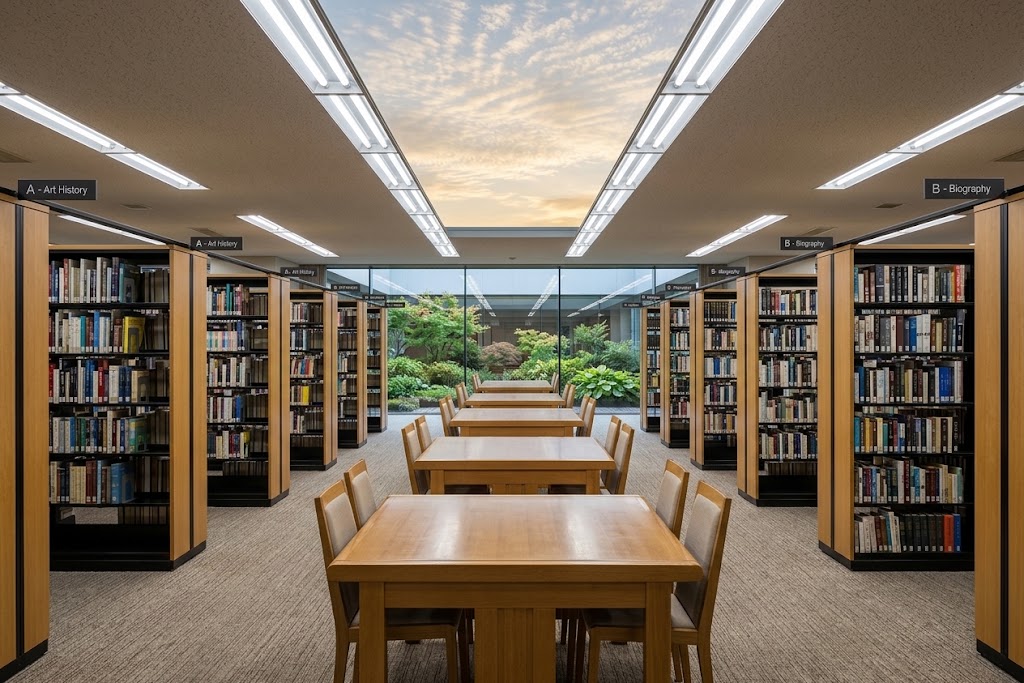
Kyoto University was founded in 1897 as the second imperial university in Japan, established as a counterbalance to the University of Tokyo, with a fundamentally different academic philosophy: freedom of inquiry instead of systematic instruction.
14 Nobel laureates (including Susumu Kitagawa, Chemistry, 2025) — #1 in Asia in this regard. Additionally: 2 Fields Medal laureates and 1 Gauss Prize laureate.
THE Industry Income #1 in the world (2026) — Kyoto University collaborates with industry more effectively than any other university in the world, according to THE.
Kyoto iUP is the only undergraduate program in the university’s history created specifically for foreigners who do not speak Japanese. No more than 30 places per year. Full coverage of tuition and admission fee for all automatically admitted students.
The academic culture of Kyoto University is described by the Japanese term “自由の学風” (jiyū no gakufū) — “freedom of the academic spirit.” This is not just a slogan: Kyoto University professors traditionally have more autonomy in choosing research areas than those at other Japanese universities.
Kyoto vs Tokyo: Kyoto University students live in a city with a fundamentally different rhythm — and it’s much cheaper. Rent in Kyoto is 1.5–2 times lower than in Tokyo. At the same time, the academic level is #2 in the country.
Getting into Kyoto University is, first and foremost, about choosing the right trajectory. A mistake at this stage means losing time and resources preparing for the wrong program. At SelfStartGlobal, we help you build the entire process systemically:
Our students have already received scholarships worth more than $35 million.
Do you want to enroll at Kyoto University? Come to a free consultation. We’ll explain how it works in your specific case.



She enrolled in Fashion PR programs at five US universities



She enrolled in graphic design at universities in France, Italy and Hungary. She received scholarships at all of them and chose the university with the maximum funding — $135,000 for the entire period of study.

He entered Siena Heights University (USA) for the Theater and Music program with a full scholarship of $170,000. Preparation took less than a year.

She entered graduate school at Kent State University and Ohio University. At Ohio University, she won a Graduate Teaching Assistantship with full funding of $37,774, covering tuition, insurance, and living expenses.

Got accepted to NYU Abu Dhabi on the first try (acceptance rate 4%) with a scholarship of $217,000. Also received offers from Lynn and Drexel University.

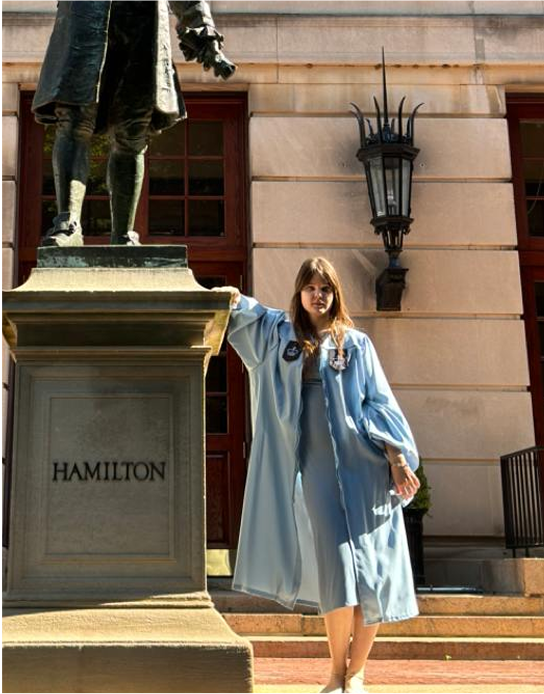
I was accepted to the PhD program at Columbia University on my first try, having strengthened my profile and compiled my achievements into a strong application.

He entered a master’s program in the USA at two universities at once – Brandeis University and Washington University in St. Louis, receiving scholarships totaling $80,000. He chose Brandeis University and went to study on the first try.

She was admitted to three American universities at once: Augustana College, Widener University, and the University of South Dakota. She chose Augustana College, where she received a scholarship of $45,000 per year.
Leave your contacts — our consultant will get in touch
