
















Why STEM Applications Should Start with Choosing a Career Direction
Время чтения:
0 мин
0 мин


 Singapore
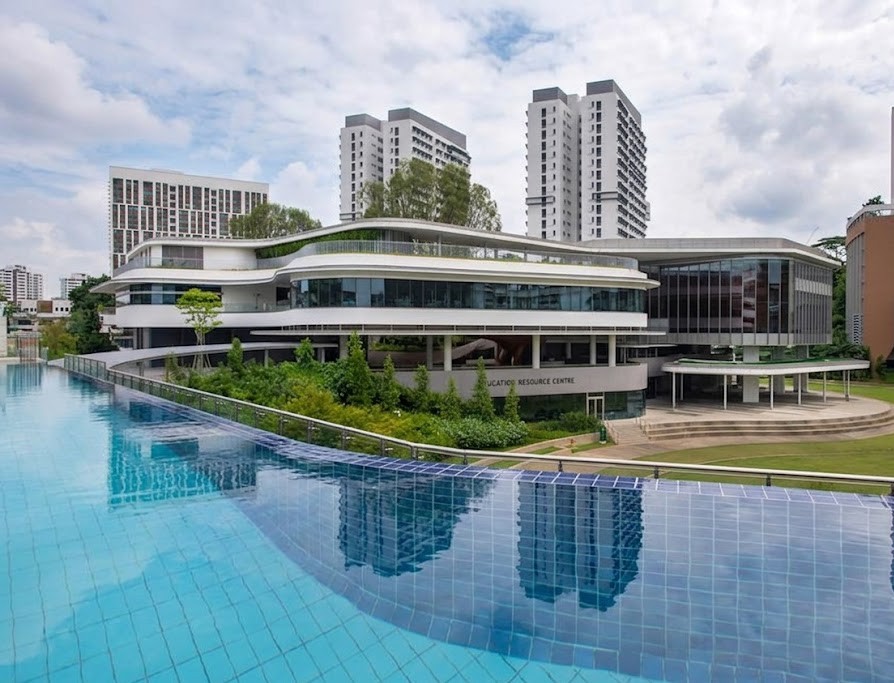
 The National University of Singapore is Singapore's flagship university and the best university in Asia according to QS and THE. NUS is the only Asian university in the global QS top 10. Instruction is in English at all levels, from undergraduate to PhD. With 16 faculties and schools and 28 subject areas ranked in the global top 10 (QS 2026), NUS is a record-breaking institution for Asian universities. For international applicants, NUS offers a combination of world-class academic excellence, a fully English-language environment, and direct access to the Asian labor market.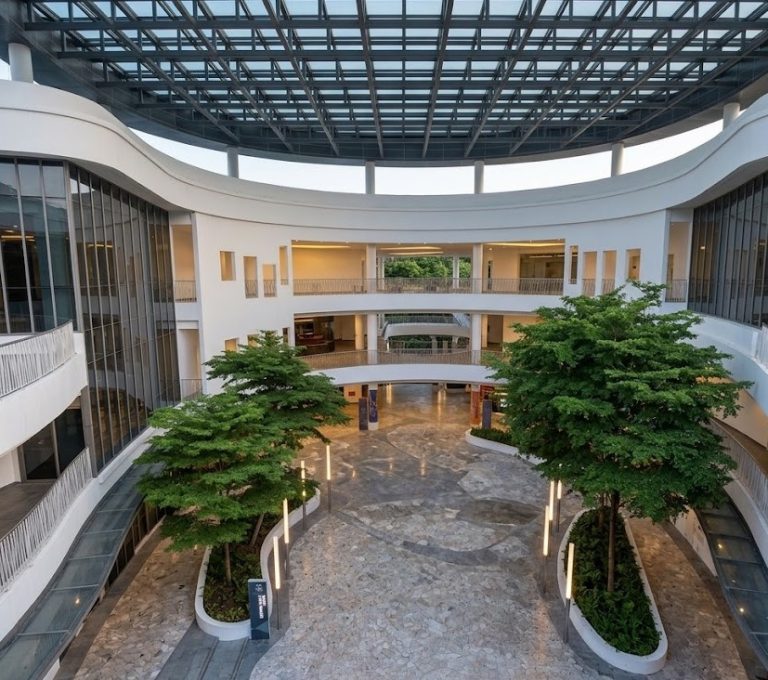
The National University of Singapore was founded in 1905. Today, it is a large research-intensive university with over 40,000 students from 100+ countries, 16 faculties and schools, over 100 undergraduate programs, and over 250 graduate programs. Approximately 39% of the student body consists of international students, which is one of the highest percentages among universities in Asia.
Singapore is one of the most stable, secure, and economically developed city-states in the world. For a foreign student, this means a fully English-speaking environment, a high quality of life, a well-developed transportation infrastructure, and direct access to the regional labor market in Southeast Asia. Global companies such as Google, Citi, McKinsey, BCG, and P&G actively recruit on campus.
NUS has produced notable alumni, including several Singaporean government ministers, executives of major Asian corporations, and international organizations. NUS actively collaborates with more than 30 research institutes and centers, and students can participate in real-world projects starting from their undergraduate studies through the Undergraduate Research Opportunities Programme (UROP).
| Degree of study | bachelor's degree, taught master's, research master's, PhD |
| Language of instruction | English - for all programs |
| Percentage of international students accepted | 7–9% (estimated based on data from 2025–2026; the official acceptance rate is not published) |
| Probability of employment | 83% of graduates are employed within 6 months (JAUGES 2025) |
| Scholarships | NUS International Undergraduate Scholarship, ASEAN Scholarship, MOE Tuition Grant, NUS Research Scholarship, President's Graduate Fellowship |
| Areas of study | computer science, engineering, business, medicine, law, natural and human sciences, design, and architecture |
| Size of the student campus | more than 40,000 students (about 39% are international from 100+ countries) |
| Campuses | main — Kent Ridge; also Buona Vista and Novena (medicine) |
Tuition fees for international students depend on the program and the availability of the MOE Tuition Grant, a government subsidy that reduces the cost by 40-60% in exchange for a commitment to work for 3 years in a Singapore-based company.
Bachelor’s degree with the MOE Tuition Grant: between 17,000 and 22,000 SGD per year (approximately 12,700-16,500 USD) for most programs
Bachelor’s without MOE Grant (full cost): from 37,000 to 65,000+ SGD per year; medicine and professional programs are at the upper end of the range
Taught master’s: from 20,000 to 50,000+ SGD per year; MBA and professional programs are above
PhD: usually funded through the NUS Research Scholarship — full tuition waiver + monthly stipend of 2,500–3,500 SGD (about 1,900–2,600 USD)
The cost of study is added:
Computer Science and Technology
Business and Social Sciences
Medicine and healthcare
Right
Humanities and Design
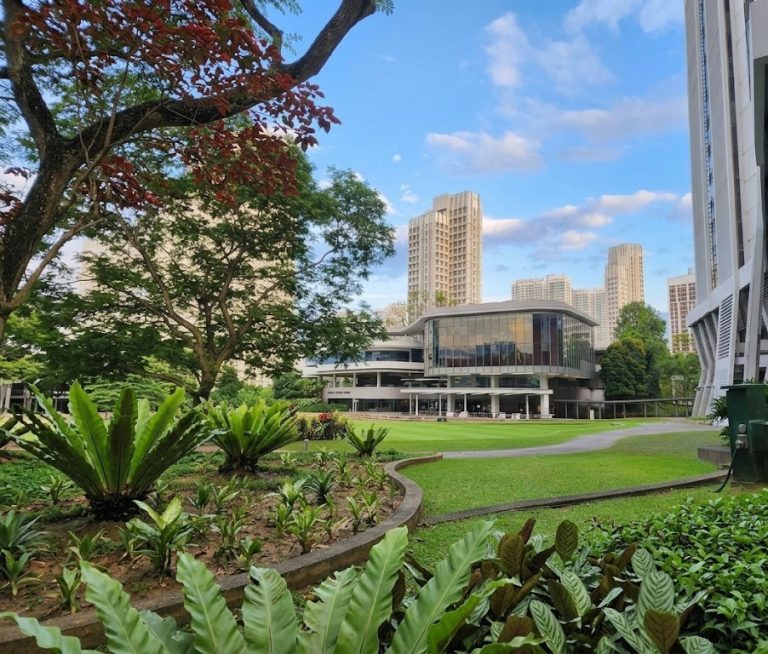
The main NUS campus is located in the Kent Ridge area of south-west Singapore – compact, green, well-connected to the city centre by the MRT (Mass Rapid Transit) lines. Medical faculties are located at the Buona Vista and Novem campuses.
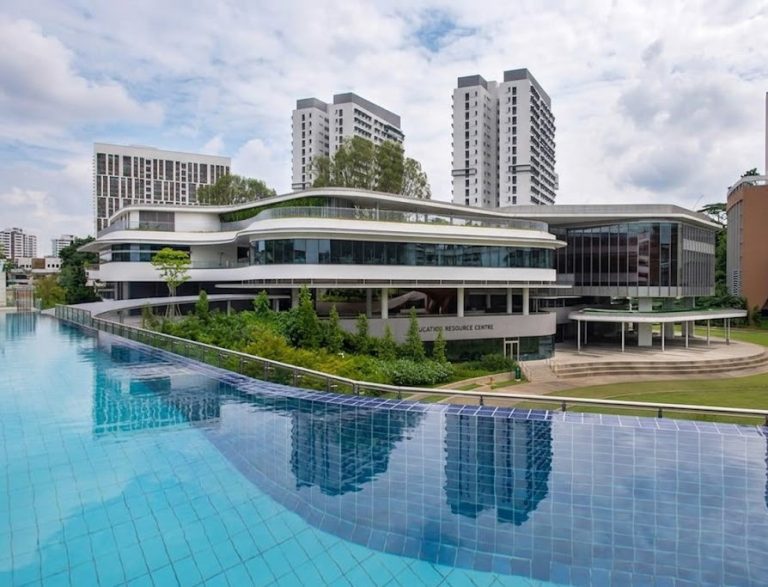
Student accommodation (halls of residence) is provided for all first-year students; upper-year students compete for places. NUS has several types of accommodation, from traditional halls with compulsory student activities to more autonomous residential colleges. UTown (University Town) is a modern student quarter with study spaces, restaurants, shops, a swimming pool, and sports facilities right on campus.
There are more than 90 student organizations and more than 200 student clubs (CCA – Co-Curricular Activities) on campus. The university library system includes 9 specialized libraries. Singapore provides students with access to a world-class cultural, business, and gastronomic environment within walking distance or a 20-minute commute.
It is important to start preparing the documents at least 5-6 months before the planned deadline.

Applications are submitted through the official NUS Admissions portal. Estimated deadlines: Applications open in October-November and close in February-March for the August intake.
NUS considers various types of school qualifications, including A-Level, IB, SAT/ACT, and a range of national qualifications. Requirements are specified by qualification type in separate admission guides on the NUS website.
Key elements of the application: high academic performance with core subjects relevant to the chosen program; language test (IELTS 6.0-7.0 or TOEFL 85-100 iBT if the school was not accredited as an English-speaking school); extracurricular achievements and leadership experience are considered when selecting competitive programs and scholarships. For medicine, law, and NUS College, an interview is mandatory.
For taught master’s and research master’s, you will need a bachelor’s degree with a strong transcript, a CV, a statement of purpose, and letters of recommendation (usually two). For research master’s and PhD, you will need a research proposal and prior contact with a supervisor (significantly increases your chances). Deadlines for graduate programs: typically February-May for August enrollment; some programs have January or November enrollment.
The acceptance rate for international students is approximately 7-9% (data from 2025-2026; NUS does not publish an official acceptance rate). The competition varies significantly by program: Computing, Medicine, and Law are the most competitive fields, while the humanities and social sciences are slightly more accessible.
It is important for international students to consider that approximately 80% of undergraduate places are reserved for Singaporean citizens and permanent residents, and international students compete for the remaining spots, which are significantly more competitive.
What strengthens an application: high scores in core subjects, a convincing statement of purpose, specific extracurricular achievements (not a list of clubs), and research experience, which is mandatory for PhD programs and valuable for competitive bachelor’s programs.

One of the most prestigious undergraduate scholarships for international students. It can cover the full subsidized tuition fee + accommodation allowance. The application is processed automatically when the admission application is submitted; shortlisted candidates are interviewed.
For ASEAN citizens (Brunei, Cambodia, Indonesia, Laos, Malaysia, Myanmar, Philippines, Thailand, and Vietnam). Covers full tuition + SGD 6,500 annual allowance + SGD 200 settling-in allowance + airfare to Singapore. Deadline for the 2026 intake: February 23, 2026. Requires a 3-year work experience in Singapore after graduation.
A government subsidy that reduces the cost of education by 40-60%. Technically, it is not a scholarship, but a subsidy. The condition is a 3-year Service Obligation, which involves working for a company registered in Singapore. The Agreement is signed in October, before the start of the academic year.
Standard PhD scholarship: full tuition waiver + monthly stipend of 2,500-3,500 SGD.
For outstanding PhD students, increased scholarships and additional research grants.
Program for international PhD students at leading research institutes in Singapore (A*STAR, NUS, NTU, SMU, SUTD): full tuition + 2,700-3,200 SGD per month + air ticket + settling-in grant.
According to JAUGES 2025, 83% of NUS graduates find employment within 6 months of graduation. Singapore is one of the most competitive job markets in Asia, with high average salaries, low taxes, and a world-class quality of life.
Key employers that actively recruit on campus include Google, Goldman Sachs, Citi, McKinsey, BCG, Procter & Gamble, ByteDance, Sea Group, and DBS Bank. Singapore serves as a regional hub for hundreds of global companies, and a NUS degree opens doors not only in Singapore but also throughout Southeast Asia and beyond.
The NUS Career Centre supports students through internship programmes, career fairs, and networking events with leading employers. Many Computing and Engineering students receive job offers before completing their bachelor’s degrees.

NUS is the only Asian university in the global top 10 QS (a position that has been stable since 2024), despite being founded only in 1905.
28 subject areas in the global top 10 (QS 2026) — more than most European universities and many American universities.
MOE Tuition Grant is a unique system of state subsidies for the education of foreigners, allowing you to reduce the cost of education by 40-60% in exchange for a commitment to work in Singapore. There are no analogues in this form in the United States or Europe.
The joint program with Imperial College London (LKCMedicine) is one of the few dual medical programs in the world with accreditation from two countries simultaneously.
NUS College (formerly Yale-NUS College) is Asia’s first Western-style liberal arts college, founded in 2013 in collaboration with Yale University.
Singapore has been ranked #1 in the world for global competitiveness (IMD World Competitiveness Ranking) for several years in a row, making NUS students the most competitive students in the world.
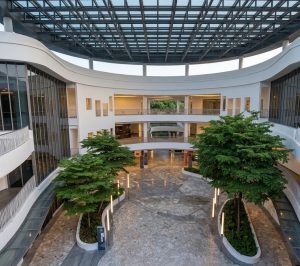
Admission to NUS is a process of several parallel tracks: admission application, scholarship application, MOE Tuition Grant, interview preparation. We at SelfStartGlobal help to manage them systematically:
Our students have already received scholarships worth more than 35 million dollars.
If you want to apply to the National University of Singapore, come for a free consultation. We will tell you how it works in your specific case.

She enrolled in Fashion PR programs at five US universities

She was admitted to three American universities at once: Augustana College, Widener University, and the University of South Dakota. She chose Augustana College, where she received a scholarship of $45,000 per year.

He entered a master’s program in the USA at two universities at once – Brandeis University and Washington University in St. Louis, receiving scholarships totaling $80,000. He chose Brandeis University and went to study on the first try.
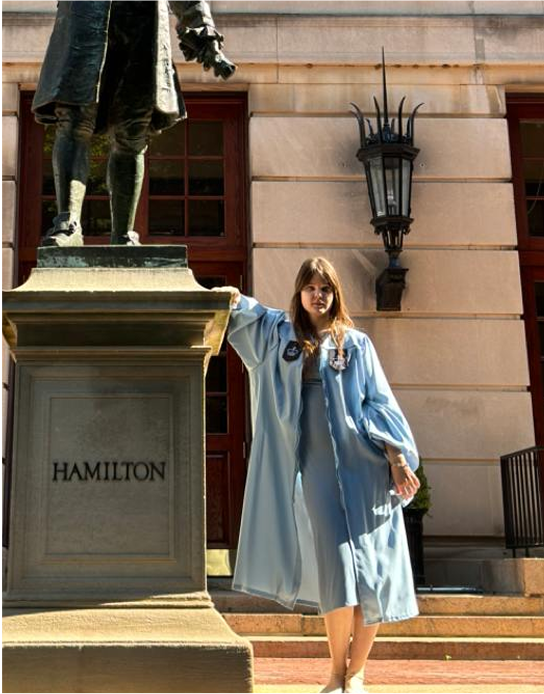
I was accepted to the PhD program at Columbia University on my first try, having strengthened my profile and compiled my achievements into a strong application.

She enrolled in graphic design at universities in France, Italy and Hungary. She received scholarships at all of them and chose the university with the maximum funding — $135,000 for the entire period of study.

She entered graduate school at Kent State University and Ohio University. At Ohio University, she won a Graduate Teaching Assistantship with full funding of $37,774, covering tuition, insurance, and living expenses.

He entered Siena Heights University (USA) for the Theater and Music program with a full scholarship of $170,000. Preparation took less than a year.

Got accepted to NYU Abu Dhabi on the first try (acceptance rate 4%) with a scholarship of $217,000. Also received offers from Lynn and Drexel University.