




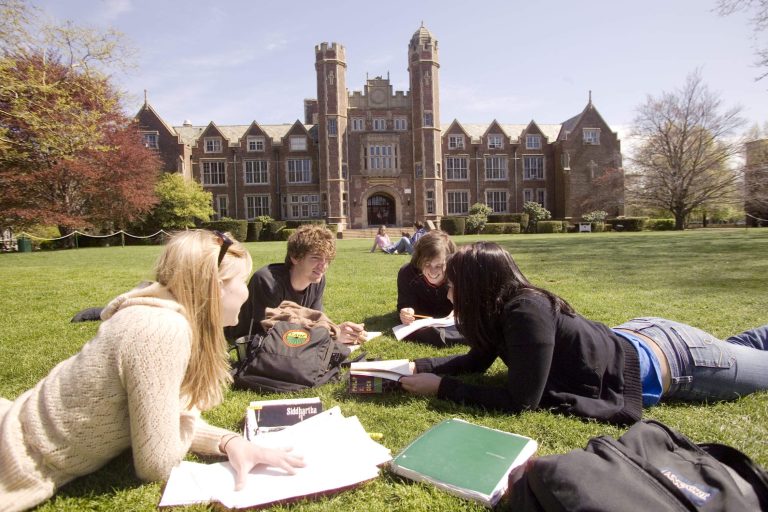
 7 steps to guarantee your admission to a university abroad


Service payment
Fill out the form and continue to payment via Stripe


European education is considered an expensive option for studying, but Belgium, Austria, and Italy refute this popular stereotype. These countries are traditionally considered budget-friendly destinations for studying due to their favorable policies at public universities and the availability of various support programs.
It is important to note that the “budget-friendly” status does not mean that there are no costs associated with studying abroad. The final cost of studying abroad is influenced by various factors, including citizenship, the chosen university, the level of the program, the city, the availability of scholarships, and the mandatory financial requirements. When choosing where to study in Europe, it is important to consider not only the cost of semester fees, but also the overall cost of living for students.
When planning to enroll in Europe inexpensively, it is important not to limit yourself to analyzing tuition fees alone, since the total cost of education consists of various factors. To estimate the actual budget, it is necessary to draw up a professional financial plan that includes the following items of expenditure:
It is the combination of these expenses that determines the actual budget for studying abroad with or without a scholarship.
Why is Austria attractive for students?
Admission to Austria is popular due to public universities with high academic standards. The country is a center of Europe and offers top-notch education in engineering, economics, social sciences, and the arts. This destination is ideal for those seeking research programs and valuing discipline.
To obtain a residence permit, you need to prove your financial viability. For 2026, students under the age of 24 need proof of funds at the level of 722.58 euros per month, after 24 years — 1,308.39 euros per month. These funds must be available in the account for 12 months in advance.
This country is suitable for students who are ready for an academic approach, plan to study German (although there are programs in English), and are able to accumulate the necessary amount for proof of funds in advance.
Why is Italy often on the list of budget countries?
Studying in Italy attracts thousands of students with its democratic cost of education. A wide range of public universities and English-taught programs in fields such as design, architecture, engineering, business, and humanities makes Italy a leader in terms of value for money.
Tuition fees:
Rent: approximately 500-1000 euros per month for a separate studio.
Food, transportation, and personal expenses: an average of 600-1400 euros per month, depending on the city.
The country’s strength lies in its regional scholarships. For example, the DSU grant in Tuscany or other regions can cover accommodation, meals, and fully exempt students from tuition fees. This is a significant financial assistance for students, which is distributed based on family income (ISEE).
The country is ideal for creative and technical specialties. It is suitable for those who are willing to delve deeply into the process of applying for scholarships and finding programs in less popular student cities where the cost of living is lower.
Why is Belgium on the list?
Belgium is not the cheapest destination, but it offers the highest level of integration into the European community. Students choose to study in Belgium for its career opportunities in Brussels, its strong international environment, and its high-quality English-language programs.
The average cost of living is between 800 and 1,000 euros per month. Students from non-EU countries who have a legal residence permit can work up to 20 hours per week, which helps to cover some of their living expenses.
This is a choice for ambitious students who value a career ecosystem, international education, and a highly regarded degree.
If the minimum tuition fee is important
Austria and Italy offer the most affordable public tuition fees, making them the leaders in this regard.
If you need a scholarship for accommodation
Italy wins through regional scholarship systems (DSU) that can cover basic needs, including accommodation and food.
If career opportunities are important
Belgium provides a strong base for a career in international organizations and global companies due to its location.
If the student is not from the EU/EEA
Tuition fees for such students in Belgium can be significantly higher than in Austria or Italy, making the latter more affordable for long-term planning.

To choose a budget-friendly country for admission, use the following checklist:
To ensure that choosing a country does not become a financial trap, we recommend going through five critical points before starting the application process.

Cost calculation: Add up all the expenses for 12 months: tuition fees, rent (including security deposit), food, travel expenses, health insurance, and study materials. Compare this amount with similar expenses in other countries. It is important to estimate how much money will be required before starting studies for visa fees and flights.

Checking Non-EU/EEA status: For many universities, citizenship is a key factor in pricing. In Belgium, for example, the difference in cost between EU citizens and students from other countries can be significant. Please carefully check the program pages. Look for the sections “Tuition fees for international students” or “Non-EU students”.

Analyze the cost of living by city (not by country): A country may be budget-friendly, but living in the capital or a major metropolis like Milan or Vienna will cost 30-50% more than in the student towns of Pavia or Graz. Use the Numbeo resource to estimate the prices of food and rent in a specific city.

Audit of scholarship opportunities (Scholarship Support): Find out in advance whether the university has scholarships available to foreigners and whether they require a separate application process. Assess the likelihood of success. If the program offers only one scholarship for a class of 100 students, budget for the full cost of tuition.

Evaluate the possibility of part-time work: Check the employment regulations for students in your chosen country. In some countries, working on a student visa can provide a realistic opportunity to cover food expenses. However, in other countries, the job market may be closed to students without knowledge of the local language.
Even applicants with a strong academic profile make mistakes in financial planning. Here are the most common ones:
This is the most dangerous mistake. A student chooses a university with zero or low tuition fees, forgetting that the cost of renting a room in that city can eat up the entire budget. Always consider the Total Cost of Attendance, not just the semester fee.
Many people forget that having enough money to live on is not enough for a visa. The consulate requires proof of the entire amount for the next year in a bank account. If you need to borrow or quickly find this money, the visa application process may be delayed.
Enrolling in a top-tier capital city comes with hidden costs: higher transportation costs, expensive cafes, accommodation taxes, and competition for budget-friendly housing. Find a balance between the quality of the university and the accessibility of the city.
A scholarship or fee waiver may be revoked, and housing prices may increase. Always plan your budget with a 15-20% buffer for unexpected expenses.
If the training requires language proficiency, the costs of courses and certification exams should be included in the total expenses.
Applying for a grant is always a risk. Your financial plan should be functional even if you don’t receive a scholarship.
Budget-funded programs and scholarships have early deadlines (6-9 months before the start of the program). Missing the deadline means losing the chance to receive a grant and having to pay for tuition.
How SelfStartGlobal helps you choose a budget-friendly country for admission
Choosing a country is the foundation of your admission strategy. SelfStartGlobal experts help you not just find “where it’s cheaper,” but also create a realistic plan. We conduct in-depth program reviews, assess your chances of receiving scholarship support, and prepare your documents to make your personal brand as appealing as possible to the admissions committee.
Our services, including Full support and Mentoring, assist you in managing your budget effectively and achieving your dream university without unnecessary financial risks.
Everything is individual. Austria and Italy often offer lower tuition fees, while the cost of living varies depending on the city.
Rarely, but possible through grants or fee waiver programs. However, your main expenses will remain accommodation and visa fees.
Italy offers the most structured system of regional grants, but receiving any scholarship requires preparation of a strong profile.
Yes, in many European countries students are allowed to work up to 20 hours a week, which allows them to partially cover expenses.
At least one year before the start of your studies. You need to choose your programs, take language tests, and collect documents for a scholarship and visa.
















 Canada
High-quality education with strong support for international students. Attractive for its safe environment and career and immigration prospects
 Germany
One of the most popular study destinations in Europe. Free or low-cost education, strong technical and engineering fields, and high demand for graduates
 Portugal
One of the most affordable countries in Europe for education. Comfortable adaptation, a growing number of English-taught programs, and good prospects for long-term residence
 Switzerland
A country of prestigious education and high standards. Especially strong in business, finance, hospitality management, and international relations
 United Kingdom
Classical education with global recognition. Shorter study periods, strong humanities and business programs, and a highly valued diploma
 UAE
UAEModern education in an international environment. Campuses of leading global universities, English-taught programs, and a strong focus on careers and business
 China
ChinaChinese universities are rapidly rising in world rankings, and the country has turned into one of the largest educational hubs on the planet. Diplomas from leading Chinese universities are recognized by employers around the world, the cost of education is lower than in Great Britain or the USA, and the government actively finances foreign students. On this page - everything you need for admission: universities, cost, scholarships, documents and student visa.
 USA
USAA popular destination for studying abroad. Prestigious universities, a flexible education system, a wide selection of programs, and broad career prospects
Leave your contacts — our consultant will get in touch
