Natural sciences and biomedicine

Natural sciences and biomedicine are at the forefront of global progress. This field combines biology, biomedicine, biotechnology, and genetics, forming the foundation for the future of medicine, pharmacology, and ecology. Students prepare for careers as researchers, innovative drug developers, and laboratory diagnostic specialists.

Why is it worth studying?

World-class technological base

Students work on the latest equipment: DNA sequencers, electron microscopes, automated bioreactors. These are not demonstration stands, but working tools that students learn to handle during the program.

Interdisciplinarity

Programs at the intersection of sciences are popular abroad — bioinformatics, nanobiotechnology, neuroscience. This opens up career tracks that do not exist within the framework of classical education.

Practical Focus

The training is industry-specific. Internships at pharmaceutical companies and research centers are often integrated into the program rather than offered as an option.

International research environment

You work in groups with students and scientists from different countries. These are professional connections that last a lifetime.

How to apply for training

Admission to biomedicine requires precision: every element of the application is important for shaping the profile of a future researcher. It is worth starting to prepare 12-18 months in advance.

1
Selecting a program

Biological sciences, biomedicine, biotechnology, and natural sciences are different tracks with different focuses. Biology is a fundamental science. Biomedicine is a bridge between biology and medicine, working in a laboratory rather than with patients. Biotechnology is the creation of new products using living systems. When choosing a program, consider the curriculum, the research focus of the faculty, and the availability of internships.

2
Academic preparation

Required subjects are biology and chemistry, and sometimes mathematics or physics. High grades in specialized subjects are a key requirement for most universities.

3
Package of documents

Transcript or diploma with apostille, motivation letter describing your scientific interests and research you want to conduct, recommendations from biology or chemistry teachers, language certificate (IELTS 6.5 for most English-speaking programs), and resume.

4
Submitting an application

In some countries, deadlines for the next academic year close as early as January. Top universities in the US and UK may require SAT scores or specialized entrance exams.

Scholarships and grants for students

Financial support for students in biomedical and scientific programs is one of the most developed systems in the academic world. Here are specific programs with verified data.

  • Wellcome Trust – Biomedical Summer Scholarships (UK)
    The Wellcome Trust funds summer research scholarships for undergraduate students studying at universities in the UK and Ireland. The program lasts 6-8 weeks and involves paid laboratory work under the guidance of a research supervisor. Payment is at the rate of the real subsistence minimum: in London, about 13.15 pounds per hour. The program is available at dozens of British universities, including UCL, King’s College London, and the University of Leicester. Important: from the summer of 2025, the Wellcome Trust plans to complete some of the summer scholarship programs – the current list of participating universities should be checked on the official website.
  • Maria Sklodowska-Curie Program (European Union)
    One of the largest European research funding programs. In 2025, the European Commission allocated 1.25 billion euros to support about 10,000 researchers through various MSCA programs. Doctoral Networks finance structured doctoral training programs through partnerships between universities, research organizations, and companies from different countries. Postdoctoral fellowships support researchers for up to two years with mandatory international mobility. The funding includes a salary or scholarship, a relocation allowance, and support for scholarship holders with children.
  • EMBO – European Molecular Biology Organization
    EMBO offers postdoctoral fellowships for excellent researchers in the field of biological sciences. The program supports researchers in Europe and around the world for up to two years. The key requirement is international mobility: the fellow must move to another country. The fellowship includes a salary or payment, relocation allowance, and support for researchers with children. The deadline for the next round is July 10, 2026.
  • DAAD – German Academic Exchange Service (Germany)
    DAAD supports students of natural science and biomedical programs through a variety of scholarship schemes. Annually, it finances more than 100,000 students and researchers. The monthly scholarship for master’s students is 992 euros, for doctoral students – 1,300 euros (from February 2026 – 1,400 euros). The package includes contributions for health insurance and travel expenses. At the same time, studying at public universities in Germany for most programs is free of charge — students pay only an administrative fee of 200-400 euros per semester. The competition for DAAD is about 10-15% of the number of applications.
  • NIH — US National Institutes of Health
    NIH offers several funding programs for students studying in the United States. The Graduate Partnerships Program allows students to conduct dissertation research directly in NIH laboratories with a paid scholarship, which is adjusted annually. In 2025-2026, the maximum level of funding for a graduate student through an NIH research grant is $62,232 per year. The program is open to international students through a number of partnership agreements with universities. The F31 Pre-Doctoral Fellowship (NRSA Fellowship) is available to graduate students in biomedical, behavioral, and clinical sciences, but only to U.S. citizens and permanent residents.
  • U.S. Universities – Graduate Assistantships
    Most PhD programs in biomedical sciences in the United States are fully funded: the student receives a scholarship, tuition fees, and health insurance. For example, in the biomolecular Sciences program at Michigan State University, the scholarship for 2025-2026 is $36,939 per year, and the full cost of support is about $57,073 per year. This is standard practice for PhDs in natural sciences in the USA — no exception.

General principles of funding in biomedicine and natural sciences:

PhD programs in the US are usually fully funded through assistantships – tuition fees are not charged, the student receives a living stipend.
European MSCA and EMBO programs involve mandatory international mobility – moving to another country is a condition for receiving funding.
Scholarships at the undergraduate level in this area are rare, but summer research programs (Wellcome Trust, university programs) provide paid experience and strengthen the application for a master’s degree.
Most programs require applications to be submitted 6-12 months in advance of the planned start date, with many programs having deadlines in October-January.

At SelfStartGlobal, we help students find scholarship opportunities that align with their specific profile and academic interests. Overall, our students have saved over $25 million.

Tip! In the fields of biomedical sciences and natural sciences, scholarships are often tied to a specific research project and a research supervisor. Finding funding should be started at the same time as finding a program and a potential supervisor — this is one strategy, not two separate steps.


Prospects after training

Biomedicine and natural sciences are a ticket to the future industry. Graduates are in demand in several completely different industries.

Pharmaceuticals and biotechnology

Drug creation and testing, vaccine development, genetic engineering, and reproductive medicine. One of the fastest-growing sectors with a high demand for internationally educated professionals.

Research and development

Work in academic laboratories, research centers, and institutes. An academic career typically requires a master’s or doctoral degree.

Public Health and Innovation

Epidemiological control, medical technology and wearable device startups, and work at the intersection of science and public health policy.

Immigration after training

  • In the UK, graduates can use the Graduate Route, a 2-year visa for job search without being tied to an employer.
  • In Germany, after graduation, you can get a job search permit for up to 18 months. Biomedical and biotechnology specialties are included in the list of professions in high demand. In the Netherlands,
  • Switzerland and a number of Scandinavian countries, there are similar programs for graduates.

Specialties in the field of biomedical and biotechnology often fall into national lists of shortage professions – this makes it easier to obtain a work visa after graduation.


FAQ

Should I choose biological sciences or biomedicine? Плюсик

If you are interested in fundamental science and living systems, then biology is for you. If you want to study human diseases and find ways to treat them in a laboratory, then biomedicine is for you.

Is it difficult to get into biomedicine? Плюсик

The competition is high, especially for top universities. Important are grades in specialized subjects, a motivation letter and an understanding of what you want to do.

What subjects are required for admission? Плюсик

Biology and chemistry are required. Some programs also require mathematics or physics.

Where is the best place to study to become a biomedical engineer? Плюсик

The United States, the United Kingdom, and Germany are considered the leaders. Excellent research schools are also located in the Netherlands, Switzerland, and the Scandinavian countries.

How is biomedicine different from medicine? Плюсик

A biomedical specialist works in a laboratory with cells, molecules, and data. A doctor works directly with patients. These are fundamentally different career paths with different training programs.

Universities

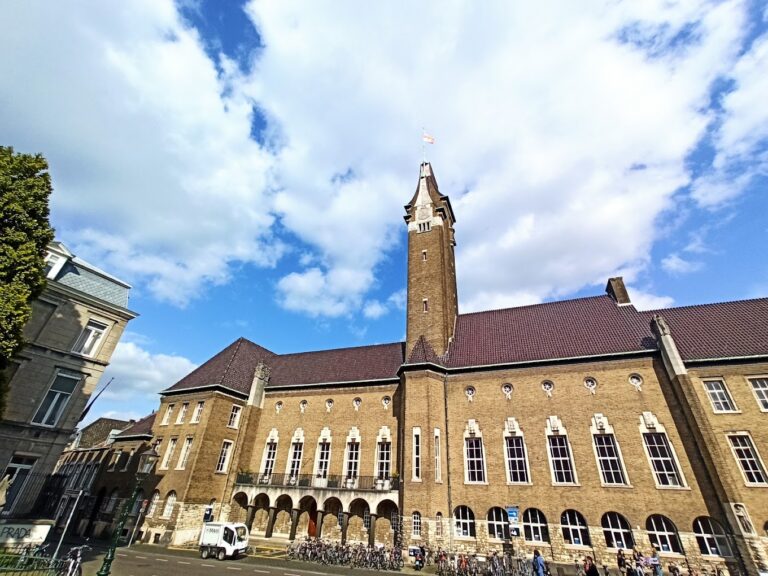
Paduana


University

Italy
One of the oldest universities in Europe with strong traditions in science, medicine, and the humanities. Attractive due to its combination of academic quality, affordable tuition, and student life in Italy
Bachelor's degree: from €2,000 to €4,500 per yearMaster's degree: from 3,000€ to 6,000€ per yearDoctoral studies: from 1,500 to 3,000 € per year
Maastricht University
Netherlands
A modern university in the Netherlands, known for its innovative Problem-Based Learning (PBL) approach. Popular among international students, especially in business, economics, law, and healthcare
Bachelor's degree: from €9,000 to €15,000 per yearMaster's degree: from €10,000 to €18,000 per yearDoctorate: free or about €2,500 per year
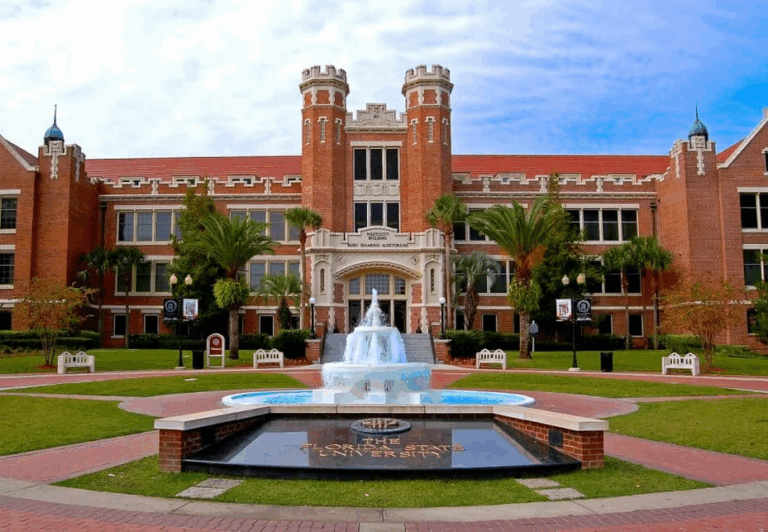
University of Florida
USA
A large public research university in the United States with a high academic ranking. Offers a wide range of programs, strong STEM fields, and more affordable tuition compared to private universities
Bachelor's degree: from $55,000 per yearMaster's degree: $15,000 - $40,000 per yearDoctoral studies: $10,000-$30,000 per year
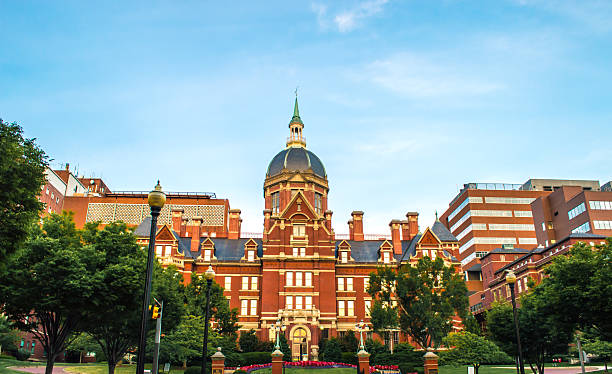
Johns Hopkins University
USA
A leading U.S. research university and a global leader in medicine, biotechnology, and international relations. Distinguished by a strong focus on research, practice, and interdisciplinary studies
Bachelor's degree: $63,340 per yearMaster's degree: $65,956 per yearDoctoral studies: about $65,000 per year
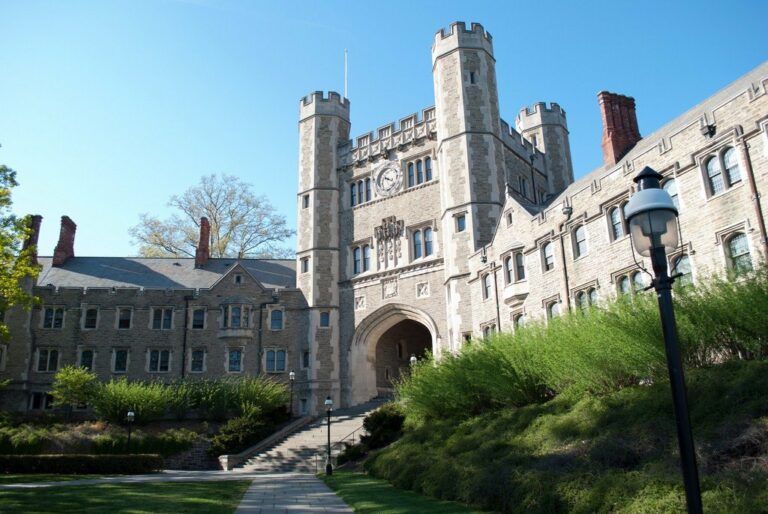
Princeton University
USA
One of the most prestigious universities in the United States, part of the Ivy League. Strong in natural sciences, engineering, economics, and the humanities. Known for a high level of academic support and generous scholarships
Bachelor's degree: about $60,000 per yearMaster's degree: average $58,000 per yearDoctoral studies: free*
Подобрать университет

Countries

France
France leads non-English-speaking countries in terms of the number of international students. French universities are renowned for their high academic standards, and degrees are valued worldwide, opening up broad career prospects. Scholarships are available, and the combination of European-quality education and a rich cultural environment makes France particularly attractive to prospective students.
Read more ➜
Germany
One of the most popular study destinations in Europe. Free or low-cost education, strong technical and engineering fields, and high demand for graduates
Read more ➜
Italy
A combination of academic tradition and affordable education. Particularly in demand for studies in design, architecture, business, and the humanities
Read more ➜
Netherlands
One of the leaders in English-taught programs in Europe. Practice-oriented education, high graduate employability, and a comfortable environment for international students
Read more ➜
United Kingdom
Classical education with global recognition. Shorter study periods, strong humanities and business programs, and a highly valued diploma
Read more ➜
USA
A US education offers prestige and limitless opportunities. American degrees are highly valued worldwide, and graduates from leading universities are eagerly sought after by international companies. US universities consistently occupy top positions in global rankings. Studying here opens the door to a global career and a unique student experience.
Read more ➜
Выбрать страну

Our services

MentoringA personal mentor at every stage of preparation. A clear plan, oversight of every step, and predictable results.
Full supportA turnkey international application process: a customized strategy, document preparation, and visa support—all in one service, guaranteeing you admission to a university abroad.
Personal brand in a yearIn 12 months, we'll build your strong personal brand for international study: we'll formulate a strategy, select activities, and identify achievements that will increase your chances of admission and scholarship awards.
Selection of activities for Personal brandA personal brand is the foundation for applying for a scholarship. Get a list of activities that will enhance your profile and distinguish you from other applicants.
Universal supportAccelerated preparation for admission: save money and time without compromising results.
Consultation with an expertAn in-depth 60-minute consultation: we'll discuss your admissions chances, financing options, develop a personalized strategy, and answer all your questions.
Consultation with a career guidance specialistWe'll help you identify your strengths and inclinations, choose the right field of study, and build a successful career.
Getting a student visa from the USAWe'll help you obtain a student visa without stress or errors, and we'll also assist you if your application is rejected.
Selection of universities and scholarshipsWe'll create a list of universities and programs that are right for you—with a realistic chance of admission and scholarships.
Admission to Foundation Programme AbroadWe'll help you enroll in the Foundation Program, a program that allows you to transfer to a bachelor's degree abroad without losing a year. We'll select suitable options, prepare your documents, and develop a strategy.
Preparation of documentationStrong documents make a strong candidate. We'll help you prepare your application package based on both formal and informal university requirements.

Reviews of our students