











Why STEM Applications Should Start with Choosing a Career Direction
Время чтения:
0 мин
0 мин


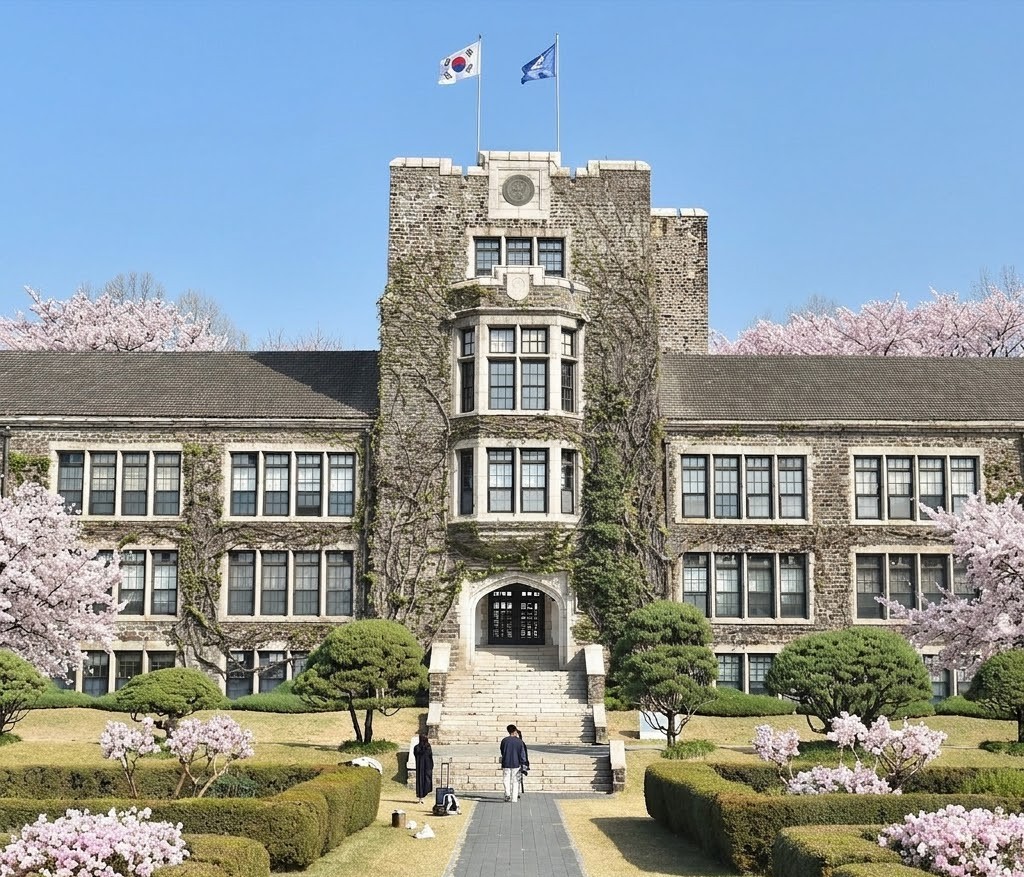
 Seoul, South Korea
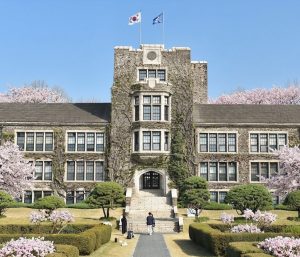
 Yonsei University is one of South Korea's leading private universities, located in Seoul. It is part of the unofficial SKY trio, along with Seoul National University and Korea University. It attracts international students with its fully English-language International College and strong programs in business, medicine, pharmacy, and engineering.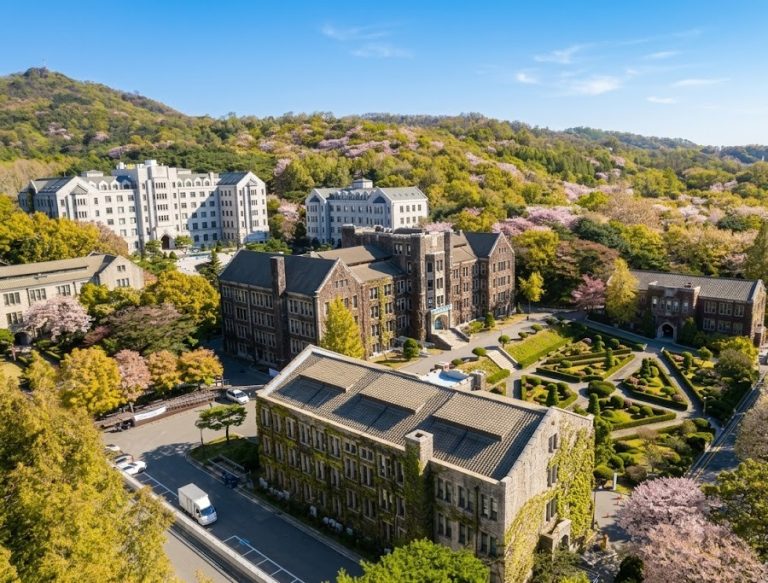
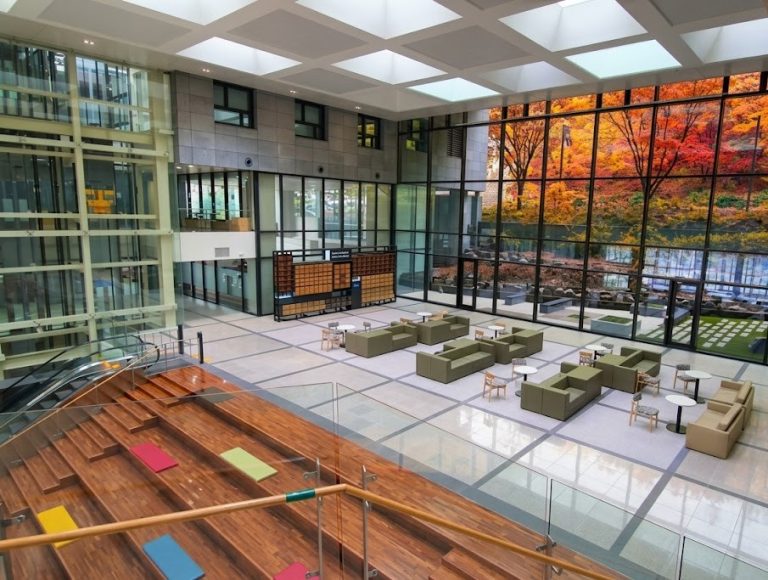
Yonsei University traces its history back to 1885, when the first modern medical center in Korea, Kwanghwang (now Severance Union Medical College), was founded. The university’s current form was established in 1957 through the merger of Yonhi College and Severance, and the name “Yonsei” is derived from the first syllables of these two institutions.
Yonsei is a private Christian research university, but it strictly adheres to the principle of non-discrimination based on religion, regardless of historical roots.
Among the university’s alumni are a Nobel Prize winner, an Oscar-winning actor, and several Olympic champions, reflecting the diverse fields in which Yonsei graduates have achieved international recognition.
Seoul is one of the largest technology and business hubs in East Asia. For Yonsei students, this means access to internships in fields such as technology, finance, medicine, and media. The university has collaborations with over 660 partner organizations worldwide, reflecting its global integration.
The university has 23 colleges and 19 graduate schools, as well as 153 research centers and institutes conducting interdisciplinary research in the fields of medicine, biochemistry, engineering, and social sciences.
| Degree of study | Bachelor's, Master's, and Doctoral Degrees |
| Scholarships | International College Scholarship for 4 years, GKS, Academic Merit Scholarships |
| Directions | business, economics, engineering, medicine, pharmaceuticals, international relations, humanities |
| Type | private (Christian) university |
| Student body size | about 38,000 students (26,700 bachelor's degree + 12,000 master's/doctoral degree) |
| Location | Sinchon (main campus), Sondo/Incheon (international campus), Wonju |
| Languages of instruction | Korean (main faculties), English (UIC International College) |
Bachelor’s and Master’s Degrees at Yonsei University
The bachelor’s degree is suitable for high school graduates and is designed for four years of study on two campuses – the main one in Sinchon, Seoul, and the second one in Seongdo (Incheon).
The master’s and doctoral degrees are designed for those who already have a bachelor’s degree. Yonsei has more than 79 departments and 23 interdepartmental programs.
There is an important difference between the two formats: The International College is an English-language program with a broad humanities foundation. The Global Leadership College is focused on Koreans living abroad and teaches primarily in Korean. The regular faculties also operate primarily in Korean.

Created specifically for international students, all classes are conducted in English. The program is based on a broad humanities education. This is the main entry point to Yonsei for most international applicants, and knowledge of Korean is not required for admission.
The College of Computing Technology is suitable for those interested in software development, artificial intelligence, and data analysis. The School of Business and the Faculty of Commerce and Economics are among the most popular programs. The Graduate School of International Studies (GSIS) offers a specialized master’s program for future diplomats and international policy specialists.
The College of Pharmacy was opened in 2011 on the international campus in Seongdo, and it is one of the youngest but rapidly developing pharmaceutical colleges in Korea. Medical and pharmaceutical programs are regulated by the government, and the competition for these programs is significantly higher than for standard programs.
The College of Liberal Arts, the College of Social Sciences, and the College of Theology offer a wide range of courses, from literature and philosophy to sociology and psychology.
To enroll in Yonsei as a foreigner, you need to choose one of several parallel tracks, each with its own requirements and deadlines.
Options for international students: standard bachelor’s degree (general competition), International College (separate competition), College of Global Leadership (for Koreans permanently residing abroad), master’s and doctoral degrees through the faculty or government scholarship, and Graduate School of International Studies (separate competition).
The basic package includes a completed application form, academic transcripts and diplomas, a copy of the school leaving certificate, a copy of the passport, language test results, a motivation letter or curriculum vitae, letters of recommendation. For international college, medical and pharmaceutical fields, the requirements may differ significantly.
For an international college, English is the primary language, and you will usually need an IELTS or TOEFL score. For Korean-language programs, you will need a certain level of TOPIK.
Receiving financial support does not guarantee admission, and vice versa, but any eligible applicant can apply for a scholarship, and it is worth doing so in advance, along with the main application package.

For newly admitted international students, UIC offers a scholarship that covers the cost of tuition for all four years of undergraduate studies. All international applicants are automatically considered candidates, and eligibility depends on the results of the competitive selection process, while maintaining the required GPA is necessary for continued eligibility.
They are awarded primarily on the basis of academic merit. In addition to UIC, extensive scholarships for international students are also available at the ASD (Division of Architecture and Urban Design) and GSIS (Graduate School of International Studies) programs, which can cover both tuition and living expenses.
A separate government program that allows you to study at the undergraduate or graduate level in Yonsei. It can cover tuition fees, a monthly living allowance, health insurance, and airfare costs. Applications must be submitted through the Korean Embassy or the university, depending on the chosen method.
Yonsei provides student housing through several dormitory options. On the main campus in Sinchon, international students can live in the International House (up to 232 students, gender-separated floors) or the SK Global House (up to 585 students, opened in 2010, 24-hour security and reception), which can accommodate up to 845 international students in total.
The cost of living in a dormitory is approximately £1,000-1,300 per semester (approximately $1,300-1,700) for a single or double room, depending on the type of accommodation.
It is important to note that a dormitory spot on the main campus is not guaranteed due to high demand, so it is recommended to explore alternative rental options in advance.
For those who do not have a dormitory spot, apartments and studios are available for rent in the Sinchon and Hongdae areas near the campus, starting at around 600,000 won per month and higher, depending on the type of accommodation and location.
Yonsei University graduates have traditionally held key positions in Korean business, government, and academia, a direct result of the university’s membership in the elite SKY Group.
Yonsei ranks first among Korean universities in several fields in THE World University Rankings by Subjects, including business and economics, social sciences, clinical medicine, and psychology, reflecting the strength of its graduate programs in these areas.
After graduation, international students have several visa options available to them. The D-10 visa is designed for job search after graduation. From 2026, bachelor’s degree graduates with a TOPIK level of 4 and above who graduated in the last 3 years can obtain this visa through a simplified procedure.
TOPIK 4 and above, who graduated in the last 3 years, can obtain this visa through a simplified procedure.
A separate path is the K-Star visa for science and technology professionals, which is particularly relevant for graduates of engineering and pharmaceutical programs at Yonsei.

The name “Yonsei” is composed of the first syllables of the names of two institutions that merged in 1957: “Yon” from Yonhi College and “Se” from Severance Union Medical College.
Yonsei Medical School has a history dating back to April 10, 1885, when Kwangheung Hospital, the first hospital in Korea to use Western medical practices, was established.
Yonsei University and Korea University have a long-standing and well-known sports rivalry: the annual matches between the universities are called “KoYong Jeon” (when Korea University is the host) and “YongKo Jeon” (when Yonsei University is the host).
The College of Pharmacy is one of the university’s youngest colleges, founded in 2010 and admitting its first students in 2011, located on the international campus in Sondo.
Yonsei has over 100 student clubs, including one of the largest and oldest financial clubs in the country, Yonsei Financial Leaders, founded in 1998, which has produced over 500 graduates working in finance around the world.
The university’s College of Law stopped accepting undergraduate students in 2008 due to the American-style reform of legal education in Korea, and today, legal education at Yonsei is only available through the Yonsei University Law School at the graduate level.

She enrolled in Fashion PR programs at five US universities

He entered a master’s program in the USA at two universities at once – Brandeis University and Washington University in St. Louis, receiving scholarships totaling $80,000. He chose Brandeis University and went to study on the first try.

She was admitted to three American universities at once: Augustana College, Widener University, and the University of South Dakota. She chose Augustana College, where she received a scholarship of $45,000 per year.
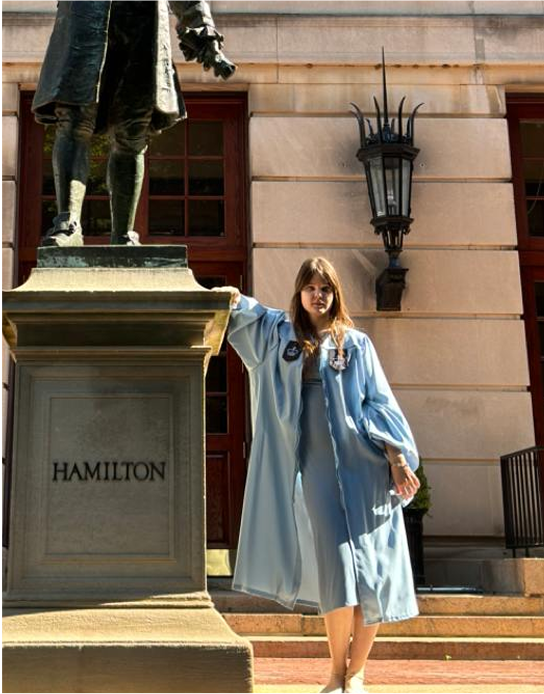
I was accepted to the PhD program at Columbia University on my first try, having strengthened my profile and compiled my achievements into a strong application.

She enrolled in graphic design at universities in France, Italy and Hungary. She received scholarships at all of them and chose the university with the maximum funding — $135,000 for the entire period of study.

She entered graduate school at Kent State University and Ohio University. At Ohio University, she won a Graduate Teaching Assistantship with full funding of $37,774, covering tuition, insurance, and living expenses.

He entered Siena Heights University (USA) for the Theater and Music program with a full scholarship of $170,000. Preparation took less than a year.

Got accepted to NYU Abu Dhabi on the first try (acceptance rate 4%) with a scholarship of $217,000. Also received offers from Lynn and Drexel University.