

Why STEM Applications Should Start with Choosing a Career Direction
Время чтения:
0 мин
0 мин


 Beijing, China
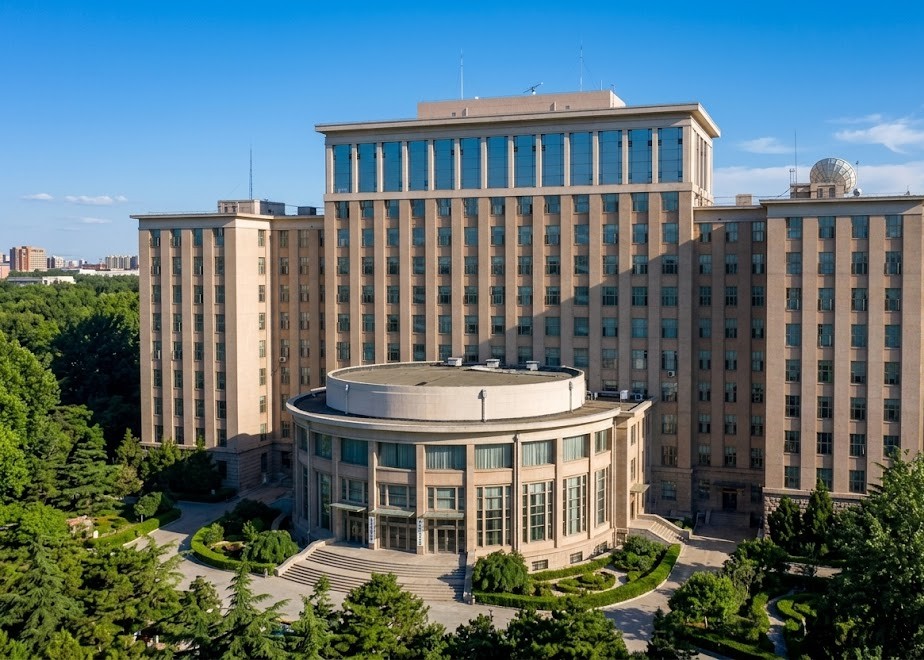
 Tsinghua University is a leading technical and research university in China and one of the best in the world. According to THE 2026 ranking, Tsinghua ranks #1 among all universities in China, ahead of Peking University, Fudan, and all others. According to ARWU 2025, it is #18 globally, making it the second most cited research university in Asia after SJTU. The founders of Huawei and ByteDance, as well as many leaders of the Chinese Communist Party and the country's tech industry, studied or worked at Tsinghua. For international applicants, this means a degree that opens doors to the world's fastest-growing economy.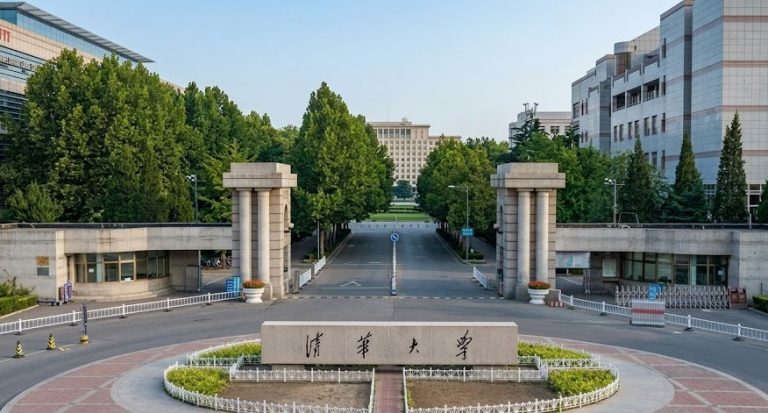
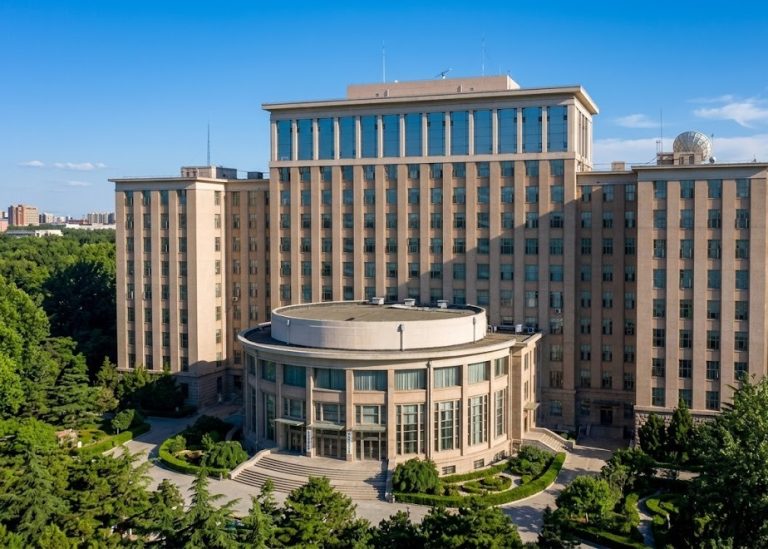
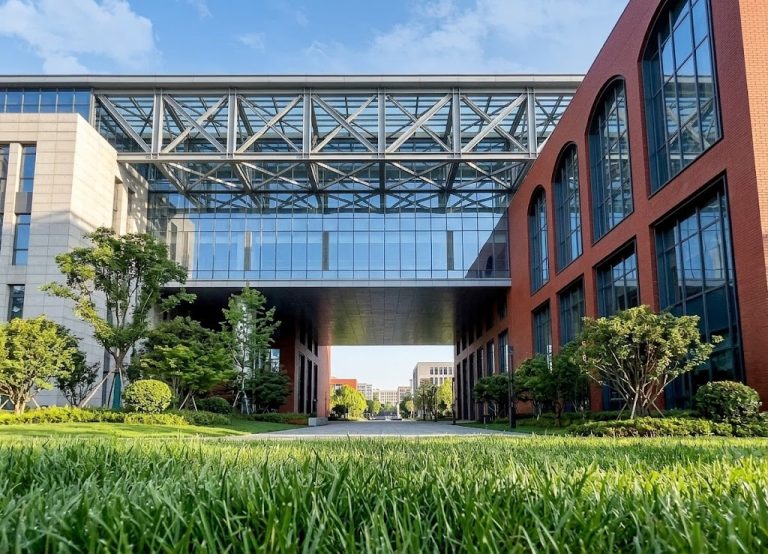
Tsinghua University was founded in 1911 on the site of a former imperial garden in the Haidian district in northwest Beijing. Initially, it was established as a preparatory school for students who were going to study in the United States. Since 1949, it has become the main engineering and technical university in the PRC. Today, Tsinghua is a multidisciplinary research university with more than 36,000 students and 26 schools and faculties covering engineering, natural sciences, humanities, law, economics, medicine, and art.
The campus covers 460 hectares — one of the largest and most beautiful in Asia. Traditional Chinese gardens, Western Gothic architecture from the early 20th century, and modern research buildings create an environment unique in global higher education. Next to the campus is Zhongguancun Science Park (“China’s Silicon Valley”), where Baidu, ByteDance, Xiaomi, Lenovo, and hundreds of high‑tech companies are concentrated — direct partners and employers of Tsinghua graduates.
According to the ARWU Subject Rankings 2025, Tsinghua ranks #1 in the world simultaneously in six engineering disciplines: Mechanical Engineering, Electrical & Electronic Engineering, Chemical Engineering, Materials Science & Engineering, Nanoscience & Nanotechnology, and Energy Science & Engineering.
| Degree of study | Bachelor's degree, master's degree, PhD, language and summer programs |
| University type | public research university; member of the C9 League; Double First Class University |
| Program language | predominantly Chinese; a significant number of programs are in English (especially graduate programs) |
| Main directions | engineering, computer science and AI, architecture, economics and management, law, medicine, natural sciences |
| Scholarships | Chinese Government Scholarship (CSC), Beijing Government Scholarship, Tsinghua Excellence Scholarship |
| Student body size | More than 36,000 students (about 15,000 bachelor’s students, more than 21,000 postgraduate students). |
| Campus | 460 hectares in the Haidian District, Beijing — near Zhongguancun Science Park |
The cost is indicated in yuan (RMB). Approximate data for the 2025–2026 academic year:
Bachelor’s degree: from 26,000 RMB/year (humanities and social sciences) to 45,000 RMB/year (medicine and certain professional programs)
Master’s program: from 29,000 RMB/year (standard research programs) to 80,000–120,000 RMB/year (professional programs — Global MBA, Executive MBA, and other business programs)
Doctoral program: from 29,000 to 45,000 RMB/year — most PhD students are funded through CSC, Tsinghua Fellowship, or professorial grants
Application review fee: 800 RMB (non‑refundable)
The following are added to the tuition fee:
All amounts are approximate. Please check the latest data at www.sis.tsinghua.edu.cn before submitting your application.
Tsinghua University unites 26 schools and faculties. The most sought‑after programs for international students are:
Engineering and Technology. Tsinghua’s historical core is the most extensive engineering base in Asia. School of Mechanical Engineering, School of Electronics and Electrical Engineering, School of Chemical Engineering, School of Automotive Engineering, School of Aerospace Sciences, School of Environmental Science and Engineering, School of Nuclear Engineering.
According to the ARWU Subject Rankings 2025, Tsinghua ranks #1 in the world in six engineering disciplines simultaneously — no other university in the world has such indicators in any ranking.
Computer Science and AI. The School of Computer Science and Technology is one of the strongest in Asia. AI, data analysis, cybersecurity, algorithms. According to the QS Subject Rankings 2025: Computer Science — #14 in the world. Direct partnerships with Huawei, Baidu, ByteDance, Tencent.
Architecture School of Architecture is one of the best architectural schools in Asia; it includes architecture, urban planning, and landscape design. QS Subject Rankings 2025: Architecture — #2 in the world. Some programs are available in English.
Economics and Management Tsinghua School of Economics and Management (SEM) is one of the leading business schools in Asia. Global MBA (in English), Executive MBA (EMBA), specialized master’s programs. QS Global MBA 2026: #28 in the world. Academic partners — Sloan (MIT), Wharton (UPenn), HBS, Kellogg (Northwestern).
Law School of Law is one of China’s leading law schools. Programs are conducted in Chinese; a number of LLM programs are available in English. Admission is through a separate competition.
Humanities and Arts: School of Humanities, School of Social Sciences, Academy of Arts & Design. The share of humanities programs at Tsinghua has grown significantly over the past few decades — in an attempt to broaden the university’s profile beyond STEM.
Tsinghua University School of Medicine is a relatively young medical faculty (established in 2001); it offers PhD programs in biomedical sciences and clinical medicine. Unlike PKU, Tsinghua does not have a hospital system comparable in scale.
The Tsinghua campus is one of the most beautiful university campuses in the world. It covers 460 hectares and features traditional Chinese gardens, ponds, architectural monuments from the early 20th century, and parks. The campus itself is a self‑sufficient town: it has libraries, canteens, sports facilities, student stores, a hospital, and a post office.
For international students, there are the Zijing Student Apartments and the Shao Yuan International Students Apartments. Housing is guaranteed for CSC scholarship students; for self‑funded students, it is available based on the number of available spots. The cost is from 1,200 to 2,500 RMB per month.
There are more than 150 student clubs on the campus, including international organizations and cultural associations. The International Students & Scholars Center coordinates orientation programs, cultural events, and support for international students. Right next to the campus are the Summer Palace and Yuanminyuan, one of the most beautiful parks in Beijing.
Applications are submitted via the official portal: sis.tsinghua.edu.cn. Fee: 800 RMB.
Language requirements: HSK 4–5 for Chinese‑language programs; IELTS 6.5–7.0 or TOEFL 90–100 iBT for English‑language programs.
It is recommended to start preparing the documents 5–6 months before the deadline.

Certificate of secondary education with high academic performance. Age limit: as a rule, no more than 25 years. Language requirements: HSK 4–5 for most programs or IELTS/TOEFL for a limited number of English‑language programs. Deadline: as a rule, March–May for the September intake.
Bachelor’s degree diploma with transcript, CV, study plan/personal statement, letters of recommendation (usually two). For most research master’s programs and MBA programs — GMAT (for business programs) or GRE. Deadlines: January–May for the September intake.
Research proposal, preliminary contact with the academic supervisor — this is essentially a mandatory element. The presence of publications significantly strengthens the application. The competition is high, especially for Engineering and CS programs.
Tsinghua is the most competitive university in China for domestic students (domestic acceptance rate is less than 0.01% in some fields). For international students, the competition is significantly lower — approximately around 17% — but it varies by program: Engineering, CS, and Architecture are the most competitive.
Important for international students: the main language of instruction remains Chinese. Without HSK 4–5, a limited set of programs is available — mainly Global MBA and a number of master’s and PhD programs in English. Tsinghua offers significantly more English‑language programs than most Chinese universities — but the choice is still limited compared to NUS, NTU, or Western universities.
What really increases the chances: outstanding academic results, strong mathematical training for STEM fields, a specific and motivated research plan, prior contact with a research supervisor for a PhD, participation in Olympiads or scientific competitions.
The Chinese Government Scholarship (CSC) is the main government program. It covers: full tuition + accommodation + health insurance + a monthly stipend:
Application is made through the PRC embassy or directly through Tsinghua (two different routes with different deadlines — duplication is not allowed). CSC deadlines are typically between February and April.
Beijing Government Scholarship is a regional program:
Type A: tuition + accommodation + insurance + monthly stipend
Types B and C: more limited coverage
Tsinghua Excellence Scholarship (Tsinghua University Tuition Scholarship) is the university’s own scholarship based on academic merit. Partial or full tuition coverage. Awarded on a competitive basis upon admission.
Tsinghua Global Excellence Scholarship — a special program for outstanding international students; it may cover 25–100% of tuition depending on the level of achievement.
Tsinghua Fellowship (PhD) — full or partial coverage for doctoral students through departmental funding and professorial grants.
A Tsinghua University diploma is a ticket to China’s technological and business elite — and increasingly, to the global elite. Huawei, ByteDance, Tencent, Baidu, Alibaba, Xiaomi, and state‑owned corporations recruit a disproportionately high share of their staff from Tsinghua and Peking University.
For an international student, the value of a Tsinghua diploma is highest in the following fields:
Tsinghua’s alumni network spans more than 200,000 people worldwide; in China, this network is one of the most influential in the country.

Tsinghua is a global leader in six engineering disciplines according to the ARWU 2025 rankings and in two according to QS (Engineering & Technology #5, Architecture #2) — no other university has such broad industry leadership.
In terms of the number of annual patent applications, Tsinghua is #1 in the world among universities, surpassing MIT, Stanford, and all others.
Founded in 1911 as a school to prepare students who were sent to the United States under a program to recover part of the Boxer indemnity payments to the American government — this is one of the most unusual stories of how a world‑class university was established.
Among the most famous alumni and individuals associated with Tsinghua are: Xi Jinping (President of the People’s Republic of China, chemical engineering, 1979), Ren Zhengfei (founder of Huawei, studied at a related university), and Liang Qichao (a reformer of the Qing era).
QS Architecture Rankings 2025: #2 in the world — Tsinghua is second only to MIT in architecture and outperforms all European and Asian universities.
According to the QS Global Employability Rankings 2016, Tsinghua is in the top 10 in the world — Tsinghua graduates are highly sought after both in China and by global employers.
Admission to Tsinghua is one of the most competitive and multi‑stage processes among all the universities we have considered. At SelfStartGlobal, we help build it in a systematic way:
Our students have already received scholarships worth more than 35 million dollars.
If you want to enroll at Tsinghua University, come to a free consultation. We’ll explain how it works in your specific case.
She enrolled in Fashion PR programs at five US universities
She enrolled in graphic design at universities in France, Italy and Hungary. She received scholarships at all of them and chose the university with the maximum funding — $135,000 for the entire period of study.
I was accepted to the PhD program at Columbia University on my first try, having strengthened my profile and compiled my achievements into a strong application.

He entered a master’s program in the USA at two universities at once – Brandeis University and Washington University in St. Louis, receiving scholarships totaling $80,000. He chose Brandeis University and went to study on the first try.
She was admitted to three American universities at once: Augustana College, Widener University, and the University of South Dakota. She chose Augustana College, where she received a scholarship of $45,000 per year.
She entered graduate school at Kent State University and Ohio University. At Ohio University, she won a Graduate Teaching Assistantship with full funding of $37,774, covering tuition, insurance, and living expenses.

He entered Siena Heights University (USA) for the Theater and Music program with a full scholarship of $170,000. Preparation took less than a year.
Got accepted to NYU Abu Dhabi on the first try (acceptance rate 4%) with a scholarship of $217,000. Also received offers from Lynn and Drexel University.