





 How to get an internship at Samsung, Sony or Tencent as a foreigner

Service payment
Fill out the form and continue to payment via Stripe
Shinjuku, Tokyo, Japan · Waseda University is one of the most famous private universities in Japan, located in the Shinjuku district of Tokyo. Founded in 1882. Ranks #=201 in the world according to QS 2027 and #38 in the world according to Employer Reputation — this means that employers value Waseda graduates more highly than its overall ranking suggests. Waseda attracts the largest number of international students among all Japanese universities — more than 10,000. The key practical advantage is that there are six undergraduate schools with full‑fledged programs in English. Japanese is not required for admission to them.
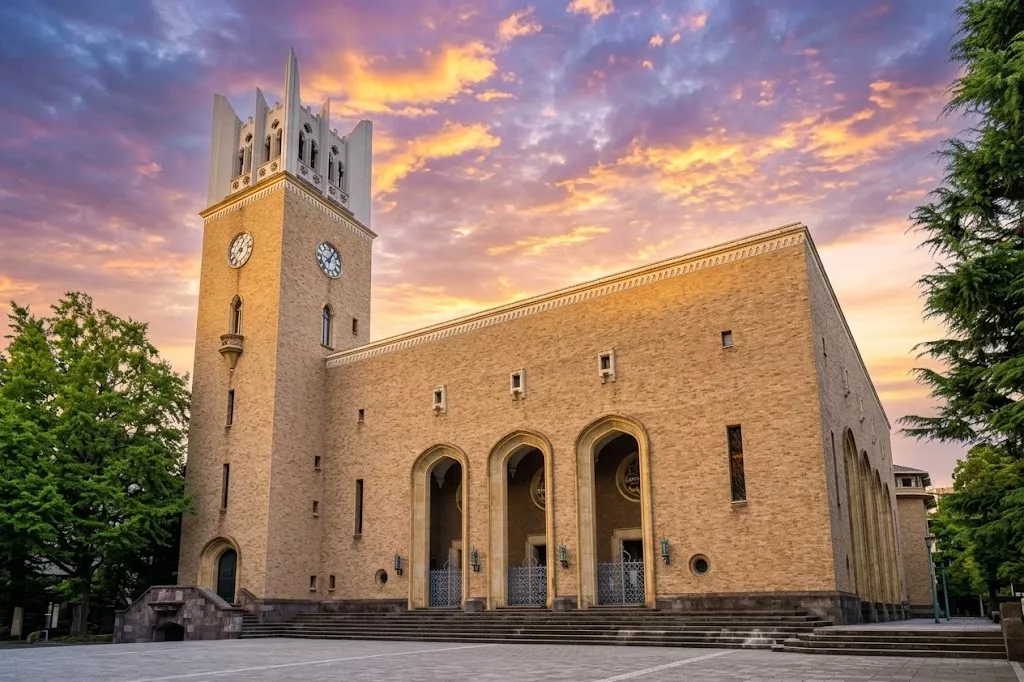
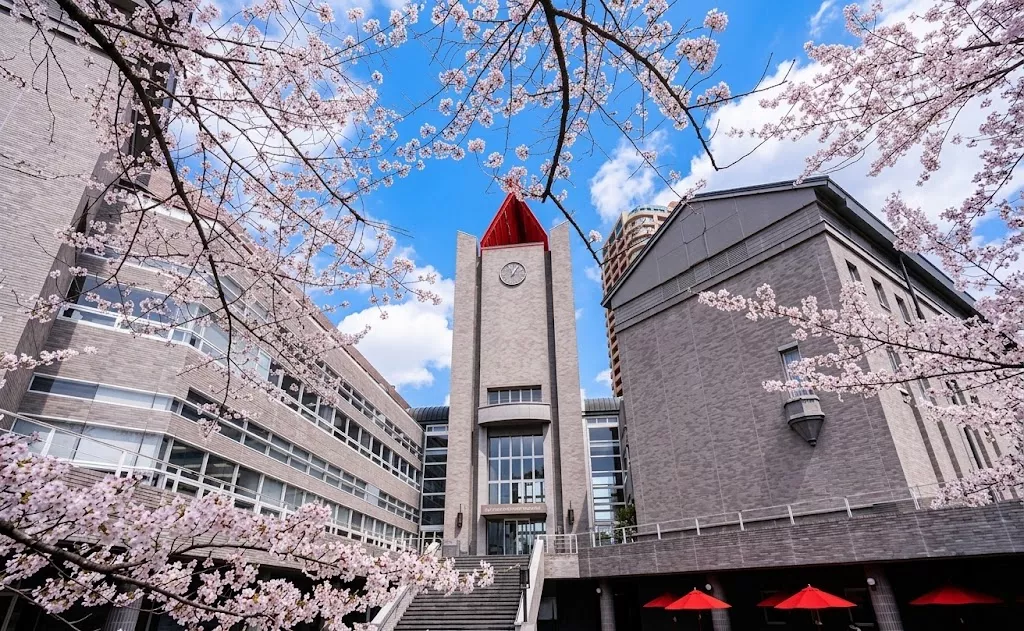
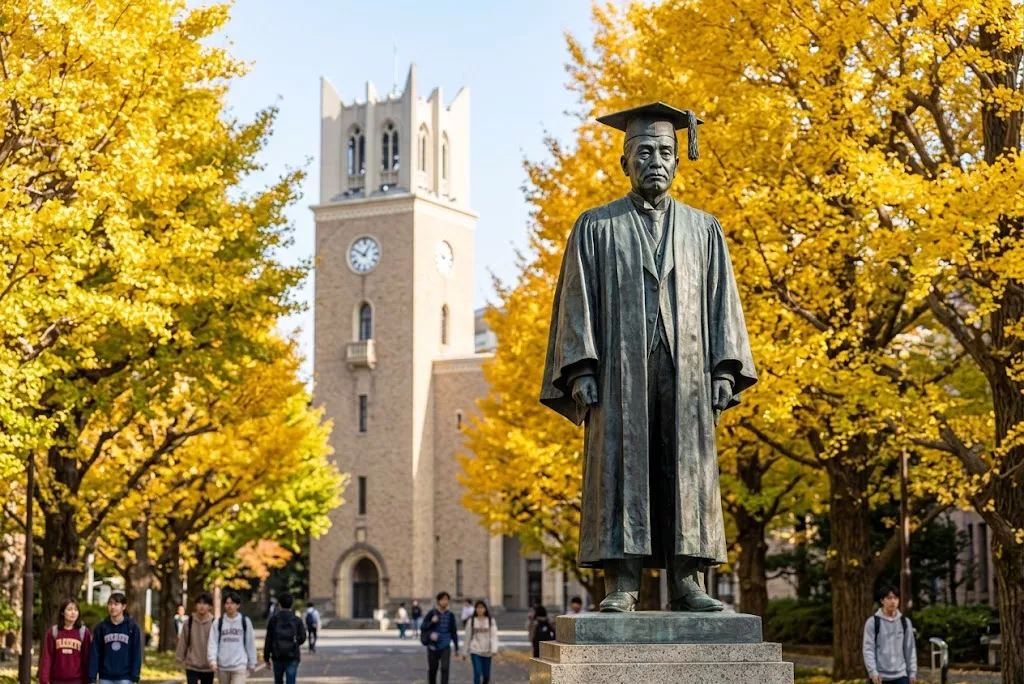
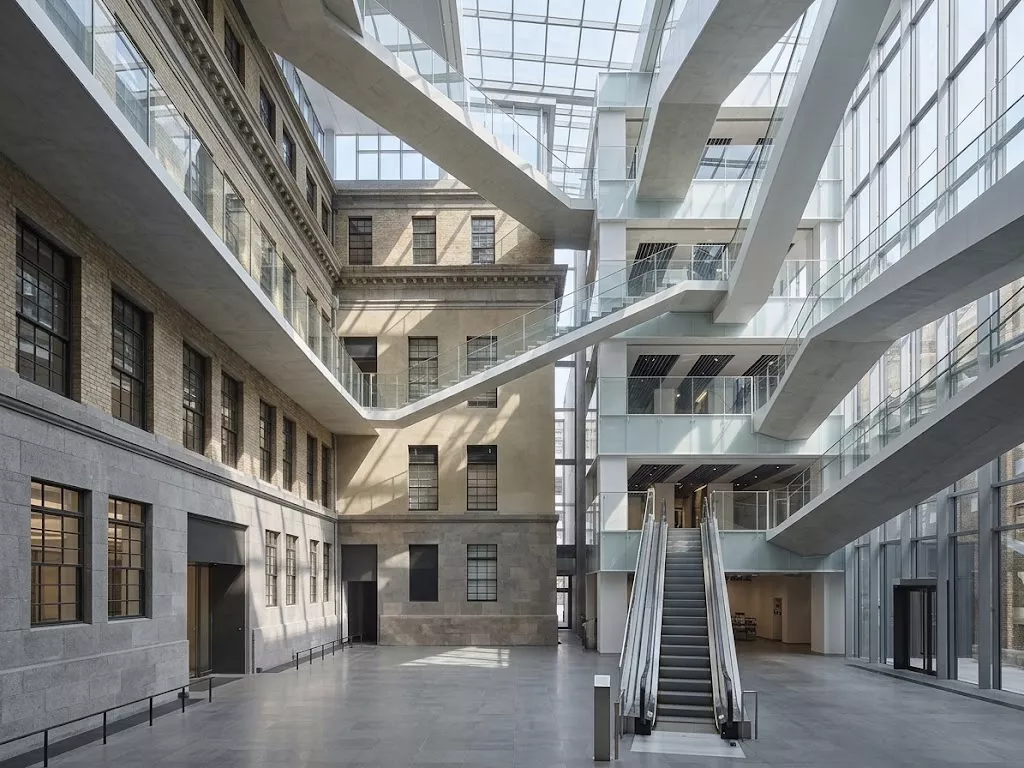
Waseda University (早稲田大学, Waseda Daigaku) was founded in 1882 by Okuma Shigenobu, a statesman who served as Prime Minister of Japan twice. Initially, it was called Tōkyō Professional School; it was renamed Waseda University in 1902 after receiving official university status. The three principles proclaimed by the founder remain relevant: academic independence, practical innovation, and enlightened citizenship.
Today, Waseda has approximately 47,000 students across 13 undergraduate schools and 23 graduate schools. The main campus is located in Nishivase, in the Shinjuku district — one of the most student‑friendly and vibrant areas in Tokyo, with a dense infrastructure of cafes, libraries, and companies. Waseda is a more cosmopolitan university than most Japanese national universities: it has more than 800 partnership programs and exchange agreements with universities in 84 countries around the world, and its alumni network exceeds 660,000 people.
Among the graduates of Waseda University are 8 Prime Ministers of Japan, including Yasuo Fukuda, Yoshihide Suga, and Shinzo Abe — the country’s longest‑serving Prime Minister; the writer Haruki Murakami; Olympic figure skating champion Yuzuru Hanyu; and top managers of Fast Retailing (UNIQLO), Nintendo, and hundreds of other major corporations.
Waseda is a private university, so the cost of tuition is higher than at national Japanese universities, but significantly lower than at comparable private universities in the USA or the UK.
Total: approximately 120,000–240,000 JPY per month (about 800–1,600 USD). Tokyo is one of the most expensive cities in the world; actual expenses vary depending on the neighborhood, lifestyle, and type of housing.
All amounts are approximate. Check the latest data on the official website: waseda.jp/top/en
Waseda comprises 13 undergraduate schools. Six of them offer full‑degree programmes entirely in English — Japanese is not required either for admission or for studying.
Important: the specific list of accepted tests may vary for each school and each country of study. The current admission guide for a specific school for the year of admission is the only reliable source.
Political science, economics, international relations. One of the most competitive options for international students. Accepts SAT, ACT, IB, A-Level. Estimated competitive SAT score for admitted students: 1450+. Enrollment is in April and September.
Sociology, cultural studies, law and society, media and communications. Broad thematic coverage. Accepts SAT, ACT, IB, A-Level. Enrollment is in April and September.
Waseda’s flagship international program with a Liberal Arts approach. Allows you to design your own academic track. Accepts SAT, ACT, IB, A‑Level. SAT 1350+ is a benchmark for competitive candidates. Enrollment is in April and September.
Cultural studies, media, design, creative industries. A program for students with a focus in the humanities and cultural disciplines. Accepts SAT, ACT, IB, A-Level. Enrollment is only in April.
Engineering and mathematics: electronics, mechanical engineering, applied physics, computer science. Accepts SAT, ACT, IB, A-Level; national equivalents are possible for a number of countries. Enrollment is only in April.
Architecture, industrial design, electromechanics, resource management. For students working at the intersection of engineering and design. Accepts SAT, ACT, IB, A-Level. Enrollment is only in April.
Campus
The main Waseda campus is located in Nishishiseda, in the Shinjuku district — right in the heart of Tokyo. Around the campus is one of the most student‑friendly areas in the Japanese capital, with a dense infrastructure: cafes, bookstores, small companies and startups. The Tokyo metro system provides direct access to any point in the 18‑million‑strong metropolitan area.
Tokyo is a global metropolis with a unique combination of traditional Japanese culture and modern technologies. For students interested in Japanese culture, language, and career opportunities in Asia, Waseda’s location is one of the key advantages.
Waseda’s student life is traditionally active: clubs, sports sections, cultural events, and international organizations. The university has more than 600 student clubs and associations. Waseda is historically known for its tradition of active student government and civic engagement — this sets its culture apart from that of most Japanese national universities.
Waseda offers several accommodation formats for international students, including the Waseda International Student House. A dormitory place is not automatically guaranteed — a separate application must be submitted within the specified timeframe. Competition for places is high.
Admission to Waseda is a sequential process, the first step of which is always choosing a specific school. You cannot apply “to Waseda as a whole” — each of the 13 undergraduate schools sets its own requirements, deadlines, and selection formats.
Six English undergraduate schools — with different profiles, requirements, and admissions. Make sure that your academic interest matches the profile of the chosen school.
April — for most schools. September — only for SPSE, SSS and SILS. SCMS, FSE, CSE recruit only in April. Check the current admission guide for the specific school.
SAT, ACT, IB, A-Level are accepted by all six schools. The list of additional tests depends on the country of study and the school. Do not transfer the requirements of one school to another.
All schools require a personal statement. The requirements vary from school to school. The standard package includes: a certificate with an transcript, a language certificate (IELTS or TOEFL, if required), letters of recommendation (usually 1–2), and a passport.
The application is submitted through the International Admissions Office Waseda. Application fee: approximately 35,000 JPY for applicants from Japan; approximately 10,000 JPY for applicants from abroad — check the current guide. Deadlines: for the April intake — usually February; for the September intake — June. Specific dates vary annually.
A number of schools and programs conduct online interviews for individual candidates. Check with the specific school.
After receiving the admission letter, apply for a student visa through the Japanese consulate. You will need: Certificate of Eligibility (COE), passport, proof of financial means.

Programs
Requirements for English undergraduate programs:
Completed 12 years of secondary education or equivalent
High GPA; competitive results on standardized tests
SAT / ACT / IB / A-Level — the list of accepted exams depends on the school and country; always check the specific school’s admission guide
IELTS / TOEFL if necessary; exceptions may be possible for graduates of accredited English‑language schools
Personal statement; questions vary by school
As a rule, 1–2 letters; requirements vary by school
It is important to understand the structure: Waseda is not a single university with one admissions committee. Each school evaluates the application independently. SILS requirements are not the same as SPSE requirements. You cannot transfer information from one school to another.
Approximately 250 scholarship programs — Waseda informs students about programs offered by JASSO, local authorities, and private foundations.
Effective strategies:
Important: Waseda explicitly warns that the number of scholarship recipients is limited. The financial plan should not be based on the scholarship as a guarantee.
The main university scholarship for international students. Covers part or the full cost of tuition. The amount depends on the competition and the candidate’s profile. Awarded upon admission. Waseda uses this scholarship as a tool to attract strong international students — in fact, it is a mechanism of differentiated pricing.
A monthly payment of 48,000–80,000 JPY for students with high academic results who have been admitted to programs conducted entirely in English. Compatible with the Waseda Tuition-Waiver, but not with MEXT.
Up to 1,000,000 JPY per year — one of the largest private scholarships at Waseda. Competitive selection.
Japan’s government scholarship: 117,000 JPY per month + full tuition coverage. Two routes: Embassy Recommendation (through the Japanese embassy before arrival) and University Recommendation (through Waseda after enrollment). Cannot be combined with Waseda Tuition‑Waiver — MEXT already includes full tuition coverage.
The key career argument for Waseda is its Employer Reputation: #38 globally and #3 in Japan (QS 2026). This indicator reflects how employers around the world evaluate graduates. For the Japanese job market, a Waseda degree is one of the most recognizable and highly valued. Major Japanese corporations (Uniqlo/Fast Retailing, Nintendo, Sony, Softbank, Nomura, Recruit) and international companies with a Japanese presence actively recruit on campus.
The Waseda alumni network comprises more than 660,000 graduates worldwide, including top managers of major corporations, politicians, scientists, and cultural figures. For an international student planning to work in Japan or in Japanese‑oriented companies, this network opens up real career opportunities.
State support for graduates: most international students who graduate from a Japanese university can apply for a work visa in Japan — the country actively attracts foreign professionals as part of its labour market globalization policy.
Waseda conducts active research through more than 120 research institutes and centers. The strengths lie in the following areas: robotics and mechanotronics, international relations and political economy, Japanese studies and Asian languages, humanities, and media research.
Waseda is one of the few Japanese private universities included in the government’s World Premier International Research Center Initiative (WPI) and Top Global University Project — state programs supporting Japanese universities seeking to join the global academic elite.
According to the ARWU, Waseda ranks #701–800 — a figure that reflects the more limited research base (compared to public Japanese universities) typical of Japan’s private universities, which focus on education and internationalization.
Waseda was founded by one of Japan’s leading statesmen, Ōkuma Shigenobu, who served as prime minister twice. This shaped the university’s academic and political culture for more than 140 years.
Among the graduates are 8 prime ministers of Japan: more than any other university in the country. Haruki Murakami, one of the most widely read writers in the world, is a graduate of Waseda (Faculty of Theatre, 1975).
Yuzuru Hanyu, a two‑time Olympic figure skating champion, studied at Waseda.
Waseda has an Employer Reputation of #38 in the world, while its overall QS ranking is #201 — a gap of 163 positions means that the real value of the degree for career prospects is significantly higher than the overall ranking suggests.
The university is historically known for its tradition of opposing state control over education — the principle of academic independence established by its founder has been repeatedly tested in the course of 20th‑century Japanese history.
Admission to Waseda requires a clear choice of school, the right set of tests, and a strong essay. Six different schools — six different application formats, deadlines, and strategies. We at SelfStartGlobal help you navigate this process without mistakes:
We analyze your academic profile and career goals — and determine which of the six English schools at Waseda best matches your profile and gives you the best chances.
We help you determine which standardized tests the chosen school accepts for a specific country and how to prepare for a competitive result.
The personal statement for Waseda should convincingly explain why this particular school and this program are the next logical step. We help you write it concisely and convincingly.
We understand the structure of Waseda Tuition-Waiver, JASSO, and compatible external programs. We help you build a realistic financial strategy.
We monitor every stage — from choosing a school to obtaining a COE and processing a visa.
Our students have already received scholarships worth more than 35 million dollars.
Want to get admitted to Waseda University and receive maximum financial support? Come to a free consultation. We’ll explain how it works in your specific case.
Leave your contacts — our consultant will get in touch
