




 How to get an internship at Samsung, Sony or Tencent as a foreigner


Service payment
Fill out the form and continue to payment via Stripe


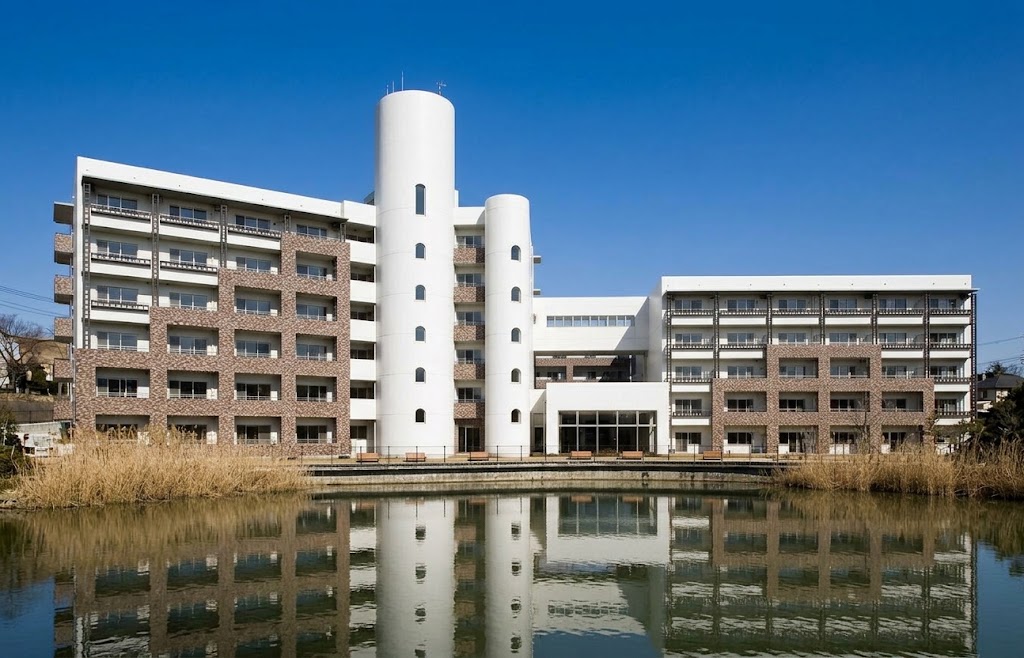
Osaka, Japan · Osaka University is one of Japan’s leading national research universities, ranked 95th globally in the QS 2027 rankings and 151st in the THE 2026 rankings. As of April 2025, the university’s official English name has changed to "The University of Osaka" (UOsaka). Both versions are considered equivalent in search queries and among the student body. Located in Osaka—Japan’s second-largest city—the university operates across three campuses. International students can enroll in English-taught undergraduate courses, Japanese-language programs, or postgraduate studies through a wide range of graduate schools.
The University of Osaka traces its history back to the private Kaithokudo Academy, founded in 1724. The modern university opened in 1931 as the Imperial University of Osaka. After World War II, it was reorganized into a comprehensive research university, and in 2007 it merged with Osaka University of Foreign Languages, becoming Japan’s largest national university in terms of the number of undergraduate students.
The university operates on three campuses in Osaka Prefecture: Toyonaka (humanities, law, economics, natural sciences), Suita (medicine, dentistry, engineering, computer science, pharmacy), and Minoh (foreign languages). Osaka is the second-largest city in Japan and is significantly more affordable than Tokyo: living and food expenses are 20–30 % lower.
The University of Osaka is a national Japanese university, which means there is a single tuition fee for both Japanese and international students:
Total: approximately 85,000–200,000 JPY per month (~570–1,340 USD). Annual budget including tuition: about 1,600,000–2,800,000 JPY (~10,700–18,700 USD).
The University of Osaka comprises 11 undergraduate schools and 16 graduate schools. Key academic areas:
Literature, history, philosophy, linguistics, art studies. School of Human Sciences is also one of the campuses of Suit. Human Sciences IUDP is a fully English‑language program.
Legal sciences, economics, international business. Most programs are in Japanese.
Mathematics, physics, chemistry, biology, geology. International Undergraduate Program in Science — partially in English, with a Japanese language component.
Clinical medicine, biomedical sciences, dentistry. Education in Japanese. For international students — primarily through graduate school.
Pharmaceutical Sciences. Education in Japanese; pharmaceutical studies #2 in Japan (EduRank).
Mechanical engineering, electronics, chemical engineering, civil engineering, computer science, artificial intelligence. A number of graduate programs in English.
A wide range of languages from around the world is a unique focus after the merger with Osaka University of Foreign Studies in 2007.
Osaka University is located on three main campuses: Suita, Toyonaka, and Minoo. A free bus service for students is provided between them.
The university’s largest campus, which serves as the main center for cutting‑edge scientific and medical research.
The Center for Bachelor’s Programs and Active Student Life.
The most modern campus specializing in foreign languages, which was completely rebuilt in 2021.
Osaka University has about 130 sports and cultural clubs that bring together thousands of students. The activities range from traditional martial arts, tea ceremonies, and academic orchestras to robotics, esports, and niche hobbies.
International students are mainly accommodated in modern Global Village complexes in block‑type apartments for 5–9 people, where each person has a separate furnished room with a shared kitchen and living room. The monthly rent costs about 17,000–40,000 yen, but the maximum stay is limited to one year, after which students usually rent private accommodation.
The admission process varies depending on the chosen trajectory. It is impossible to talk about uniform requirements — each faculty sets them independently. But we will tell you about the main steps:
This is the first and key step. Only IUDP and Science IUDP are fully English‑language bachelor’s programs. The rest of the undergraduate programs are in Japanese. Graduate programs vary depending on the school: some accept applications in English, while others require Japanese. The current list of requirements is available only on the official pages of the specific school or graduate school.
Check the individual admission procedure. For IUDP and Science IUDP — online application via the university’s official portals; fixed deadlines (usually in autumn for spring intake). For Japanese‑language undergraduate programs — EJU, internal exams, and JLPT may be required. Please note that each faculty may have its own calendar.
If you are applying for a master’s or doctoral program, you must find a professor in advance who will agree to take you under their supervision. It is almost impossible to get admitted without their prior consent. To make it easier for you to get in touch with the right teacher, the university has a special support service — the Admissions Assistance Desk (AAD).
The package of documents depends on the level of study.
For a bachelor’s degree (IUDP programs), you need a school certificate with an academic transcript, recommendations, a motivation letter, and a language certificate. For English‑language programs, IELTS or TOEFL will be sufficient, while for natural sciences programs, you will need SAT results or results from the Japanese state exam.
To apply for a master’s or doctoral program, you will need a bachelor’s degree diploma with grades, a plan for your future research (research proposal), recommendations, and a language certificate.
A fee must be paid for the application review: 17,000 yen for prospective bachelor’s students and 30,000 yen for master’s and doctoral students.
The selection process depends on your program:
For the English‑language bachelor’s program (IUDP), candidates are selected based on their documents and sometimes are additionally invited to an online interview. For the Japanese‑language bachelor’s program, you will likely have to take written exams.
In master’s and doctoral programs, everything is decided by the specific faculty: you may be required to take a written exam, have an interview, or both.
As soon as you are officially enrolled, you will need to apply for a student visa at the Japanese consulate.
You will need a foreign passport, a bank statement (to show that you have money for living and studying), and a special certificate (COE) — the university will send it to you.

Mandatory completion of 12 years of schooling (or equivalent) with a notarized translation of documents into English or Japanese.
IELTS or TOEFL certificates are required for admission to IUDP and English‑language graduate programs (the exact required score should be checked in the official guide for the specific program).
The JLPT N1–N2 level is required for a Japanese‑language bachelor’s program; EJU results are needed for a number of tracks; and the Science IUDP program includes learning Japanese as part of the curriculum.
For the Japanese‑language bachelor’s program, the Japan Common Test (EJU) is required, while for the English‑language IUDP, SAT results or international qualifications such as IB and A‑Level are accepted.
It is strictly mandatory for applicants to graduate school (PhD) and highly desirable for Master's degree programs; the topic should correspond exactly to the research profile of the chosen faculty (graduate school).
Three key nuances when choosing Osaka University
MEXT Scholarship (Monbukagakusho) is a Japanese government scholarship. There are two routes:
The competition is exceptionally high; each graduate school is allocated limited quotas.
This is Japan’s main government scholarship. The competition for it is traditionally very high.
Amount of payments and coverage
For bachelor’s students: 117,000 yen per month.
For postgraduate students (and master’s students): 143,000–145,000 yen per month. In addition, the state fully covers the cost of tuition and university entrance fees.
How to apply
There are two main ways:
Through the Japanese embassy: you undergo selection in your home country before moving.
Through a university: you are recommended by the university itself. However, to follow this path, in most cases you will first have to take the exams and get admitted on your own.
This scholarship is available only to students of a fully English‑language bachelor’s programme (Human Sciences IUDP). The winners of the competition receive 48,000 yen per month for a fixed period.
An important nuance: students of the Science IUDP programme cannot apply for this payment, as their programme includes Japanese language studies and is not formally considered 100 % English‑language.
Internal financial support for top students. Students with outstanding grades can receive 80,000 yen per month. The scholarship is awarded after admission, based on your academic performance.
The Japan Science and Technology Agency scholarship for PhD students in the field of sustainable development: up to 180,000 JPY per month. Awarded through a separate competition based on laboratories.
The university may partially or fully waive tuition fees. This benefit is available to everyone without exception (both Japanese and foreigners) if the student is in a difficult financial situation or has excellent academic performance. Applications are accepted twice a year: for the spring semester — in March–April, and for the autumn semester — in September–October.
After you are enrolled, you will be able to apply for financial assistance from various private Japanese and international foundations. The university’s International Center (International Center) handles the selection of such programs. There is also a separate scholarship from JASSO (Short-Term Study), which is awarded to students who have come through exchange programs.
Osaka University is one of Japan’s three leading public universities (Designated National University), which ensures its graduates enjoy a high status and strong positions in the international market.
Osaka University is one of the leading research centers in Asia, having set global standards in immunology, robotics, and fundamental physics.
Immunology and medicine
Discovery of regulatory T cells (Treg): Professor Simon Sakaguchi discovered a type of immune cell that suppresses autoimmune reactions, which became the foundation of modern cancer therapy and transplantology.
The discovery of interleukin-6 (IL-6): Research by Tadamitsu Kishimoto and Toshio Hirano led to the discovery of the IL-6 protein and the development of the drug Actemra (tocilizumab), which saves lives in rheumatoid arthritis and severe cytokine storms.
Robotics and artificial intelligence
Humanoid androids: Professor Hiroshi Ishiguro’s laboratory creates world‑famous hyper‑realistic robots (the Geminoid series), which are used to study the problems of human–AI interaction, as well as cognitive sciences.
Physics and thermonuclear fusion
Japan’s first Nobel Prize: physicist Hideki Yukawa predicted the existence of mesons while working at Osaka University, for which he received the country’s first Nobel Prize in 1949.
Petawatt laser systems: the Institute of Laser Engineering (ILE) at the university has developed the LFEX facility — one of the most powerful lasers on the planet, used for research into controlled thermonuclear fusion and the physics of extreme states of matter.
Materials science and nanotechnology
The university leads in research into spintronics, advanced semiconductors, and catalysts for hydrogen energy, holding the top position in Japan in terms of the volume of joint R&D projects with commercial corporations.
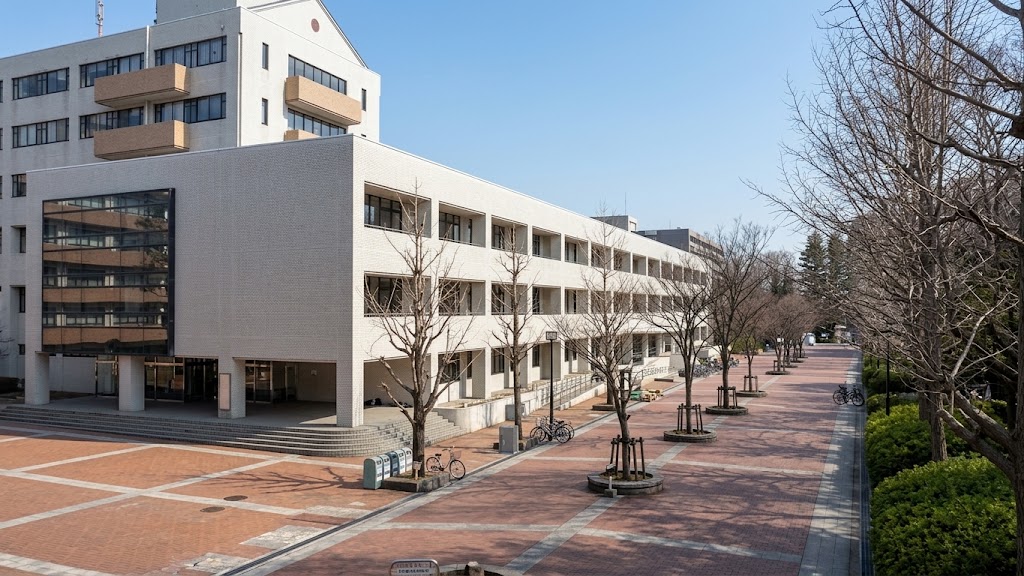
The university’s history is unofficially traced back to the Kaishokudo (1724) and Tekijuku (1838) schools. The former was founded by Osaka merchants to educate ordinary townspeople, which laid the foundation for the university’s free, anti‑elitist, and pragmatic spirit.
The famous Osamu Tezuka, the creator of Astro Boy and the “god of manga,” graduated from the medical faculty of Osaka University. He obtained a medical license, and his in‑depth knowledge of anatomy later formed the basis for the iconic manga about the brilliant surgeon Black Jack.
Akio Morita, the legendary entrepreneur and co‑founder of Sony Corporation, graduated from the physics department of Osaka University in 1944. It was the academic foundation provided by the university that later helped him revolutionize the portable electronics market.
When, in 1931, the university officially received the status of the sixth Imperial University of Japan, the Osaka Prefectural government and local businessmen independently raised enormous funds to demonstrate to Tokyo the region’s need for its own scientific center.
Admission to the University of Osaka requires a clear understanding of the differences between programs, the right choice of a scholarship strategy, and — for graduate programs — preliminary work with a research supervisor. We help structure this process systematically:
Our students have already received scholarships worth more than 35 million dollars.
Want to get into the University of Tokyo? Come to a free consultation. We’ll tell you how it works in your specific case.

Leave your contacts — our consultant will get in touch
