




 Studying in Japan: Admission, Fees, and Scholarships for Foreigners

She enrolled in Fashion PR programs at five US universities


Beijing, China · Peking University (PKU) is one of China's two flagship universities, along with Tsinghua University, founded in 1898. It is a member of the elite C9 League—an association of nine leading Chinese universities, similar to the American Ivy League. The campus is located in Haidian, a district in northwest Beijing—the academic core of the Chinese capital, adjacent to the Summer Palace and Yuanmingyuan. International students can pursue all levels of study: undergraduate, graduate, and PhD.
Peking University was founded in 1898 as the Imperial University of Beijing — the first national university with comprehensive disciplines in the history of China. In 1912, when China became a republic, the university received its current name. Today, PKU is a major research university with about 35,000 students, 12 faculties, and more than 270 specialties.
The Yanyuan campus (“Garden of the Yan People”) covers 274 hectares and is one of the most beautiful university campuses in Asia: it features historic gardens, ponds, traditional Chinese pavilions, and modern research buildings. Beijing is China’s political, cultural, and scientific center, providing direct access to key government structures, international organizations, and major Chinese corporations.
PKU is a member of the C9 League and holds the status of a “Double First Class University” — the highest state classification for Chinese universities. According to QS, PKU’s academic reputation ranks #12 in the world, reflecting its recognition among scientists and researchers worldwide.
The tuition fee is stated in yuan (RMB) and varies depending on the program and level.
Bachelor’s degree (standard programs): from 26,000 RMB/year (humanities) to 30,000 RMB/year (natural sciences and engineering)
Bachelor’s degree (medical programs, PKUHSC): 45,000 RMB per year
Master’s degree (standard programs): from 29,000 RMB/year (humanities) to 33,000 RMB/year (natural sciences)
Master’s program (specialized and English‑language programs): up to 94,000 RMB/year; Global MBA — 188,000 RMB for the full course
Doctoral program: from 32,000 to 60,000 RMB/year, depending on the field of study
Application review fee: 800 RMB (non‑refundable)
Peking University unites 12 faculties and numerous schools. The most in demand among international students are:
Economics and Management
Computer Science and Technology
School of Computer Science and Technology is one of the leading institutions in China. Algorithms, AI, data analysis, cybersecurity, software engineering. Most programs are in Chinese.
Medicine
Peking University Health Science Center (PKUHSC) is a medical cluster of PKU: clinical medicine, dentistry, pharmacology, and public health. Instruction is in Chinese; HSK 5–6 is required. Admission is through a separate process involving an entrance exam.
Law, International Relations, and Social Sciences
Humanities and natural sciences
A wide range through the main faculties: literature, history, philosophy, physics, chemistry, biology, mathematics, earth sciences.
The Yanyuan campus is one of the most beautiful in Asia. Historical gardens, ponds, and traditional Chinese pavilions coexist with modern academic and research buildings. The campus is located in the Haidian district — the academic core of Beijing, where dozens of universities and technology companies are concentrated.
For international students, there are Zhongguanyuan Global Village and Shaoyuan International Student Dormitory — student dormitories on the campus. The cost ranges from 1,500 to 2,000 RMB per month. Starting in 2025, on‑campus accommodation for self‑funded undergraduate students is not guaranteed — it is recommended to plan accommodation in advance.
The campus has canteens, cafes, sports complexes, libraries (the collection comprises more than 11 million volumes) and medical centres. The Beijing Metro, with several lines, provides convenient connections to the city centre and international companies.
It is recommended to start preparing the documents 5–6 months before the deadline, taking into account the time required for language tests, translation, and notarization of the documents.
High school diploma with high academic performance. Most programs require HSK 4–5. Age limit: as a rule, no more than 25 years. Online application via the official PKU portal. Deadlines: March–May for the autumn intake. Fee: 800 RMB.
Bachelor’s degree diploma with transcript, CV, letters of recommendation (usually two), personal statement or study plan. Deadlines: December–March for the autumn intake.
A research proposal and preliminary contact with a potential academic supervisor are essentially a mandatory element. For programs in the field of science and technology, publications may be required.
HSK 4–5 for Chinese‑language programs (HSK 5–6 for medicine); IELTS 6.5–7.0 or TOEFL 90–100 iBT for English‑language programs.

It is critically important for international students: the main language of instruction at PKU is Chinese. Most undergraduate programs and many graduate programs are conducted exclusively in Chinese. Without HSK 4–5, only limited programs in English are available — mainly Global MBA, a number of LLM programs, and some master’s programs.
Medical programs have a separate, significantly more complex admission process: HSK 5–6 is required, along with a specialized CSCA exam, and the program lasts 6 years.
What really affects the chances: high academic performance, a strong language profile, a specific and convincing study plan with references to particular teachers and research centers at PKU, and prior contact with a potential PhD supervisor.
PKU is one of the most competitive universities in China and the world. The official acceptance rate for international students is not published; it is estimated to be around 15%, but the competition is significantly higher for medicine, law, and economics.
The main state financing program. Covers: full tuition, hostel accommodation, medical insurance and monthly stipend:
Submission via the Chinese Embassy in the country of origin or directly through PKU (different routes, different deadlines — usually January-April). Not all countries have CSC quotas — check with the embassy.
The Beijing government’s regional program:
The university’s own scholarship for outstanding international students. Awarded on a competitive basis; the conditions and amount of coverage vary annually — check at isd.pku.edu.cn.
For students studying Chinese or enrolled in Chinese‑language programs.
Beijing is the political and economic center of China, offering unique career opportunities for PKU graduates. The headquarters of major Chinese corporations (Baidu, ByteDance, Xiaomi, CITIC), government agencies, international organizations, and diplomatic missions are all within easy reach.
A PKU diploma is one of the most recognizable in China and beyond. For an international student, it is especially valuable in the following fields:
Peking University is one of the world’s leading research universities. ARWU 2025: #23 in the world — one of PKU’s strongest academic indicators in this ranking, which focuses on objective scientific metrics (Nobel laureates, highly cited researchers, publications in Nature and Science).
PKU has more than 200 research institutes and centres, including China’s largest centres for quantum computing, genomics and climate sciences. Peking University is traditionally strong in theoretical fields: mathematics, physics, chemistry, as well as in the humanities — linguistics, history, philosophy.
Near the campus is Zhongguancun Science Park — China’s largest technology cluster, known as the “Chinese Silicon Valley.” This creates a unique connection between academic research and the commercial application of technologies.
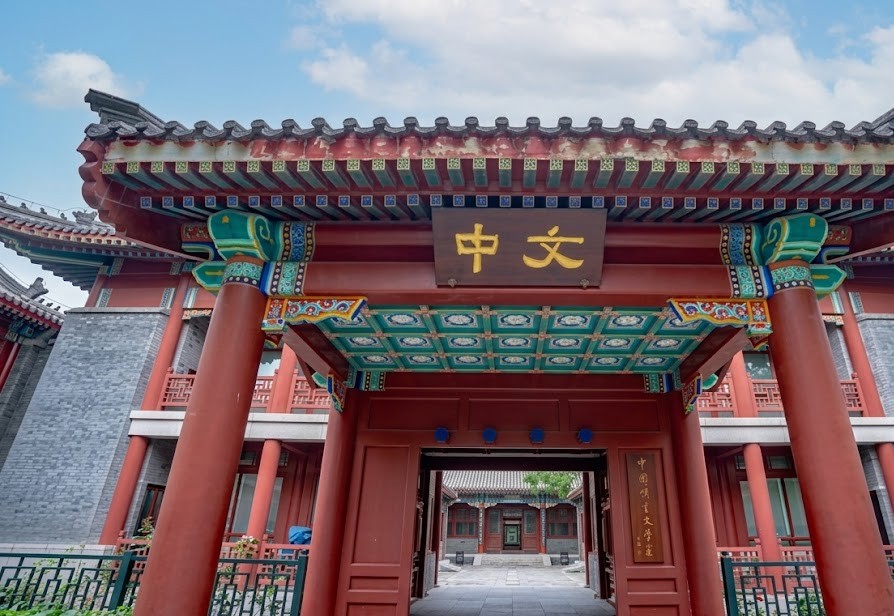
PKU was founded in 1898 as China’s first national university with interdisciplinary studies — it is over 125 years old.
The Yanyuan campus covers 274 hectares and is an architectural monument: traditional Chinese gardens, ponds, and pavilions were created over the course of three centuries.
In 1918, Mao Zedong worked at the library department of PKU, and it was there that he first became acquainted with Marxism — a fact that has become part of the university’s official history.
PKU is ranked #2 in Asia according to the QS Asia University Rankings 2026, behind only the University of Hong Kong and ahead of NTU and NUS.
QS Academic Reputation Ranking 2026: #12 in the world — PKU’s academic reputation is higher than its overall ranking, which indicates exceptional recognition among scholars.
Located near the campus is Zhongguancun Science Park — China’s “Silicon Valley,” the country’s largest technology cluster, with residents such as Lenovo, ByteDance, Baidu, and hundreds of startups.
Admission to PKU is a multi‑stage process in which every element of the application matters. At SelfStartGlobal, we help you build it in a systematic way:
Our students have already received scholarships worth more than 35 million dollars.
If you want to enroll at Peking University, come to a free consultation. We’ll explain how it works in your specific case.

She enrolled in Fashion PR programs at five US universities

She was admitted to three American universities at once: Augustana College, Widener University, and the University of South Dakota. She chose Augustana College, where she received a scholarship of $45,000 per year.

He entered a master’s program in the USA at two universities at once – Brandeis University and Washington University in St. Louis, receiving scholarships totaling $80,000. He chose Brandeis University and went to study on the first try.
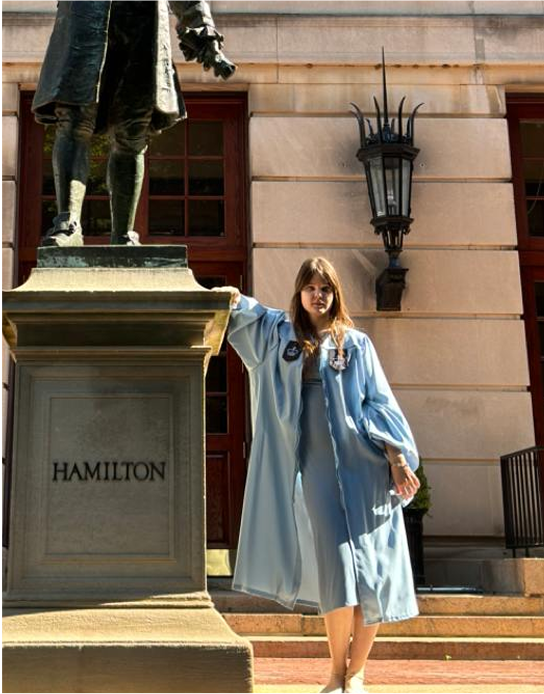
I was accepted to the PhD program at Columbia University on my first try, having strengthened my profile and compiled my achievements into a strong application.
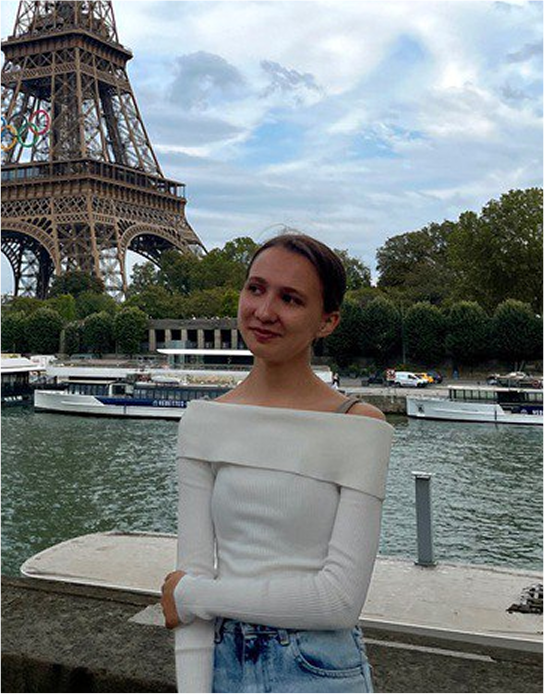
She enrolled in graphic design at universities in France, Italy and Hungary. She received scholarships at all of them and chose the university with the maximum funding — $135,000 for the entire period of study.

She entered graduate school at Kent State University and Ohio University. At Ohio University, she won a Graduate Teaching Assistantship with full funding of $37,774, covering tuition, insurance, and living expenses.

He entered Siena Heights University (USA) for the Theater and Music program with a full scholarship of $170,000. Preparation took less than a year.

Got accepted to NYU Abu Dhabi on the first try (acceptance rate 4%) with a scholarship of $217,000. Also received offers from Lynn and Drexel University.
Leave your contacts — our consultant will get in touch
