




 How to find a scholarship to study abroad


Service payment
Fill out the form and continue to payment via Stripe


Interest in studying in Korea for foreigners has grown not only because of the culture — the country offers strong programs in engineering, IT, business, design, and media, and Korean technology companies and corporations actively hire graduates with an international background. This direction is suitable not only for fans of K-culture, but also for students with clear career goals in technology, international business, or the media industry.
The system includes bachelor’s degrees (usually 4 years), master’s degrees, doctoral degrees (PhD), as well as language programs and exchange programs. Some programs are taught in English, while others are taught in Korean, and some universities offer a hybrid format: a year of language training followed by specialized studies. The difference is significant. English-language programs do not require knowledge of Korean for admission, while Korean-language programs usually require a TOPIK certificate.
South Korean universities for international students are not limited to a single city. It is important to consider not only the prestige, but also the specialty, budget, available scholarships, and admission requirements.
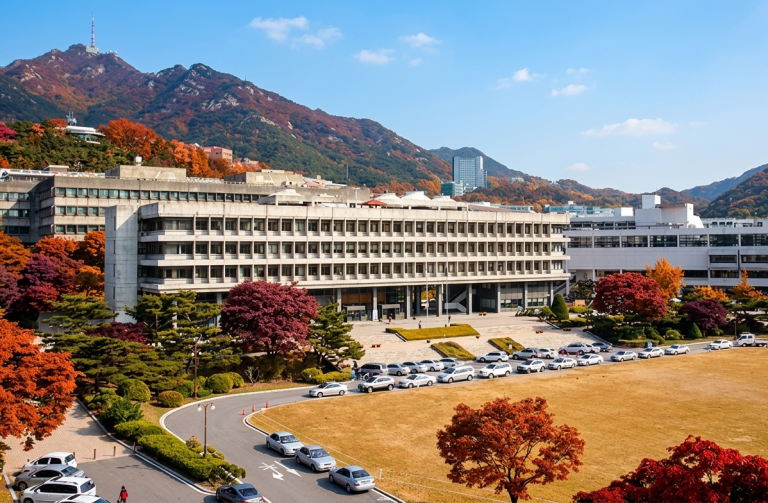
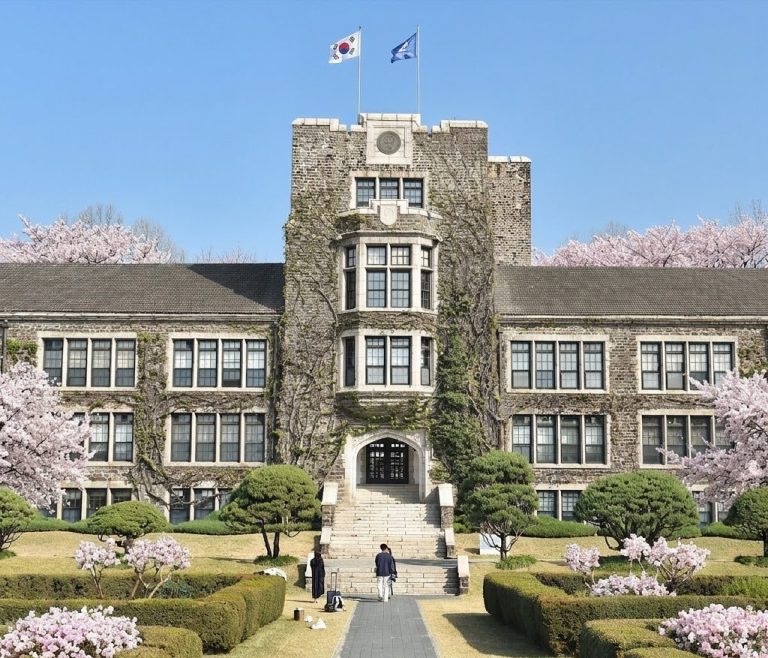
Seoul universities — Seoul National University, Yonsei University, Korea University, Sungkyunkwan University (SKKU) — provide an international environment, a wide range of programs in English, and proximity to the headquarters of major corporations. The downside is the high competition for admission and the higher cost of living.
Regional universities. For example, KAIST in Daejeon (80% of programs in English) or Chonnam National University in Gwangju offer lower living costs, a comfortable student environment, and often higher chances of receiving individual scholarships. For many majors, especially technical ones, the quality of education in the regions is comparable to that in the capital.
The admission process is based on a common logic:
Choose a program and check your intake (usually there are two intakes – spring and fall semesters)
Review the requirements of a specific program—they vary by university and department.
Prepare academic documents and, if necessary, apostille them
Take a language test – TOPIK for Korean-language programs or IELTS/TOEFL for English-language programs
Prepare motivational materials – Personal statement and Study plan
Submit your application through the university’s online portal and attend an interview, if required.
Obtain an Admission Letter and Apply for a Student Visa
Bachelor’s Degree Admission
For a bachelor’s degree, you need a high school diploma, grades in relevant subjects, a language certificate (TOPIK for the Korean track or IELTS/TOEFL for English — for example, for SNU programs, the typical threshold is IELTS 6.0-7.0 or TOEFL iBT 80-90+, depending on the program), a motivation letter, and verified extracurricular achievements.
Master’s Degree Admission
For a master’s degree, you need a bachelor’s degree, a transcript of grades, recommendation letters, a CV, and a motivation letter. Research programs require a research proposal and often the prior consent of a supervisor, while creative programs require a portfolio.
Tuition fees in South Korea are significantly lower than in the United States, the United Kingdom, or Australia, but they vary significantly between public and private universities.
On average, tuition fees at a public university are around 4,000,000 won per semester (~$3,000), while tuition fees at a private university are around 6,500,000 won. At Yonsei University, the cost varies from 4.3 million to 8.7 million won per semester, depending on the department, while at Seoul National University, it ranges from 2.4 million to 5.7 million won per year for undergraduate programs and from 5 million to 7 million won per year for graduate programs.
In addition to tuition, students also need to cover living expenses. On average, students should expect to spend between $800 and $1,200 per month on rent, food, and transportation. Rent is usually between $300 and $800 per month, depending on the city, and Seoul is significantly more expensive than regions like Daejeon or Gwangju. As of 2021, NHIS health insurance is mandatory for international students and costs around 76,000 won per month.
Scholarships in Korea for foreigners exist at several levels. The Global Korea Scholarship (GKS) program by the government, university scholarships for academic performance, GPA discounts, and grants for individual faculties.
For example, Yonsei University offers the Admissions Scholarship for Underwood International College applicants, while Seoul National University offers the President Fellowship, which covers full tuition and living expenses for PhD candidates from developing countries.
The main and most significant request in this topic is the GKS, and it requires a separate preparation strategy.
The Global Korea Scholarship is a government-funded full-scholarship program from the Korean Ministry of Education, administered by the National Institute for International Education (NIIED). GKS covers tuition, flights, a scholarship, one-year language training, and health insurance, and is awarded to approximately 1,500 students from over 150 countries each year.
The program is worth considering if you have a strong academic profile (the minimum GPA is equivalent to 2.64 out of 4.0, and competitive applications are usually above 3.5) and you are willing to invest in your preparation in advance, as the competition is high and the documentation requirements are strict.
It depends on the format of the program. For English-language programs, Korean is not required. Instead, you need an IELTS or TOEFL certificate.
For programs taught in Korean, you usually need a TOPIK certificate from level 3. If your level is not yet sufficient, many universities offer a one-year preparatory course before the main program.
An important note: TOPIK level 5-6 not only opens up more programs, but also gives you an advantage when applying for the GKS. You can receive an additional monthly allowance and skip the mandatory language year.

A D-2 visa is required for degree programs, while a D-4 visa is required for language and other non-degree programs.
The visa costs around $40 for stays of up to 90 days and around $60 for longer stays. A D-2 visa typically requires proof of enrollment, apostilled educational documents, and financial stability, typically around $9,000 to $10,000 in an account.
After entering, you must register with the immigration office and obtain an ARC (Alien Registration Card) within 90 days. It is best to check with the consulate for details specific to your country of citizenship, as this is a separate topic that we will cover in a dedicated article on visas.
Start preparing in advance — a strong academic profile, a well-written motivation letter, and a well-developed Personal brand can make all the difference in most programs, especially GKS. Your study plan should be specific.
Explain why you want to study in Korea, why you chose this program, and how it aligns with your career goals. Don’t delay taking the language test or submitting your recommendation letters. The deadlines for Korean universities, especially GKS, are strict and cannot be extended.
At SelfStartGlobal, we help you choose a university and program in Korea based on your budget, major, and admission chances. We also help you create a scholarship application strategy, including the GKS, prepare your documents, motivation letter, and personal brand, and manage your deadlines at every stage.
If you are considering studying in South Korea, come for a free consultation where we will review your profile and create an admission strategy.
Yes, if you receive a full scholarship, such as the Global Korea Scholarship, which covers your entire tuition fees, or a university scholarship that provides full tuition waivers.
Only for programs in Korean. On the English track, IELTS or TOEFL is required instead of TOPIK, and TOPIK becomes an advantage when applying for scholarships.
Yes, if you are applying for a Korean-language program with a TOPIK certificate, or if the university accepts alternative tests, you should check the specific program’s requirements.
Approximately $800-1, 200 per month for accommodation plus tuition-from $3,000 per semester at a state university.
The academic year in Korea is divided into two semesters: spring (March) and autumn (September). Applications are usually submitted 6-12 months in advance, and even earlier for GKS.
Yes, but with restrictions: D-2 visa holders can work part-time after receiving permission from the immigration service, and the hours limit increases with the TOPIK level.
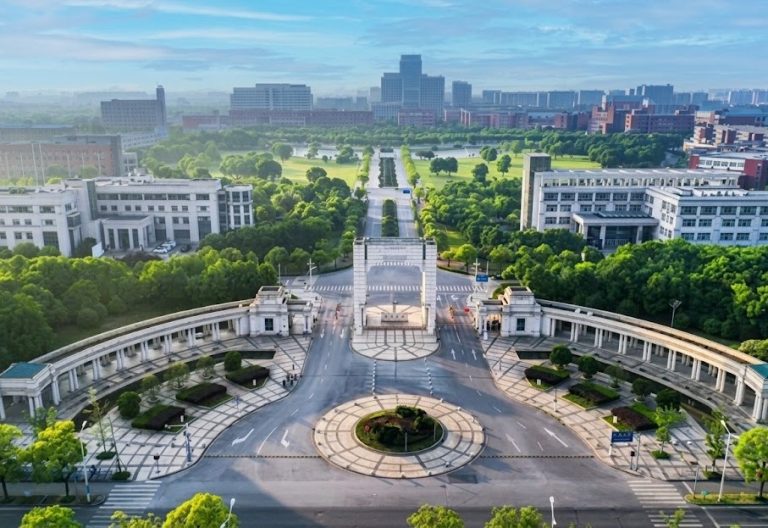
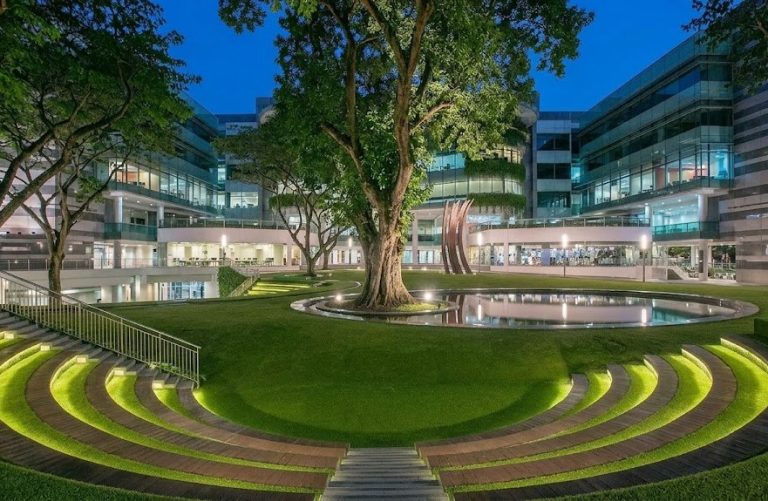
 South Korea
 Japan
JapanJapan is one of the most unconventional destinations for studying abroad. Japanese diplomas are highly valued in the international job market, universities are ranked among the top in the world, and students work with technologies that have not yet been mass-produced in other countries. If you are ready to immerse yourself in a unique culture and a systematic approach to knowledge, this is the right choice for you.
 Singapore
 China
ChinaChinese universities are rapidly rising in world rankings, and the country has turned into one of the largest educational hubs on the planet. Diplomas from leading Chinese universities are recognized by employers around the world, the cost of education is lower than in Great Britain or the USA, and the government actively finances foreign students. On this page - everything you need for admission: universities, cost, scholarships, documents and student visa.
 United Kingdom
Classical education with global recognition. Shorter study periods, strong humanities and business programs, and a highly valued diploma
 USA
USAA popular destination for studying abroad. Prestigious universities, a flexible education system, a wide selection of programs, and broad career prospects
Leave your contacts — our consultant will get in touch
