





 How to get an internship at Samsung, Sony or Tencent as a foreigner

Service payment
Fill out the form and continue to payment via Stripe
Tokyo, Japan · The University of Tokyo (UTokyo, Todai) is a national research university ranked number one in Japan across all major global rankings. Established in 1877, it was the country's first national university. Its alumni and faculty include 20 Nobel laureates, 17 Japanese prime ministers, and 7 astronauts. In 2026, the University of Tokyo discontinued admissions to PEAK—its only undergraduate program taught entirely in English. This fundamentally alters the options for international applicants: without Japanese language proficiency, pursuing a bachelor's degree there directly after high school is no longer an option. However, the situation differs at the graduate level, where a large number of programs accept international students and offer instruction in English.
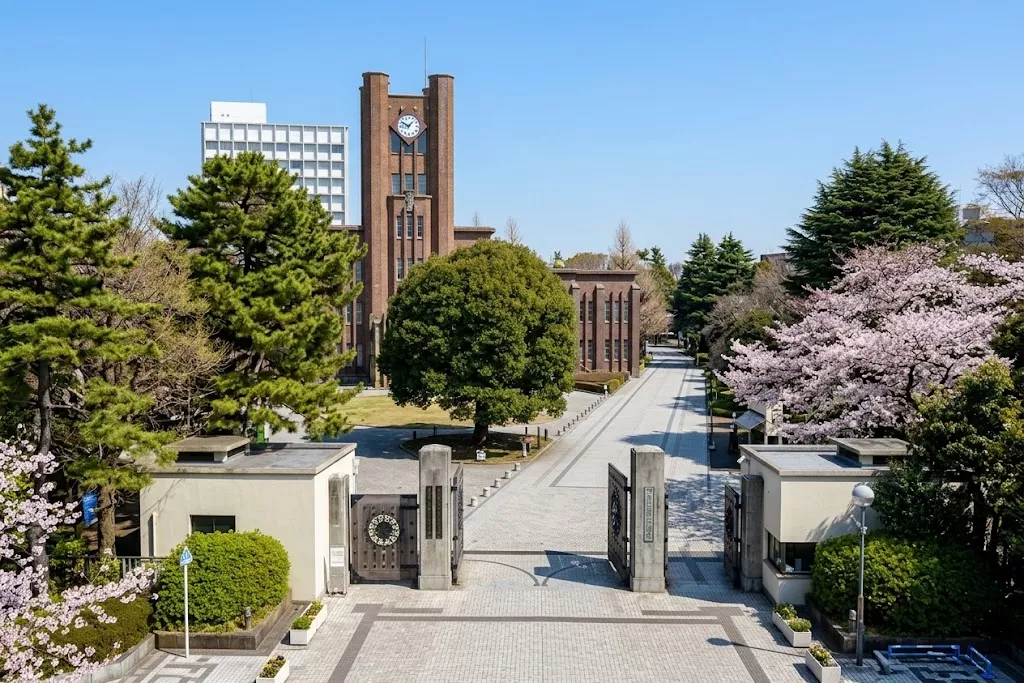
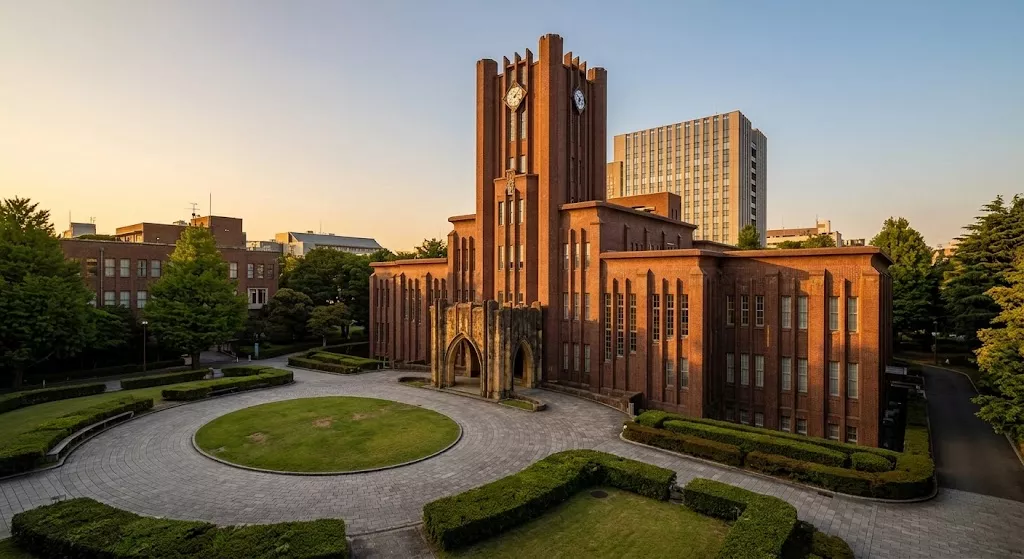
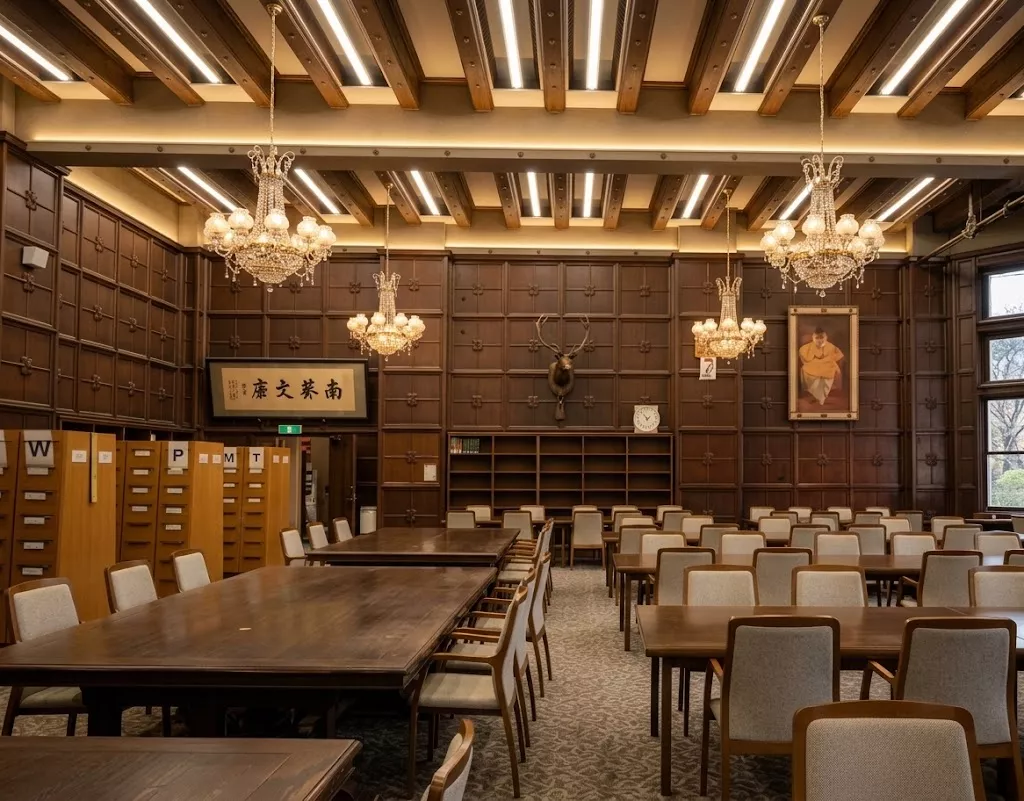
The University of Tokyo (日本語: 東京大学, abbreviated as Todai / 東大) was founded in 1877 — it is Japan’s first national university. It was established during the Meiji Restoration as a flagship of Japanese science and education. Since then, UTokyo has consistently occupied a central place in Japan’s academic, political, and business life.
Today, the university has about 28,000 students, of whom about 4,200 are foreigners from over 100 countries. The three main campuses are: Hongo (medicine, law, engineering, humanities, and economics), Komaba (the first two years of undergraduate studies for most students; PEAK was also located here), and Kashiwadai (advanced sciences and biomedicine). The university has 10 faculties, 15 graduate schools, and a number of world‑class specialized research institutes.
UTokyo consistently ranks in the top 30 of global rankings: #28 according to QS 2027, #28 according to THE 2026, #23 according to ARWU 2025. According to QS academic reputation, it is ranked #13 worldwide. In chemistry, it is ranked #4 worldwide; in biology, it is ranked #15 worldwide (EduRank 2026). Among the alumni and faculty are 20 Nobel laureates, including Takaaki Kajita (physics, 2015, discovery of neutrino oscillations), Koichi Tanaka (chemistry, 2002), Sinichiro Tomonaga (physics, 1965), and Masatoshi Koshiba (physics, 2002). UTokyo graduates head major Japanese corporations, government agencies, and international academic institutions.
UTokyo is a national university: the tuition fee is the same for Japanese and international students, which fundamentally distinguishes it from private Japanese universities.
Tuition fee: 535,800 JPY per year (about 3,600 USD) — for all students regardless of citizenship
Admission fee (one‑time upon enrollment): 282,000 JPY (about 1,900 USD)
Application fee (graduate): 30,000 JPY (~200 USD); 10,000 JPY if selection is based solely on documents.
Despite the fact that Tokyo is one of the most expensive cities in the world, the cost of studying at UTokyo ($3,600 per year) is significantly lower than at private Japanese universities and incomparably lower than at Western universities of a comparable level. The main burden is living expenses.
UTokyo comprises 10 faculties (undergraduate) and 15 graduate schools (graduate schools). For international students in 2026, there are three main pathways:
The standard path for most students. All 10 faculties: law, medicine, engineering, humanities, education, economics, agriculture, natural sciences, pharmacy, interfaculty Liberal Arts & Sciences. JLPT N1 and high EJU scores are required. In fact, this is the same competition as for Japanese students, with an additional language barrier.
A fully English-language transfer program offered by the Faculty of Science. Requirements: at least 2 years of bachelor’s studies completed at a university outside Japan (equivalent to admission to the 3rd year). Studies in physics, chemistry, biology, astronomy, mathematics, and related disciplines. Upon completion, a Bachelor of Science degree is awarded by the University of Tokyo. Funding for all automatically admitted students: 150,000 JPY per month + accommodation with fully paid rent for the first year. The competition is exceptionally high.
For international students, this is the most realistic and broadest trajectory. There are 15 graduate schools, a significant portion of which accept applications and offer instruction in English. The most accessible fields for foreigners are: Graduate School of Science, Graduate School of Engineering, Graduate School of Information Science and Technology (IST), IRCN (neuroscience), Graduate School of Public Policy, Graduate School of Agricultural and Life Sciences.
Non‑degree category: the official status of “research trainee” within a specific laboratory. This is a recognized pathway to preparing for admission to a PhD program. Many international PhD students at UTokyo started out as Research Students. The MEXT Scholarship Embassy Track is often associated with this status.
Campus
The three UTokyo campuses have three different urban atmospheres.
The main campus is located in the Bunkyo district. A traditional Japanese university environment: historic buildings, including the famous Yasuda Auditorium (Yasuda Kōshido), libraries, and research laboratories. Bunkyo is a quiet residential area with low building density and a high quality of life. It takes 15–20 minutes by subway to reach the center of Tokyo.
The campus in Meguro. A more youthful atmosphere: all bachelors study here for the first two years before being assigned to faculties. Nearby is the lively Shibuya district, a 5‑minute walk away.
The campus is in Chiba, 30 minutes from Hongo. Advanced sciences, biomedicine, ecology. A less urbanized environment — more space for research.
There are more than 400 student clubs on campus — academic societies, sports sections, and cultural organizations. The International Student Center coordinates support for international students: language courses, cultural programs, and adaptation seminars.
The university has several dormitories for international students — the International Lodge on the Hongo and Komaba campuses; places are allocated based on applications.
Admission to UTokyo is a sequence of steps, the order of which is determined by the chosen trajectory. You cannot apply “to UTokyo as a whole” — each department sets its own requirements.
Bachelor’s degree without Japanese — only via GSC (if you already have 2 years of bachelor’s studies abroad). Bachelor’s degree with Japanese — standard program (JLPT N1 + EJU). Postgraduate studies — graduate school with the option of studying in English. Research Student — preparatory status through professors.
Each division of UTokyo has its own admission guidelines. The Graduate School of Science page is not the Graduate School of Engineering page.
Without the professor’s prior consent, admission to a PhD program is virtually impossible. You need to contact them 6–12 months before the application deadline.
For a Japanese-language bachelor’s program: JLPT N1, EJU, entrance exam. For GSC: TOEFL iBT 100+ / IELTS 7.0+, recommendations, statement of purpose. For graduate school: diploma + transcript, research proposal, recommendations, language certificate, prior approval from the academic advisor.
Online via the website of the specific graduate school. Application fee: 30,000 JPY (10,000 JPY for documentary selection).
For most graduate programs — a written exam and/or an interview. For GSC — documentary screening + online interview.
After receiving the admission letter — Certificate of Eligibility (COE) + student visa through the Japanese consulate.

Programs
It is fundamentally important to know in 2026:
A realistic strategy for those who want to study at UTokyo without Japanese: start undergraduate studies at another university (in Japan or abroad) — achieve a 2‑year mark — apply to GSC at the Faculty of Science.
Language requirements: for a Japanese‑language bachelor’s program — JLPT N1 or equivalent; for GSC and most English graduate programs — TOEFL iBT 100+ or IELTS 7.0+.
MEXT Scholarship (Monbukagakusho) is a Japanese government scholarship. There are two routes:
Through the Japanese embassy before arriving in Japan; includes Research Student status for a year, followed by admission to a graduate program; payment of 143,000–145,000 JPY per month + full tuition coverage + airfare
Through UTokyo after establishing contact with a professor; a more direct path for well‑prepared candidates
The competition is exceptionally high; each graduate school is allocated limited quotas.
For all admitted students, GSC automatically provides: 150,000 JPY per month + accommodation with fully paid rent for the first year. One of the most generous undergraduate transfer packages in Japan.
A monthly payment of 48,000 JPY for students admitted to English‑taught programs. Competitive selection after admission.
Partial (50%) or full tuition exemption based on academic performance and financial circumstances. Submitted twice a year. For graduate students at UTokyo, the success rate of such applications is higher than at private Japanese universities.
The Japan Science and Technology Agency scholarship for PhD students in the field of sustainable development: up to 180,000 JPY per month. Awarded through a separate competition based on laboratories.
IRCN, IST, GPES, and a number of other graduate schools offer their own funding for international PhD students. The list is available via the websites of the specific graduate schools.
The UTokyo diploma is the most recognizable and highly valued in Japan. Graduates of Todai hold a disproportionately high share of leadership positions in the Japanese government and business:
For an international student, a UTokyo diploma is especially valuable when building a career in Japan, in Japan‑oriented companies in Asia, and in international academic and research organizations. More than 638 startups have been founded by graduates and researchers of UTokyo — an actively developing entrepreneurial ecosystem around the university.
The annual external funding for UTokyo’s research exceeds 90 billion yen. Twenty Nobel laureates are associated with the university.
Among the flagship research structures:
UTokyo was founded in 1877 — at the height of the Meiji era, when Japan was actively opening up to the world. The university was created as a tool for the rapid modernization of the country — and it fulfilled this role throughout the 20th century.
Among the alumni are 20 Nobel laureates and 17 prime ministers of Japan — more than at any other Japanese university.
Takaaki Kajita (Nobel laureate in physics in 2015 for the discovery of neutrino oscillation) was an active professor at UTokyo at the time of receiving the award and is the director of Kavli IPMU.
As of March 2025, 638+ startups have been founded by graduates and researchers of UTokyo.
In 2026, UTokyo closed PEAK — the only fully English undergraduate program. This event fundamentally changed the trajectories for international applicants who do not speak Japanese and are planning to pursue a bachelor’s degree.
The UTokyo color is Tansei (淡青, “pale blue”): the Todai sports teams wear uniforms in this shade, and it is used in all official university symbolism.
Admission to UTokyo in 2026 requires a clear understanding of the available pathways: PEAK is closed, GSC is only for those who already have 2 years of bachelor’s studies, and PhD requires prior contact with a professor. A mistake in choosing a pathway means a lost year. We at SelfStartGlobal help you navigate this path without mistakes:
We analyze your profile, language level, and career goals — and determine which route is realistic: GSC, Japanese‑language bachelor’s program, graduate school, or Research Student.
We work with the current admission guide for a specific graduate school, not with the general descriptions of UTokyo.
For PhD candidates, we help formulate research interests, write a research proposal, and establish contact with a professor via the UTokyo database.
Statement of purpose, recommendations, document translation, JLPT/EJU preparation — a complete package tailored to the requirements of a specific program.
MEXT Embassy Track vs University Track — we help choose the optimal route and prepare a competitive application.
From choosing a program to obtaining a COE and processing a visa.
Our students have already received scholarships worth more than 35 million dollars.
Want to get into the University of Tokyo? Come to a free consultation. We’ll tell you how it works in your specific case.
Leave your contacts — our consultant will get in touch
