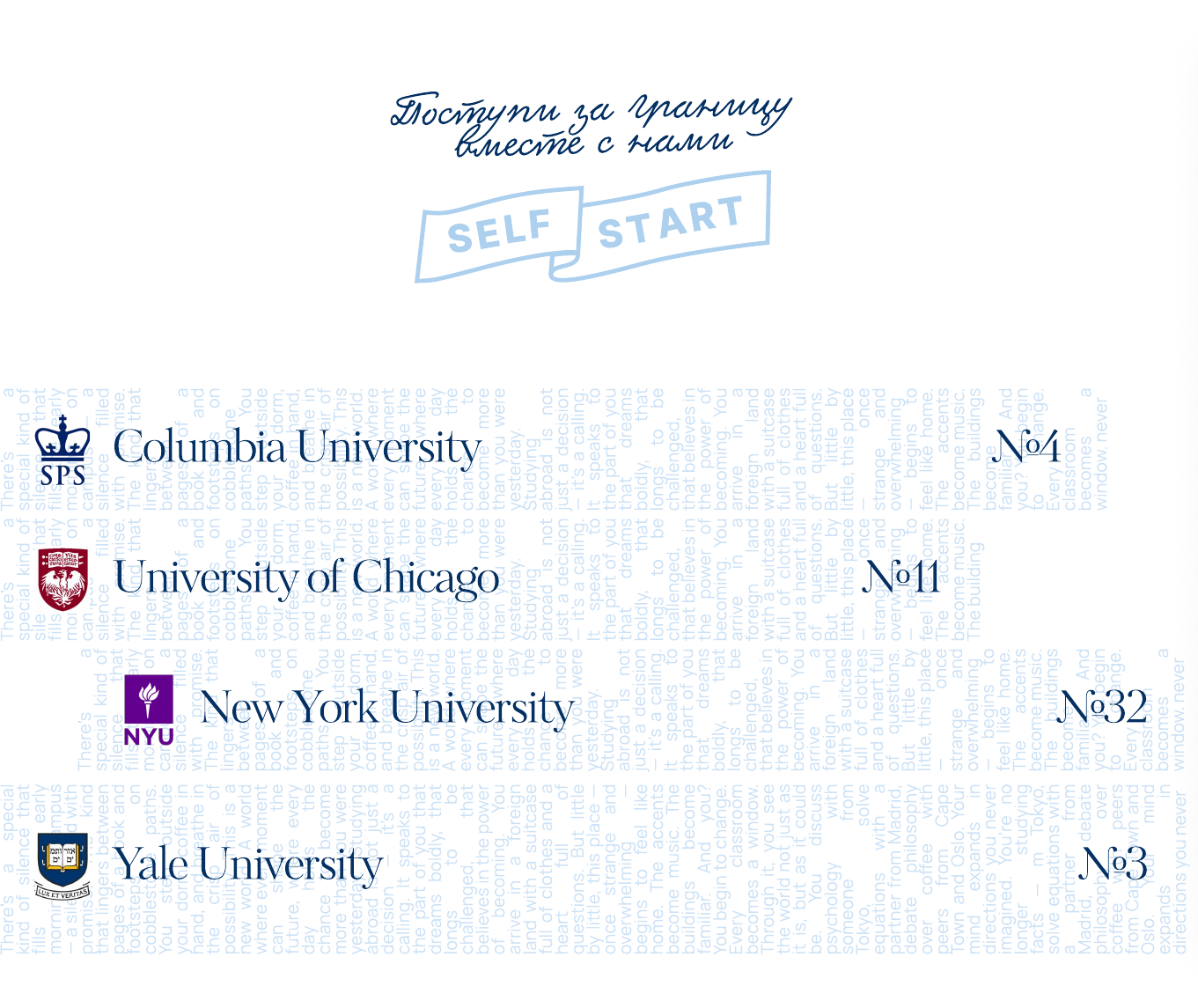
Top 9 public universities in the USTIME World's Top Universities
Top 23 universities in the worldTimes Higher Education (THE)
About the university
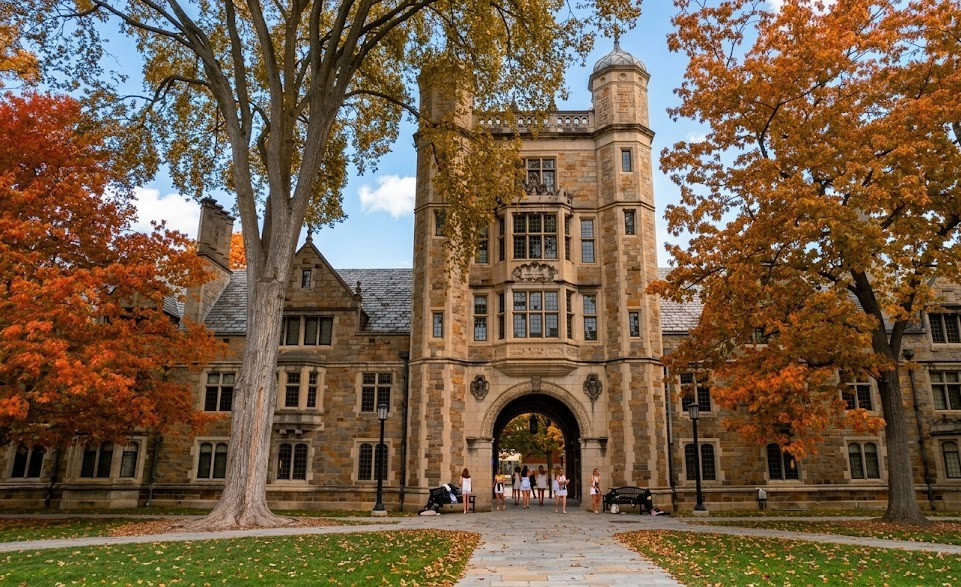
The University of Michigan is located in Ann Arbor, Michigan. It’s a small college town that thrives on the university. The campus is vast, modern, and diverse, from historic buildings to high-tech laboratories and research centers.
UMich is classified as a public research university, meaning it combines the scale of a public university with academic standards comparable to top private universities. Tens of thousands of students study here, yet maintain a strong emphasis on research, project work, and individualized academic pathways.
The university is especially well-suited for those who:
- want a fundamental education with a strong research foundation;
- are considering a career in international companies, consulting, or academia;
- are planning a master’s or PhD program in the US or Europe.
Degree of study
Bachelor's, Master's, Doctoral studies
Percentage of accepted students
16,42%
Probability of employment after training
As of 2025, the University of Michigan MBA graduates have a 91% chance of being employed within 6 months of graduation.
Scholarships
Scholarships are available for international students that cover part or all of their tuition fees.
Directions
The University of Michigan offers a wide range of educational programs covering virtually every key area of knowledge: from the arts, humanities, and social sciences to medicine, engineering, law, economics, information technology, and the natural sciences.
Type
state research university
Size of the student campus
51,823 students
% of international students
10%
Student town
The university's main campus is located in Ann Arbor, just 56 km west of Detroit, where students have access to a well-developed urban infrastructure with three hundred restaurants, numerous theaters, galleries, and museums.
How to Know if You're Looking for UMich (Ann Arbor)
The easiest way to identify a university is by three signs:
- The full name always includes “University of Michigan”;
- The location is Ann Arbor;
- The official abbreviations are UMich or U-M.
If the name simply includes “State” or another city, it’s not the same university.
Available programs
Bachelor’s degree- Arts and Humanities
- Social Sciences and Public Policy
- Natural sciences and Biomedicine
- Engineering
- Economics, finance and management
- Education management
- Law and Legal Research
- Pharmaceuticals
- Journalism and Communications
- Business and Management
Master’s degree- Natural sciences and Biomedicine
- Journalism and Communications
- Engineering
- Arts and Humanities
- Education management
- Law and Legal Research
- Social Sciences and Public Policy
- Economics, finance and management
- Business and Management
Doctoral studies- Business and Management
- Natural sciences and Biomedicine
- Journalism and Communications
- Engineering
- Arts and Humanities
- Education management
- Law and Legal Research
- Social Sciences and Public Policy
- Economics, finance and management
- Pharmaceuticals
Why Choose UMich: Strengths and Opportunities
The University of Michigan is often called one of the most balanced universities in the United States. It doesn’t have a bias toward just one area, as is common at specialized universities.
Academic reputation and research
UMich is a university with a very strong research culture. It actively develops interdisciplinary projects, research laboratories, its own startup incubators, and partnerships with businesses. Students are involved in real-world research early on, rather than simply learning from textbooks.
Popular destinations
In practice, the most common programs here are:
- engineering and computer science;
- business and economics;
- life sciences and medicine;
- social sciences and public policy;
- data, analytics, and related fields.
It’s important to note that there are many more strong programs here, but these are the ones traditionally considered UMich’s “anchor” programs.
Careers, Internships, and Alumni
A major advantage of UMich is its network of alumni and employers. The university actively collaborates with major companies, research centers, and government agencies. Internships and career programs are integrated into the curriculum, not an additional bonus.
For students, this means that a diploma alone isn’t their only asset. A portfolio of projects, experience working in teams, and participation in real-world cases are far more important.
University of Michigan Schools and Departments: What to Choose
UMich consists of numerous schools and colleges, each responsible for its own set of areas. It’s not necessary to memorize all the names; it’s more important to understand the logic.
Main Schools and Who They’re For
They can be roughly divided into several groups:
- Engineering and technology schools – for those pursuing STEM;
- Business and economics – for future analysts, consultants, and entrepreneurs;
- Social sciences and public policy – for those interested in society, politics, and international affairs;
- Humanities – for academic and research careers.
Want to know what actually fits you?
Leave your contacts — a consultant will review your profile and map out the shortest path to admission

University of Michigan Tuition and Student Budget
Financial considerations are one of the most sensitive when applying to UMich. Even as a public university, it remains expensive for international students.
What does the cost consist of?
The annual budget is based on more than just tuition; it also typically includes:
- Tuition;
- Mandatory
- University fees;
- Room and board;
- Health insurance;
- Personal expenses and transportation.
Michigan residents receive a reduced rate. Everyone else, including international students, receive a higher rate. This is why official sources often list multiple figures, leaving applicants confused about which one applies to them.
Scholarships and Funding: How to Reduce the Cost of Tuition at UMich
The University of Michigan is not a university that offers automatic financial aid for international students.
Funding is available, but you have to fight for it.
UMich uses two main types of support: need-based and merit-based.
The first type is focused on the family’s financial situation, while the second is based on achievements and academic profile. For international students, the merit-based approach is most often relevant, considering not your parents’ income but your potential as a candidate.
In practice, the real chances of receiving funding are higher for those who:
- have a strong and coherent academic profile;
- demonstrate concrete results in projects, research, or competitions;
- can explain why they want to attend UMich and how it fits into their career strategy.
The most common mistake is viewing scholarships as a bonus after admission. In reality, a funding strategy should be developed during the program selection and application process.
How to Apply to the University of Michigan (Ann Arbor): Requirements and Documents
From an academic perspective, grades and the difficulty of the curriculum are important. They look not only at your GPA but also at your overall performance: how you’ve developed, what courses you’ve taken, and how well your program aligns with your chosen program.
Language and entrance exams vary by program and year of admission. SAT and ACT policies change regularly, so always check the current requirements on a specific program’s website rather than relying on old articles.
The essay is the central element of the application. It’s where you showcase not the “perfect student,” but rather a person with a compelling story. A good UMich essay isn’t a collection of beautiful phrases, but a clear account of:
- what you’ve done;
- what you’ve learned;
- why you chose this program;
- what you want to do next.
Recommendations also play a significant role. They should be specific, with examples of your work, thinking, and personal qualities.
A step-by-step plan to prepare for admission in 12–24 months
For 18-24 months
Typically, a strategy is formed: choosing a direction, analyzing requirements, participating in specialized projects, olympiads or research.
In 9-12 months
The active phase begins: tests, first versions of essays, selection of recommenders, budget calculations and possible financing options.
1–3 months before the deadline
The final assembly of the package is underway. At this stage, it is important to check formalities, deadlines, and compliance with requirements.
Why are strong applicants rejected?
UMich often rejects applicants when:
- the applicant’s background doesn’t add up;
- their activities aren’t related to the chosen program;
- their essays are abstract and lack specific examples;
- their preparation began too late;
- the recommendations are formal and incomplete;
- their funding expectations are unrealistic.
UMich seeks applicants who understand why they are applying here and what they plan to do next.
How SelfStartGlobal Helps You Get into the University of Michigan
First, we conduct a profile assessment: education, goals, strengths, and weaknesses. Then, we develop an admissions strategy tailored to specific programs and universities. This includes working on your application, essays, recommendations, and, specifically, funding.
University of Michigan Admissions Consultation
This consultation is suitable for those considering UMich or any other university worldwide and want to understand their realistic chances, budget, and preparation path. Take the first step—submit an application to SelfStartGlobal and begin your journey to international education today.







 7 steps to guarantee your admission to a university abroad