



DSU Scholarship to Study in Italy

DSU (Diritto allo Studio Universitario - "Right to Higher Education") is a comprehensive state support program for students in Italy, funded by regional authorities in conjunction with universities. It aims to ensure equal access to education regardless of family financial situation.

What is DSU and why is it one of the most popular scholarships in Italy?

Unlike merit scholarships (which are awarded for outstanding results and require a competitive process), the DSU primarily evaluates the family’s financial situation. This opens it up to a wide range of students, including international students who may not have the opportunity to compete with top graduates for a limited number of “award” places.

The DSU support package is quite substantial: it can include a full tuition waiver, an annual cash payment of up to €6,000–€8,000, a place in university dorms, and free meals in the student canteen.

The DSU is implemented through regional agencies: DSU Toscana, DiSCo Lazio, EDISU Piemonte, ER.GO (Emilia-Romagna), and others. They publish the official competitions (bando) annually, setting deadlines, requirements, and payment amounts. It’s important to understand this from the outset: there are no uniform federal rules; each region has its own program with its own conditions and deadlines.


Who is eligible for DSU (including international students)

The DSU is available to both Italian and international students. Application requirements:

  • The student is enrolled or has confirmed pre-enrollment at an Italian university for the current academic year;
  • The family income (as determined by the ISEE or ISEE Parificato) does not exceed the regional threshold—usually between €25,000 and €30,000 per year;
  • The student does not hold a degree of the same level (DSU cannot be obtained for a second bachelor’s degree or a second master’s degree at the same level);
  • The student has not completed the maximum period of study (for a bachelor’s degree—three years plus one semester; for a master’s degree—two years plus one semester).

If the family income is below the ISEE threshold of €13,560–€14,000, the student is eligible for a full support package: cash payment, dormitory accommodation, meals, and a full waiver of tuition fees. Partial benefits and reduced tuition fees are available for those with an income of up to €25,000–€30,000.

In the first year of a bachelor’s degree, academic requirements are not applied; rankings are determined solely by financial indicators. In the second year and beyond, a mandatory academic achievement criterion is added: students must earn a minimum number of credit units (CFU) by specified dates. There is no age limit for participation in the competition.

What DSU covers: money, dorms, and meals

The DSU support package is one of the most comprehensive student programs in Europe. It consists of three main components, which can be provided either together or separately, depending on the region and the applicant’s financial profile.

Cash Payment

The cash payment is an annual stipend paid directly to the student and is non-refundable. The amount depends on three factors: the university’s region, the student’s residence status (whether they live with a host family or rent), and their income level according to the ISEE.

The estimated payment range for 2025–2026 is €2,500 to €7,900 per year for non-resident students (those who relocated for their studies and do not live with a host family). Students with the lowest verified income receive the maximum amount. Payments are made in two tranches, typically in December and May–June.

Dormitory / Housing

A place in student dormitory is provided through the DSU program on a competitive basis. Spaces are limited—in large cities (Milan, Rome, Florence), there are significantly fewer available places than applicants. If a place in the dormitory is not secured, students may receive a monetary compensation for rent—a “borsa alloggio” (housing stipend). The amount and terms of this stipend are determined by the regional agency and depend on average market rent in the specific city.

It is important to understand that a place in the dormitory and the monetary compensation are two separate components of the package. Receiving one does not automatically guarantee the other. It is important to carefully review the terms and conditions of your specific region and the current year’s bando.

Canteen and other benefits

Students included on the DSU (beneficiari) list are generally entitled to one free or reduced-price meal per day in the university canteen. This represents a significant savings: lunch at the student mensa costs 5-8 euros for a “regular” student, while for a DSU recipient it’s practically free or even nominal.

Some regions offer additional benefits, including discounts on public transportation, partial reimbursement of study materials, and discounted access to university sports facilities. The specific list depends on the regional agency and the current year’s bando.

An important nuance: DSU is not just one scholarship, but regional programs.

The DSU conditions in Tuscany, Lazio, Lombardy, and Emilia-Romagna differ in several key parameters:

  • The ISEE entry threshold for the competition is approximately €23,000 in Lombardy, €22,000 in Tuscany, and €20,000 in Campania;
  • The amount of the monetary award and the number of installments;
  • The requirements for CFU (study credits) by year;
  • Application deadlines – each region has its own deadline, often varying by 2–4 weeks;
  • The list of documents and translation/apostille requirements.

Official websites of regional agencies where current bando are published: dsu.toscana.it (Tuscany – Florence, Pisa, Siena), discostudenti.it (Lazio – Rome), er-go.it (Emilia-Romagna – Bologna, Modena), edisu.piemonte.it (Piedmont – Turin). Look for the “Bando borse di studio” section; this year’s official competition with all requirements is posted there.

Main criterion of the DSU: financial assessment (ISEE / ISEE Parificato)

ISEE (Indicatore della Situazione Economica Equivalente) is an Italian indicator of a family’s financial situation. It is calculated based on the combined income of all family members for the previous year and their assets, including real estate, bank accounts, and securities. The lower the ISEE value, the more government support a student can receive.

For Italian citizens and students whose income is solely in Italy, the ISEE can be obtained through CAF (Centro di Assistenza Fiscale) tax assistance centers or online through the INPS portal. The procedure is free and standard. Form DSU (Dichiarazione Sostitutiva Unica) is submitted—a declaration of the property and family status of all family members.

ISEE Parificato for Foreigners Плюсик

International students whose family income and assets are wholly or partially located outside of Italy cannot obtain a standard ISEE. They require an ISEE Parificato (or ISEEU Parificato)—an equivalent document calculated based on foreign financial documentation.
The standard ISEE Parificato package includes:

  • A certificate of family composition listing all relatives living together;
  • Income certificates for all employed family members for the previous financial year (similar to a 2-NDFL form);
  • A certificate of no income for non-employed family members (from the employment service or tax office);
  • Real estate documents—proof of ownership and cadastral value;
  • Bank statements for all family members as of December 31 of the reporting year.

All documents must be translated into Italian by a translator approved by the Italian embassy and apostilled (or legalized through the Italian consulate in the country of origin). This step takes the longest and is the main source of delays in application.

Common complications include unofficial or partial income of one parent, incorrectly formatted certificates, outdated bank statements, and missing apostilles on required documents. Any of these issues can result in an inflated ISEE Parificato, which directly reduces the payment amount or disqualifies the student from the selection threshold.

Step-by-step submission to DSU

Step 1: Select your region and find the official DSU/EDISU website Плюсик

The first step is to determine the region in which your university is located and visit the website of the relevant regional DSU agency. Find the “Bando borse di studio” section for the current academic year. The Bando is the official competition document, which details everything: who can apply, what documents are required, the ISEE thresholds, the deadline, and how the ranking is calculated.
Read the Bando in its entirety if anything is unclear; regional agencies have email support and FAQ sections. Check directly: errors due to unverified information can be costly. At the same time, make sure your pre-admission to the university is confirmed through the Universitaly portal. Many regional DSU portals require Universitaly data when registering an application.

Step 2 - Prepare the ISEE Parificato package of documents Плюсик

Start collecting documents at least 3-4 months before the application deadline. Apostilles in some countries take 2 to 6 weeks, and translation by a certified translator takes another 1-2 weeks.
Sample list of documents:

  • Student passport (copy);
  • Certificate of family composition;
  • Income certificates for all employed family members;
  • Certificates of no income for unemployed/non-employed family members;
  • Real estate documents indicating the cadastral value;
  • Bank statements as of December 31 of the reporting year;
  • Marriage/divorce certificates (if necessary).

Confirmation of enrollment or pre-enrollment at an Italian university
All documents must be apostilled and have a notarized translation into Italian. For specific exceptions and additions, please contact your regional bando.

Step 3 – Registration and filling out the application Плюсик

The DSU application is submitted online through your personal account on the regional agency website or on the university portal (depending on the university and region). When filling out the application, pay particular attention to the following fields:

  • Residence status (residente / non-residente / fuori sede) — directly affects the amount of the benefit. A student from another city or country who rents accommodation is considered “fuori sede” and generally receives maximum support.
  • Family composition — must be entered strictly according to the certificate, without rounding or assumptions.
  • ISEE Parificato data — the document must be ready at the time of submission and have a current registration number.

Any inaccuracy in the application, whether an error in residence status or discrepancies in data and documents, may result in a decrease in the final score in the ranking or rejection of the application.

Step 4 – Sending, Confirming, and Monitoring Status Плюсик

After submitting your application, please keep the receipt (ricevuta/receipt). It confirms your application has been accepted and may be required for subsequent inquiries from the agency or for appeals.

Next steps:

  • Monitor your email; the agency may request additional documents within 2-4 weeks after the application deadline.
  • Watch for the publication of the preliminary ranking (graduatoria provvisoria), which is usually released in October-November.
    If you disagree with your ranking, you can file an appeal within a strictly defined deadline (usually 10-15 days).
  • The final ranking (graduatoria definitiva) and first payment tranche are usually released in December.

DSU deadlines and action calendar

The annual bando for most regions is published in June–July. The application deadline is August–mid-September. This means that if you start collecting documents in August, you’re already late.
Optimal preparation calendar:

  • January–April — select a region and university, submit an application for pre-admission through the Universitaly portal;
  • April–May — review the previous year’s bando as a preliminary document guide, begin collecting income and property certificates;
  • May–June — apostille and translation of documents, preparation of the ISEE Parificato;
  • July — publication of the current bando, final verification of documents against the new requirements;
  • August — submit the application online, no later than the deadline indicated in the bando;
  • October–December — awaiting the ranking, appeal if necessary, and the first tranche.

A delay at any stage is critical. Apostilles in some countries can take up to 4–6 weeks. A translation with a certified translator takes 7 to 14 days. The bank may issue an official statement within 3 to 10 business days. Please allow extra time for each step.

Academic Requirements: How to Keep Your DSU After Receiving It

In the first year of an undergraduate program, the DSU scholarship is awarded based solely on financial criteria; there are no academic requirements. However, to confirm eligibility for the second year and beyond, students must demonstrate minimum academic progress.
CFU (credit unit) requirements vary by region and program, but there are some common points:

  • By August 10th, students must have earned the minimum number of CFUs to confirm eligibility for the scholarship for the previous year. For undergraduate programs, this is typically 20 to 30 CFUs; for graduate programs, it is 30 to 40 CFUs;
  • November 30th is the second deadline for those who missed the August deadline. In this case, the payment may be delayed or partially reduced.
    If the CFU requirements are not met by either August or November, the scholarship already received may be reclaimed.

Monitor your progress from the first semester and don’t put off exams.

Common mistakes when applying for DSU

Most denials and lost payments are the result of typical, recurring errors. The most common are:

Focus on a foreign region Плюсик

Tuscany’s DSU regulations do not apply to Lazio. Always consult the regulations for your regional agency—no exceptions.

Errors in the ISEE Parificato Плюсик

Incomplete income information (such as undeclared rent), outdated bank statements, and incorrectly reported family composition can all inflate the ISEE score and reduce the award amount or disqualify a student from the selection threshold.

No apostille or incorrect type of legalization Плюсик

A simple notarized translation without an apostille is not accepted. Documents from CIS countries require an apostille or consular legalization at the Italian embassy, ​​depending on the country of origin.

Incorrect translations Плюсик

The translation must be done by a certified translator approved by the Italian Embassy. Uncertified or uncertified translations will be rejected.

Missed deadlines Плюсик

Bando’s deadline is very strict. No applications will be accepted after it closes. No exceptions or extensions.

Incorrect residence status Плюсик

A student renting accommodation in their hometown is entitled to a higher support amount than someone living with a family. An error in this field will result in an underestimation of the calculated benefit amount.

Ignoring CFU requirements Плюсик

Students who fail to keep track of loan deadlines risk not only losing future scholarships but also having to repay those they’ve already received.

Waiting to arrive in Italy to submit documents Плюсик

The application must be submitted while still in the country of origin; by the time of arrival, the deadline is often already closed.

How to increase your chances of winning a DSU and avoid losing your payouts

The best chance of getting a DSU is the result of proper preparation. What influences the result?

Documents:

  • Prepare the ISEE Parificato with the help of a specialist or consultant specializing in Italian documents. Filling out the form yourself, with errors, is significantly more expensive than professional assistance.
  • Use only current bank statements: as of December 31 of the reporting year.
  • Make sure your income statements cover the entire previous financial year, not just part of it.
  • Check that all documents are apostilled before translation—the apostille is placed on the original and then translated along with it.

Strategy:

  • Choose your region and university, taking into account the availability of the DSU: some regions have a higher ISEE threshold, which broadens the pool of applicants.
  • For example, in regions with a lower concentration of international students, competition for rankings is traditionally lower.
  • If your income is close to the threshold, consult a specialist on how to correctly declare all parameters to ensure an accurate calculation. Submit your application within the first few days after your bando opens. This reduces the risk of technical issues and gives you time to correct any errors.

Academic:

  • Make an exam plan at the beginning of each semester, taking into account the CFU deadlines (August/November).
  • Don’t postpone difficult courses until the last minute: academic failure in your first year can result in the refund of your scholarship.
  • Monitor the CFU requirements in your region annually; they may vary from bando to bando.

Do you want to get DSU without errors and wasted time?

The DSU is a real tool that allows you to significantly reduce or completely eliminate the cost of studying in Italy, including a complete waiver of tuition fees, plus an annual payment of up to €7,900 and a place in a dormitory.

If you want a professional review of your case, including your income level, possible ISEE score, suitable region, and a complete list of documents, contact us for a consultation. Our expert will help you: assess your financial profile and your realistic chances of receiving the DSU in a specific region, prepare the correct ISEE Parificato package, avoid mistakes with apostilles and translations, correctly indicate your residency status and family composition, and organize a timeline so that all documents are ready well before the deadline.

Start preparing now. Bando opens in July, but you should begin collecting documents in April or May.

MentoringA personal mentor at every stage of preparation. A clear plan, oversight of every step, and predictable results.
Full supportA turnkey international application process: a customized strategy, document preparation, and visa support—all in one service, guaranteeing you admission to a university abroad.
Personal brand in a year
Selection of activities for Personal brand
Universal supportAccelerated preparation for admission: save money and time without compromising results.
Consultation with an expertAn in-depth 60-minute consultation: we'll discuss your admissions chances, financing options, develop a personalized strategy, and answer all your questions.
Consultation with a career guidance specialistWe'll help you identify your strengths and inclinations, choose the right field of study, and build a successful career.
Getting a student visa from the USAWe'll help you obtain a student visa without stress or errors, and we'll also assist you if your application is rejected.
Selection of universities and scholarshipsWe'll create a list of universities and programs that are right for you—with a realistic chance of admission and scholarships.
Admission to Foundation Programme AbroadWe'll help you enroll in the Foundation Program, a program that allows you to transfer to a bachelor's degree abroad without losing a year. We'll select suitable options, prepare your documents, and develop a strategy.
Preparation of documentationStrong documents make a strong candidate. We'll help you prepare your application package based on both formal and informal university requirements.

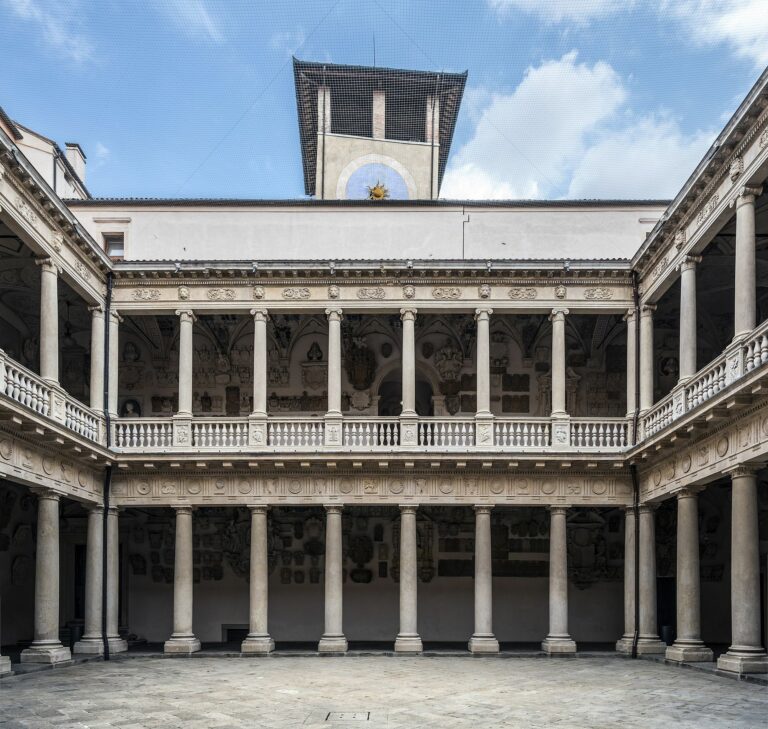
Paduana


University

Italy
One of the oldest universities in Europe with strong traditions in science, medicine, and the humanities. Attractive due to its combination of academic quality, affordable tuition, and student life in Italy
Bachelor's degree: from €2,000 to €4,500 per yearMaster's degree: from 3,000€ to 6,000€ per yearDoctoral studies: from 1,500 to 3,000 € per year
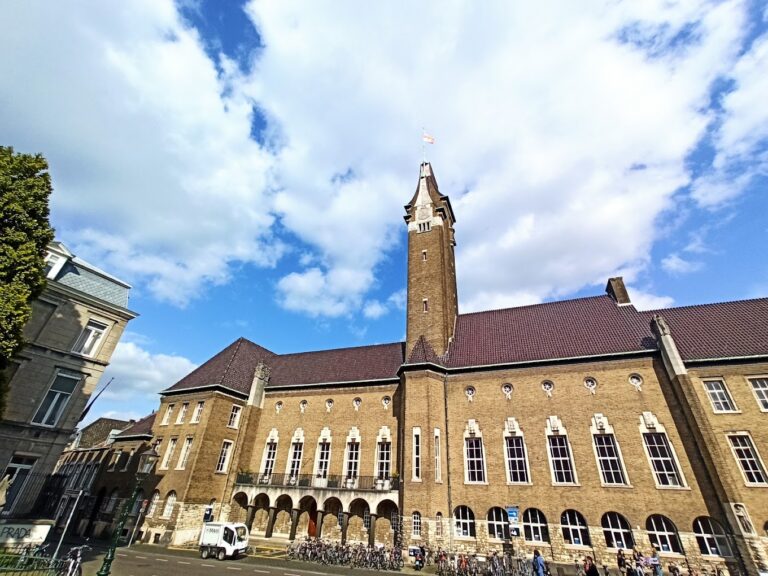
Maastricht University
Netherlands
A modern university in the Netherlands, known for its innovative Problem-Based Learning (PBL) approach. Popular among international students, especially in business, economics, law, and healthcare
Bachelor's degree: from €9,000 to €15,000 per yearMaster's degree: from €10,000 to €18,000 per yearDoctorate: free or about €2,500 per year
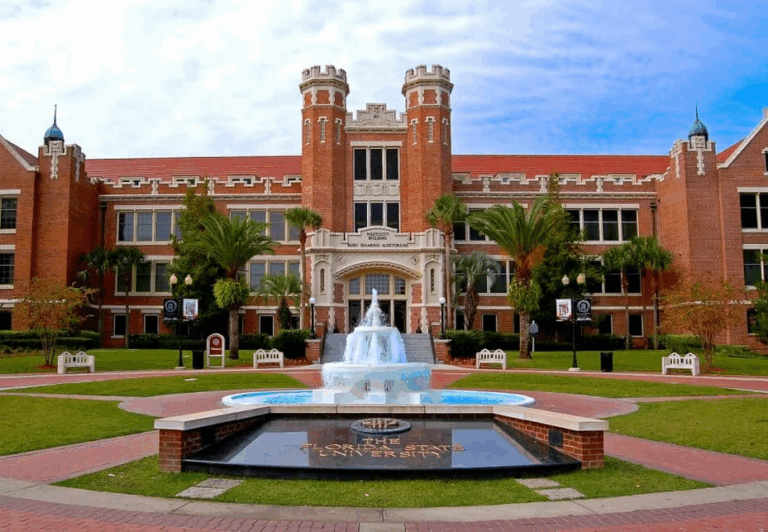
University of Florida
USA
A large public research university in the United States with a high academic ranking. Offers a wide range of programs, strong STEM fields, and more affordable tuition compared to private universities
Bachelor's degree: from $55,000 per yearMaster's degree: $15,000 - $40,000 per yearDoctoral studies: $10,000-$30,000 per year
Johns Hopkins University
USA
A leading U.S. research university and a global leader in medicine, biotechnology, and international relations. Distinguished by a strong focus on research, practice, and interdisciplinary studies
Bachelor's degree: $63,340 per yearMaster's degree: $65,956 per yearDoctoral studies: about $65,000 per year
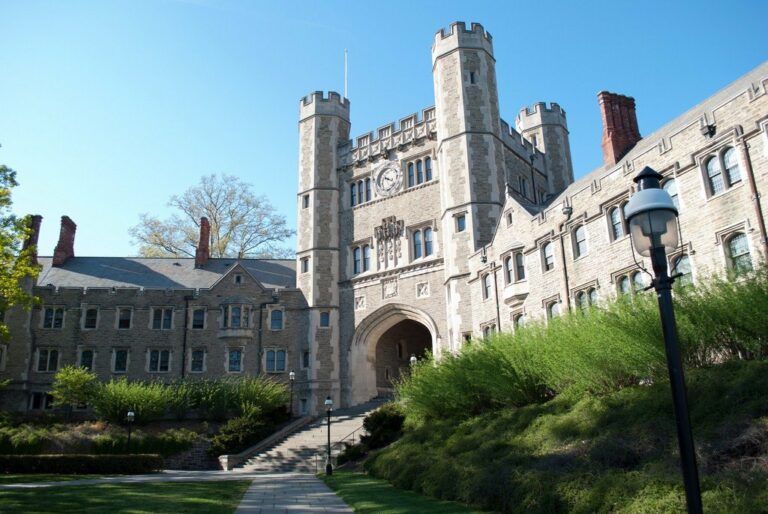
Princeton University
USA
One of the most prestigious universities in the United States, part of the Ivy League. Strong in natural sciences, engineering, economics, and the humanities. Known for a high level of academic support and generous scholarships
Bachelor's degree: about $60,000 per yearMaster's degree: average $58,000 per yearDoctoral studies: free*
Подобрать университет

Статьи по теме

Study Abroad: How to Apply and What to Expect After GraduationМечтаешь учиться за границей, но в голове множество вопросов и сомнений? Разбираем, как поступить в иностранный вуз, с чем предстоит столкнуться во время учебы и что ждет после.
Время чтения:
0 мин
Top 7 Universities in the World: How to Enter a Prestigious UniversityТоповые университеты мира — мечта или переоцененный миф? Рассказываем, как поступить в престижный вуз, что на самом деле дают громкие имена, и стоит ли гнаться за рейтингами любой ценой.
Время чтения:
0 мин
What documents are needed to study abroad and how to prepare themМечта об учебе за границей может разбиться о бумажную волокиту — если не знать "правила игры". В статье разбираем, какие документы действительно нужны, и на что обращают внимание приемные комиссии зарубежных вузов.
Время чтения:
0 мин
TOEFL or IELTS: which one to choose for studying abroad?We compare the TOEFL and IELTS exams to help students choose which test is best suited for studying abroad. We examine the key differences in format, scoring system, and international recognition of the exams.
Время чтения:
0 мин
How can I stay and work abroad after completing my studies?How to stay and work abroad after graduation: visa options and pathways, as well as practical steps to start a career overseas.
Время чтения:
0 мин
How much does it cost to study abroad in 2026?Studying abroad in 2026 involves various costs, from tuition fees to living expenses. Understanding these costs helps students plan their budget more effectively.
Время чтения:
0 мин
Education abroad: popular countries 2026Find out the most in-demand countries to study abroad in 2026. We look at the benefits, programs and opportunities that attract students from all over the world.
Время чтения:
0 мин