




 Study Abroad: How to Apply and What to Expect After Graduation


She enrolled in Fashion PR programs at five US universities


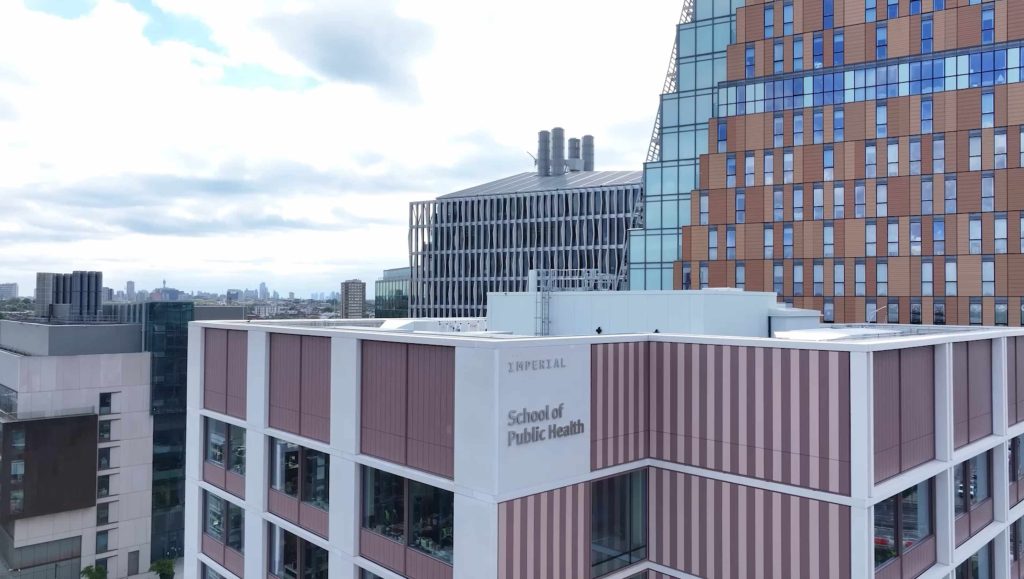
United Kingdom, London, South Kensington · Imperial College London is rightly considered part of the "elite of world education". It is consistently ranked among the top 10 universities in the world and is recognised as one of the most technological and innovative universities in Europe. If you want to build an international career in science, IT, business or another field, Imperial College London is one of the best places to do it. Getting in requires serious preparation and a well-planned step-by-step strategy.
Imperial College London is a public research university focused on science, engineering, medicine and business. It was founded in 1907 and is located in South Kensington, one of the most prestigious areas of London.
Imperial is ranked 2nd in the world in the QS World University Rankings 2026 and is among the top 10 in Times Higher Education. Students learn from researchers who publish in Nature and Science and take part in projects with leading companies and research centres.
Imperial is associated with 14 Nobel laureates. Among the people who studied here are Alexander Fleming, who discovered penicillin, the writer H. G. Wells and astrophysicist and Queen guitarist Brian May.
Imperial College London was founded in 1907. Its campus is in the prestigious South Kensington area, next to the Victoria and Albert Museum and within walking distance of Hyde Park. Today Imperial is ranked 2nd in the world by QS (2026) and 8th by Times Higher Education (2026), and it is one of the top 3 universities in the UK.
What makes Imperial College London unique:
Imperial College London students do not just study theory: they take part in research and develop projects that directly shape the future of engineering, medicine and artificial intelligence worldwide.
Getting into Imperial is certainly not easy: you will need a precise plan, a consistent strategy and patience. Requirements differ slightly between bachelor’s and master’s programmes, but are broadly similar: a high GPA, a well-presented application, good English and a strong personal brand.
Undergraduate applications are submitted through UCAS; master’s applications go through Imperial College London’s own online application system.
Before you start preparing, choose your field: engineering, biomedicine, economics, data science or something else? Admission to a university of this level leaves no room for chance: you need to be sure which subject you want to study and what you want to achieve.
Choose your programme, department and field (the requirements depend on them). Imperial offers hundreds of programmes, from robotics and IT to sustainable business and medicine.
You will need academic transcripts, letters of recommendation, a personal statement and IELTS or TOEFL results (master’s programmes may also require the GRE/GMAT). The application package should be coherent and reflect not only your grades but also your personal brand.
Bachelor’s: through UCAS. Master’s: directly through Imperial’s online application portal.
Some programmes close earlier than others and many fill up on a rolling basis, so it is best to apply as early as possible.
Applications take about 6–10 weeks to review.
Many programmes, including medicine and a number of engineering and science courses, invite shortlisted applicants to an interview. It is mainly a test of motivation: you need to explain why you chose Imperial and how the programme fits your goals.
A-levels: typically A*A*A – A*AA, depending on the course.
IB Diploma: 38–42 points, with high scores in the relevant subjects.
English: IELTS Academic 6.5–7.0 overall or TOEFL iBT 92–100, depending on the programme.
Graduates of schools in CIS countries usually need a foundation year or one year of university study at home.
A bachelor's degree with high grades (equivalent to a UK first or upper second-class degree).
IELTS Academic 6.5–7.0, depending on the programme.
GRE/GMAT for some engineering, analytics and business programmes.
Letters of recommendation, a personal statement and a CV.
The admissions committee looks not only at grades but at the candidate as a person: how motivated they are, what goals they have and how they apply their knowledge in practice. Students from CIS countries with a strong academic record and a distinctive profile have a real chance of getting into Imperial.

A master’s degree from Imperial College London is a solid foundation for a future career. Students learn from researchers who publish in Nature and Science and work on projects funded by international corporations.
The most popular fields:
A master’s programme lasts 1 year, but its intensity matches two-year programmes in the US. Students take part in laboratory research, group projects and practical studies.
Our team of experts helps students choose the best programme, prepare their documents, build a personal brand and pass the interview to receive the long-awaited offer from Imperial College London.
With the right preparation, studying at Imperial can be partly or fully funded.
Tuition fees for international students (2026/27):
You should also budget roughly £15,000–£20,000 a year for accommodation and living costs in London.
Scholarships available to international students:
Our specialists help you choose the right programmes and apply for them, from university grants to government funds, to reduce the cost of study by 50–100%.
accommodation, textbooks, insurance, transport
scholarships, grants, loans, on-campus work and teaching assistantships
Imperial College London is divided into several large faculties, each of which is a scientific universe of its own.
Before applying, find out which faculty is closest to your goals:
Robots, satellites and sustainable energy technologies are created here.
Medical research, development of innovative treatments, clinical practice.
A centre for training business leaders, managers and analysts.
Students study physics, chemistry, life sciences and mathematics. Imperial physicists take part in CERN experiments and quantum computing projects.
Humanities, languages, science communication and policy courses for students of all faculties.
London is a city where something happens every day. You will never be bored here: there are plenty of opportunities for cultural and professional development. The university’s campus is in South Kensington, an area full of museums, cafés, parks and company offices.
Students can live in university halls of residence or in flats near the campus. Life in London is full of events, and this environment not only shapes your career but also broadens your horizons.
Imperial College London combines dynamism, research and creativity. Studying here is not just theoretical: students spend a lot of time in real laboratories, take part in international projects and pitch their own start-up ideas to world-leading experts.
Imperial has close ties with industry: its partners include Airbus, Google and Dyson, and many research laboratories are located right on campus. The practical focus of the programmes lets students gain the experience they need even before graduation. Imperial graduates are competitive and in demand on the global job market.
Preparing for Imperial College London requires not only academic success but also a strategic approach. We support students from the first consultation to the day of enrolment.
Our help includes:

She enrolled in Fashion PR programs at five US universities

She was admitted to three American universities at once: Augustana College, Widener University, and the University of South Dakota. She chose Augustana College, where she received a scholarship of $45,000 per year.

Got accepted to NYU Abu Dhabi on the first try (acceptance rate 4%) with a scholarship of $217,000. Also received offers from Lynn and Drexel University.
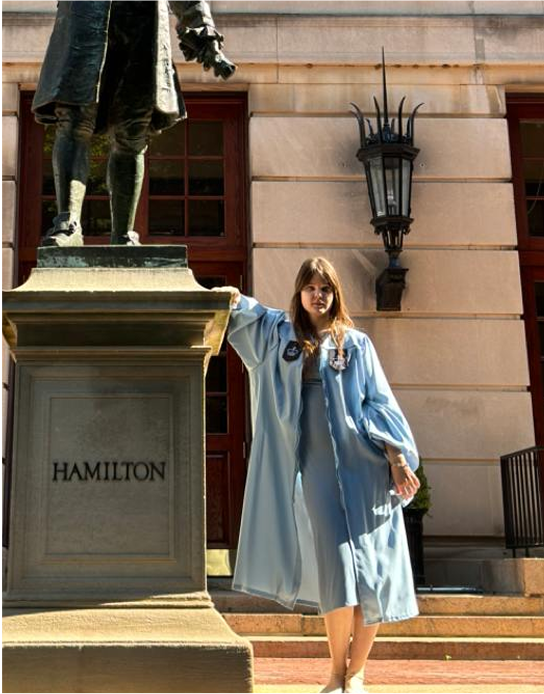
I was accepted to the PhD program at Columbia University on my first try, having strengthened my profile and compiled my achievements into a strong application.

He entered a master’s program in the USA at two universities at once – Brandeis University and Washington University in St. Louis, receiving scholarships totaling $80,000. He chose Brandeis University and went to study on the first try.
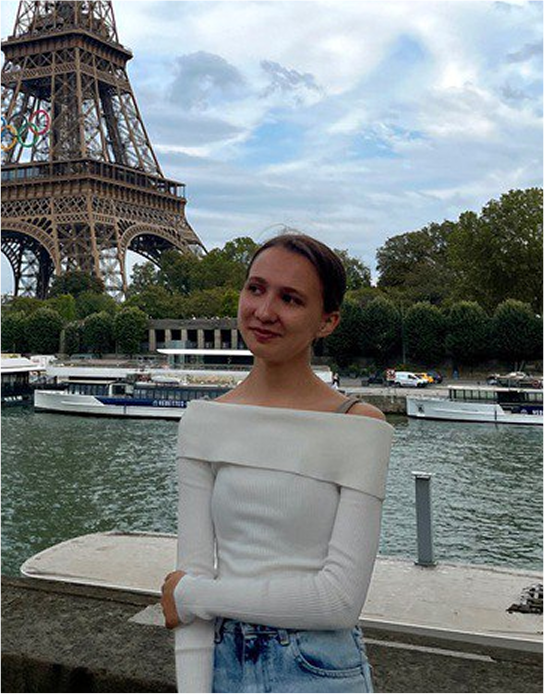
She enrolled in graphic design at universities in France, Italy and Hungary. She received scholarships at all of them and chose the university with the maximum funding — $135,000 for the entire period of study.

She entered graduate school at Kent State University and Ohio University. At Ohio University, she won a Graduate Teaching Assistantship with full funding of $37,774, covering tuition, insurance, and living expenses.

He entered Siena Heights University (USA) for the Theater and Music program with a full scholarship of $170,000. Preparation took less than a year.





«Try, work and trust! Don’t be afraid to trust, I trusted the SelfStartGlobal team and haven’t regretted it for a minute»

 Video review by Anastasia
«If you are in doubt about where to go, worried that it won’t work out, then what are you waiting for? Come for a consultation with an expert»
Video review by Anastasia
«I am currently in 11th grade at a school in Kyiv, but I have already been admitted to a U.S. bachelor’s program and received a 100% scholarship»
Feedback from Ksenia
«I was looking for information on how to apply to a university and came across many webinars. One of them was hosted by Radmila»
Video review by Leonid
«Now a new best life is beginning, full of victories and adventures. This is absolute happiness, and I wish it to everyone»
Video review from Ksenia
«I liked that the company focuses on developing a personal brand, as this is important for admission to the USA»
Elina's video review
«I didn’t know what I wanted to study for, and I was given an appointment with a career guidance counselor. We chose medicine, which I am very happy about»
Video review of Diora
«There are many companies on the market that help with studying abroad, but no one does it as comprehensively as SelfStart»
Review by Egor
«The main thing is the match with the university. I didn’t look at rankings, but at how well the university fit my profile and goals»
Review by Leila
«With SelfStartGlobal support, you will always know: what to do, why to do it and when to do it. This saves a lot of time»
Video review by Igor
«We started preparing a year in advance, and this was not enough. To have a good profile, you need to spend several years being active»
Sabrina's video review
«I liked that we had constant contact with Ksenia (curator). I needed clear deadlines - I myself would start to grab onto everything at once»
Video review from Sofia«It took me a while to realize I'd been accepted. It was an unforgettable experience, one I wish everyone who dreams of studying abroad could experience»
Alina's video review«Don't waste your time choosing an admissions company; I've done it for you. Just contact SelfStartGlobal – they'll help you»
Video review by Lazizbek«Among all the companies in the admissions market, SelfStartGlobal places an emphasis on distinguishing students from other candidates»
Video review by Lilia«At first, the university refused me a scholarship, but my supervisor helped me write a letter, after which I received a 100% scholarship»
Video review by Natalia«When I started, I knew absolutely nothing about applying abroad: no deadlines, no documents, nothing!»
Video review by Ruslan
«There were many questions during the process, but they helped me in everything, supported me and convinced me that I was on the right path. I think this is the most important thing»
Video review from Kamola
Leave your contacts — our consultant will get in touch
