




A teacher education abroad gives you access to modern teaching methods, diverse career tracks, and internationally recognized qualifications. Here are the main reasons to consider a foreign program.



 Pedagogy is more than just the teaching profession. It's a broad field that studies how people learn, how educational systems are built, and how to develop learning practices at different levels. Teaching focuses on direct classroom work—teaching methods, lesson planning, and interaction with students. Education is broader: educational policy, methodology, management, research, and educational technologies.
A teacher education abroad gives you access to modern teaching methods, diverse career tracks, and internationally recognized qualifications. Here are the main reasons to consider a foreign program.
In universities in the United States, the United Kingdom, Canada, and other countries, education is based on current teaching methods, inclusive education, and educational technologies, providing a practical foundation that can be applied in various educational systems.
Teacher education covers not only teacher training, but also educational leadership, curriculum development, educational psychology, teaching English as a foreign language (TESOL), and educational technology, depending on your career goals.
Pedagogical practice is the core of the program. Students observe lessons, conduct their own classes under the guidance of a mentor, and analyze the results in real partner schools, not just in theory.
Experience in a multicultural educational environment, language proficiency, and an understanding of different educational systems are advantages for further career development in schools, international organizations, or edtech companies.
It is important to distinguish between the two from the very beginning. Teacher training programs prepare students to become teachers in schools or colleges and include mandatory teaching practice. Education programs, on the other hand, are broader in scope and focus on research, curriculum development, management of educational organizations, and learning technologies. Graduates of these programs work not only in the classroom but also in методический службах, консалтинге и государственных структурах.
We help students identify the right track and enroll in teacher training programs with funding ranging from 50% to 100%. Apply for a free consultation to learn more!
Admission to teacher training programs requires not only an academic background, but also proven experience working with people. The main steps include:
If your goal is to work as a teacher in a school, it is important to choose a program with a licensing pedagogical track and sufficient practical experience. If you are interested in teaching, management, or research, an education program may be a better fit. We can help you determine which program is most suitable for your goals.
A certificate or diploma with academic documents, a language certificate for programs in English (IELTS or TOEFL), a motivation letter, a resume, and letters of recommendation. Some programs require an interview or a teaching assignment.
Volunteering with children and teenagers, tutoring, and participating in educational projects and summer camps strengthen the application. The motivation letter should show a specific, experience-based interest in education, rather than just a desire to work with children.
Applications are submitted online through the university’s portal, and the program’s deadlines must be met. It is important to check the country’s requirements for future teacher certification in advance, as they vary and influence the choice of program.
It is worth preparing for a pedagogical study abroad in 18-24 months — this time is spent on accumulating practical experience, preparing documents and working on the language. We are happy to help you go through this path and get not only an offer, but also a scholarship.
The cost of teacher education varies depending on the country and the level of the program, and several targeted sources of funding are available for future teachers.
The Fulbright program includes Teaching Excellence and Achievement (TEA) for practicing teachers, as well as general grants for students and researchers that can be used for educational programs. Joint Master’s degree programs in Europe
The Erasmus Mundus in Education and Pedagogy provides full tuition, travel expenses, and a living stipend for the best candidates. Many universities also offer their own scholarships for international applicants of pedagogical faculties.
Tip! For education programs, a motivation letter and verified classroom or project experience are often just as important for funding as grades.
SelfStartGlobal helps students match programs with real chances of admission and funding, and build a strategy for their application, taking into account the scholarship opportunities of a particular university.
A teaching degree opens up various career paths — it is one of the few professions where a degree does not limit you to a single path.
Primary or secondary school teacher, subject teacher, and class teacher are the main tracks for graduates of teaching programs, which require teaching experience and, in most countries, further certification.
A methodologist, a curriculum developer, and an assessment specialist are careers open to graduates of both teaching and education programs.
An educational manager, educational project coordinator, or training consultant is a path for those who want to work at the organizational level rather than just in the classroom.
A specialist in an edtech company is a fast-growing field at the intersection of pedagogy and technology, which is in demand both in startups and in large educational platforms.
Practical experience and a portfolio of materials, communication skills with students and parents, knowledge of languages, and the ability to adapt methods to different groups of students all have a real impact on a career. A bachelor’s degree provides a methodological and practical foundation, while a master’s degree allows for specialization, transition to management, or research.
Teaching is in demand in most countries, but working as a teacher abroad almost always requires additional certification, as a degree alone does not automatically grant the right to teach.
To work in public schools in England, teachers with foreign education must obtain the Qualified Teacher Status (QTS) or its international equivalent, the international Qualified Teacher Status (iQTS), which confirms that their qualifications meet British standards. To do this, they must prove the equivalence of their diploma through the UK ENIC and complete a separate training program.
Teacher licensing is regulated at the state level, and foreign teachers are usually required to have their diplomas evaluated by specialized agencies (such as NACES) and pass state-specific qualification exams. With a master’s degree, teachers can apply for an EB-2 immigrant visa, while with a bachelor’s degree, they can apply for an EB-3 visa, which can lead to permanent residency in the long run.
In international schools around the world, the requirements for qualifications vary by region: in some places, a bachelor’s degree and a TEFL certificate are sufficient for teaching English as a foreign language, while teaching core subjects typically requires an official license such as a PGCE, QTS, or a national certificate from the country of origin.
Studying abroad provides a strong methodological foundation, but it almost always requires an additional step of validating your qualifications in the specific country where you plan to work. It’s important to consider this aspect when choosing a program from the beginning.

Academic documents, language certificate (IELTS or TOEFL) for English-language programs, motivation letter, resume, and letters of recommendation. For some programs, an interview or a teaching assignment is required.
Yes. The Fulbright program offers a direction for practicing teachers (Teaching Excellence and Achievement), while Erasmus Mundus offers joint master’s programs in education with full tuition coverage for the best candidates.
Strong programs are available in the UK, USA, Canada, Australia, and Ireland. The choice depends on the country where you plan to work, as teacher certification requirements vary by country.
In addition to teaching, graduates can pursue careers in educational research, curriculum development, and management of educational institutions and edtech companies.
Almost always, yes. In the UK, this is the QTS or iQTS status, and in the US, it is a state license with an equivalence assessment of a degree. A degree alone usually does not grant the right to teach in a public school in another country.
We help you determine the right track — teaching or education — to choose the countries, universities, and programs for a specific profile, build a positioning strategy through experience, portfolio, and motivation, find funding options, and accompany you until the final result is achieved.
If you want to understand which teaching program is right for you, come for a free consultation.

Paduana
University

 Austria
 Japan
Japan
 Portugal
 USA
USA
 United Kingdom
 Italy
Italy
 South Korea












He entered a master’s program in the USA at two universities at once – Brandeis University and Washington University in St. Louis, receiving scholarships totaling $80,000. He chose Brandeis University and went to study on the first try.

She enrolled in Fashion PR programs at five US universities

She was admitted to three American universities at once: Augustana College, Widener University, and the University of South Dakota. She chose Augustana College, where she received a scholarship of $45,000 per year.
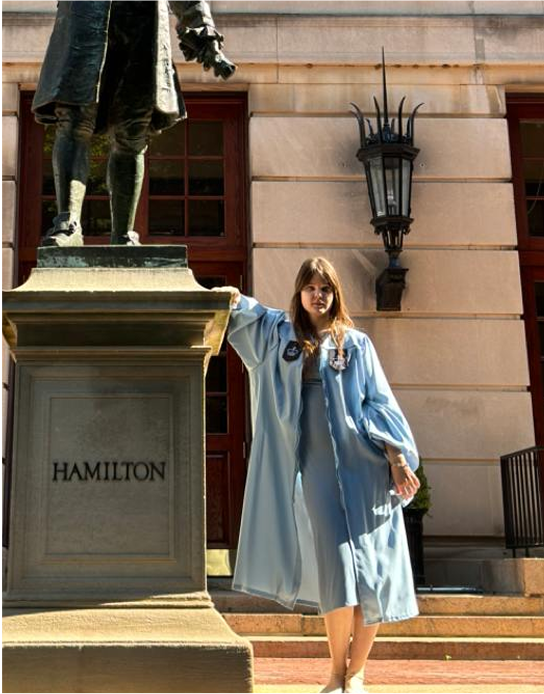
I was accepted to the PhD program at Columbia University on my first try, having strengthened my profile and compiled my achievements into a strong application.
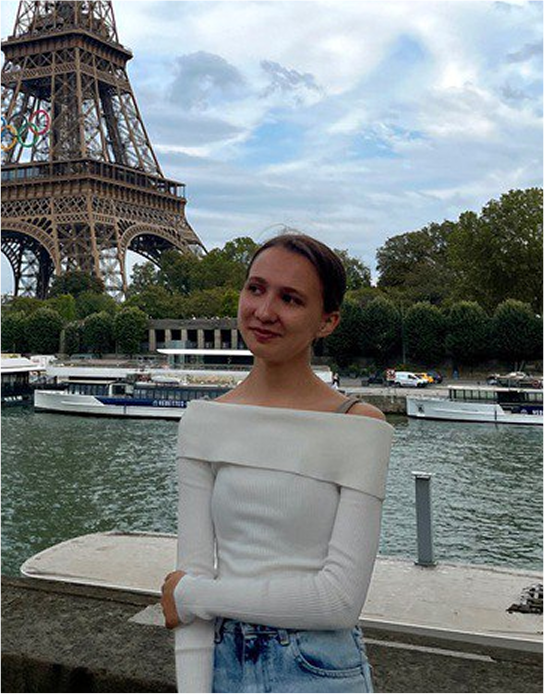
She enrolled in graphic design at universities in France, Italy and Hungary. She received scholarships at all of them and chose the university with the maximum funding — $135,000 for the entire period of study.

She entered graduate school at Kent State University and Ohio University. At Ohio University, she won a Graduate Teaching Assistantship with full funding of $37,774, covering tuition, insurance, and living expenses.

He entered Siena Heights University (USA) for the Theater and Music program with a full scholarship of $170,000. Preparation took less than a year.

Got accepted to NYU Abu Dhabi on the first try (acceptance rate 4%) with a scholarship of $217,000. Also received offers from Lynn and Drexel University.