




 Free education in Europe
She enrolled in Fashion PR programs at five US universities



Providence, Rhode Island, USA · Brown University is often called the most liberal university in the Ivy League—there are no required general education courses, and students design their own curriculum. This attracts applicants seeking not just a prestigious degree, but also the opportunity to pursue an unconventional academic path. The competition is also one of the most competitive in the Ivy League: only 5.65% of applicants for the Class of 2025 were accepted.
Brown University is one of the eight Ivy League universities and one of the oldest universities in the United States: it was founded in 1764, only 28 years after Princeton. It is located in Providence, Rhode Island, a small but conveniently located city: an hour to Boston, about three hours to New York.
The main feature of Brown is the Open Curriculum, an open-ended curriculum system introduced back in 1969. Unlike most American universities, there is no fixed set of general education subjects. A student chooses courses from more than 80 fields and forms their own academic program. This is convenient for those who want to combine several fields of knowledge or build a non-standard career path, such as studying computer science and philosophy simultaneously.
The campus is located in the historic College Hill neighborhood. Alumni include Nobel laureates, politicians, entrepreneurs, and cultural figures, including CNN founder Ted Turner (who attended Brown but did not graduate) and actress Emma Watson, who earned a bachelor’s degree in English literature in 2014.
The cost of undergraduate tuition for the 2026-2027 academic year is $74,568 per year, which is a fixed rate regardless of the program chosen.
Master’s and doctoral programs at Brown are charged differently, based on courses rather than a fixed annual rate. The standard course price for 2026-2027 is $9,320. With a typical load of 8 courses per year, the total amount is comparable to the cost of a bachelor’s degree, but the exact figure depends on the program and the year of study. About two dozen master’s programs are priced separately, at an individual market rate.
Popular undergraduate majors for international students include computer science, economics, biology and biomedical sciences, political science and international relations, mathematics, and the humanities.
The campus occupies the historic College Hill neighborhood, a mix of colonial and Victorian architecture. Student life is centered around Main Green, which is within a 5- to 10-minute walk of any freshman dorm.
Most freshmen live in campus dorms, which offer single, double, or triple rooms with shared kitchens and laundry facilities. Seniors choose between dorms, program houses, and apartments, and over 1,100 students participate in Greek organizations.
On campus, there are two large dining complexes (Sharpe Refectory and Verney-Woolley), four restaurants, coffee shops, and stores, as well as seven libraries and the School of Engineering laboratories. Most graduate and doctoral students live off-campus.
Admission is done through the Common App. A student enrolls in the university as a whole, not in a specific faculty — the direction is formed after enrollment.
Diploma, grades in specialized subjects, and overall academic trajectory.
The main essay through the Common App and additional questions from Brown are about the applicant’s personality and the reasons for choosing the university.
Two from subject teachers, and one from a school counselor.
Brown values the depth of engagement rather than the number of activities.
Early Decision — until November 1 (binding option). Regular Decision — until January 5.

For international applicants, the requirements are the same as for U.S. citizens, plus proof of English proficiency through IELTS or TOEFL.
Starting from the 2025-2026 academic year, Brown has reinstated the mandatory SAT or ACT exam. The average scores of accepted students are 1480-1560 on the SAT (Math + EBRW) and 34-35 on the ACT, which serves as a guideline rather than a selection threshold.
For creative fields and the Brown|RISD Dual Degree program, a portfolio may be required through SlideRoom.
From the 2025 class, Brown has need-blind admission for international students: family income does not affect the admission decision. Brown is one of eight universities in the United States with this policy, along with Harvard, Yale, Princeton, Dartmouth, MIT, Amherst, and Bowdoin College.
About 49% of students receive grants, with an average size of about $59,655 (covering ~84% of the cost of education).
About a quarter of bachelor’s degree graduates pursue a master’s degree immediately after graduation. The career network spans over 100 countries. Six years later, the median salary for graduates is around $79,131 (US News).
Employers include Google, Microsoft, Meta, Goldman Sachs, and Morgan Stanley.
Among the faculty are eight Nobel laureates, including physicist Leon Cooper (one of the creators of the BCS theory of superconductivity) and economist Peter Howitt (Nobel Prize 2025). Among the alumni is Nobel laureate in medicine Crag Mello.
A notable achievement is the BrainGate project: a brain-computer interface that in 2023 helped a person with ALS to “speak” again with up to 97% signal translation accuracy.
Brown receives about $250 million in federal research funding per year.
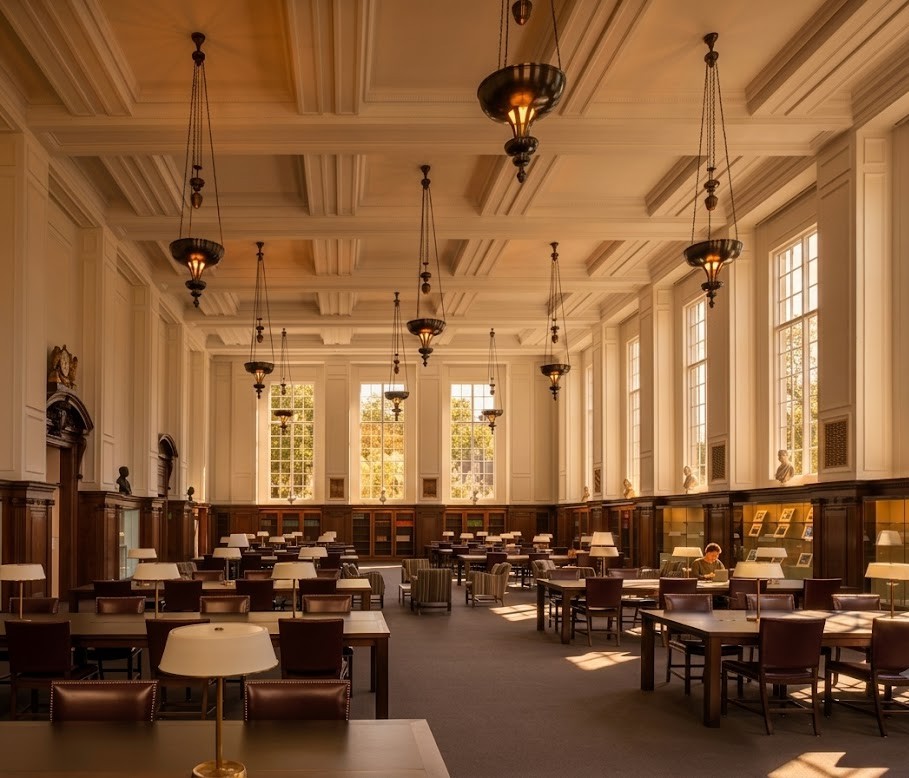
The seventh oldest university in the United States.
The oldest applied mathematics program in the country and the oldest engineering program in the Ivy League.
The Open Curriculum was created in 1969 on a student initiative.
In 1971, Pembroke College for Women merged completely with Brown.
Alumni include former Federal Reserve Chair Janet Yellen, Uber CEO Dara Khosrowshahi, and science fiction writer Ted Chiang.

She enrolled in Fashion PR programs at five US universities

She was admitted to three American universities at once: Augustana College, Widener University, and the University of South Dakota. She chose Augustana College, where she received a scholarship of $45,000 per year.

He entered a master’s program in the USA at two universities at once – Brandeis University and Washington University in St. Louis, receiving scholarships totaling $80,000. He chose Brandeis University and went to study on the first try.
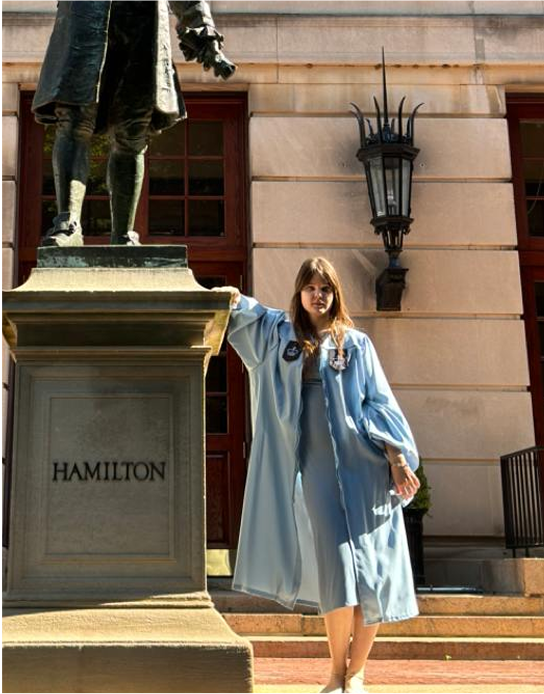
I was accepted to the PhD program at Columbia University on my first try, having strengthened my profile and compiled my achievements into a strong application.
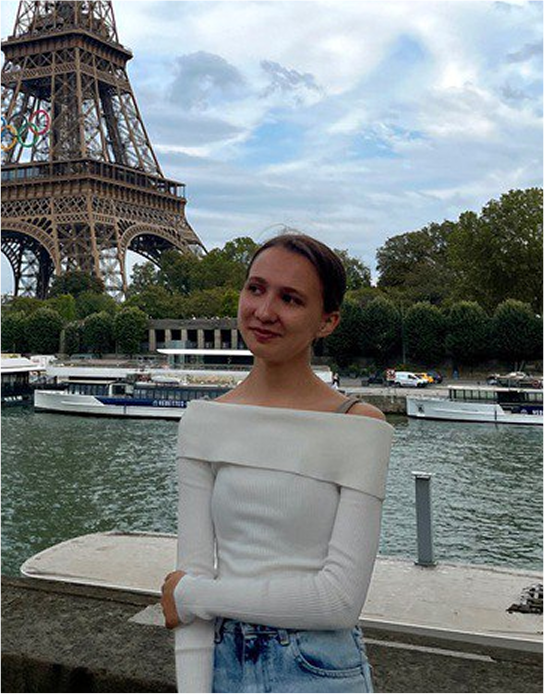
She enrolled in graphic design at universities in France, Italy and Hungary. She received scholarships at all of them and chose the university with the maximum funding — $135,000 for the entire period of study.

She entered graduate school at Kent State University and Ohio University. At Ohio University, she won a Graduate Teaching Assistantship with full funding of $37,774, covering tuition, insurance, and living expenses.

He entered Siena Heights University (USA) for the Theater and Music program with a full scholarship of $170,000. Preparation took less than a year.

Got accepted to NYU Abu Dhabi on the first try (acceptance rate 4%) with a scholarship of $217,000. Also received offers from Lynn and Drexel University.
Leave your contacts — our consultant will get in touch
