





 TOP 10 Countries for Free Education



Service payment
Fill out the form and continue to payment via Stripe
STEM is not one specialty, but a group of fields that combine science, technology, engineering and mathematics. The abbreviation stands for Science, Technology, Engineering, Mathematics. The term appeared as a response to the growing demand for specialists with analytical and engineering thinking - people who know how to set problems, work with data and create technical solutions.
STEM education abroad gives you access to state-of-the-art laboratories, world-class research teams, and industry partnerships that build practical skills while you’re still in school. Here are the top reasons to consider a STEM program abroad.
The basis of foreign STEM education is projects, laboratories, and practice. Students don’t just learn theory; they conduct experiments, solve engineering problems, write code, analyze data, and present their findings to an audience. Teamwork on projects is the norm, not the exception.
STEM professionals remain among the most sought-after in the international job market. Analytical and engineering thinking, the ability to work with data and create technical solutions, are needed in almost all industries — from technology to energy and biomedicine.
STEM combines three big tracks – science, engineering, technology and data – and within each, dozens of specializations. This gives the opportunity to find a direction exactly for your type of thinking: a laboratory, an engineering project or working with models and data.
STEM degrees from leading foreign universities provide access to international companies, research centers, and expanded employment opportunities after graduation compared to other fields.
It is important to understand the difference between the natural sciences and the exact sciences from the very beginning. The natural sciences study nature through observation and experimentation, such as field research, laboratory experiments, and working with biological and chemical objects. The exact sciences, on the other hand, are based on mathematical models, rigorous proofs, and theoretical constructs, such as physics, mathematics, and statistics. The line between these two fields is often blurred, with computational biology and quantum chemistry being at the intersection of both worlds.
We help students identify the right STEM track and enroll in programs with 50% to 100% funding. Apply for a free consultation to learn more!
Admission to STEM fields requires a strong academic background in mathematics and related sciences, as well as specific projects that demonstrate interest in the chosen track. The main steps include:

Researcher, engineering practitioner, or technology and data specialist – the choice depends on what you find more interesting: laboratory and experiment, engineering project, or working with code and models. We will help determine which track matches your type of thinking and career goals.

A high school diploma or degree with strong grades in mathematics and related sciences, a language certificate for English-language programs (IELTS or TOEFL), a motivation letter, a resume, and recommendations. Some programs require entrance tests or interviews.

Olympiads and competitions in mathematics, physics, and computer science strengthen the application. However, real projects, such as engineering, research, data science, or programming, are crucial. A portfolio that includes “problem, approach, and result” is significantly more powerful than a simple list of activities.

Applications are submitted online through the university’s portal, and deadlines must be met. For technical and engineering programs, it is important to check the mathematical requirements in advance, as they may vary between universities.
It takes 18-24 months to prepare for a STEM program abroad, including choosing a track, improving your academic background, and completing projects. We are here to help you navigate this process and secure both an offer and a scholarship.
STEM fields are among the most actively funded specialties in the world: governments, universities, and technology companies are interested in training engineers and researchers and allocate significant funds for scholarships.
In the UK, the Gates Cambridge Scholarship covers the full cost of tuition, accommodation, and travel expenses for outstanding international master’s and postgraduate students at the University of Cambridge, including STEM fields. In Switzerland, the ETH Zurich Excellence Scholarship provides full tuition coverage and a living stipend for the best international master’s candidates.
In Singapore, the government agency A*STAR funds doctoral and research programs in STEM fields, covering tuition fees and providing a monthly stipend. The GEM Fellowship, which covers full tuition, is also available for postgraduate programs in engineering and science.
Tip! For STEM programs, competitive achievements such as Olympiads, hackathons, and research publications often increase the chances of receiving a scholarship, just as much as academic grades.
SelfStartGlobal helps students choose programs with real chances of admission and funding, as well as build a strategy for submitting documents based on the scholarship opportunities of a particular university.
STEM education offers one of the broadest career opportunities among all fields, with graduates in demand in the industry, science, and at the intersection of technology with other sectors.
A career in the natural sciences, physics, mathematics, or biomedical research tracks is a path for those who want to work in laboratories, research institutes, and the academic environment after completing a master’s or doctoral degree.
Working in mechanical, electrical, civil, or chemical engineering is a career track with direct entry into the industry immediately after completing a bachelor’s degree, with the option to further specialize through a master’s degree.
Computer science, data analysis, artificial intelligence, and cybersecurity are among the fastest-growing and highest-paying fields in the international job market.
Mathematics is not only needed in technology, but also in finance, analytics, and research institutions, making it one of the most versatile STEM fields.
It’s not the diploma itself that really affects your career, but rather your portfolio of real projects, internships, participation in competitions and Olympiads, and your ability to work in a team on complex technical tasks.
STEM fields offer some of the broadest opportunities for employment and immigration after studying abroad, especially in the United States.
Foreign graduates of STEM programs can apply for an extended OPT (Optional Practical Training) program: the standard 12 months of work after graduation are extended by an additional 24 months for qualifying STEM degrees, for a total of up to 36 months of legal employment without the need for an H-1B visa. This provides significantly more time to find an employer and transition to a long-term work status compared to non-STEM fields. Many graduates switch to the H-1B visa during this period with the support of their employer, although the sponsorship process has recently become more complicated due to the increased costs for employers.
In Germany, the Netherlands, and other EU countries, engineering and IT specialties are among the most in-demand professions, making it easier to obtain a visa for job search after graduation and then switch to a work visa.
Singapore and other technology hubs in Asia are actively attracting STEM professionals through the Employment Pass and Tech.Pass programs for qualified candidates.
Education abroad does not guarantee automatic immigration, but STEM fields provide one of the strongest starting positions in the job market due to the shortage of technical professionals in most developed countries.

Academic documents with strong grades in mathematics and related sciences, a language certificate (IELTS or TOEFL), a motivation letter, a resume, and recommendations. For some programs, entrance tests or an interview may be required.
Yes, and the chances are higher than in most other fields. Gates Cambridge, ETH Zurich Excellence Scholarship, A*STAR in Singapore, and the GEM Fellowship for postgraduate studies are just a few examples of targeted funding for STEM students.
Strong programs are available in the USA, UK, Germany, Switzerland, the Netherlands, and Singapore. The choice depends on the chosen track and future career plans — some countries are stronger in engineering, while others are stronger in technology or fundamental science.
STEM graduates are in demand in research, engineering, technology companies and the financial sector. In the US, they additionally receive an extended OPT program – up to 36 months of legal work after the diploma.
It depends on what you are closer to: abstract models – mathematics, fundamental laws of nature – physics, creation and design of systems – engineering. We help to determine the appropriate track through the analysis of your profile and interests.
We help you determine the right track — science, engineering, or technology — choose the right countries, universities, and programs, build a positioning strategy through projects, competitions, and research, find funding options, and guide you through the process.
If you want to know which STEM program is right for you, come for a free consultation.






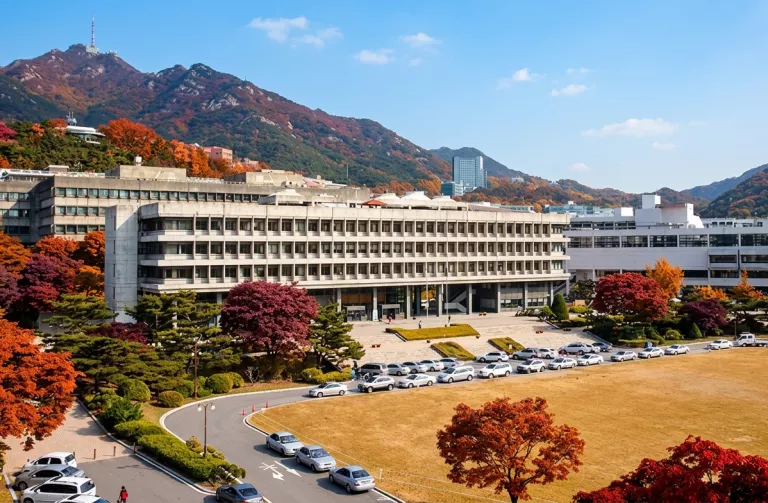
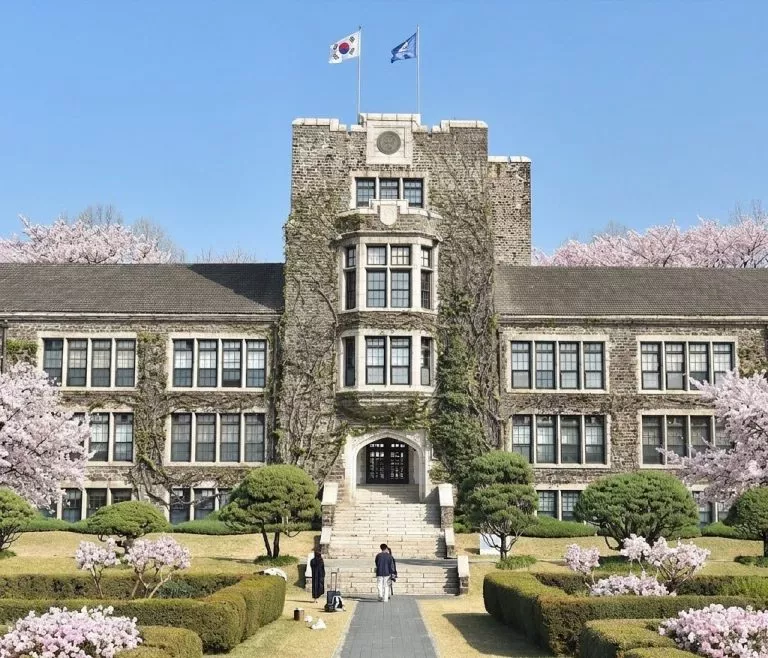

 South Korea
 USA
A popular destination for studying abroad. Prestigious universities, a flexible education system, a wide selection of programs, and broad career prospects
 Italy
A combination of academic tradition and affordable education. Particularly in demand for studies in design, architecture, business, and the humanities
 United Kingdom
Classical education with global recognition. Shorter study periods, strong humanities and business programs, and a highly valued diploma
 Germany
One of the most popular study destinations in Europe. Free or low-cost education, strong technical and engineering fields, and high demand for graduates
 France
High-quality European education at an affordable cost. Attractive for strong programs in business, arts, and engineering, as well as the option to study in English or French
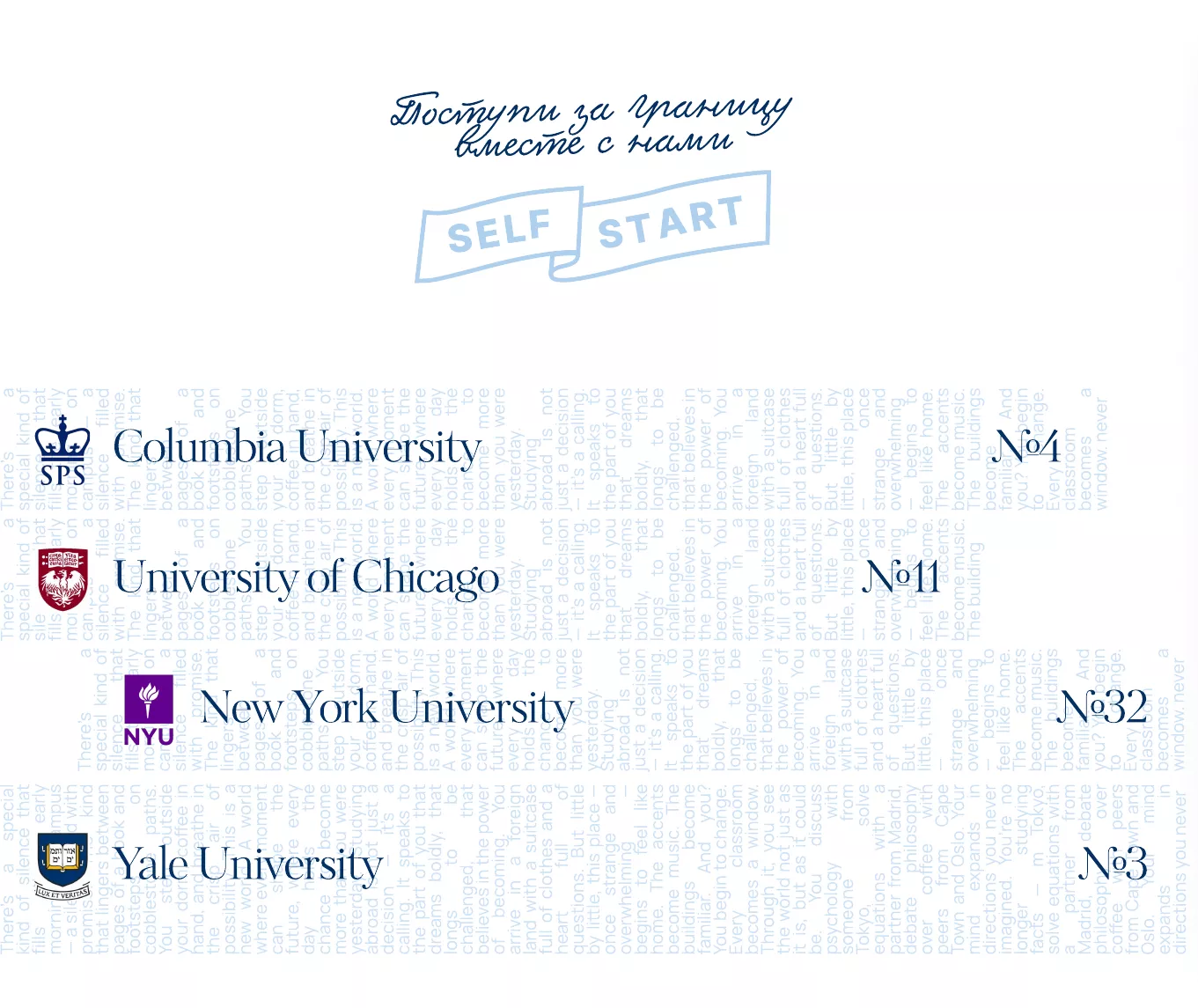
Leave your contacts — our consultant will get in touch
