




Admission requirements vary significantly depending on the type of program. The main steps include:



 Business and management is one of the broadest fields in higher education, ranging from bachelor’s degrees in business administration to MBAs and specialized master’s programs. It is not a single major but a group of programs united by a common goal: preparing individuals to manage organizations, resources, and teams in real-world market conditions.
Leading business schools — Wharton, HBS, LBS, INSEAD, HEC Paris — have established partnerships with the world’s largest employers. According to the GMAC Corporate Recruiters Survey 2025, more than a third of global employers plan to expand their hiring of MBA graduates compared to 2024, and about 90% of employers overall plan to hire MBA graduates.
The median salary of MBA graduates in the US in 2025 was $125,000, according to GMAC. According to the Financial Times MBA Ranking 2026, graduates of Harvard Business School report an average salary of $259,874 three years after completing the program, while graduates of Wharton report an average salary of $246,813.
Studying at a business school with a global reputation builds a network of contacts that lasts throughout one’s career. Former consultants from MBB firms who completed leading programs hold leadership positions in more than 1,500 companies on the Fortune 500 list.
Business education encompasses dozens of specializations — from finance and strategy to entrepreneurship and sustainable development. This makes it possible to find a direction that suits specific career goals, rather than obtaining a generic diploma.
Admission requirements vary significantly depending on the type of program. The main steps include:
If you have just graduated from school or completed a bachelor’s degree without work experience — BBA or MiM. If you have 2–5 years of professional experience and want to change tracks or accelerate your career — MBA. To get into an MBA program in the USA, you typically need a GMAT or GRE, as well as work experience. For a MiM, a bachelor’s degree without standardized tests is often sufficient — the requirements depend on the school. We will help you determine which type of program suits your profile.
Academic performance, professional experience, leadership achievements, extracurricular activities. For an MBA, specific, measurable career achievements play a key role. For MiM and BBA, academic potential, first internships, and project work are key. Essays for leading programs should explain why now, why this particular school, and how the program fits into a specific career plan.
Language certificate for programs in English (IELTS or TOEFL — most leading American MBA programs require a TOEFL iBT score of 100+ or an IELTS score of 7.0+), a resume, motivation letters, and letters of recommendation. For an MBA in the USA, you need a GMAT or GRE. An important nuance: according to Fortune Education, Columbia Business School, for example, does not require a language certificate from international applicants — the requirements must be checked for each school individually.
Most MBA programs in the US accept applications in three rounds: the first in October, the second in January, and the third in March–April. More spots and scholarships are available in the earlier rounds. It’s worth starting preparation 18–24 months in advance — GMAT preparation alone takes an average of 3–6 months.
We are happy to help you navigate this journey and secure not only an offer but also a scholarship.
Business education is one of the most expensive fields (the cost of studying at Wharton for international students is approximately $184,500 for a two‑year MBA), but at the same time it is one of the most actively funded through institutional scholarships and external funds.
Most leading business schools offer their own merit-based scholarships that cover 25–50% of the tuition cost. According to AACSB, approximately two out of three business education programs worldwide offer scholarships to international students.
Tip! The first round of applications usually provides access to a larger number of scholarship spots. The strategy of “submit in the first round with a strong profile” yields much better financial results than “submit at any time with ready documents.”
SelfStartGlobal helps students choose programs with real chances of admission and funding.
Business education opens up the broadest range of career opportunities among all fields — from investment banking to entrepreneurship.
The most popular and well‑paid path for MBA graduates. According to the Management Consulted Consulting Salaries Report 2026, starting salaries at MBB firms (McKinsey, BCG, Bain) are around $190,000 in base salary plus a $40,000 signing bonus and a $25,000 performance bonus — totaling around $255,000 in the first year.
Investment banking, private equity, and asset management are the second‑highest‑paying hiring sectors for MBAs. Harvard Business School reports that 20 % of graduates choose finance, with a starting median compensation of $200,000, although this figure includes very different roles — from corporate finance to private equity.
Google, Amazon, and Microsoft hire MBA graduates for roles such as Product Manager, Operations Manager, and Strategy, offering base salaries ranging from $125,000 to $165,000 plus stock packages. Stanford GSB sends the highest percentage of its graduates to technology among leading programs.
Approximately 60–70% of students from top‑tier programs successfully change industries after completing an MBA, and a significant portion choose entrepreneurship or corporate development as a path to starting their own business.
Strategic roles within large corporations, such as General Manager and Country Director, represent a career path for those who want to manage a business directly.
Employment prospects are significantly influenced by the school’s brand (critical for consulting and finance), internships during the program (most Full‑Time MBA programs provide access to summer internships that translate into job offers), and the professional network built during studies.
Business education is one of the areas with the most developed corporate support for international students, and immigration opportunities largely depend on the employer, not just on the visa system.
MBA graduates in the USA work under the OPT program for up to 12 months after graduation. Programs in business analytics, information systems management, and a number of other specializations may fall under STEM OPT, with an extension of up to 36 months — this should be clarified for a specific program when choosing a school. Major employers — McKinsey, Goldman Sachs, Amazon, Google, Bain — regularly sponsor H‑1B visas for international graduates. H‑1B sponsorship by employers is a standard practice for leading corporate MBA employers.
The Graduate Route Visa gives graduates of British programmes up to two years to find a job. London is one of the world’s main financial centres, which makes studying here (LBS, Imperial Business School, Oxford Saïd, Cambridge Judge) particularly attractive for those who want to build a career in European or British finance.
INSEAD (France/Singapore), HEC Paris, ESADE, IE Business School (Spain) — European programs open up access to EU markets. Many graduates work in the European offices of multinational corporations without needing a separate work visa, thanks to internal transfers within the companies.
Singapore (NUS, INSEAD Asia Campus), Hong Kong (HKUST), South Korea, and Japan are actively attracting MBA professionals through the Employment Pass and similar tools. Studying in Asian programs is especially valuable for those who want to build a career in the region.

MBA is a professional program for professionals with work experience (typically, at least two years), focused on general management and career path changes. MiM (Master in Management) is a master’s program for recent bachelor’s graduates without a mandatory work experience requirement.
For most leading American programs — yes. European programs (INSEAD, LBS, HEC Paris) also typically accept the GMAT or GRE. Some programs have completely abolished mandatory testing — the requirements need to be clarified for each school individually.
Yes. The Forté Foundation Fellowship is available to students of all nationalities at 50+ partner schools. The Consortium offers full scholarships. Harvard, Wharton, and other leading schools offer need‑based and merit‑based grants to international students. According to AACSB, about two‑thirds of programs worldwide provide funding to international applicants.
Consulting, finance, and technology are the three main hiring sectors. According to the FT MBA Ranking 2026, the average salary of Harvard MBA graduates three years after graduation is $259,874. The median MBA salary across the US market is around $125,000 at the start.
It depends on the goal. The USA — for access to MBB consulting, Wall Street, and Silicon Valley. The UK — for European finance. France (INSEAD, HEC Paris) — for an international career in Europe. Singapore — for Asia.
We help you determine the appropriate type of program — BBA, MiM, or MBA — select countries, universities, and specializations, develop an essay and profile strategy tailored to a specific school, find financing options, and provide support until you achieve the final result.
If you want to figure out which business program is right for you, come to a free consultation.

Paduana
University
 Canada
 Spain
Spain
 USA
USA
 United Kingdom
 France
 Germany
 Italy
Italy
 China
China
 Singapore












She enrolled in Fashion PR programs at five US universities

She was admitted to three American universities at once: Augustana College, Widener University, and the University of South Dakota. She chose Augustana College, where she received a scholarship of $45,000 per year.

He entered a master’s program in the USA at two universities at once – Brandeis University and Washington University in St. Louis, receiving scholarships totaling $80,000. He chose Brandeis University and went to study on the first try.
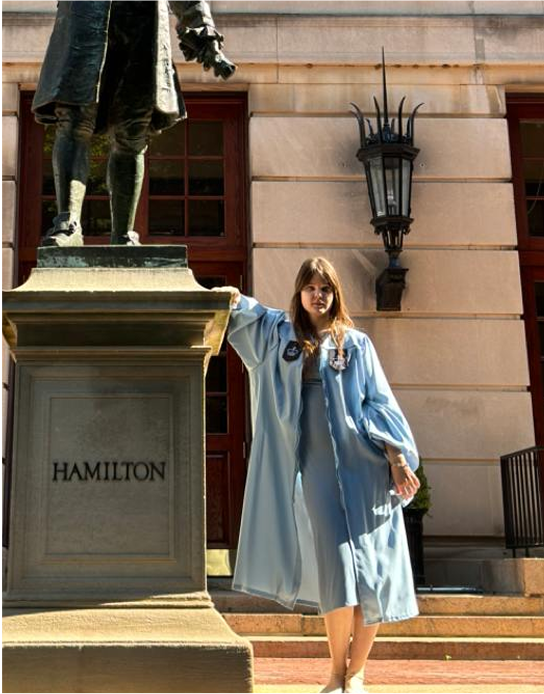
I was accepted to the PhD program at Columbia University on my first try, having strengthened my profile and compiled my achievements into a strong application.
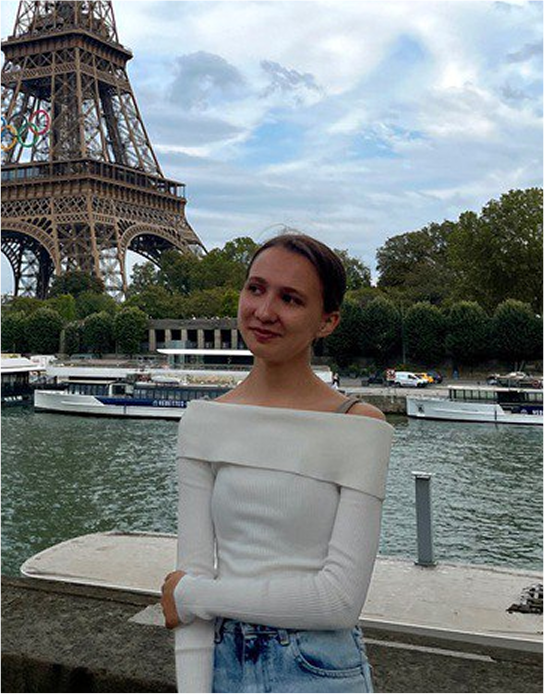
She enrolled in graphic design at universities in France, Italy and Hungary. She received scholarships at all of them and chose the university with the maximum funding — $135,000 for the entire period of study.

She entered graduate school at Kent State University and Ohio University. At Ohio University, she won a Graduate Teaching Assistantship with full funding of $37,774, covering tuition, insurance, and living expenses.

He entered Siena Heights University (USA) for the Theater and Music program with a full scholarship of $170,000. Preparation took less than a year.

Got accepted to NYU Abu Dhabi on the first try (acceptance rate 4%) with a scholarship of $217,000. Also received offers from Lynn and Drexel University.