



DAAD scholarship guide for admission to Germany 2026

DAAD (Deutscher Akademischer Austauschdienst or German Academic Exchange Service) is one of the world's largest organizations supporting international academic exchange. Every year, DAAD finances tens of thousands of students, postgraduates and researchers around the world, providing not just money for studies, but a full ecosystem of support: from the search for a university to assistance with a visa and accommodation in Germany.

What is DAAD and who is it suitable for?

For whom is DAAD most relevant? First of all, for undergraduate graduates who are planning a master’s degree at a German university, and for researchers aiming for a PhD or postdoctoral studies. It is these levels that are covered by most DAAD programs, although there are also offers for students of summer language courses and for professional artists and musicians.

The competition is serious: according to the DAAD, approximately every tenth to twelfth applicant successfully passes key programs for the CIS countries. This means that the question is not whether to submit or not, but how strategically you package your application. This guide is dedicated to this.


What types of DAAD programs are there?

DAAD is not a single scholarship, but a whole catalog of programs. The mistake of many candidates is to apply to DAAD in general, not realizing that different programs have different criteria, deadlines and document packages. Choosing the right program is half the success.

Scholarships for master's degree Плюсик

The most sought-after category is Studienstipendien für alle Fächer (Study Scholarships — All Master’s Programs). The program is open to graduates of all majors and finances studies at master’s programs of German universities for a period of 10 months to 2 years.

Who is suitable for: graduates of a bachelor’s degree or specialty, whose diploma was obtained no earlier than 6 years ago. Students of graduation courses can also apply, provided that they receive a diploma before the start of their studies in Germany. The commission evaluates academic performance, the quality of motivational writing, language training and, most importantly, the realism and awareness of the candidate’s educational plan.

Separately, there are scholarships for specialized fields: fine art and design, music, cinematography – for graduates of specialized universities, also for a period of up to 2 years.

Research grants / PhD / internships Плюсик

For those who already have a master’s degree and are aiming for a research career, the DAAD offers Research Grants (Forschungsstipendien). These are short-term (1–6 months) or long-term grants for conducting research at German universities and research institutes.

The main difference between an application for a research grant is the central role of the research proposal. Here, not only the academic background is evaluated, but also the scientific novelty of the project, its realism, the availability of a host scientific supervisor in Germany, and an understanding of how this research fits into the overall career trajectory.

Having a prior agreement with a German professor about scientific supervision is an important plus or even a necessity for most PhD grants.

Programs in fields (STEM, humanities, etc.) Плюсик

In addition to universal programs, DAAD implements thematic scholarships, including in partnership with universities and federal ministries of Germany. Among them: programs in the field of sustainable development, public administration, law, health care, engineering.

Why is it important to choose a program for your profile: a universal program “for all specialties” means higher competition. Thematic programs, on the contrary, are looking for candidates with a specific profile. And if your direction coincides, the chances of selection are much higher.

Before submitting, be sure to study the full catalog on the official DAAD portal (daad.de), where filtering by country, level, and major takes 5 minutes, but saves months of improper preparation.

What DAAD covers and what budget to expect Плюсик

DAAD is not partial funding, but a full support package. Scholars of master’s programs receive a monthly stipend in the amount of about 850–934 euros (the amount depends on the program and level of education). This is not pocket money, but the main financing for the period of study.

In addition to the monthly payments, the DAAD package usually includes the following support categories:

  • Medical and accident insurance — covered by DAAD for the entire scholarship period;
  • Travel supplement — a one-time payment for a round trip/travel to Germany and back;
  • Language courses — for a number of programs, intensive German is required to be paid before the start of training;
  • Administrative support — assistance in finding housing, processing documents, meeting fellows upon arrival in Germany.

An important nuance: the specific composition of the package depends on the program and the candidate’s country of origin. Some programs cover only the stipend without travel, others include family allowances. Therefore, before applying, be sure to read the conditions of a specific program, and do not focus on “average” figures from the Internet.

Main requirements for candidates in 2026

Requirements for DAAD candidates can be divided into three blocks. A strong application closes all three, and a “drawdown” even in one of them reduces the chances of selection.

Academic profile

Academic performance is the basic selection filter. DAAD does not publish a minimum GPA, however, in practice, candidates who successfully pass the competition have an average score in the upper 20–30% of their stream. The diploma must be obtained no earlier than 6 years before the application is submitted.

In addition to grades, the relevance of the academic direction of the chosen program is important. Enrolling in an IT master’s degree with a historian’s diploma requires a convincing justification and demonstration of self-acquired skills. Additional academic achievements, for example, participation in conferences, publications, scientific projects, significantly strengthen the profile.

Language requirements

Language requirements depend on the language of the program:

  • German language: for programs in German — at least B2–C1. Confirmed by TestDaF (TDN 4), DSH-2, Goethe-Zertifikat C1/C2 certificates. For DAAD, it is recommended to have C1.
  • English language: for programs in English — IELTS Academic from 6.0–6.5 or TOEFL iBT from 80–90 (depending on the specific university). An uncertified copy of the certificate is accepted for submission to the DAAD, the original is required for admission to the university.

An important point: a language certificate is mandatory even if the description of a specific university says that it is “not required at the time of application.” DAAD insists on including the certificate in the package of documents in all cases.

Experience and extraordinary achievements

DAAD evaluates the candidate as a whole person, not as a set of grades. Practical experience: internships, research projects, participation in student organizations, volunteering, especially thematically related to the field of study, significantly distinguishes the application from competitors with a similar academic profile.

Leadership and civic activity are also perceived positively: DAAD is historically focused on supporting future leaders who will return home and apply the experience gained for the benefit of their country and region.

Step-by-step application plan for DAAD

Applying for DAAD is more than one document and more than one day. This is a project lasting several months, and its success is determined by planning.

Step 1 — choose a program and check the criteria Плюсик

Start with the catalog on daad.de, section “Scholarships”. Use the filters: your country, level of education (master’s degree/PhD), direction, time of start of education. For each program you will learn:

  • The target group (to whom it is suitable);
  • Application deadline;
  • Full list of documents;
  • Language and diploma requirements.

Do not apply to the program if you do not meet at least one of the formal criteria – this is an automatic rejection. It is better to spend a week searching for a suitable program than a month preparing documents for an unsuitable one.

Step 2 — prepare a strategy (timeline) Плюсик

Key deadlines for Fall 2026 entry: Most DAAD master’s programs have a deadline in the fall of the previous year, i.e. October–November 2025. If you’re reading this in early 2026, study programs with spring deadlines or aim for 2027.
Plan with a buffer at least 3-4 months before the deadline:

  • 6–8 weeks before the deadline — start of document collection
  • 4 weeks before the deadline — drafts of motivation letter and CV;
  • 3 weeks — request letters of recommendation from teachers;
  • 1–2 weeks — final check of the package and upload to the portal.

Letters of recommendation are the most unpredictable element in terms of timing: request them no later than 4-6 weeks before the deadline.

Step 3 — collect a package of documents Плюсик

The standard package for the master’s program includes:

  • Completed online application form on the DAAD portal;
  • Detailed CV / resume (maximum 3 pages, without time gaps);
  • Motivational letter (maximum 3 pages);
  • Diploma (and all available diplomas) with annex/transcript of grades + translation into German or English (self-translation is accepted, no certification is required);
  • Language certificates;
  • Recommendation letters (as a rule, 2 letters – from the academic supervisor and from the employer or second teacher);
  • For research programs – research plan.

“Trifles” that solve: the correct file format (PDF), absence of time gaps in the CV, correct dates in the form, up-to-date certificates. An unverified translation submitted with errors or an outdated language test are frequent reasons for the technical rejection of an application.

Step 4 — sending the application and monitoring the status Плюсик

Upload documents to the DAAD portal in advance, not on the day of the deadline. Technical failures on the last day are unfortunately a common problem. After sending, do the following:

  • Save the submission confirmation (screenshot / email);
  • Check that all documents are displayed correctly in the system;
  • Check in the program whether letters of recommendation are sent separately (sometimes the recommender uploads them directly);
  • Watch your mail: DAAD may request additional documents.

DAAD documents: how to make them strong

The correct package of documents is good, it is not enough for admission. The decision is made on the basis of content.

Letter of Motivation

The motivational letter is the central document of the application. It is here that you explain why DAAD should invest in you. Structure of strong writing:

  • The goal is what exactly you want to study and why (specifically, with the name of the program and university);
  • Why Germany / this program — what is not at home, what is here: scientific schools, laboratories, professors, industrial partners;
  • Why you — academic background, experience, achievements with specific examples and figures;
  • The development plan — how this program fits into your career path, what you will do after your return.

Frequent mistakes: general phrases (“Germany is a country with a rich history”), lack of specifics (“I want to develop in the field of IT”), inconsistency between past experience and future goals. The commission reads hundreds of letters, and yours must tell a unique, provable story.

CV (summary)

A CV for DAAD is a document that demonstrates your intellectual and professional trajectory. Key principles:

  • A maximum of 3 pages, without time gaps (any period of life must be explained);
  • Emphasis on achievements, not responsibilities: not “participated in the project”, but “developed the module, reduced data processing time by 30%”;
  • Relevance: education, research experience, publications, conferences;
  • Language skills and certificates — mandatory section;
  • The format is strict, without creative design: the European Europass standard or a similar academic format.

Letters of recommendation

Letters of recommendation are often underestimated. A weak recommendation letter from a person with a high position is worse than a strong letter from an ordinary teacher who knows you well.

Who to choose: a scientific supervisor, a teacher of a specialized course, an internship supervisor – those who can talk about you and your work. How to prepare a recommender: provide him with your CV, a letter of motivation and a description of the program to which you are applying. Explain what exactly you want to emphasize.

A good recommendation letter should contain: specific examples of your work, an assessment of academic potential, a comparison with other students (“one of the best in 5 years”), and confirmation of your motivation and goals.

Study Plan (if required)

For research grants and PhD programs, the research plan is a key document. He must demonstrate four things:

  • Reason: where did the question arise, why is it important, what is already known
  • Novelty: what exactly will your research add to existing knowledge
  • Realism: methodology, time plan, availability of data/resources in Germany
  • Career Connection: How This Research Experience Will Advance Your Professional Trajectory

The volume, as a rule, is 3–5 pages. Avoid overly ambitious statements without justification: the commission knows well what can be done in 6–12 months.

How DAAD evaluates candidates

Selection at DAAD is a multi-criteria process. The commission considers the application as a whole, and no single indicator is either an automatic pass or an automatic refusal.
Key assessment criteria:

  • Academic achievements — GPA, education relevance, awards;
  • Potential — ability to independent scientific or professional work;
  • Motivation — awareness of program choice, persuasiveness of written arguments;
  • Relevance — how much the program logically follows from the past and leads to the future;
  • Impact — what will change after the return: in the candidate’s career, in his country, in the scientific field.

That’s why your personal brand and your development history are just as important as grades. A candidate with a GPA of 4.5, but without a clear plan, loses to a candidate with a GPA of 4.2, who has a clear understanding of why this program is for him and what he will do with it.

How to increase the chances of DAAD in 2026

If the deadline is still ahead, you have real tools to strengthen your profile. Even in 6–12 months, it is possible to significantly improve the position.
What works:

  • Issledovatelsky opyt — participation in projects, course/diploma projects with an original contribution, publications even in student collections;
  • Conferences — participation (especially with a report) in thematic conferences in your direction;
  • Internships — especially in specialized organizations or with German/European partners;
  • Language training — upgrading the certificate from B2 to C1 in German or obtaining a high IELTS/TOEFL score;
  • Contact with a German university — write to a potential supervisor even before submitting. A positive answer from the professor significantly increases the chances for research programs;
  • Volunteering and leadership — especially in thematic areas (ecology, education, social projects).

How to “package” achievements: each achievement should be formulated according to the scheme action → result → significance. Not “participated in the project”, but “developed the data collection methodology for the project with the participation of 200 respondents, the results are published in collection X”.

Typical errors and reasons for failure

Most of the failures are predictable. Consistently leads to failure:

Non-compliance with the program Плюсик

Application to the program, the criteria of which the candidate does not meet according to formal indicators – diploma older than 6 years, stay in Germany more than 15 months, inappropriate direction.

Weak motivation Плюсик

Motivational writing without specifics, with general phrases and without evidence. “I want to study in Germany because it’s a great country” is not motivation.

Formal errors Плюсик

Absence of a language certificate, an outdated diploma (without an up-to-date transcript), gaps in the CV, incorrect document format.

Late start Плюсик

Submission 2–3 weeks before the deadline without time to complete documents and collect recommendations.

Inappropriate recommendations Плюсик

A letter from an “important” person who is hardly familiar with the candidate’s work. Vague, template texts without specifics.

DAAD Application Readiness Checklist

Before submitting, review each item:

Documents:

  • Online form completed completely, with no empty mandatory fields;
  • CV without gaps, maximum 3 pages, PDF;
  • Motivation letter — no more than 3 pages, structured, and specific;
  • Diploma + transcript + translation attached;
  • Language certificate current (no more than 2 years old for most programs);
    2 letters of recommendation completed and uploaded (or sent directly by recommenders);
  • For research programs, the research plan attached.

Content:

  • The motivation letter clearly outlines the flow: past → program → future;
  • All achievements supported by specific examples or figures;
  • The choice of Germany and a specific university/program is substantiated, not formally justified;
  • The question “what will happen after returning” is answered.

Technical aspects:

  • All files in PDF format;
  • Each file size is within the acceptable limits (usually up to 5 MB);
  • The deadline is not today—upload early;
  • Submission confirmation saved.

Want to find out if DAAD is right for you and what your chances are in 2026?

The DAAD is a real route to Germany’s best universities for those who prepare strategically, not at the last minute. One well-chosen program, a well-developed application, and a well-thought-out timeline make all the difference.

If you want an honest assessment of your profile and find out how competitive your degree, experience, and English level are for the DAAD right now, contact us for a personal consultation. A specialist will help you: select a suitable program from the DAAD catalog, create a personalized timeline for a specific deadline, develop a profile-strengthening strategy, write and edit key documents, and explore alternative funding options.

Start now, because competitors who will receive a DAAD scholarship in 2026 have begun preparing at least a year in advance.

Paduana


University

Italy
One of the oldest universities in Europe with strong traditions in science, medicine, and the humanities. Attractive due to its combination of academic quality, affordable tuition, and student life in Italy
Bachelor's degree: from €2,000 to €4,500 per yearMaster's degree: from 3,000€ to 6,000€ per yearDoctoral studies: from 1,500 to 3,000 € per year
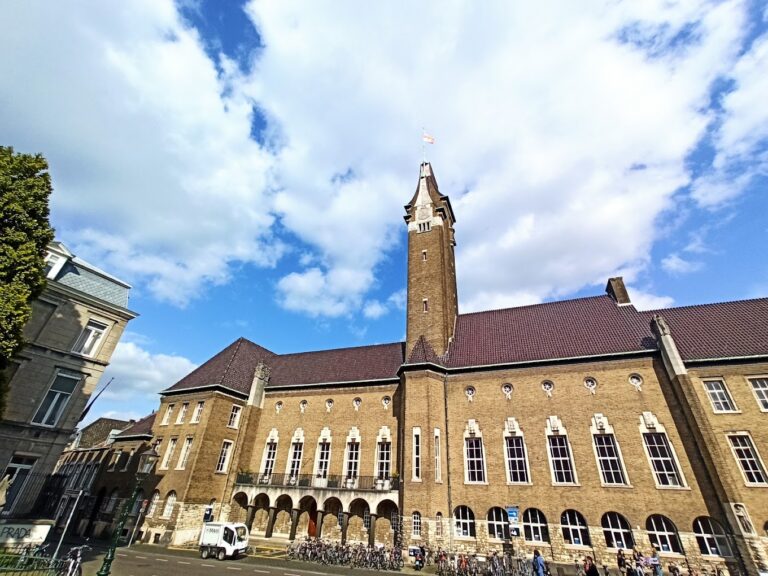
Maastricht University
Netherlands
A modern university in the Netherlands, known for its innovative Problem-Based Learning (PBL) approach. Popular among international students, especially in business, economics, law, and healthcare
Bachelor's degree: from €9,000 to €15,000 per yearMaster's degree: from €10,000 to €18,000 per yearDoctorate: free or about €2,500 per year
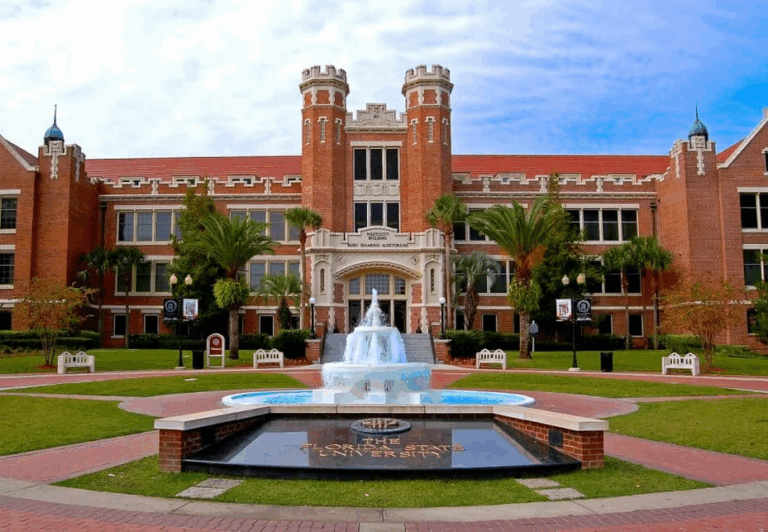
University of Florida
USA
A large public research university in the United States with a high academic ranking. Offers a wide range of programs, strong STEM fields, and more affordable tuition compared to private universities
Bachelor's degree: from $55,000 per yearMaster's degree: $15,000 - $40,000 per yearDoctoral studies: $10,000-$30,000 per year
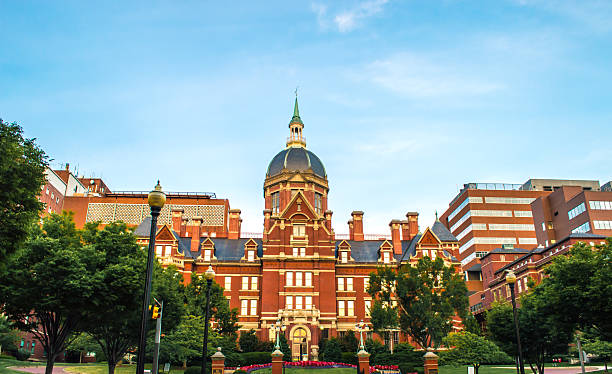
Johns Hopkins University
USA
A leading U.S. research university and a global leader in medicine, biotechnology, and international relations. Distinguished by a strong focus on research, practice, and interdisciplinary studies
Bachelor's degree: $63,340 per yearMaster's degree: $65,956 per yearDoctoral studies: about $65,000 per year
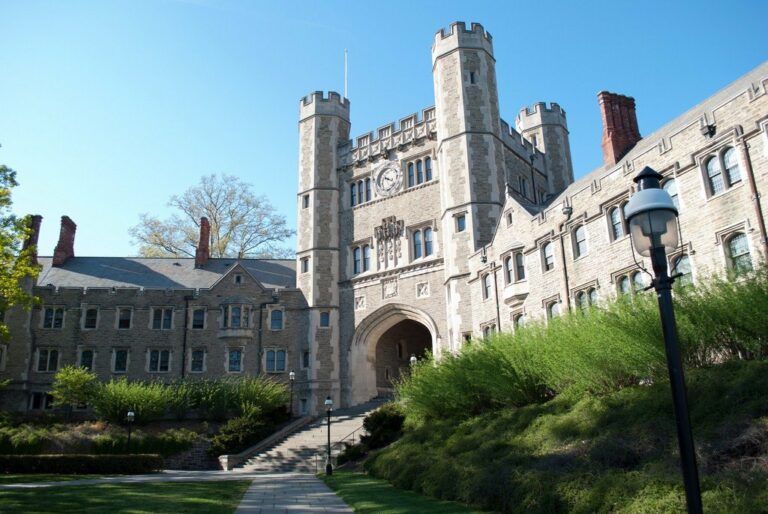
Princeton University
USA
One of the most prestigious universities in the United States, part of the Ivy League. Strong in natural sciences, engineering, economics, and the humanities. Known for a high level of academic support and generous scholarships
Bachelor's degree: about $60,000 per yearMaster's degree: average $58,000 per yearDoctoral studies: free*
Подобрать университет

MentoringA personal mentor at every stage of preparation. A clear plan, oversight of every step, and predictable results.
Full supportA turnkey international application process: a customized strategy, document preparation, and visa support—all in one service, guaranteeing you admission to a university abroad.
Personal brand in a year
Selection of activities for Personal brand
Universal supportAccelerated preparation for admission: save money and time without compromising results.
Consultation with an expertAn in-depth 60-minute consultation: we'll discuss your admissions chances, financing options, develop a personalized strategy, and answer all your questions.
Consultation with a career guidance specialistWe'll help you identify your strengths and inclinations, choose the right field of study, and build a successful career.
Getting a student visa from the USAWe'll help you obtain a student visa without stress or errors, and we'll also assist you if your application is rejected.
Selection of universities and scholarshipsWe'll create a list of universities and programs that are right for you—with a realistic chance of admission and scholarships.
Admission to Foundation Programme AbroadWe'll help you enroll in the Foundation Program, a program that allows you to transfer to a bachelor's degree abroad without losing a year. We'll select suitable options, prepare your documents, and develop a strategy.
Preparation of documentationStrong documents make a strong candidate. We'll help you prepare your application package based on both formal and informal university requirements.

Статьи по теме

Study Abroad: How to Apply and What to Expect After GraduationМечтаешь учиться за границей, но в голове множество вопросов и сомнений? Разбираем, как поступить в иностранный вуз, с чем предстоит столкнуться во время учебы и что ждет после.
Время чтения:
0 мин
Top 7 Universities in the World: How to Enter a Prestigious UniversityТоповые университеты мира — мечта или переоцененный миф? Рассказываем, как поступить в престижный вуз, что на самом деле дают громкие имена, и стоит ли гнаться за рейтингами любой ценой.
Время чтения:
0 мин
What documents are needed to study abroad and how to prepare themМечта об учебе за границей может разбиться о бумажную волокиту — если не знать "правила игры". В статье разбираем, какие документы действительно нужны, и на что обращают внимание приемные комиссии зарубежных вузов.
Время чтения:
0 мин
TOEFL or IELTS: which one to choose for studying abroad?We compare the TOEFL and IELTS exams to help students choose which test is best suited for studying abroad. We examine the key differences in format, scoring system, and international recognition of the exams.
Время чтения:
0 мин
How can I stay and work abroad after completing my studies?How to stay and work abroad after graduation: visa options and pathways, as well as practical steps to start a career overseas.
Время чтения:
0 мин
How much does it cost to study abroad in 2026?Studying abroad in 2026 involves various costs, from tuition fees to living expenses. Understanding these costs helps students plan their budget more effectively.
Время чтения:
0 мин
Education abroad: popular countries 2026Find out the most in-demand countries to study abroad in 2026. We look at the benefits, programs and opportunities that attract students from all over the world.
Время чтения:
0 мин