




 Education in Asia: Which Country to Choose – Singapore, Korea, China, or Japan


She enrolled in Fashion PR programs at five US universities


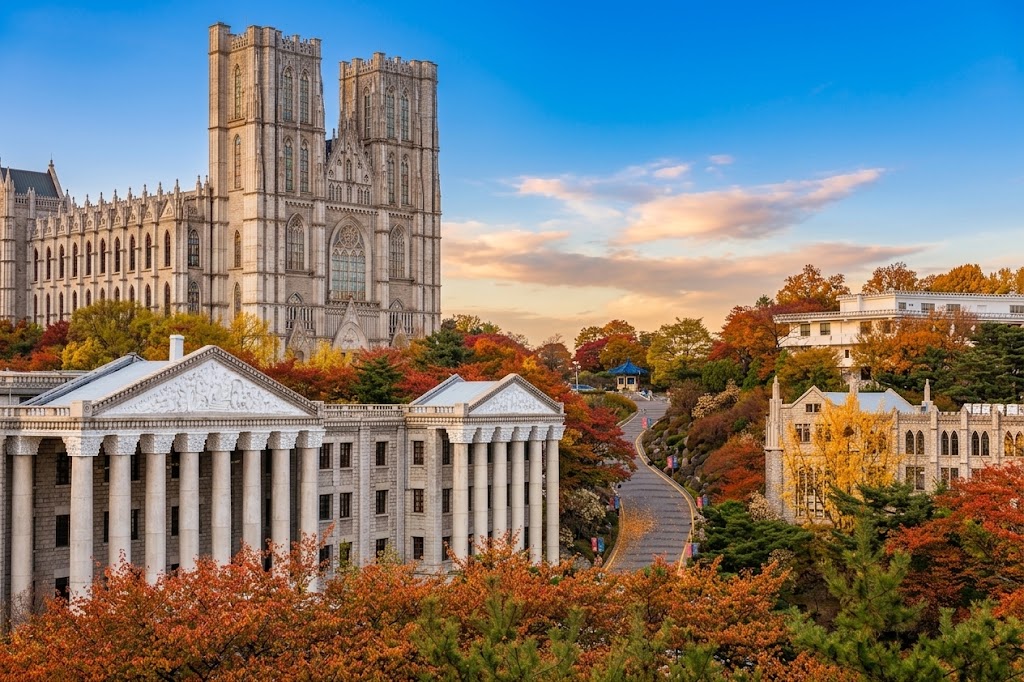
Seoul and Suwon, South Korea · Kyung Hee University (경희대학교, abbreviated KHU) is one of the leading private universities in South Korea, founded in 1949. KHU is especially known for programs in tourism and hospitality, oriental medicine, international relations and business. More than 5,500 foreign students from 120+ countries make this university one of the most international private universities in Korea. The university operates on two campuses: Seoul Campus in the center of the capital and Global Campus in Suwon. The choice of campus determines the rest: majors, language of instruction, and admission requirements.
Kyung Hee University was founded in 1949 with the motto “Democratization of School, Thought, and Life.” The university was built around the concept of “peace through education,” which is reflected in its architecture, culture, and international focus. The main campus in Seoul is known for its neo‑Gothic architecture — the red‑brick buildings on the hill have become the hallmark of the Dongdaemun‑gu district.
Today, KHU has 34,342 students (2025), including 25,573 bachelor’s degree holders and 8,769 graduate students. The university comprises 24 undergraduate colleges, 1 general graduate school, 13 specialized graduate schools, and 49 auxiliary research institutes.
KHU is one of the first Korean universities to focus on an international environment: international students account for more than 16% of the total number. Programs in tourism and hospitality, Eastern medicine, and global communications attract students from all over the world — especially from China, Vietnam, Mongolia, Central Asia, and Europe.
The cost of tuition depends on the campus, faculty, and level of study.
Bachelor’s degree: approximately 7,000 USD per year (approximately 9,500,000–10,000,000 KRW) — for most faculties; medical, pharmaceutical, and traditional medicine programs — higher.
Master’s and PhD programs: approximately 11,000 USD per year (approximately 15,000,000–16,000,000 KRW)
Admission fee (one‑time): approximately 200,000–300,000 KRW upon enrollment
Total: approximately 950,000–1,650,000 KRW (~700–1,200 USD) per month.
For reference: 1,000,000 KRW is approximately 730–750 USD at the current exchange rate. All amounts are approximate — check the current rates via the official KHU website.
Seoul Campus is located in Dongdaemun-gu, a central district of Seoul. Its Neo‑Gothic architecture with red brick buildings on a hill is one of the most recognizable university campuses in Korea. Direct access to the “회기” (Hwagi) metro station on Line 1 provides quick access to the entire city of Seoul. Nearby is Kyung Hee Park, one of the popular leisure spots in the area. The Sewha Hall dormitory is located right on the campus. Cost: from 1,220,000 to 4,680,000 KRW per semester (4 months), depending on the room type.
Global Campus is located in Suwon (Gyeonggi Province) — about 40 minutes from the center of Seoul by public transport. It is significantly larger than Seoul Campus in terms of area: modern buildings, spacious areas, and its own infrastructure. Suwon is a less expensive region, which reduces food and rental costs. There is a dormitory on campus, with a larger capacity.
On both campuses, there are canteens, sports facilities, medical centers, and libraries.
Student life is vibrant: international cultural festivals, the Korean Language Institute with courses for international students, student clubs. International students make up more than 16% — the environment is truly multicultural.
The first decision — choosing the campus and the language track — determines all the requirements.
Seoul or Global Campus — each has its own faculties. You cannot enroll in a program at another campus. Make sure that the chosen major is actually offered at the relevant campus — this should be verified using the current catalog of the International Affairs Office of the relevant campus.
For Korean‑language programs: TOPIK 3 is the minimum level for most fields (the specific level depends on the program). For English‑language programs (English Track): TOEFL iBT or IELTS. Important: about 4 out of 68 KHU programs are available with full instruction in English — for the rest, it is essential to clarify what percentage of the disciplines are taught in Korean.
Certificate or diploma with an official translation; apostille or consular legalization — depending on the country (the process takes several weeks — start early); personal statement or study plan; financial documents for a visa; portfolio or interview — for creative and medical fields.
Through the official international KHU portal. Deadlines: spring intake (March) — applications are usually accepted from September to November of the previous year; autumn intake (September) — April–June. Check the exact dates in the official KHU announcement.
After submitting online, send the documents by mail to the admissions committee within the established timeframe.
For medicine, dentistry, and creative fields — an interview or a portfolio.
After receiving the admission letter: admission confirmation + bank statement + insurance. The process takes 2–4 weeks.
The applicant and both parents must have citizenship of a country other than Korea.
completed 12‑year secondary education or its equivalent
The average grade is above average; a higher GPA directly affects the chances of receiving an entrance scholarship.
TOPIK 3 or higher for Korean‑language programs; not required for the English Track.
TOEFL iBT or IELTS for English Track programs
personal statement or study plan; financial documents for a visa; portfolio/interview for specific specialties
An important nuance regarding the English Track: according to official KHU data, about 4 out of 68 programs are available with full instruction in English. For the remaining programs with the “English Track,” a significant portion of the required courses are taught in Korean — be sure to check the specifics of the program before submitting an application.

KHU places particular emphasis on international careers in tourism, hospitality, business, and international relations — areas in which the university’s reputation in Asia is the highest. The largest hotels, restaurant groups, and travel companies in the Asia‑Pacific region specifically recruit graduates from Global Campus KHU.
The medical program at Seoul Campus offers particularly high career potential for those planning to work in the Korean or Asian medical sector. KHU’s Eastern medicine program is recognized as one of the most authoritative in Korea.
According to EduRank 2026, 138 notable alumni are associated with KHU — politicians, cultural figures, and top managers of Korean corporations and the hospitality business in the Asia‑Pacific region. The alumni network is active and maintains connections with graduates through university clubs and associations.
According to EduRank 2026, Kyung Hee University ranks #7 in South Korea in terms of overall research output — higher than many more well‑known universities in the country. The strongest fields are:
The main research topics are: biochemistry, genetics, nanotechnology, immunology, pathology, and materials science. The university has 49 auxiliary research institutes.
KHU actively participates in international academic programs: it is a member of AALAU (Association of Asian Liberal Arts Universities) and supports exchange programs with hundreds of universities around the world.

The Neo‑Gothic architecture of Seoul Campus — the red brick buildings on the Tondemun Hill in Seodaemun‑gu have become one of the most photographed university locations in Korea. The campus is regularly used as a filming location for Korean dramas and movies.
KHU operates as a complete educational system — from kindergarten to postgraduate studies — within the Kyung Hee University System.
The flagship program at Global Campus — Tourism and Hospitality — is one of the best programs of its kind in Korea; graduates work in the largest international hotels and tourism companies in Asia.
Oriental Medicine at Seoul Campus is one of the few full—fledged academic programs in traditional Korean medicine in the country; along with the Kyunghee, SNU, and Dongguk programs, it ranks in the national top.
More than 16% of students are foreigners from 120+ countries. In terms of the share of international students, KHU is among the top private universities in Korea — a truly multinational academic environment.
The university’s color is Crimson; the logo is the Laughing Lion, a symbol of openness, optimism and academic freedom.
Getting into KHU requires choosing the right campus, language track, and scholarship strategy. A mistake at the selection stage means losing time preparing for the wrong requirements.
We at SelfStartGlobal help you structure this process clearly:
Our students have already received scholarships worth more than 35 million dollars.
Do you want to enroll at Kyung Hee University and receive maximum financial support? Come to a free consultation. We’ll explain how it works in your specific case.



She enrolled in Fashion PR programs at five US universities


She was admitted to three American universities at once: Augustana College, Widener University, and the University of South Dakota. She chose Augustana College, where she received a scholarship of $45,000 per year.

He entered a master’s program in the USA at two universities at once – Brandeis University and Washington University in St. Louis, receiving scholarships totaling $80,000. He chose Brandeis University and went to study on the first try.

He entered Siena Heights University (USA) for the Theater and Music program with a full scholarship of $170,000. Preparation took less than a year.

She entered graduate school at Kent State University and Ohio University. At Ohio University, she won a Graduate Teaching Assistantship with full funding of $37,774, covering tuition, insurance, and living expenses.

Got accepted to NYU Abu Dhabi on the first try (acceptance rate 4%) with a scholarship of $217,000. Also received offers from Lynn and Drexel University.
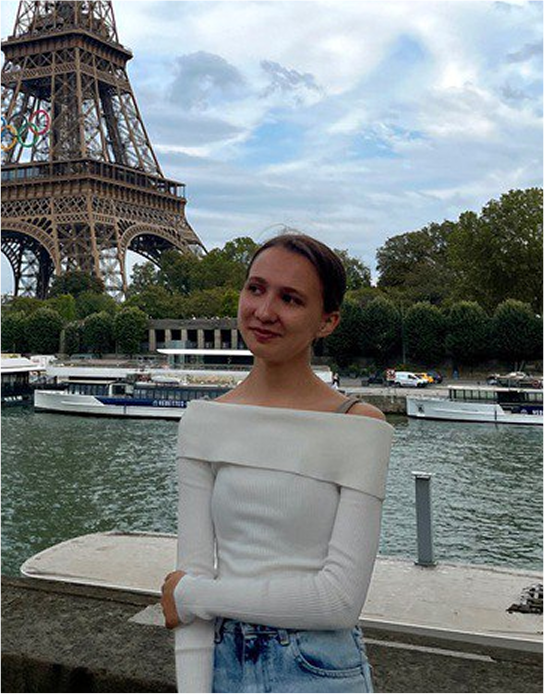
She enrolled in graphic design at universities in France, Italy and Hungary. She received scholarships at all of them and chose the university with the maximum funding — $135,000 for the entire period of study.

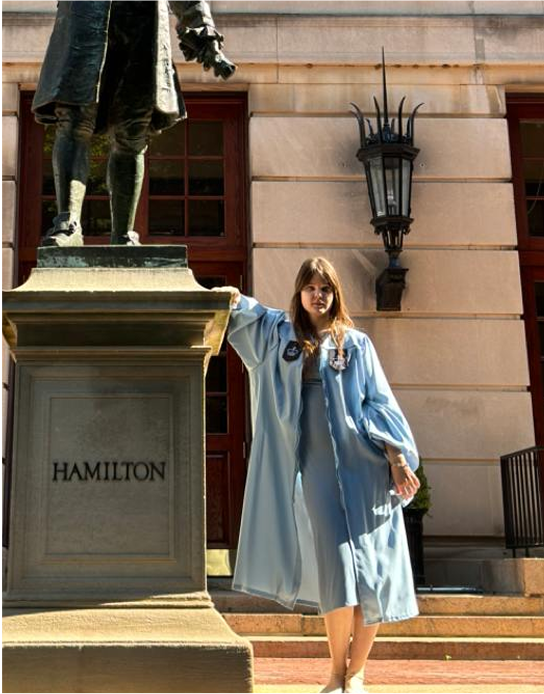
I was accepted to the PhD program at Columbia University on my first try, having strengthened my profile and compiled my achievements into a strong application.
Leave your contacts — our consultant will get in touch
