




 Building Quality Support for STEM Applicants: From Expert Assessment to a Managed Application Strategy

She enrolled in Fashion PR programs at five US universities


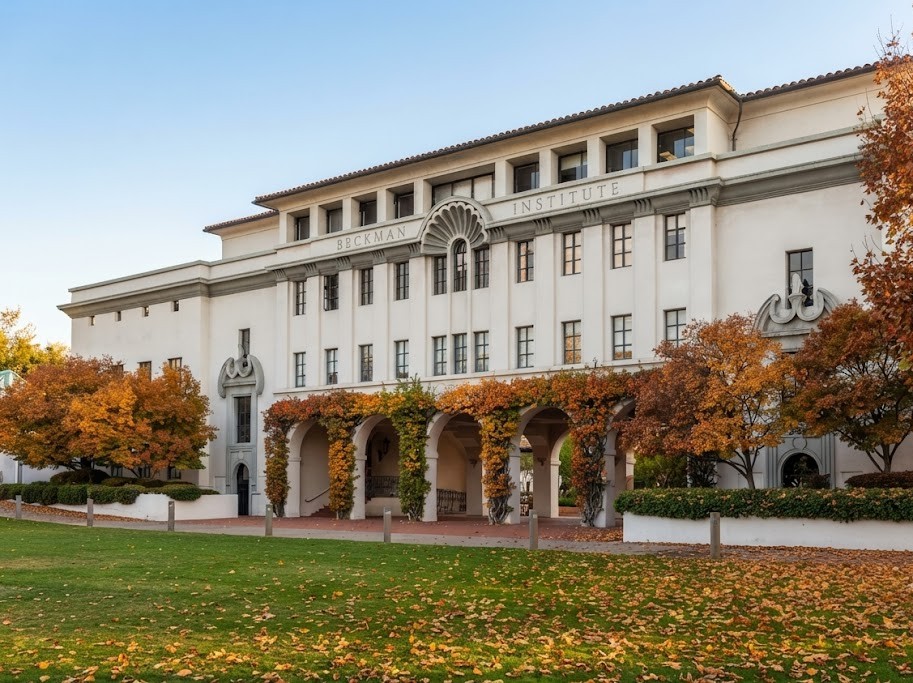
Pasadena, California, USA · The California Institute of Technology is one of the most prestigious science and engineering universities in the world. Caltech specializes exclusively in science, engineering, and technology. Despite its small size—approximately 990 undergraduate students and 2,400 total students—the institute ranks among the top ten universities in the world according to all key rankings. Admission to Caltech requires exceptional preparation, but for those seriously passionate about science, it offers one of the most powerful academic pathways in the world.
The California Institute of Technology was founded in 1891. Over its more than 130 years of existence, it has become a symbol of scientific concentration: with a campus population smaller than most high schools, Caltech operates NASA’s Jet Propulsion Laboratory (JPL) and is responsible for the Mars Rover, Voyager missions, and the maintenance of the Hubble Telescope.
Caltech’s main distinguishing feature is its 3:1 faculty-to-student ratio, one of the best in the United States. This means that every student has real access to leading scientists, including Nobel laureates. The institute has 46 Nobel laureates associated with it – including physicist Richard Feynman and two-time laureate Linus Pauling.
Famous alumni include Intel co-founder Gordon Moore. The campus is located in Pasadena, among palm trees against the backdrop of the San Gabriel Mountains, about 18 kilometers from downtown Los Angeles – small but rich in research infrastructure.
The cost of undergraduate tuition for the 2025-2026 academic year is $65,622 per year. On-campus housing costs $12,105, and meals cost around $8,886. Including mandatory fees, textbooks, and personal expenses, the total cost of attendance is approximately $93,912 per year for on-campus students.
Caltech offers programs exclusively in the fields of science and engineering, which is a fundamental difference from most universities. The main areas of study are divided into six academic departments:
Approximately 80-90% of undergraduate students participate in real research, often starting from their first year through the SURF (Summer Undergraduate Research Fellowships) program. At the Master’s and doctoral levels, training is organized through the same six departments, with almost 50 separate graduate programs (graduate options).
The Caltech campus occupies 124 acres in downtown Pasadena, within walking distance of the historic Old Town Pasadena. Housing is guaranteed to all first-year undergraduate andmaster’s/doctoral students in their first year.
Instead of traditional dormitories with hundreds of students, Caltech has a house system of eight student houses (house system) — each with its own self-governing and traditions. This forms a dense and informal academic community, where students of different courses and fields interact closely with each other.
Catalina Apartments are available on campus for graduate and postdoctoral students, with new grad students having priority for housing. The campus is home to about 50 research institutes and centers, including the Resnick Sustainability Institute and the Tectonics Observatory, as well as the central Athenaeum building, a venue for formal dining, meetings, and campus events.
Despite the compact size of the campus, Caltech offers a vibrant student life with over 100 student clubs ranging from robotics to music, 13 varsity sports under the Caltech Beavers brand, and its own tradition of Ditch Day, where upperclassmen leave the campus and younger students solve the engineering challenges they left behind.
Admission to the California Institute of Technology is one of the most competitive processes among technical universities in the world. The acceptance rate is about 3.78% for the class of 2029, which is lower than in most Ivy League universities.
An important feature is that Caltech accepts applications through the Common Application, but evaluates them using its own logic, which is different from most universities. The institute looks not just at academic achievements, but also at genuine scientific interest, research motivation, and the ability to work in an intense intellectual environment.
Caltech offers exclusively STEM-related courses. Students enroll in the institute as a whole and choose their major after admission.
The Institute expects exceptional results in mathematics and the sciences. Strong grades in core subjects are required: at least four years of mathematics (including algebra and beyond), one year of chemistry, one year of physics, and at least three years of English.
Caltech asks its own additional questions, which are aimed at revealing scientific thinking, specific projects, and personal motivation. Standard answers do not work; the institute expects specifics. Historically, about a third of the applicants submit a portfolio or technical work (“maker work”).
Two letters from science teachers and one from a school counselor. The letters should confirm analytical abilities rather than simply listing achievements.
International students must pass the TOEFL, IELTS, or Duolingo English Test if English is not their native language or the language of instruction at their school.
The Restrictive Early Action tour is until November 1, and the main tour (Regular Decision) is until January 3. Caltech explicitly states that the acceptance rate is the same for both rounds (below 5%), and warns applicants in advance not to apply early solely for the sake of improving their chances.

For international applicants, Caltech applies a need-aware policy for admission, which means that the family’s financial situation may influence the decision to enroll, since the amount of funds available to help international students is limited. At the same time, the institute covers 100% of the confirmed financial need for all accepted students who have applied for assistance.
Since admission to the class of 2029, Caltech has returned the mandatory SAT or ACT exam — the institute found that 95% of applicants still sent points even during the test-optional policy period. The average range of scores for admitted students is 1540–1590 on the SAT and 35–36 on the ACT.
What enhances the application of a foreign applicant:
All financial aid at Caltech is targeted and based on need. The institute does not offer scholarships based on academic merit. For students from the United States, admission is need-blind, and family income does not affect the admission decision. However, for families with confirmed financial need, Caltech covers 100% of expenses.
Key conditions:
The main career advantage for Caltech graduates is their proximity to the NASA Jet Propulsion Laboratory (JPL), which the institute manages directly. Students have the opportunity to complete internships at JPL, as well as at companies such as SpaceX, Boeing, Google DeepMind, and national research laboratories.
The six-year median salary for Caltech graduates is around $132,140, one of the highest among US universities. The average starting salary for graduates in engineering and computer science is between $140,000 and $175,000 per year.
Caltech’s four-year graduation rate is 77%, which is lower than most top universities, but this is a direct result of the program’s extremely high academic workload and not a sign of future employment challenges.
Caltech manages NASA’s Jet Propulsion Laboratory (JPL), the center responsible for robotic exploration of the solar system, including the Mars Rover, Voyager missions, and the servicing of the Hubble Space Telescope. This is a unique partnership that no other university in the world has.
The institute has 46 Nobel laureates among its faculty and alumni, including physicist Richard Feynman and two-time laureate Linus Pauling (Nobel Prize in Chemistry and Nobel Peace Prize). In terms of the number of Nobel laureates per capita of students and staff, Caltech remains one of the leaders among universities in the world.
The campus is home to about 50 research institutes and centers, including the Resnick Sustainability Institute (sustainable energy) and the Tectonics Observatory (geology and plate tectonics). Caltech also operates its own seismological laboratory and a network of international observatories.
Caltech was founded in 1891 as Throop University’s preparatory and professional school, and it was renamed in 1920.
The faculty-to-student ratio at Caltech is 3:1, one of the best in the world.
Caltech manages NASA’s Jet Propulsion Laboratory (JPL), one of the key centers for space exploration in the United States.
All undergraduate students, regardless of their chosen major, take the same basic course in the first two years: mathematics, physics, chemistry, and biology.
The annual tradition of Ditch Day, where upperclassmen leave campus and lower-year students solve the engineering and logic puzzles they left behind, has been a part of Caltech for over a century.
Caltech is the smallest university in terms of the number of undergraduate students among the top 10 global rankings: about 990 students, compared to thousands in most other universities of this level.

She enrolled in Fashion PR programs at five US universities

She was admitted to three American universities at once: Augustana College, Widener University, and the University of South Dakota. She chose Augustana College, where she received a scholarship of $45,000 per year.

He entered a master’s program in the USA at two universities at once – Brandeis University and Washington University in St. Louis, receiving scholarships totaling $80,000. He chose Brandeis University and went to study on the first try.
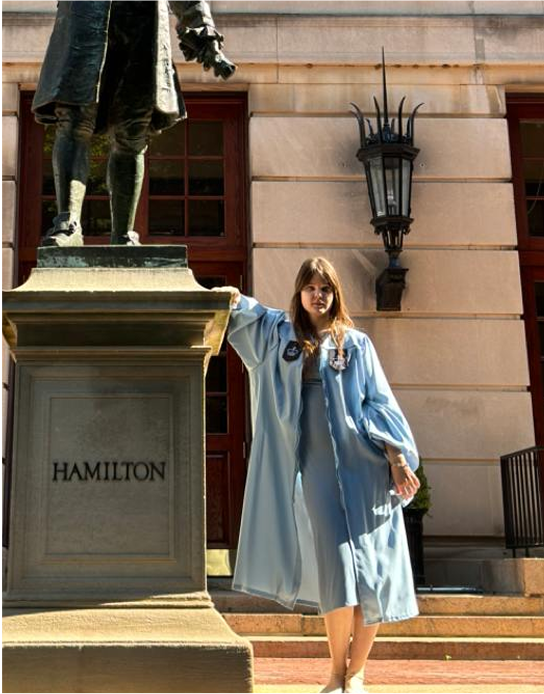
I was accepted to the PhD program at Columbia University on my first try, having strengthened my profile and compiled my achievements into a strong application.

She entered graduate school at Kent State University and Ohio University. At Ohio University, she won a Graduate Teaching Assistantship with full funding of $37,774, covering tuition, insurance, and living expenses.
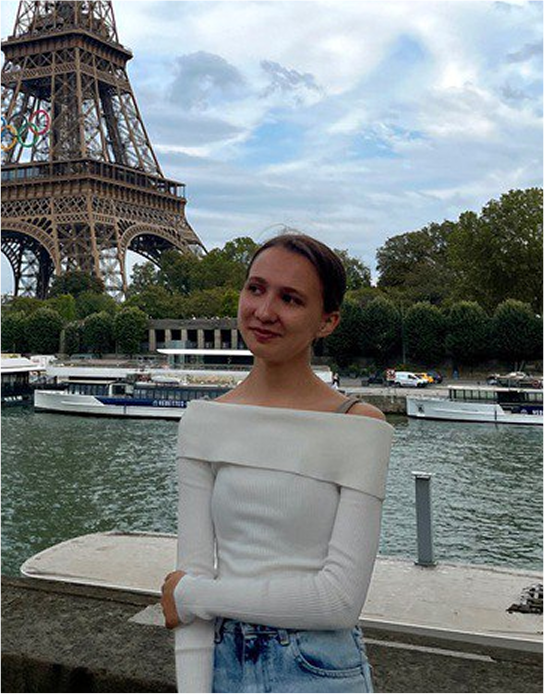
She enrolled in graphic design at universities in France, Italy and Hungary. She received scholarships at all of them and chose the university with the maximum funding — $135,000 for the entire period of study.

He entered Siena Heights University (USA) for the Theater and Music program with a full scholarship of $170,000. Preparation took less than a year.

Got accepted to NYU Abu Dhabi on the first try (acceptance rate 4%) with a scholarship of $217,000. Also received offers from Lynn and Drexel University.






Leave your contacts — our consultant will get in touch
