



Jurisprudence

Legal education abroad is more than just studying the law. It's about developing a unique way of thinking that's valued by the world's largest companies and international organizations. Students learn to analyze complex cases, construct arguments, and understand the workings of different legal systems.

Why study law abroad?

Critical Thinking and Practice

Foreign universities focus on precedents, practical analysis, and the development of negotiation and public speaking skills. Students analyze real cases, participate in legal clinics, and assist real clients under the guidance of faculty members.

Global labor market

A degree from a foreign law university opens up access to international corporations, government agencies, and organizations where knowledge of local law is not sufficient. According to Law School Transparency, the average salary for graduates of the top five American law schools ranges from $170,000 to $180,000 per year. Graduates of top British universities start with salaries ranging from £40,000 to £100,000, depending on their specialization and experience.

Language and professional competence

Knowledge of legal terminology in a foreign language at a professional level is a separate competitive advantage in the international market.

Prestige and professional connections

A top-ranked university degree and connections with fellow students from different countries are professional capital that lasts for decades.

How to apply to law school abroad

1
Selecting a country and legal system

Decide where you plan to practice. The main division is between Anglo-Saxon law (USA, UK, Canada) and continental law (Europe). This determines the choice of program and university.

2
Package of documents

As a rule, you will need a high school or university diploma, a motivation letter, letters of recommendation, a language certificate, a resume, a copy of your passport, and the results of specialized tests.

3
Entrance tests

Depending on the country, you may need to take a specialized exam, such as the LSAT for the United States and Canada or the LNAT for a number of British universities. Please check the specific program requirements.

4
Submitting an application

Applications are submitted online through the university’s portal. It is important to meet the deadlines, as they are strict in top law schools. It is recommended to start preparing at least 12-18 months before the start of the academic year.

Scholarships for foreigners

Legal programs are among the fields for which scholarships are available from universities, government programs and international funds. Specific conditions depend on the university, the country, the level of the program and the academic profile of the student. For example, many American law schools offer scholarships based on the results of the admission competition – especially on LLM programs for international students. In the Netherlands and Belgium, state-funded scholarship programs are available for citizens of a number of countries. Scholarships should be looked for in parallel with the selection of universities, and not after – most programs have their own deadlines that do not coincide with the deadlines for submitting documents.


At SelfStartGlobal, we help students get funding, and our students have already saved more than $25 million.


How much does legal education cost abroad?

The cost varies significantly depending on the country, university, program level, and student’s citizenship.

In the United States, a JD (Juris Doctor) program at top universities costs between $60,000 and $72,000 per year. An LLM (Master of Laws) program, which is a master’s degree for already-qualified lawyers, is generally cheaper and shorter, lasting one year.

In the UK, the cost of law programs for international students at top universities is £20,000-£30,000 per year.

In EU countries, such as the Netherlands, Belgium, and Germany, the prices are significantly lower, ranging from €8,000 to €20,000 per year for English-language programs. In public universities in Germany and France, tuition fees may be waived or subject to nominal administrative fees.

In addition to tuition fees, the budget should include accommodation, insurance, study materials, visa costs, flights, and entrance fees.

Prospects after training

Career in law and business

Graduates of law programs are in demand in corporate law, consulting, tax and financial sectors. A career is possible in legal support of mergers and acquisitions, in compliance with the legislation (compliance) and in government agencies.

International organizations

A specialization in international law opens the door to the United Nations, the World Trade Organization, the Red Cross, international courts, and diplomatic agencies. Programs in the Netherlands, Belgium, Switzerland, and the United Kingdom are particularly valued for these positions.

Scientific and academic career

An international degree opens doors to research and teaching at leading universities around the world.

It is important to note that most countries require additional qualifications to obtain the status of a lawyer or judge. For example, in the United Kingdom, the SQE (Solicitors Qualifying Examination) has been introduced since 2021, and it can be taken by holders of foreign law degrees. The preparatory courses cost between £3,000 and £8,000, while the examination fees are approximately £4,000. In the United States, obtaining a law license requires passing a bar exam in the specific state. Specific requirements should always be checked against the current rules of the country and state.

Immigration after training

The opportunity to stay in the country after graduation depends on the legislation of a particular country.

  • In the USA, graduates with a student visa can take advantage of the OPT (Optional Practical Training — practical training after graduation) program: she gives up to 12 months of work in her specialty without a separate work permit. This time can be used to find an employer willing to apply for an H-1B work visa.
  • In the UK, graduates can use the Graduate Route, a visa that allows them to work or look for work without a sponsor from an employer for two years after graduation (three years for PhD holders). From January 1, 2027, the period for bachelors and masters is planned to be reduced to 18 months.
  • In Europe, the conditions vary by country. Many EU states offer special visas for graduates or simplified pathways to work permits.

Education alone does not guarantee successful immigration, but it significantly increases the chances, especially if you have a degree from an accredited university and are employed in your field.

FAQ

What is the difference between jurisprudence and legal science? Плюсик

Law (Law) is a professional education that prepares students for legal practice. Legal Studies (Legal Studies) focuses on the academic study of law as a social phenomenon. Without additional qualifications, legal studies do not grant the right to obtain a professional legal license.

Is it possible to study international law as a bachelor's degree? Плюсик

Yes. Many universities in Europe and the UK offer programs in international law at the undergraduate level. In the United States, law is traditionally the second level of education, and students enter with a bachelor’s degree in any field.

Is it difficult to enter a law school abroad? Плюсик

The competition for top universities is high. To get into the top five American law schools, you need an LSAT score of 165 to 180 and a high GPA. With a strong academic background and a well-structured application, it is possible to get in, but it requires a proper preparation strategy.

Where is the best place to get a legal education? Плюсик

It depends on your career goals. For corporate law and finance, the US and UK. For international institutions and European law, the Netherlands, Belgium, and Switzerland. For traditional legal practice, the country where you plan to work is appropriate, as legal systems differ.

Is work experience required to apply to law school? Плюсик

For undergraduate programs, generally no. For American JD programs, a bachelor’s degree in any specialty is formally sufficient, although experience related to law strengthens the application. For some master’s programs, professional experience is an advantage or a requirement—this should be verified with the specific program.

Popular universities

Paduana


University

Italy
One of the oldest universities in Europe with strong traditions in science, medicine, and the humanities. Attractive due to its combination of academic quality, affordable tuition, and student life in Italy
Bachelor's degree: from €2,000 to €4,500 per yearMaster's degree: from 3,000€ to 6,000€ per yearDoctoral studies: from 1,500 to 3,000 € per year
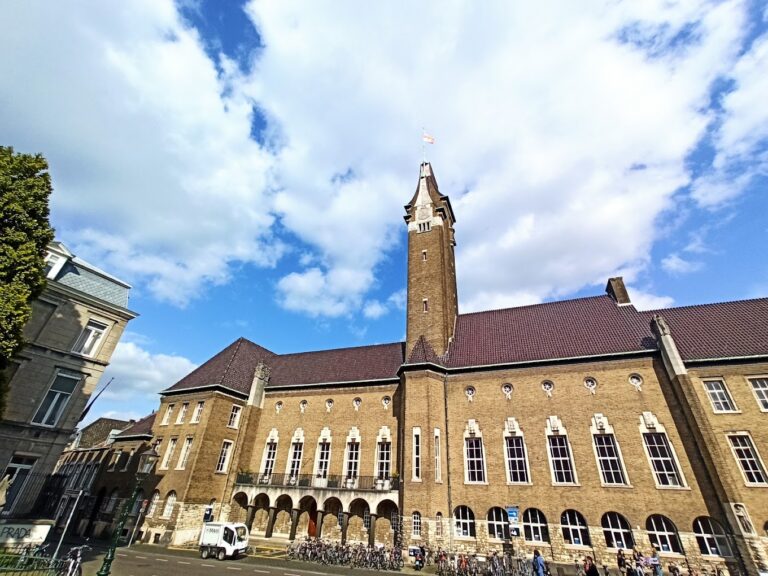
Maastricht University
Netherlands
A modern university in the Netherlands, known for its innovative Problem-Based Learning (PBL) approach. Popular among international students, especially in business, economics, law, and healthcare
Bachelor's degree: from €9,000 to €15,000 per yearMaster's degree: from €10,000 to €18,000 per yearDoctorate: free or about €2,500 per year
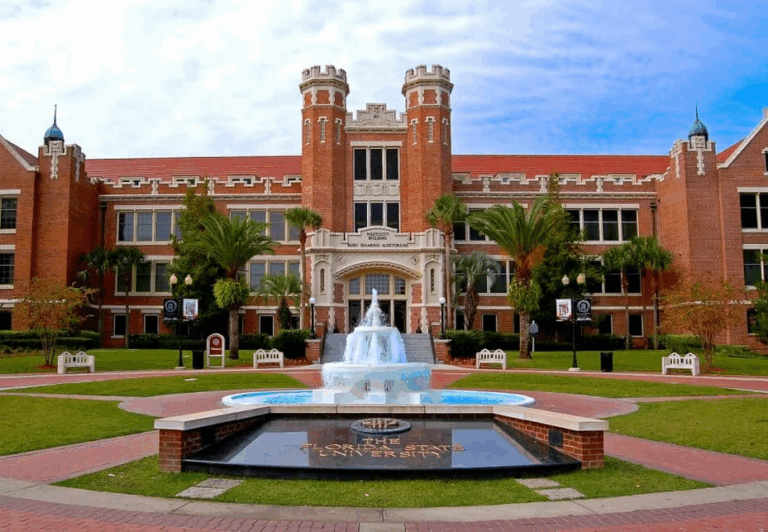
University of Florida
USA
A large public research university in the United States with a high academic ranking. Offers a wide range of programs, strong STEM fields, and more affordable tuition compared to private universities
Bachelor's degree: from $55,000 per yearMaster's degree: $15,000 - $40,000 per yearDoctoral studies: $10,000-$30,000 per year
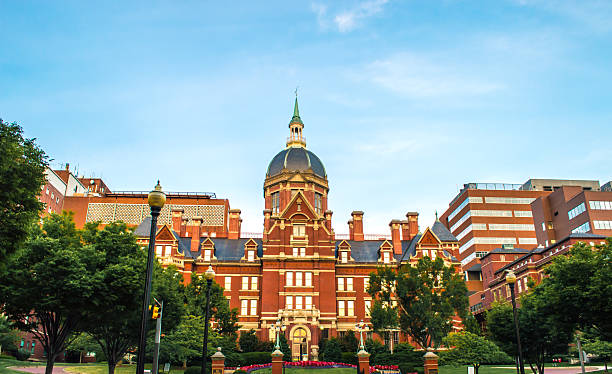
Johns Hopkins University
USA
A leading U.S. research university and a global leader in medicine, biotechnology, and international relations. Distinguished by a strong focus on research, practice, and interdisciplinary studies
Bachelor's degree: $63,340 per yearMaster's degree: $65,956 per yearDoctoral studies: about $65,000 per year
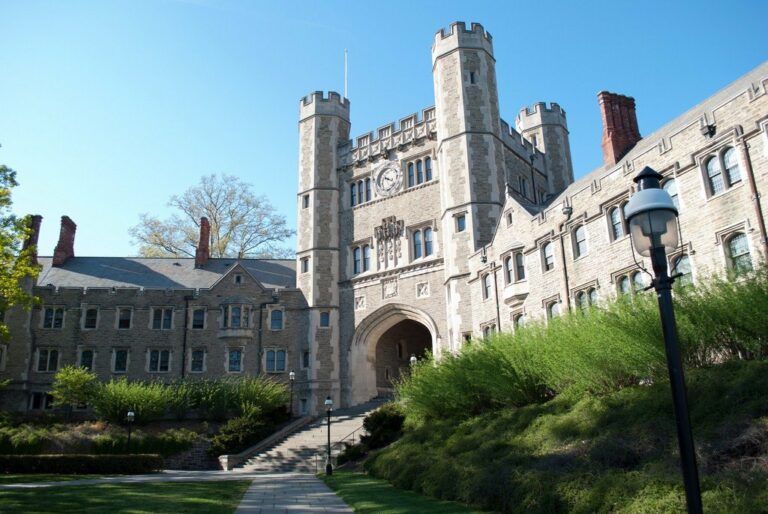
Princeton University
USA
One of the most prestigious universities in the United States, part of the Ivy League. Strong in natural sciences, engineering, economics, and the humanities. Known for a high level of academic support and generous scholarships
Bachelor's degree: about $60,000 per yearMaster's degree: average $58,000 per yearDoctoral studies: free*
Подобрать университет

Countries

France
France leads non-English-speaking countries in terms of the number of international students. French universities are renowned for their high academic standards, and degrees are valued worldwide, opening up broad career prospects. Scholarships are available, and the combination of European-quality education and a rich cultural environment makes France particularly attractive to prospective students.
Read more ➜
Germany
One of the most popular study destinations in Europe. Free or low-cost education, strong technical and engineering fields, and high demand for graduates
Read more ➜
Italy
A combination of academic tradition and affordable education. Particularly in demand for studies in design, architecture, business, and the humanities
Read more ➜
Netherlands
One of the leaders in English-taught programs in Europe. Practice-oriented education, high graduate employability, and a comfortable environment for international students
Read more ➜
United Kingdom
Classical education with global recognition. Shorter study periods, strong humanities and business programs, and a highly valued diploma
Read more ➜
USA
A US education offers prestige and limitless opportunities. American degrees are highly valued worldwide, and graduates from leading universities are eagerly sought after by international companies. US universities consistently occupy top positions in global rankings. Studying here opens the door to a global career and a unique student experience.
Read more ➜
Выбрать страну

Our services

MentoringA personal mentor at every stage of preparation. A clear plan, oversight of every step, and predictable results.
Full supportA turnkey international application process: a customized strategy, document preparation, and visa support—all in one service, guaranteeing you admission to a university abroad.
Personal brand in a yearIn 12 months, we'll build your strong personal brand for international study: we'll formulate a strategy, select activities, and identify achievements that will increase your chances of admission and scholarship awards.
Selection of activities for Personal brandA personal brand is the foundation for applying for a scholarship. Get a list of activities that will enhance your profile and distinguish you from other applicants.
Universal supportAccelerated preparation for admission: save money and time without compromising results.
Consultation with an expertAn in-depth 60-minute consultation: we'll discuss your admissions chances, financing options, develop a personalized strategy, and answer all your questions.
Consultation with a career guidance specialistWe'll help you identify your strengths and inclinations, choose the right field of study, and build a successful career.
Getting a student visa from the USAWe'll help you obtain a student visa without stress or errors, and we'll also assist you if your application is rejected.
Selection of universities and scholarshipsWe'll create a list of universities and programs that are right for you—with a realistic chance of admission and scholarships.
Admission to Foundation Programme AbroadWe'll help you enroll in the Foundation Program, a program that allows you to transfer to a bachelor's degree abroad without losing a year. We'll select suitable options, prepare your documents, and develop a strategy.
Preparation of documentationStrong documents make a strong candidate. We'll help you prepare your application package based on both formal and informal university requirements.

Feedback from our students

Interesting articles about education

Top 8 universities where you can study for free or almost for free
Время чтения:
0 мин
Guide: How to Choose a Country for Admission?
Время чтения:
0 мин
The 3 most affordable countries for admission are Belgium, Austria, and Italy
Время чтения:
0 мин
Extracurricular activities for studying abroad
Время чтения:
0 мин
Deadlines, Exams, and Scholarships: Your Guide to Studying in the USA, Europe, and Asia
Время чтения:
0 мин
I want to study abroad in 2027, but I don’t know where to start
Время чтения:
0 мин
How to pack a suitcase: what to consider when moving to another country
Время чтения:
0 мин