




 How to prepare for the IELTS exam on your own


Service payment
Fill out the form and continue to payment via Stripe


GKS is a government-funded program for international students, administered by the National Institute of International Education of Korea (NIIED) under the Ministry of Education.
The program aims to attract talented students from around the world, support them in pursuing their degrees at Korean universities, and build an international network of alumni. The program covers undergraduate programs, including associate degrees, master’s degrees, and doctoral degrees, as well as separate tracks for exchange programs and short-term internships.
GKS is aimed at candidates with a strong academic profile and a real motivation to study in Korea. According to the official conditions, in order to participate, you need to meet the formal criteria for citizenship, age, education, and academic performance, as well as prepare a meaningful Personal statement and Study plan.
Both documents are evaluated along with academic performance. The program is suitable for those who are willing to go through a multi-stage selection process with high competition and plan their application 6-12 months in advance.
According to official data from Study in Korea, the scholarship covers four key expenses:
The exact amounts and conditions of payments are published in the annual Guidelines for a specific recruitment. Before applying, it is necessary to check them on the official website, rather than relying on figures from third-party sources.
The program is divided into two main tracks based on the level of education.
GKS can be submitted in one of two ways: through the embassy of your country or directly through the university.
In the embassy route, the applicant submits documents through the Korean embassy in their country of citizenship and can specify up to three universities, with at least one of them being a “Type B” university. This route is suitable for those who want to consider multiple universities simultaneously and do not have a pre-selected program.
In the university route, the application is submitted directly to a specific university, such as the specialized programs at UIC (undergraduate) or R&D and Global Network (master’s/doctoral). This route is suitable for those who have already chosen a university and a specific field of study and can demonstrate a clear alignment with the chosen program.
According to the official conditions of Study in Korea, the following basic requirements must be met by candidates.
It is also important to consider the formal restrictions: applicants must not have previously received a GKS degree scholarship, been dismissed from a GKS or IRTS language program, received a degree scholarship from another Korean government agency in addition to NIIED, or been selected as a GKS scholarship recipient in the last three years but declined the offer before enrollment or was disqualified.
Citizenship. Neither the candidate nor both of their parents must have Korean citizenship; stateless persons are not allowed to participate.
Age. For bachelor’s degrees, the age limit is 25, and for master’s and doctoral degrees, it is 40.
Education. For the associate degree program, you need a high school diploma; for the bachelor’s degree program, you need a high school diploma or an associate degree; and for the master’s and doctoral programs, you need a bachelor’s or master’s degree, respectively.
Grade. The average grade point average (CGPA) for the entire previous program must meet one of the following thresholds: 2.64/4.0, 2.80/4.3, 2.91/4.5, or 3.23/5.0, or a percentage score of 80% or higher on a 100-point scale, or a position in the top 20% of the class.
Language. TOPIK certificates are accepted (for the paper version, starting from the 93rd session, and for the online version, starting from the 1st session), or TOEFL iBT/IELTS for English-language programs.
Health. A 15-item medical self-assessment questionnaire is completed.
What documents are needed for GKS
According to the official application guide, the package of documents includes:
Each item is uploaded as a separate file with a maximum size of 20 MB. If the university requests additional materials, such as a portfolio, they must be submitted directly to the university rather than through the NIIED system.
Personal statement and study plan are combined by the official volume limit – up to 6,000 characters in Korean or up to 17,000 characters in English, including spaces, with no exceptions for any candidate.
Within this volume, the personal statement should reveal the motivation to study in Korea specifically, the academic path and achievements, as well as how the previous experience logically leads to the chosen program. Since the limit is common for personal statement and study plan, it is important to think in advance about the balance between the self-introduction and the meaningful study plan, rather than spending the entire volume on one part.
How to prepare a Study Plan
The study plan should show a specific educational and, for master’s and PhD, research trajectory:
For doctoral studies and some master’s programs, information about previous master’s training is also required, which is a separate mandatory section of the application form. The more closely the study plan is linked to the actual program and (for graduate-level programs) to the research area of the host university, the stronger the application will be, all other things being equal.

The selection process consists of several stages, and the exact dates may vary from year to year, so it is important to refer to the current guidelines. The general process for master’s and doctoral programs includes the following steps: NIIED announces the recruitment process, applications are submitted through embassies or universities, the documents are reviewed by the embassy/university and NIIED, and the final results are announced by NIIED.
For bachelor’s programs, the process is similar, but with slightly different recruitment deadlines. Once an application is submitted, it cannot be edited or withdrawn under any circumstances. Candidates who pass the first stage must print out the application, sign all the fields, and submit the document to the recommending organization.
Most often, GKS applications fail for the same reasons:
A motivation letter with no specific connection to Korea or the chosen program.
A training plan without any real educational logic or understanding of the program.
The university was selected without considering the type (A or B) or requirements of the program.
Lack of or incomplete submission of at least one of the required documents.
The average score was recalculated independently, without official confirmation from the university.
Once submitted, the application cannot be corrected, and errors are noticed too late.
How to increase your chances of GKS
Start preparing in advance — at least 6-12 months before the deadline, in order to collect documents, translate and certify the transcript, prepare recommendations and think over the study plan.
Strategically choose a track: Embassy Track gives the opportunity to indicate up to three universities and is suitable if there is no single priority university, and University Track — if there is a clear match of the profile with a specific program. Make sure that the CGPA is correctly converted to one of the accepted scales, and if this is not possible, request an officially certified recalculation from the university in advance.
Consider the balance of volume between the personal statement and the study plan within the single limit, and ensure that all documents are submitted in full and on time.
At SelfStartGlobal, we diagnose the candidate’s academic profile, help them choose the right application track and universities (including Type A and Type B), build a strategy for their documents and personal brand, assist them in preparing their personal statement and study plan within the single volume limit, and prepare them for potential interviews and monitor each deadline of the process.
If you are considering GKS, come for a free consultation where we will analyze your profile and develop a realistic application strategy.
No, Korean is not required at the application stage. Scholars who need language training receive it as part of the program; those who enroll in a fully English-language program can apply for exemption from language training.
Yes, if you have a TOPIK certificate of the appropriate level, the language requirements depend on the language of instruction for the chosen program.
Yes, a high school diploma is sufficient for bachelor’s and associate degree programs, provided that you meet the age requirements (under 25 years old).
Both factors are mandatory: the formal CGPA or percentile requirements are the admission threshold, while the personal statement and study plan are evaluated separately and often determine the outcome between candidates with similar grades.
Yes, when applying through the Embassy Track, you can specify up to three universities, with at least one of them being a Type B university. With the University Track, the application is submitted directly to a specific university.
At least 6-12 months before the deadline, it takes time to collect and certify documents, prepare recommendations, and develop a study plan. Once the application is submitted, it cannot be revised.

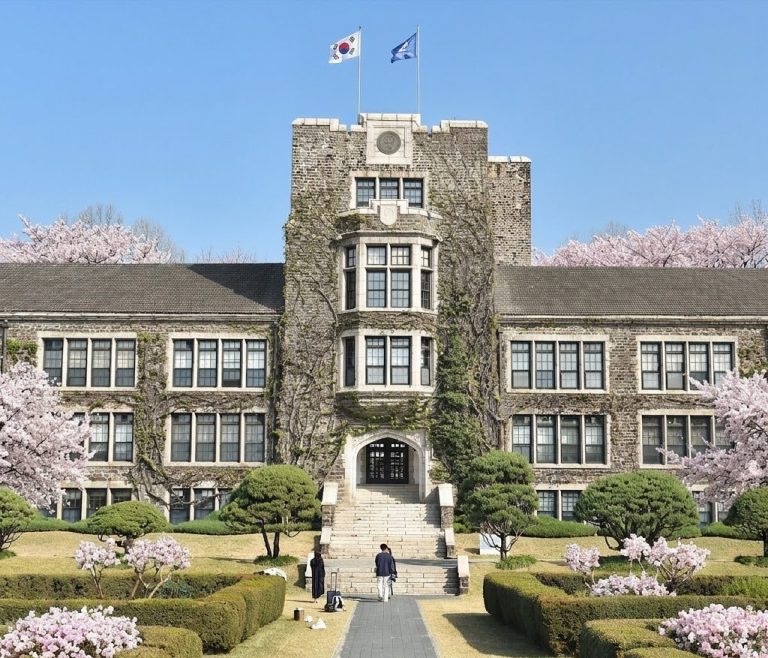
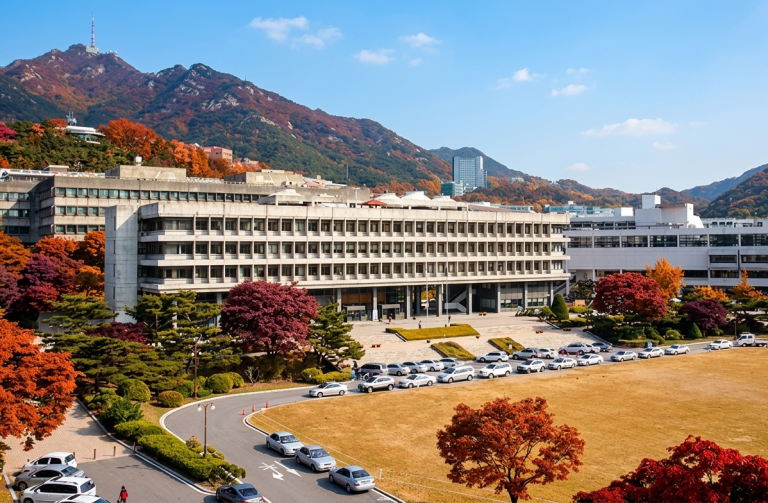
 South Korea
 Japan
JapanJapan is one of the most unconventional destinations for studying abroad. Japanese diplomas are highly valued in the international job market, universities are ranked among the top in the world, and students work with technologies that have not yet been mass-produced in other countries. If you are ready to immerse yourself in a unique culture and a systematic approach to knowledge, this is the right choice for you.
 Singapore
 China
ChinaChinese universities are rapidly rising in world rankings, and the country has turned into one of the largest educational hubs on the planet. Diplomas from leading Chinese universities are recognized by employers around the world, the cost of education is lower than in Great Britain or the USA, and the government actively finances foreign students. On this page - everything you need for admission: universities, cost, scholarships, documents and student visa.
Leave your contacts — our consultant will get in touch
