International relations: what is this specialty, who to work with, and how to enter the faculty of international relations

International Relations (IR) is an academic discipline that studies the interaction of states, international organizations, non-governmental structures and other actors in the political, economic, legal and communication spheres. It's not just diplomacy and the Ministry of Foreign Affairs: graduates of the faculties of international relations work in analytical centers, international organizations, the private sector, the media, NGOs and consulting - depending on the chosen track and professional portfolio.

What is "International relations" as a specialty

International relations as an academic specialty studies how the world order is structured: how states interact with each other, how international organizations work, what drives conflicts and cooperation, how global processes affect specific countries and regions. The subject area covers several interconnected blocks: international politics and security, world economy and trade, international law and institutions, regional studies, diplomacy and negotiation processes.

The specialty forms a set of skills that is difficult to obtain in one narrow discipline. Analytical thinking and working with information from different sources, the ability to write analytical notes and policy briefs, understanding the institutional logic of international structures, cross-cultural competence and negotiation skills — all this constitutes the practical core of the profession. That is why IR graduates are in demand in the most diverse sectors: from state structures to transnational corporations.

Who is suitable for the specialty "International relations"

The specialty is well suited to those who answer affirmatively to most of the following questions:

  • Are you interested in global politics, international conflicts and diplomacy?
  • Do you read and write a lot — analytical texts, essays, studies?
  • Do you know or are you ready to seriously learn at least two foreign languages?
  • Are you able to work with a large volume of unstructured information and draw conclusions?
  • Are you interested in history and its connection with modern politics?
  • Are you ready for public speeches, debates, defense of positions?
  • Are you attracted to a cross-cultural environment and working with people from different countries?
  • Are you stress-resistant in conditions of uncertainty and a rapidly changing context?
  • Are you interested not only in “what is happening”, but also “why” and “what to do with it”?

If most of the answers are positive, IR is an organic choice. If you are more interested in the economic side of international interaction — finance, trade, economic policy — you should consider international economic relations or political economy.

International relations and international economic relations: what is the difference

Both directions study international interaction, but from fundamentally different entry points. This is a frequent cause of confusion when choosing a specialty, and it is important to distinguish between them before submitting an application.

International Relations (IR) is primarily a political direction. In the center of attention: states and their foreign policy, international security, diplomacy, institutions of global governance (UN, NATO, WTO), human rights, international conflicts and peacebuilding. Graduates move to roles in government, diplomatic service, think tanks, international organizations, and NGOs.

International economic relations (MEO) is an economic direction. In the center of attention: international trade, world financial systems, currency policy, balance of payments, transnational corporations, economic integration. Graduates move on to roles in international business, economic policy, trade negotiations, financial analysis and international consulting.

There are many intersections between the directions: both IR and MEO include courses on world economy, international law, and regional studies. But the career logic is different: IR is closer to politics, and MEO is closer to economics and business. The choice between them should be made based on what interests you more — political dynamics or economic mechanisms of international interaction.

What is taught at the Faculty of International Relations

The international relations program consists of several levels of disciplines: from the theoretical base to applied skills and regional specialization. This is not a set of isolated objects, but an interconnected system that allows analyzing global processes systematically.

Basic disciplines Плюсик

The fundamental block of the program includes the theory of international relations — realism, liberalism, constructivism, and other paradigms of world policy analysis. Comparative political science and political institutions provide tools for comparing state systems. The world economy and international trade provide an understanding of the economic mechanisms of global interaction. International public law covers contract law, international courts and dispute settlement mechanisms. The history of international relations forms the context for understanding modern politics. Methodology of social research — quantitative and qualitative analysis, work with data and sources.

Practical skills Плюсик

One of the strengths of strong IR programs is the built-in formats of applied training. Writing policy briefs and analytical study notes translates complex information into concrete recommendations. Models of negotiations and debates — in particular, Model United Nations — develop skills of argumentation and cross-cultural communication. Case analysis of real international conflicts and crises forms analytical thinking in conditions of uncertainty. Basic skills of working with data — statistics, visualization, interpretation — are increasingly included in programs as a response to the growing demand for data-driven policy analysis.

Languages ​​and regional specialization Плюсик

Languages ​​are not just a requirement for admission, but an instrument of career strategy. A specialist in the Middle East without Arabic or a specialist in China without Chinese significantly lose in competitiveness compared to those who speak the language of the region. Regional specialization — Europe, Asia, the Middle East, Latin America, Africa — is formed in the course of study and should be a conscious choice related to a career goal. The combination of “language + region + track” is three coordinates that determine the positioning of the graduate in the labor market.

International relations: undergraduate and graduate studies

Bachelor's degree in international relations Плюсик

The bachelor’s degree is suitable for those who are just forming a professional profile and want to get a broad analytical base with the possibility of specialization. For admission, not only grades are important, but also a demonstration of real interest in the subject: participation in debates, Model UN, writing analytical texts, volunteering in international projects. A strong applicant for the IR program is a person with curiosity about world politics, argumentation skills and at least one foreign language above the basic level. A motivational essay for a bachelor’s degree is the first chance to show analytical thinking and awareness of choice.

Master's degree in international relations Плюсик

The master’s program is suitable for three categories: bachelor’s degree graduates who want to deepen their specialization or change their track; specialists with experience in related fields — political science, law, economics — who are moving to the international dimension; and practitioners from the civil service, NGO or business who want to strengthen their analytical background and career transition. The IR master’s degree is much more diverse than the bachelor’s degree in terms of formats: from research-oriented programs to professional tracks focused on a specific sector.

Variants of master's tracks Плюсик

The modern master’s degree in international relations offers a wide selection of specializations, each of which leads to a different career track:

  • International Security and Strategic Studies — security, conflicts, intelligence, military policy;
  • Diplomacy and International Affairs — diplomatic practice, negotiation processes, protocol;
  • Global Public Policy — policy at the level of international institutions and states;
  • Global Governance — management of global processes, reform of international organizations;
  • Development Studies — international development, project management in developing countries;
  • International Political Economy — political economy, trade negotiations, international finance;
  • Conflict Resolution and Peacebuilding — mediation, post-conflict reconstruction, humanitarian law;
  • Area Studies — deep regional specialization: China Studies, Middle East Studies, European Studies;
  • Human Rights and Transitional Justice — human rights track, international judicial mechanisms;
  • Environmental Policy and Global Governance — climate policy, international agreements.

International relations: who to work after the university

This is the most frequently asked question about the specialty, and the answer to it is non-linear. A diploma in international relations does not lead directly to one profession: it forms an analytical, communication and research base, which is implemented through a specific track. The choice of the track takes place during the course of study – through internships, specialization and a portfolio of texts.

According to the BLS (USA), the employment of specialists in the field of international relations and politics expects steady growth in 2025–2030, especially in the segments of analytics, international development, and political consulting.

Career tracks (with examples of roles)

Diplomacy and state service is the most traditional track. Roles: attache, diplomatic officer, MFA employee, foreign policy analyst in state structures. Entrance through competitive selections, requiring knowledge of several languages, analytical tests and an interview. This track requires patience and often starts with administrative positions.

Analytics, think tanks and research is one of the most intellectually rich tracks. Roles: political analyst, researcher, regional security expert, political risk analyst. The key asset here is a portfolio of analytical texts and publications. Competent think tanks and political institutes evaluate first of all the quality of analytical writing and research methodology.

International organizations and NGOs — work in the UN, WHO, OECD, the World Bank, regional organizations, as well as in international non-governmental structures. Roles: program coordinator, policy officer, project manager, advocacy specialist. Entry often begins with internships or volunteer positions. Knowledge of two official languages ​​of the UN significantly increases the chances.

International business and the corporate sector is a less obvious but growing track. Roles: GR (government relations) specialist, compliance manager, regulatory affairs specialist, market entry analyst, political risk consultant. Transnational corporations need specialists who understand the regulatory environment and political risks in different jurisdictions.

Media and strategic communications — international journalism, press services of international organizations, public diplomacy. Roles: international correspondent, communications officer, international PR specialist. This track requires a combination of journalistic skills with an understanding of the political context.

Academic and educational track — research and teaching at universities, analytical institutes, and educational organizations. As a rule, it requires continuation to the PhD level. It is suitable for those who have a strong research interest and for whom intellectual independence in work is important.


What really affects employment

A degree from a strong university is necessary, but not sufficient. IR employers primarily value evidence of applied competencies:

  • Internships in relevant organizations: government agencies, NGOs, think tanks, international companies;
  • Portfolio of analytical texts: published or representative policy briefs, articles, research;
  • Language skills: two or more languages ​​at a professional level;
  • Professional network: developed through conferences, Model UN, internships, and professional associations;
  • Projects with measurable results: organized conferences, implemented initiatives, contribution to public discourse.

International Relations: Universities and Colleges – How to Choose a Program

Instead of choosing a “top list” based on overall rankings, it’s worth using a selection methodology that takes into account your specific track, budget, and career goals. A program at a university well-connected to your desired sector will offer more than just a big name.

10 Criteria for Choosing a University for International Relations Плюсик

An informed program choice requires analyzing the following parameters:

  • Course content and availability of specializations or tracks that align with your career goals;
  • Practitioner-focused faculty: Does the faculty include individuals with real-world experience in diplomacy, NGO work, or analytics?
  • Internships and partner organizations: Are they integrated into the program or merely recommended?
  • Career services: Is there active support, is there an alumni database, and are there regular career events?
  • Languages ​​of instruction and available language courses:
  • Opportunities to deepen your desired language skills within the program;
  • Country and access to internships: Proximity to international organizations, embassies, and think tanks;
  • Funding costs and options: Is the university public or private, and available scholarships?
  • Admission requirements: Are they realistic for your current profile?
  • Competitiveness and selectivity: Is the admissions level appropriate for your profile?
  • Student community: Availability of active Model UN, debate clubs, and research journals.
Mistakes when choosing a program Плюсик

The first typical mistake is choosing a program based on a catchy name without studying the content: two “International Relations” programs at different universities can be radically different in focus, tracks, and career opportunities.

The second is ignoring the language component: a program without language support doesn’t help you develop a competitive profile.

The third is underestimating the budget: the cost of living in Geneva or London is fundamentally different from Vienna or Warsaw, and this needs to be factored into your strategy from the very beginning.

The fourth is starting your preparation late: competitive programs have deadlines several months before the start of their studies, and scholarship windows are even earlier.

International Relations: Admission and Preparation

Admission to the International Relations program requires not only academic credentials but also a demonstrated interest in the subject and a clear career goal. This is a program where a motivation letter and a portfolio of activities often outweigh the difference in grades.

What is usually required for admission? Плюсик

The standard application package for international students includes a high school diploma or bachelor’s degree with a transcript and certified translation. A language certificate is required for programs taught in English—IELTS Academic or TOEFL iBT.

A motivation letter or Statement of Purpose is a key document: it explains the rationale for choosing a major, career goal, and connection to a specific program. Letters of recommendation from professors or employers, and a CV detailing academic and professional activities are also included in the standard package. Some programs conduct interviews or additional written assignments.

How to strengthen an applicant's profile for IR Плюсик

A competitive profile for IR is developed through several avenues. Participation in debates and Model UN is one of the strongest signals for admissions committees, as it directly demonstrates skills that are in demand in the profession.

Publishing analytical essays, even in student or school media, forms a writing portfolio—concrete proof of analytical ability. Volunteering for NGOs, international projects, or language exchange programs demonstrates practical involvement. Competitions in social studies, history, or economics, international internships of any level, and language certificates above the basic requirement—all these factors strengthen the application.


Step-by-step preparation plan (12-18 months) Плюсик

12-18 months in advance, it’s important to determine your career path and select programs that align with it. During this time, you should also begin or continue learning relevant languages ​​and build your portfolio: participating in debates, writing analytical texts, and volunteering. Signing up for a language test (IELTS, TOEFL) and preparing for it takes several months.

6-9 months beforehand, you need to collect and formally process all documents, including apostilles and translations. A motivation letter is written in several iterations and requires significant work. Letters of recommendation are requested well in advance—faculties and employers need several weeks to prepare them. During this period, scholarship terms and conditions are also reviewed and grant application deadlines are checked.

1-3 months before the deadline, you should conduct a final review of your entire application package, register on application portals, and prepare for a possible interview. Some competitive programs conduct interviews or require a written test—this should be clarified in advance.

Tuition and how to reduce your budget

The total cost of studying International Relations is made up of several components, and the tuition fee is just one of them. The actual budget includes accommodation, food, insurance, transportation, and course materials, and some programs may even require mandatory field trips or conferences.

Costs vary dramatically depending on the country and student status. Public universities in Germany, Austria, and several other EU countries offer minimal or no tuition with a small semester fee. The Netherlands sets different rates for EU/EEA and non-EU students—the difference can range from seven to tenfold. British and American programs at top schools require significantly larger budgets but often have more extensive scholarship systems. Geneva, London, and Washington, D.C.—the three most geographically logical cities for IR—are also among the most expensive in terms of living costs.

Scholarships and funding Плюсик

The main sources of funding for students in IR programmes include:

  • merit-based scholarships for academic and extracurricular achievements, which are available at many European and UK universities;
  • need-based grants based on the family’s financial situation with the requirement of official documentation; programme scholarships of individual faculties and schools;
  • government grants from the Netherlands (Holland Scholarship), France (Eiffel Fellowship), Germany (DAAD), and the UK (Chevening Scholarship);
  • Erasmus Mundus grants for joint international programmes;
  • scholarships from international organisations and NGOs for professional development in specific fields.
Strategy to increase your chances of getting funding Плюсик

An early start isn’t just advice, it’s a practical tool. Most scholarships have deadlines in January-March for a September start, and late submissions automatically disqualify you from the competition. A strong presentation of documents—a coherent CV, motivation letter, and recommendations—significantly impacts success in competitive programs. Evidence of achievement should be concrete: an organized conference, a published text, a completed project. Vague language and the lack of a tangible portfolio are among the most common reasons for scholarship rejection.

FAQ: Frequently Asked Questions about International Relations

Are international relations just diplomacy? Плюсик

No. Diplomacy is one of the tracks. IR graduates also work in think tanks, NGOs, international organizations, the corporate sector, media, and academia.
International Relations – What to Work For After Graduation?
Depends on the track: political analyst, diplomatic officer, international organization employee, political risk consultant, NGO program coordinator, GR or compliance specialist, international journalist.

How does IR differ from international economic relations? Плюсик

IR is a political program (security, diplomacy, institutions). IEO is an economic program (trade, finance, international business). Both programs offer related courses, but the career paths are different.

What subjects are important for admission? Плюсик

History, social studies, foreign languages, and analytical writing skills form the core of the program. Basic mathematics is required for methodology courses.

Are ideal languages ​​required for admission? Плюсик

No, a perfect level is not required, but a language certificate (IELTS/TOEFL) is required for programs abroad. Having a second language above the basic level significantly strengthens your profile.

What is more important: grades or projects and internships? Плюсик

Grades set the minimum threshold. Projects, internships, analytical publications, and participation in Model UN determine the selection among candidates who pass the threshold.

How to choose universities for international relations? Плюсик

First and foremost, the program’s tracks should align with your career goals, the presence of experienced faculty, integrated internships, language support, and a comprehensive budget that includes cost of living.

When should I start preparing for admission? Плюсик

12-18 months. The language test, portfolio creation, motivation letter, and scholarship strategy all take a significant amount of time.

Is it difficult to study at the Faculty of International Relations? Плюсик

The program requires a significant amount of reading, analytical writing, and data processing. The math workload is moderate, but the research and communication workload is high.

Popular universities

Paduana


University

Italy
One of the oldest universities in Europe with strong traditions in science, medicine, and the humanities. Attractive due to its combination of academic quality, affordable tuition, and student life in Italy
Bachelor's degree: from €2,000 to €4,500 per yearMaster's degree: from 3,000€ to 6,000€ per yearDoctoral studies: from 1,500 to 3,000 € per year
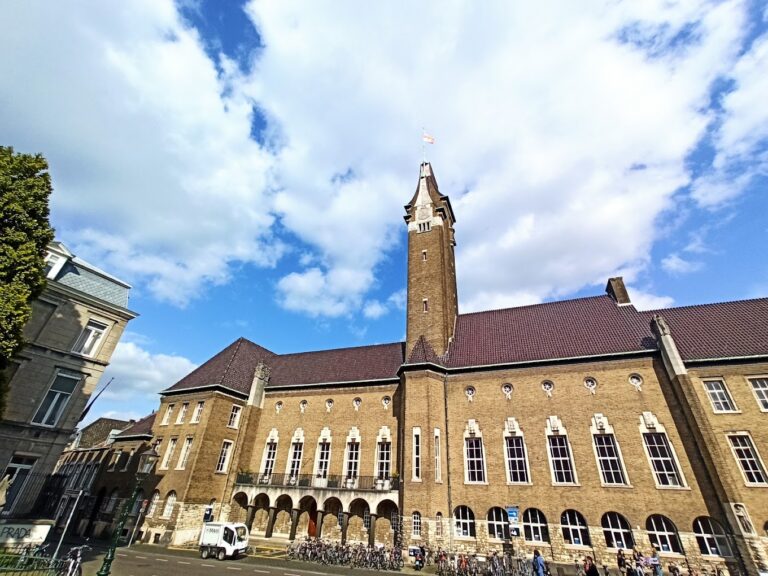
Maastricht University
Netherlands
A modern university in the Netherlands, known for its innovative Problem-Based Learning (PBL) approach. Popular among international students, especially in business, economics, law, and healthcare
Bachelor's degree: from €9,000 to €15,000 per yearMaster's degree: from €10,000 to €18,000 per yearDoctorate: free or about €2,500 per year
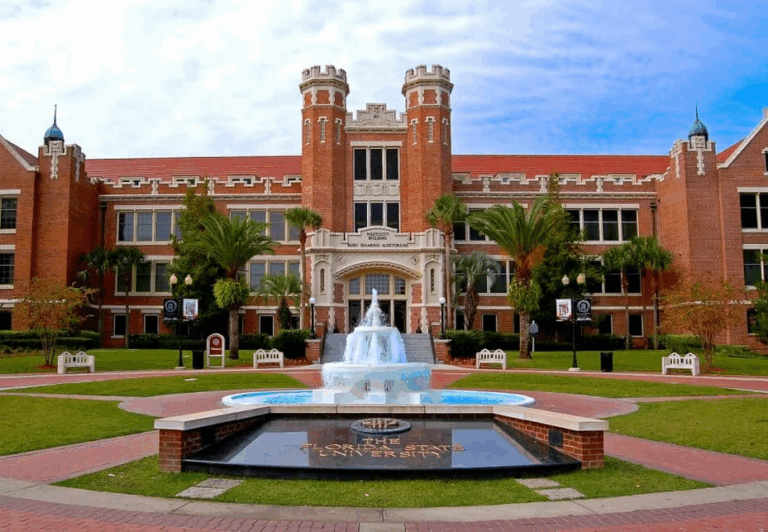
University of Florida
USA
A large public research university in the United States with a high academic ranking. Offers a wide range of programs, strong STEM fields, and more affordable tuition compared to private universities
Bachelor's degree: from $55,000 per yearMaster's degree: $15,000 - $40,000 per yearDoctoral studies: $10,000-$30,000 per year
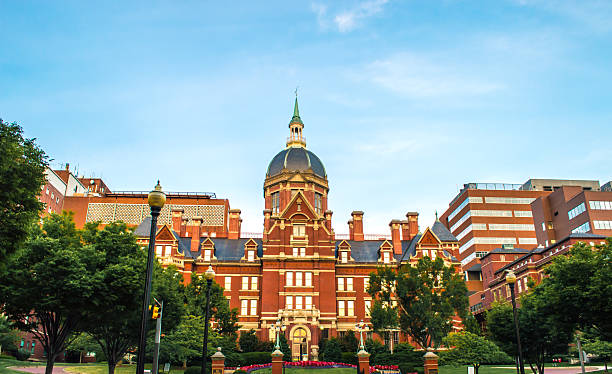
Johns Hopkins University
USA
A leading U.S. research university and a global leader in medicine, biotechnology, and international relations. Distinguished by a strong focus on research, practice, and interdisciplinary studies
Bachelor's degree: $63,340 per yearMaster's degree: $65,956 per yearDoctoral studies: about $65,000 per year
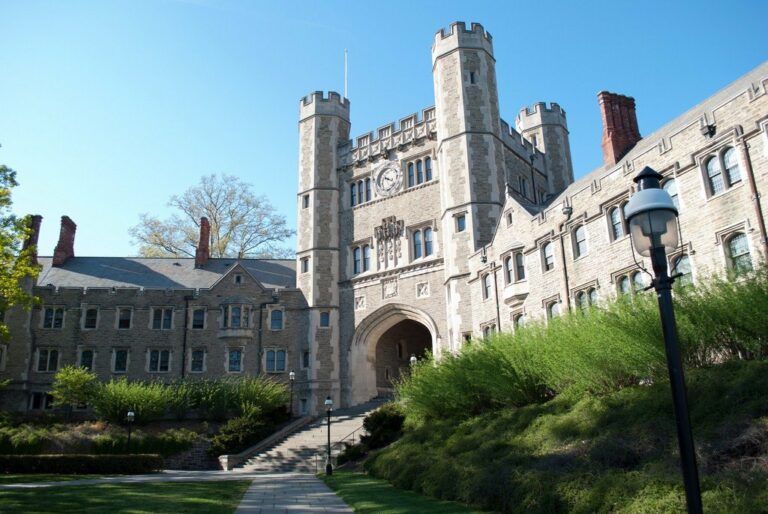
Princeton University
USA
One of the most prestigious universities in the United States, part of the Ivy League. Strong in natural sciences, engineering, economics, and the humanities. Known for a high level of academic support and generous scholarships
Bachelor's degree: about $60,000 per yearMaster's degree: average $58,000 per yearDoctoral studies: free*
Подобрать университет

Countries

Austria
<span style="font-weight: 400">High-quality education with low tuition costs. Attractive for its stable system, strong academic traditions, and high quality of life</span>
Read more ➜
Belgium
<span style="font-weight: 400">European education in the heart of the EU. Suitable for studying business, politics, and international relations, with affordable programs and a multicultural environment</span>
Read more ➜
Canada
<span style="font-weight: 400">High-quality education with strong support for international students. Attractive for its safe environment and career and immigration prospects</span>
Read more ➜
France
France leads non-English-speaking countries in terms of the number of international students. French universities are renowned for their high academic standards, and degrees are valued worldwide, opening up broad career prospects. Scholarships are available, and the combination of European-quality education and a rich cultural environment makes France particularly attractive to prospective students.
Read more ➜
Germany
<span style="font-weight: 400">One of the most popular study destinations in Europe. Free or low-cost education, strong technical and engineering fields, and high demand for graduates</span>
Read more ➜
Italy
<span style="font-weight: 400">A combination of academic tradition and affordable education. Particularly in demand for studies in design, architecture, business, and the humanities</span>
Read more ➜
Netherlands
<span style="font-weight: 400">One of the leaders in English-taught programs in Europe. Practice-oriented education, high graduate employability, and a comfortable environment for international students</span>
Read more ➜
Portugal
Portugal combines a rich history, picturesque landscapes, and a high standard of living, making it increasingly popular among international students. Local universities offer high-quality and affordable education, and close cooperation with the UK opens up opportunities for dual degrees. Studying in Portugal offers European standards at a reasonable cost and a comfortable environment for living and studying.
Read more ➜
Spain
<span style="font-weight: 400">Education in a friendly European student environment. Promising English-taught programs and strong fields in business, tourism, and design</span>
Read more ➜
Switzerland
<span style="font-weight: 400">A country of prestigious education and high standards. Especially strong in business, finance, hospitality management, and international relations</span>
Read more ➜
UAE
<span style="font-weight: 400">Modern education in an international environment. Campuses of leading global universities, English-taught programs, and a strong focus on careers and business</span>
Read more ➜
United Kingdom
<span style="font-weight: 400">Classical education with global recognition. Shorter study periods, strong humanities and business programs, and a highly valued diploma</span>
Read more ➜
USA
A US education offers prestige and limitless opportunities. American degrees are highly valued worldwide, and graduates from leading universities are eagerly sought after by international companies. US universities consistently occupy top positions in global rankings. Studying here opens the door to a global career and a unique student experience.
Read more ➜
Выбрать страну

Our services

MentoringA personal mentor at every stage of preparation. A clear plan, oversight of every step, and predictable results.
Full supportA turnkey international application process: a customized strategy, document preparation, and visa support—all in one service, guaranteeing you admission to a university abroad.
Personal brand in a yearIn 12 months, we'll build your strong personal brand for international study: we'll formulate a strategy, select activities, and identify achievements that will increase your chances of admission and scholarship awards.
Selection of activities for Personal brandA personal brand is the foundation for applying for a scholarship. Get a list of activities that will enhance your profile and distinguish you from other applicants.
Universal supportAccelerated preparation for admission: save money and time without compromising results.
Consultation with an expertAn in-depth 60-minute consultation: we'll discuss your admissions chances, financing options, develop a personalized strategy, and answer all your questions.
Consultation with a career guidance specialistWe'll help you identify your strengths and inclinations, choose the right field of study, and build a successful career.
Getting a student visa from the USAWe'll help you obtain a student visa without stress or errors, and we'll also assist you if your application is rejected.
Selection of universities and scholarshipsWe'll create a list of universities and programs that are right for you—with a realistic chance of admission and scholarships.
Admission to Foundation Programme AbroadWe'll help you enroll in the Foundation Program, a program that allows you to transfer to a bachelor's degree abroad without losing a year. We'll select suitable options, prepare your documents, and develop a strategy.
Preparation of documentationStrong documents make a strong candidate. We'll help you prepare your application package based on both formal and informal university requirements.

Related articles

Study Abroad: How to Apply and What to Expect After GraduationМечтаешь учиться за границей, но в голове множество вопросов и сомнений? Разбираем, как поступить в иностранный вуз, с чем предстоит столкнуться во время учебы и что ждет после.
Время чтения:
0 мин
Top 7 Universities in the World: How to Enter a Prestigious UniversityТоповые университеты мира — мечта или переоцененный миф? Рассказываем, как поступить в престижный вуз, что на самом деле дают громкие имена, и стоит ли гнаться за рейтингами любой ценой.
Время чтения:
0 мин
What documents are needed to study abroad and how to prepare themМечта об учебе за границей может разбиться о бумажную волокиту — если не знать "правила игры". В статье разбираем, какие документы действительно нужны, и на что обращают внимание приемные комиссии зарубежных вузов.
Время чтения:
0 мин
TOEFL or IELTS: which one to choose for studying abroad?We compare the TOEFL and IELTS exams to help students choose which test is best suited for studying abroad. We examine the key differences in format, scoring system, and international recognition of the exams.
Время чтения:
0 мин
How can I stay and work abroad after completing my studies?How to stay and work abroad after graduation: visa options and pathways, as well as practical steps to start a career overseas.
Время чтения:
0 мин
How much does it cost to study abroad in 2026?Studying abroad in 2026 involves various costs, from tuition fees to living expenses. Understanding these costs helps students plan their budget more effectively.
Время чтения:
0 мин
Education abroad: popular countries 2026Find out the most in-demand countries to study abroad in 2026. We look at the benefits, programs and opportunities that attract students from all over the world.
Время чтения:
0 мин