


Free education in Europe

Free education in Europe has its own nuances. At public universities, tuition fees are covered by the budget, but this does not exclude small administrative fees.

Get a Consultation

Is it really possible to study in Europe for free?

Important: You don’t have to pay for the lectures themselves, but there will still be minimal associated costs.

  • Semester fees: In Germany and Austria, students pay an administrative fee (150 to 350 euros per semester). This money covers student travel passes, trade union activities, and library use.
  • Language barrier: Most often, knowledge of the national language (German, Czech, or French) at a B2-C1 level qualifies for free education.
  • Student status: Rules may differ for EU citizens and foreigners from non-EU countries. However, some countries maintain equal rights for all ambitious students.

In other words, you don’t pay tuition fees, but you are responsible for accommodation costs and mandatory student fees. This is important to consider when budgeting for your trip.

Why Europe is considered one of the most accessible study destinations

Europe remains the leader in the number of available educational programs:

Government funding

In countries like Germany or France, universities aren’t designed to make money. Education is paid for by the state, making it accessible to everyone.

Variety of programs

Here you can find everything from classical philosophy to cutting-edge bioengineering.

Access to scholarships

Paid tuition can be offset by a grant. Some programs fully cover the cost of the semester and accommodation.

Relatively low cost of living

In countries such as Poland, the Czech Republic, Hungary or Italy (in smaller cities), student costs will be significantly lower than in the USA, UK or Canada.

In which European countries is it possible to get a free or almost free education?

Germany

German education is known for its affordability. Almost all public universities in the country offer tuition waivers for both EU citizens and students from other countries.

  • Terms and Conditions: You only pay a semester fee (Semesterbeitrag)—an average of €150–€400.
  • Language: A wide range of free programs in German are available. English-language programs at public universities are also often free, but the competition is higher.

Note: At universities in Baden-Württemberg (Heidelberg, Stuttgart, KIT), tuition for non-EU citizens is €1,500 per semester. There are no tuition fees in the rest of Germany.

France

Free tuition is available at public universities in France.

  • Cost: The state covers most costs, but students pay a registration fee. For non-EU students, this can be around €2,770 per year for undergraduate studies and €3,770 for master’s programs. Many universities offer exemptions from these fees under certain conditions. In these cases, international students pay the same fee as French citizens.
  • Grandes Écoles: Fees at elite universities can be high, so it’s best to consider a Université.
Italy

Free education in Italy is structured differently. There is a concept of “flexible tuition” based on family income.

  • DSU Scholarships: If you can document a low income, the university may waive your tuition and provide a stipend of approximately €2,500–€7,900 per year.
  • Affordability: Italy is one of the few countries where it’s easy to find free English-language master’s degree programs in Europe, using social benefits.
Austria, Czech Republic, Norway and other countries

  • Czech Republic: Tuition is completely free for all students studying in Czech at public universities. Admission requires passing a nostrification (certificate confirmation) and a language exam. English-taught studies in the Czech Republic are subject to a fee, averaging €2,000–€3,000 per semester.
  • Austria: For non-EU students, tuition is approximately €726 per semester. Simply gathering the required documents is usually sufficient for admission. Entrance exams are not required for all programs. Mandatory documents include a high school diploma, proof of language proficiency (such as an ÖSD, GOETHE, or TestDaF certificate), and a motivation and recommendation letter (if required).
  • Norway: Until recently, tuition was free for everyone. A fee has now been introduced for non-EU students, but PhD programs remain tuition-free with a stipend.

Free English Tuition: Myth or Reality

Many people seek English-language programs, not wanting to spend a year learning the local language. Which countries offer free study?

  • Germany: Many Master’s programs in engineering and natural sciences are free and taught in English.
    Italy: A wide range of programs in English, where fees are minimized through family income scholarships.
  • Estonia and Poland: Offer a number of free places in English for top applicants (merit-based).
  • Hungary: The Stipendium Hungaricum program fully covers tuition fees in English, dormitory accommodation, and insurance, and also provides a stipend. Competition for humanities programs is high, while technical programs are less competitive.
  • France: Public universities offer English-language Master’s programs. The cost can be offset by the Eiffel Excellence Scholarship, which covers both tuition and monthly living expenses.

Important: There are 10 times more free programs in the national language than in English. If your goal is to get into a top university with zero budget, learning the local language will be your main competitive advantage.

What are the requirements for free education in Europe?

Academic requirements

The main selection criterion is your grade point average (GPA). This is the average of all your grades. The higher your GPA, the greater your chance of studying for free.

In Germany and some other countries, the Numerus Clausus (NC) system is in place. This is a score-based competition:

  • The university ranks applicants in a queue, from top students to bottom students.
  • Places are awarded to those at the top of the list.
  • Medicine, psychology, and law are the most competitive programs. Only those with a near-perfect GPA are admitted.
  • For technical or less popular majors, the passing score is significantly lower.
Language requirements

Without a certificate, your application will not be considered. Before admission, please take the required language proficiency test:

  • English: IELTS (usually 6.5) or TOEFL (80–90).
  • German: TestDaF, Goethe-Zertifikat C1, or DSH.
  • French: DELF or DALF.
Documents for admission

Basic package:

  • A certificate or diploma with a transcript (supplement). Documents must be translated into the language of the country or English and notarized. An apostille is required in most countries.
  • Motivation letter (SOP). A 500-700-word essay explaining why you chose this university and how the program will help you achieve your goals.
  • CV (resume). Europass format is recommended. Include your education, work experience, volunteer work, and achievements.
  • Letters of recommendation. Typically, 2-3 letters from professors or employers on official letterhead are required.
  • A copy of your passport. It must be valid for at least 6 months upon entry.
Additional documents

  • Language certificate. IELTS/TOEFL for English, TestDaF/DELF and others for national languages.
  • Portfolio. Required for designers, architects, and artists.
  • Entrance tests. For example, in Italy, applicants for medical or architecture programs require a national exam. Master’s programs in business majors may require the GMAT or GRE.
  • Financial guarantees. A bank statement confirming your financial means.
  • Application fee. Many universities charge €50–€100 for application review.

Important nuances by country

  • Recognition of documents. Each country verifies your certificate differently: in Germany, it’s the Anabin database, in France, contact the ENIC-NARIC center, and in Spain, they go through the homologación procedure.
  • Difference in school years. If schooling in your country lasts 11 years, while in Europe it’s 12 or 13, you may need an additional year of study before entering a bachelor’s degree.
  • Research plan. Required only for those applying for a PhD.Tip: Always check the list on the website of the specific faculty. It’s best to begin preparation and apostille 6-8 months before the deadline. Bureaucratic procedures in Europe take a long time.

What expenses will remain even with free education?

When planning your budget, remember that even with zero tuition, you’ll need funds for:

  • Accommodation: This is the largest expense. It ranges from €300 for a dorm in Poland to €800-€1,000 for an apartment in Munich or Paris.
  • Meals: On average, €200-€300 per month when using student canteens.
  • Insurance: A mandatory requirement for a visa. In Germany, state student insurance costs approximately €120 per month.
  • Blocked Account: To obtain a visa to Germany, you need to deposit approximately €11,904 (the amount for the 2024/25 school year) as proof of financial solvency.

How to cut costs even further: scholarships and grants

If you don’t have enough savings to live on, it’s worth looking for additional sources of funding:

  • DAAD (Germany): A huge number of scholarships for master’s students and researchers.
  • Erasmus Mundus: Mobility programs that fully cover flights and tuition fees and provide a stipend of approximately €1,000 per month.
  • Regional scholarships in Italy: Need-based.
  • University grants: Many universities offer discounts or one-time payments for academic achievement.

How to choose a country and university on a budget

To avoid mistakes, use the following comparison algorithm:

  • Rental Cost: Compare housing prices in the capital and provincial towns. Education in a small German city is often better quality and cheaper than in Berlin.
  • Part-time Job Opportunities: In most European countries, students are allowed to work 20 hours a week. This allows them to fully cover their food and allowance expenses.
  • Prospects after University: Germany and the Czech Republic allow graduates to stay for 1-1.5 years to find work.

Common Mistakes When Searching for Free Education in Europe

Missed deadlines

Admissions to European universities close six months before the start of studies. In Germany, the deadline for the winter semester is usually July 15, but it’s best to submit your applications to Uni-Assist in May.

Ignoring small fees

Forgetting to pay your student fees or insurance can result in you losing your student status.

Selection of only top universities

The competition to get into the University of Munich (LMU) is extremely high. Lesser-known universities offer the same quality of education, but offer higher chances of admission and affordable housing.

Lack of a financial cushion

Even if you plan to work, you need money for the first 3-4 months of life.

A step-by-step plan for applying for free education in Europe

12-18 months before: Choose a country and language. Begin intensive preparation for the language exam.
10 months before: Check if your certificate is recognized. If not, plan to spend a year in a preparatory program.
6 months before: Pass the language exam and receive your certificate.
4-5 months before: Submit applications through national portals (Campus France, Uni-Assist, Universitaly).
After receiving an offer: Apply for a visa and find accommodation.

Who is eligible for free education in Europe, and who should consider other strategies?

This path is for you if you:

  • Are willing to learn a new language and immerse yourself in a foreign culture.
  • Are highly self-organized. In Europe, no one forces you to attend lectures, but exams are strict.
  • You have the necessary start-up capital to live on, but you don’t want to pay for your studies.

If you’re looking for an English-speaking environment and aren’t prepared for bureaucratic complications, consider fee-paying programs at private universities, where admission requirements are more lenient.

Looking to find a country and program in Europe with the lowest cost specifically for your profile?

Choosing a university takes time and effort. Searching on your own often results in wasting a year due to an incorrectly submitted transcript or a missed deadline.

We will help you:

  • Assess your real chances of admission with your current GPA.
  • Choose a list of universities with minimal or no tuition fees.
  • Develop a winning strategy for obtaining scholarships and grants.
  • Prepare a flawless motivation letter that will set you apart from the crowd.

Take the first step toward a European degree today – schedule a consultation and receive a clear action plan!

Get a Consultation

Universities

USA
The Massachusetts Institute of Technology is a leading private research university in the United States, located in Cambridge, near Boston. MIT is a global leader in engineering, computer science, artificial intelligence, economics, and fundamental science. The university is known for its strong focus on practice, scientific research, startups, and technological innovation.
Bachelor's: $66,720 per year (tuition, 2026/27)Master's: $66,720 per year (standard graduate tuition)PhD: usually fully funded (tuition + stipend)
Netherlands
A modern university in the Netherlands, known for its innovative Problem-Based Learning (PBL) approach. Popular among international students, especially in business, economics, law, and healthcare
Bachelor's degree: from €9,000 to €15,000 per yearMaster's degree: from €10,000 to €18,000 per yearDoctorate: free or about €2,500 per year
Germany
The Technical University of Munich (TUM) is Germany's leading public technical university in Munich, known for its strong programs in engineering, computer and natural sciences, high level of research and excellent graduate employability opportunities.
Bachelor's degree: semester fee €85 – €100Master's degree: semester fee €85 – €100PhD: semester fee €85 – €100
United Kingdom
Oxford University is one of the oldest and most prestigious universities in the world, founded in the 12th century. The university is renowned for its strong programs in the humanities, natural sciences, and social sciences, high-quality academic research, and international recognition.
Undergraduate: £28,000 – £45,000 per yearMaster's: £28,000 – £48,000 per yearPhD: £26,000 – £35,000 per year
USA
Bachelor's degree: $62,982/yearMaster's degree: $43,000/yearPhD: $40,000 - $60,000/year
Netherlands
Vrije Universiteit Amsterdam is a public research university in Amsterdam, the Netherlands, with approximately 25,000 students. Its strengths include economics, business, law, psychology, social and natural sciences, and medicine. It has a modern campus in Amsterdam-Zuid and offers a variety of scholarships for international students.
Bachelor's degree: €8,000 – €13,000 per yearMaster's degree: €22,000 – €34,000 per yearPhD: about €8,000 per year
USA
A leading U.S. research university and a global leader in medicine, biotechnology, and international relations. Distinguished by a strong focus on research, practice, and interdisciplinary studies
Bachelor's degree: $63,340 per yearMaster's degree: $65,956 per yearDoctoral studies: about $65,000 per year
France
Bachelor's degree: about $60,000 per yearMaster's degree: average $58,000 per yearDoctoral studies: free*
USA
A large public research university in the United States with a high academic ranking. Offers a wide range of programs, strong STEM fields, and more affordable tuition compared to private universities
Bachelor's degree: from $55,000 per yearMaster's degree: $15,000 - $40,000 per yearDoctoral studies: $10,000-$30,000 per year
France
Bachelor's degree: about €2,770 per yearMaster's degree: about €3,770 per yearPhD: about 380–450 € per year
France
Bachelor's degree: about $60,000 per yearMaster's degree: average $58,000 per yearDoctoral studies: free*
Italy
One of the oldest universities in Europe with strong traditions in science, medicine, and the humanities. Attractive due to its combination of academic quality, affordable tuition, and student life in Italy
Bachelor's degree: from €2,000 to €4,500 per yearMaster's degree: from 3,000€ to 6,000€ per yearDoctoral studies: from 1,500 to 3,000 € per year
France
Paris Sciences et Lettres University (PSL) is a prestigious public research university in Paris, uniting France's leading universities and research institutes. The university is renowned for its high-quality education, strong programs in science, engineering, economics, and the humanities, as well as its strong international reputation and excellent career prospects for its graduates.
Bachelor's degree: approximately €2,770 per yearMaster's degree: about €3,770 per yearPhD: about €494 per year
USA
Brown University is often called the most liberal university in the Ivy League—there are no required general education courses, and students design their own curriculum. This attracts applicants seeking not just a prestigious degree, but also the opportunity to pursue an unconventional academic path. The competition is also one of the most competitive in the…
Bachelor's degree: $74,568 per yearMaster's degree: from $9,320 per course (approximately $74,560 per year with a standard course load of 8 courses)Doctoral degree: from $9,320 per course (approximately $74,560 per year for a standard 8-course course load)
USA
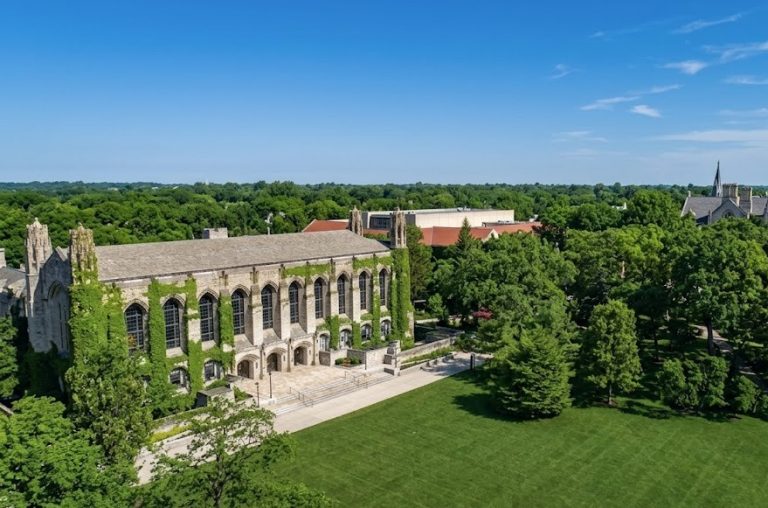
Northwestern University is one of the leading private research universities in the United States, located in Evanston, a 20-minute drive from Chicago. This combines a university environment with full access to the opportunities of one of North America’s largest business and cultural centers. Northwestern is particularly renowned for its programs in journalism, engineering, music, and…
Bachelor's degree: $69,375 per yearMaster's degree: from $62,000 to $82,000Doctoral studies: Most PhD programs are fully funded
USA
University of California, Los Angeles is one of the best public universities in the USA and the world. UCLA receives more applications than any other university in the country: more than 145,000 applicants annually — more than the combined contingent of all Ivy League universities. The location in Los Angeles gives students unique access to…
Undergraduate: $55,976 per hourMaster's degree: from $17,550 to $32,652 per hourDoctoral studies: most PhD programs are fully funded
USA
Stanford University is one of the three or four best universities in the world according to all key ratings. Located in the heart of Silicon Valley, 50 kilometers from San Francisco. It was here that Google, Netflix, Yahoo, HP, LinkedIn, Instagram were founded – Stanford graduates and students changed the way the modern world is…
Bachelor's degree: $64,890 per hourMaster's degree: about $64,890Doctoral studies: most PhD programs are fully funded

Countries

Austria

High-quality education with low tuition costs. Attractive for its stable system, strong academic traditions, and high quality of life
United Kingdom

Classical education with global recognition. Shorter study periods, strong humanities and business programs, and a highly valued diploma
Belgium

European education in the heart of the EU. Suitable for studying business, politics, and international relations, with affordable programs and a multicultural environment
Germany

One of the most popular study destinations in Europe. Free or low-cost education, strong technical and engineering fields, and high demand for graduates
Spain

Education in a friendly European student environment. Promising English-taught programs and strong fields in business, tourism, and design
Netherlands

One of the leaders in English-taught programs in Europe. Practice-oriented education, high graduate employability, and a comfortable environment for international students

Switzerland

A country of prestigious education and high standards. Especially strong in business, finance, hospitality management, and international relations
Italy

A combination of academic tradition and affordable education. Particularly in demand for studies in design, architecture, business, and the humanities
Portugal

One of the most affordable countries in Europe for education. Comfortable adaptation, a growing number of English-taught programs, and good prospects for long-term residence
France

High-quality European education at an affordable cost. Attractive for strong programs in business, arts, and engineering, as well as the option to study in English or French
Related articles

Get a free consultation

Leave your contacts — our consultant will get in touch