




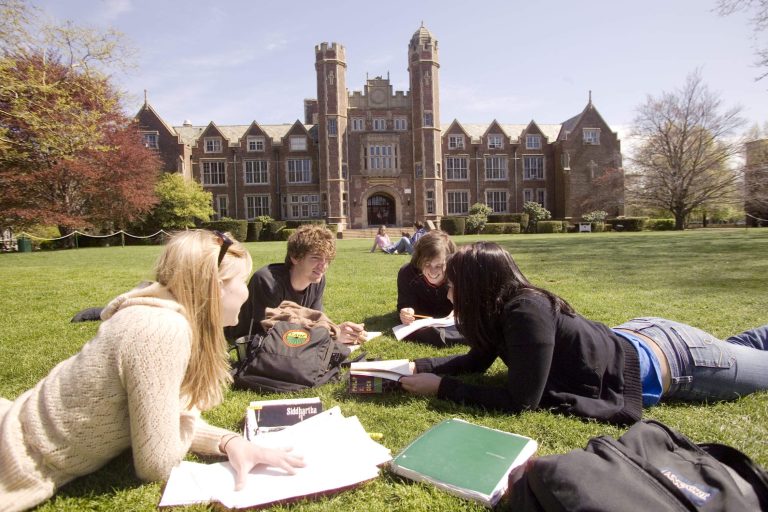
 7 steps to guarantee your admission to a university abroad


Service payment
Fill out the form and continue to payment via Stripe


Higher education in Singapore combines Asian dynamics and Western academic standards. Programs are taught in English, and the universities themselves are consistently ranked among the world’s top institutions in engineering, IT, and business.
Studying in Singapore is particularly attractive for international students because the country serves as a gateway to the business and technology market in Southeast Asia. Many major international companies have regional offices in Singapore, making internships and subsequent employment opportunities a realistic prospect.
This program is suitable for those who are considering a bachelor’s or master’s degree in business, engineering, computer science, or finance, as well as those who want to combine a strong academic background with an international career in Asia.
The system includes several levels: bachelor’s degree (usually 3-4 years), master’s degree (course-based or research-based), MBA programs, and doctoral programs (PhD).
For applicants whose profile does not fully meet the requirements of the chosen program, some universities offer foundation and pre-university routes, which are preparatory years before the main course.
There is no unified admission system in Singapore, as the requirements for grades, language certificates, and additional tests vary not only between universities but also between departments within the same university.
Singapore’s universities for international students are divided into two main groups: public (autonomous) universities and private institutions, including international campuses.
The public sector is represented by six autonomous universities: NUS, NTU, SMU, SUTD, SIT, and SUSS. These are the most competitive universities in the country, particularly in the fields of Business, Computing, Engineering, and Medicine. International students can apply for the MOE Tuition Grant, which significantly reduces the cost of education.
Private institutions and foreign university campuses (programs implemented jointly with British or Australian universities) offer more flexible admission deadlines and applied programs, making them a reasonable alternative for those who do not qualify for admission to a public university or prefer a shorter trajectory.
Admission is based on the same logic, regardless of the university:
You need a high school diploma (or its equivalent, such as A-Level or IB Diploma), academic performance in relevant subjects, and proof of your English proficiency. The approximate threshold is IELTS from 6.5 or TOEFL iBT about 92, although students with English medium of instruction may be exempt from the test. For some programs, an additional motivation letter is required, and for certain fields, an interview or a profile test.
For a master’s degree, a bachelor’s degree, a transcript of grades, a CV, usually two letters of recommendation, and a motivation letter are required. For creative fields, a portfolio is often requested, and for research programs, a preliminary agreement with a supervisor and a brief description of the research topic are required.
Tuition fees vary greatly depending on the university, the level of the program, and whether the student receives a MOE Tuition Grant.
According to official NUS data for the 2026/2027 academic year, for non-ASEAN international students, the annual cost of a bachelor’s degree, including the MOE Tuition Grant, is approximately S$21,000-23,700 for most Business, Computing, Engineering, Humanities, and Sciences programs, around S$44,500 for Law, and up to S$87,800 for Medicine.
Without a subsidy, the cost is significantly higher: around S$33,000–40,000 per year for most programs, and around S$190,000 per year for Medicine and Dentistry.
This is in addition to the cost of living. Without considering tuition, students should budget S$1,500–2,000 or more per month for housing, food, transportation, and daily expenses. The exact amount depends on the program and university, so it is important to check the official faculty website for specific details.
Scholarships in Singapore for foreigners do exist, but they are not structured in the same way as government grants in Europe — and it is important to know about this in advance.
The main mechanism is the MOE Tuition Grant. It significantly reduces the tuition fee, but in return, the student signs an obligation to work for three years in a company registered in Singapore after graduation. For graduates of engineering, IT, and financial fields, this condition is usually realistic — these sectors actively hire foreign specialists.
Universities also offer merit-based scholarships, which provide partial or full tuition coverage for the strongest applicants. The ASEAN Undergraduate Scholarship is specifically designed for ASEAN citizens and does not apply to applicants from the CIS.
For those considering a PhD in science or engineering, the Singapore International Graduate Award (SINGA) offers fully funded programs: It covers tuition and includes a scholarship of about S$2,700–3,200 per month, as well as one-time payments for travel and accommodation.
For undergraduate and graduate programs, a realistic approach is to combine the MOE Tuition Grant with a university merit scholarship rather than a separate government grant.
Full-time international students need a Student’s Pass, which is issued by the Immigration & Checkpoints Authority (ICA) of Singapore. The university submits the application through the SOLAR system after the student’s enrollment, and the student is required to provide proof of enrollment, financial stability, and a medical examination.
The application fee is S$30 for the application and S$60 for the issuance of the Student’s Pass. The processing time is typically around a month. It is important to check the detailed visa procedure at the stage of receiving an offer of admission, as the process differs for public and private universities.

Start preparing 12-18 months before the program starts and create a realistic list of universities: ambitious options plus a few programs with higher chances.
The motivation letter should be written for a specific program, supported by measurable results such as Olympiads, projects, and internships.
It is better to prepare the language test and documents in advance, as the application deadlines in Singapore are tight, and a late submission of one document can delay the entire application process.
At SelfStartGlobal, we help you choose a program and university in Singapore based on a student’s profile, real chances, and goals.
Specialists build an admission strategy, prepare documents and a motivation letter, show which financial support formats — MOE Tuition Grant, merit scholarships or SINGA – can be applied for, and accompany them to the result.
If you are considering studying in Singapore, come for a free consultation. Let’s analyze your profile and show you which universities and programs are right for you.
Yes, if the profile meets the academic requirements of the chosen program. If the profile does not meet the requirements, you can consider a foundation program as an intermediate step.
Generally, yes, if your schooling was not in English, the typical IELTS threshold is 6.5 or the TOEFL iBT is around 92, but the exact requirements vary by university and program.
Yes, through the MOE Tuition Grant, university merit scholarships, or the SINGA program for PhDs in science and engineering.
Approximately S$1,500–2,000 or more per month, excluding tuition fees.
Ideally, 12 to 18 months before the program begins.
Students on a Student’s Pass at public universities can usually work up to 16 hours per week during the semester and without restrictions during the holidays, but it is important to check with the university and the ICA for specific conditions.

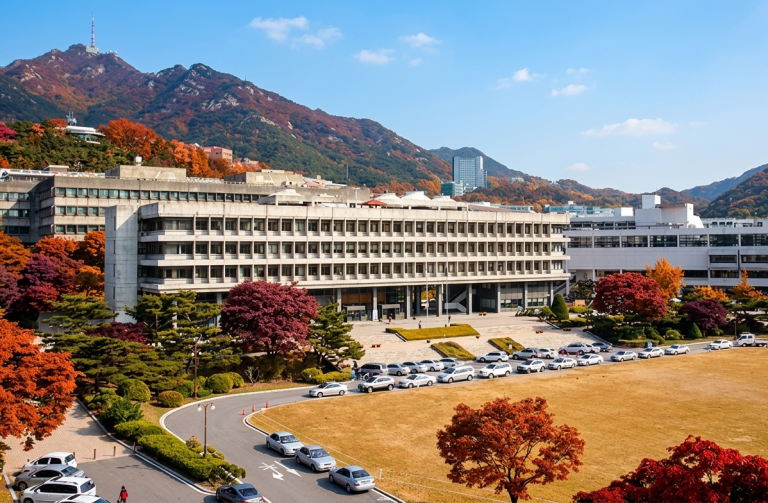




 Singapore
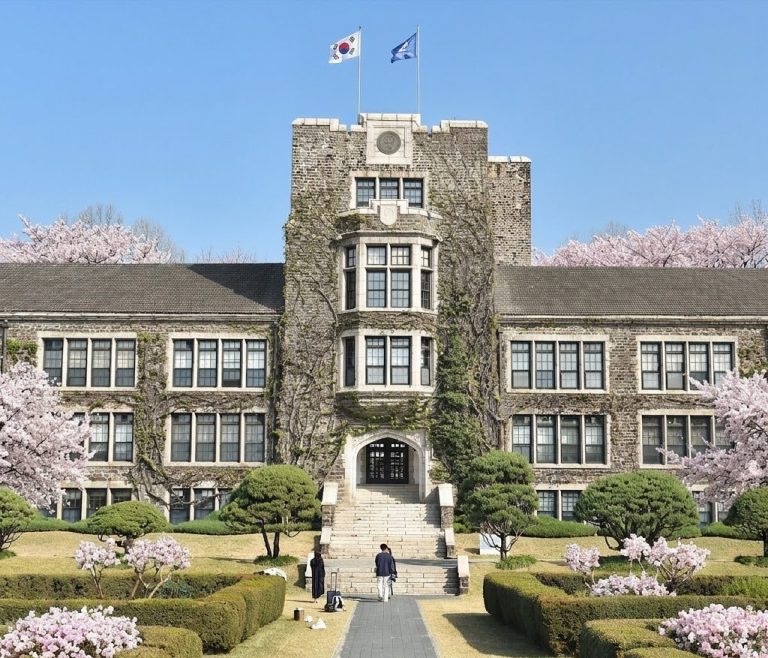
 South Korea
 China
ChinaChinese universities are rapidly rising in world rankings, and the country has turned into one of the largest educational hubs on the planet. Diplomas from leading Chinese universities are recognized by employers around the world, the cost of education is lower than in Great Britain or the USA, and the government actively finances foreign students. On this page - everything you need for admission: universities, cost, scholarships, documents and student visa.
 Japan
JapanJapan is one of the most unconventional destinations for studying abroad. Japanese diplomas are highly valued in the international job market, universities are ranked among the top in the world, and students work with technologies that have not yet been mass-produced in other countries. If you are ready to immerse yourself in a unique culture and a systematic approach to knowledge, this is the right choice for you.
 United Kingdom
Classical education with global recognition. Shorter study periods, strong humanities and business programs, and a highly valued diploma
 USA
USAA popular destination for studying abroad. Prestigious universities, a flexible education system, a wide selection of programs, and broad career prospects
 Canada
High-quality education with strong support for international students. Attractive for its safe environment and career and immigration prospects
 France
High-quality European education at an affordable cost. Attractive for strong programs in business, arts, and engineering, as well as the option to study in English or French
Leave your contacts — our consultant will get in touch
