




 How can I stay and work abroad after completing my studies?

Service payment
Fill out the form and continue to payment via Stripe


Over the past decade, Asian universities have seen a significant increase in their global rankings, with NUS, Tsinghua, Seoul National University, and the University of Tokyo consistently ranking in the top 50 by QS. This has coincided with an increase in the number of English-language programs, the expansion of government scholarship programs (MOE Tuition Grant, GKS, CSC, MEXT), and a growing demand for graduates with Asian experience from regional technology and financial companies.
For an applicant, this means more real options — not only “America or Europe”, but also four different scenarios within one Asia, each with its own logic of cost, language and scholarships. The difference between countries is so significant that choosing “just Asia” without specifying the country almost does not solve anything — further everything depends on specific goals and budget.
Singapore is suitable for those who are focused on English-language education, a career in business, finance, or technology from the very beginning, and are willing to invest a high budget for an international degree and connections with employers in the region. For a detailed analysis of admission, costs, and scholarships, please refer to our article on studying in Singapore.
All programs at public universities — NUS, NTU, SMU — are taught in English, and the country itself serves as a hub for international business in Southeast Asia. NUS or NTU degrees are highly valued by employers in Asia, and student internships often lead to job offers.
Tuition fees without subsidy reach $33,000–40,000 per year, and even with the MOE Tuition Grant, it remains at $21,000–24,000 per year plus a commitment to work for three years in Singapore. There are few scholarships for non-ASEAN students: a realistic path is a combination of the MOE Tuition Grant and a university merit scholarship, rather than a separate government grant.
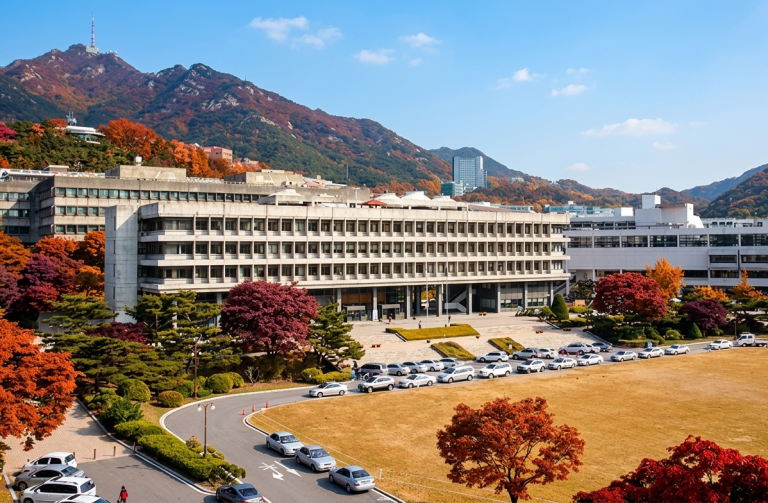
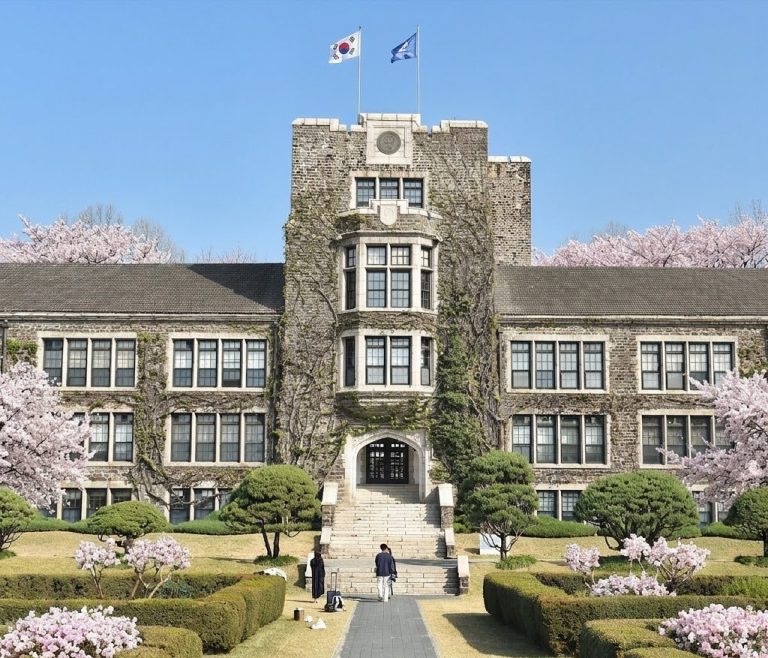
Korea is suitable for those who want a strong university, affordable costs compared to Singapore, and a real chance of a full government scholarship. For more information about admission, costs, and the Global Korea Scholarship, please refer to the article about studying in South Korea.
Tuition fees are significantly lower than in Singapore, ranging from 4 million to 8.7 million won per semester, depending on the university and faculty, and the GKS government scholarship covers tuition, flights, one-year language training, and a full scholarship. In addition to the GKS, most major universities have their own merit scholarships.
Competition for budget places is high, and Korean-language programs require a TOPIK certificate. Even on the English track, adaptation is easier with basic language proficiency, and a high TOPIK level provides a direct advantage when applying to GKS.
China is suitable for those who want a wide range of specialties — from engineering and IT to medicine and international relations — at a competitive price and with a real chance of full funding through CSC. Learn more about studying in China.
With over 3,000 universities and more than 2,000 programs in English, there is great flexibility in choosing your field and city. Tuition fees range from 20,000 to 50,000 RMB per year, making it one of the most affordable countries to study in, and the CSC government scholarship covers all tuition, accommodation, insurance, and stipend.
There is a wide range of program quality and cities: before applying, you need to carefully check the language of instruction, the specific university, the requirements for documents, and the visa route. Not all universities and programs are equally strong, despite their similar cost.
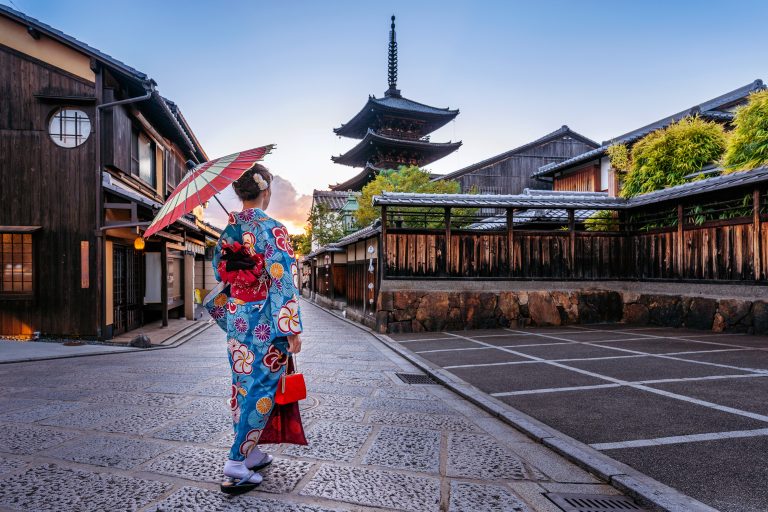
Japan is suitable for research-oriented applicants who are interested in engineering, technology, or an academic career and are willing to invest a year or two in preparation for a strong science program and a MEXT scholarship. For more information, please refer to the article on studying in Japan.
Japanese universities offer some of the strongest research programs in engineering and the sciences, and national universities do not charge foreign students more than they charge Japanese students. The MEXT Scholarship is one of the most generous government grants in the world, providing full tuition, a scholarship, and travel expenses.
The application process is the longest and most demanding of the four countries: for bachelor’s degrees, you usually need to pass the EJU exam in Japanese, and for master’s and PhD degrees, you need a strong research plan and the prior approval of your supervisor. There are few English-language programs, especially for bachelor’s degrees, and MEXT deadlines are fixed and cannot be rescheduled.
If you only consider the cost of tuition and living expenses without a scholarship, China and South Korea are significantly more affordable than Singapore and Japan, and Japan is cheaper than Singapore at a national university, although it adds a significant one-time entrance fee.
However, the final cost depends less on the country and more on the specific city and the availability of a scholarship: studying in Beijing or Seoul will be more expensive than studying at a regional university in the same country, and a full scholarship, such as the GKS, CSC, or MEXT, can almost completely eliminate the cost difference between countries.
That’s why it makes sense to compare countries not by the tuition fee alone, but by the total: tuition plus accommodation plus the real chance of funding.
There are government scholarships in all four countries — GKS in Korea, CSC in China, MEXT in Japan, and MOE Tuition Grant in Singapore — but the logic varies. GKS and CSC cover tuition fully and are relatively predictable in terms of conditions, MEXT is heavily tied to the research plan and supervisor, and the Singapore route is typically a partial subsidy with an employment commitment rather than a pure grant.
The real chance of getting any of them depends on your academic profile, deadlines, and how well you choose the program that matches the specific scholarship.

Singapore has the most English-language bachelor’s and master’s programs, with public universities offering almost entirely English-language courses.
China and Korea have many English-language programs, especially at the master’s level, but the selection is limited at the bachelor’s level, and some of the top universities still require local language proficiency.
Japan has the fewest English-language programs, with limited options at the bachelor’s level, and local language (through EJU) remains the primary route for admission to most national universities.
I want a business and an English environment — Singapore.
I want the best chance of getting a full scholarship in South Korea or China.
I want to study IT, engineering, or medicine at a wide range of universities in China.
I want to do research/PhD and am ready for a long preparation period — Japan.
I want an affordable budget without a scholarship — China or South Korea.
I want to pursue a career in Asia after graduation, either in Singapore or China, due to the presence of international companies in the region.
How SelfStartGlobal helps you choose a country and get in
We at SelfStartGlobal start with a profile diagnostics — academic results, budget, language and career goals — and on the basis of this we select a country, universities and specific programs, and do not offer the same list of universities to everyone.
Further, we build a strategy for the right scholarship (GKS, CSC, MEXT or MOE Tuition Grant), help with personal brand, documents and motivation materials and accompany the application to the result.
If you haven’t yet decided on a country, come for a free consultation. We will analyze your profile and provide a realistic admission route.
Without a scholarship, China and South Korea are usually more affordable than Singapore and Japan, but the final cost varies greatly depending on the city and the specific university.
There is no clear answer — Singapore has high academic competition, Japan has a complex preparation process, and Korea and China have more universities and programs at different levels, which increases the real chances.
There are government programs everywhere: GKS in Korea, CSC in China, MEXT in Japan, and MOE Tuition Grant in Singapore — but the conditions and amount of funding vary, and it’s worth exploring each country individually.
Yes, but it is much easier in Singapore and in China and Korea’s master’s programs. In Japan, the selection of English-language programs is limited, especially in the bachelor’s program.
A minimum of 12 months for most countries, and 12 to 18 months for Japan and government scholarship applications, especially if a research plan or language exam is required.

 China
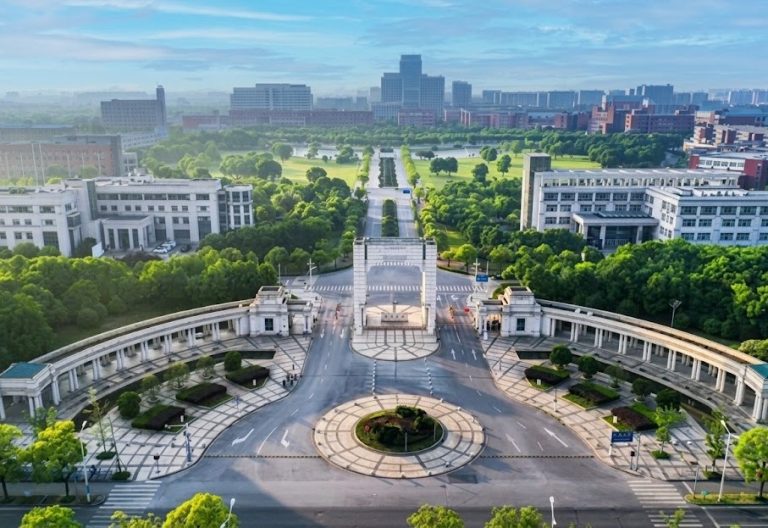
ChinaChinese universities are rapidly rising in world rankings, and the country has turned into one of the largest educational hubs on the planet. Diplomas from leading Chinese universities are recognized by employers around the world, the cost of education is lower than in Great Britain or the USA, and the government actively finances foreign students. On this page - everything you need for admission: universities, cost, scholarships, documents and student visa.
 Singapore
 South Korea
 Japan
JapanJapan is one of the most unconventional destinations for studying abroad. Japanese diplomas are highly valued in the international job market, universities are ranked among the top in the world, and students work with technologies that have not yet been mass-produced in other countries. If you are ready to immerse yourself in a unique culture and a systematic approach to knowledge, this is the right choice for you.
Leave your contacts — our consultant will get in touch
