




 How much does it cost to study abroad in 2026?


Service payment
Fill out the form and continue to payment via Stripe


A visa or residence permit is issued after admission, once the applicant has an Admission letter or its equivalent from the university. The specific type of visa, the duration of the process, and the authorities involved depend on the country, the duration of the program (language course or full degree), and the applicant’s citizenship.
The requirements for each country must be checked against the current rules of the consulate or immigration service.
Regardless of the country, the standard package for the visa part includes:
The full list is specified on the website of the specific consulate or immigration service.
In Japan, the processing steps differ: first, the university submits an application for a Certificate of Eligibility (COE) to the Japan Immigration Service on behalf of the student, and only after receiving this document can an application for a visa be submitted at a Japanese embassy or consulate. The COE confirms that the stated purpose of the visit is consistent with the status of stay, but it does not guarantee automatic visa issuance.
At the embassy, the applicant’s identity and the validity of the passport are additionally verified. Since March 17, 2023, the COE can be obtained via email, not just in paper form.
Delays arise due to a late start of the COE application. The university initiates the process, and if you apply late, there may not be enough time for the visa itself. Incomplete financial documents, discrepancies between data in different documents, and confusion between the COE itself and the visa are also common issues.
The COE is not a visa; it is only the basis for applying for one. After receiving the COE, you need to apply to the consulate separately.
To study under a degree program, you need a D-2 visa, and for language courses and other non‑degree programs, you need a D-4 visa. The application is processed through the Korean consulate in the applicant’s country of citizenship, based on confirmation of enrollment from the university. The visa cost is about $40 for stays up to 90 days, and about $60 for longer stays. After entering the country, you must register at the local immigration office and obtain an ARC (Alien Registration Card) within 90 days.
Students sometimes confuse the type of visa. The D-2 is needed for degree programs, and the D-4 is needed for language courses and non-degree studies, and substituting one type for another leads to rejection.
Late receipt of the Certificate of Admission from the university, poor financial confirmation, and ignoring the requirements of a particular consulate, which may vary by country of application.
For studies lasting longer than 180 days, an X1 visa is required, while for short programs, an X2 visa is needed. To apply, you need an official Admission Notice from a Chinese university and either form JW201 or JW202 — JW201 is issued to scholarship recipients of government programs such as CSC, while JW202 is issued to self‑funded students.
After entering China on an X1 visa, you must obtain a residence permit (Residence permit) from the local entry‑exit administration within 30 days. Starting in April 2023, applicants are required to submit their fingerprints and undergo facial scanning in person when submitting their application, with the exception of certain categories of applicants.
Most often, people confuse X1 and X2 — the choice depends strictly on the duration of the program, not on the type of university. They also submit an application without the JW201/JW202 form, believing that one Admission letter is sufficient. Without this form, a visa cannot be issued. Late submission is also common, as is a mismatch between the dates in the university documents and in the application.
Foreign students studying full‑time need a Student’s Pass to enter and study in Singapore; the pass is issued by the Immigration & Checkpoints Authority (ICA). The university submits the application for the Student’s Pass via the SOLAR system after enrolment, and the student is required to provide confirmation of enrolment, proof of financial solvency, and a medical examination. The cost of processing the application is S$30 for submitting the application and S$60 for issuing the Student’s Pass itself.
Most often, delays occur due to late submission via SOLAR. The university initiates it, and if the enrollment arrives late, there may not be enough time. Errors in passport data, discrepancies between the application data and the university’s data, and ignoring specific ICA deadlines, which do not always coincide with the program start date, are also common.
How a scholarship affects a visa
A scholarship letter helps confirm funding for education and living expenses, but on its own it does not replace the other visa requirements — a passport, an application form, medical documents, and, where necessary, separate financial proof.
Even with a full scholarship, the consulate or immigration service may request a letter from the scholarship program as part of the package confirming that the expenses have been covered, but the application procedure and the list of documents are not reduced.
Start familiarizing yourself with the country’s and consulate’s requirements in advance, before the final admission. This will help you understand which documents to collect in parallel with the admission process. You can start submitting the application for a visa only after receiving the necessary document from the university — COE, Certificate of Admission, Admission Notice with the JW form, or confirmation via SOLAR — since the application will not be accepted in any of the four countries without it.
An incomplete package of documents or the absence of a mandatory document from the university (COE, Admission Notice, JW forms, etc.).
Weak or unconvincing financial proof.
Errors or inconsistencies in the questionnaire — including discrepancies between the university’s documents and passport data.
An unclear or contradictory stated purpose of the trip.
Late submission, which leaves no time for processing or submitting the documents.
Different data (name, dates) in different documents in the package.

No, in none of the four countries: in all cases, a visa or permit is issued based on an official document confirming enrollment from the university.
It varies: in Japan, processing the visa itself after obtaining a COE takes about a week, but obtaining a COE through a university may take longer; in Korea, China, and Singapore, the timeframes also depend on the consulate/immigration service and the workload during a particular period.
Yes, health insurance is usually required as part of the visa or subsequent immigration package. The specific conditions vary by country.
Usually, yes. A scholarship letter helps, but it does not fully replace the other visa requirements, including, in some cases, separate financial proof.
In some countries, this is possible with restrictions on the number of hours and subject to obtaining permission. The exact conditions need to be clarified for each country and visa type separately.
Contact the university’s international office as soon as possible and clarify the status of the COE, Admission Notice, JW forms, or application via SOLAR. Most delays at this stage can be resolved through prompt clarification, rather than by taking independent action at the consulate.

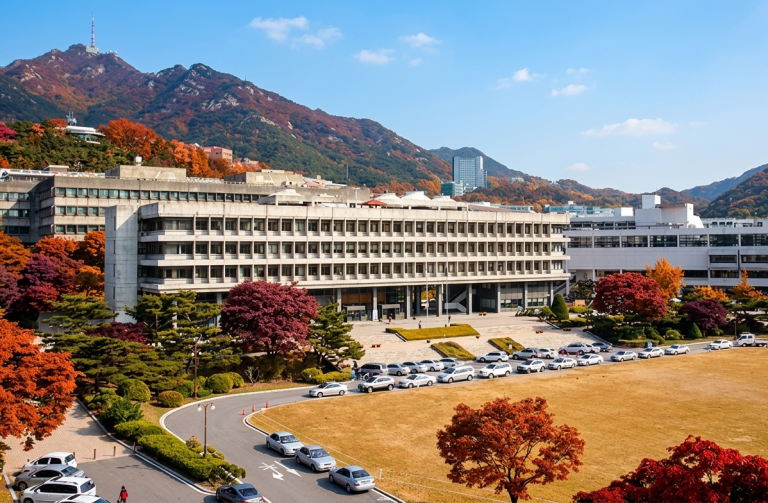
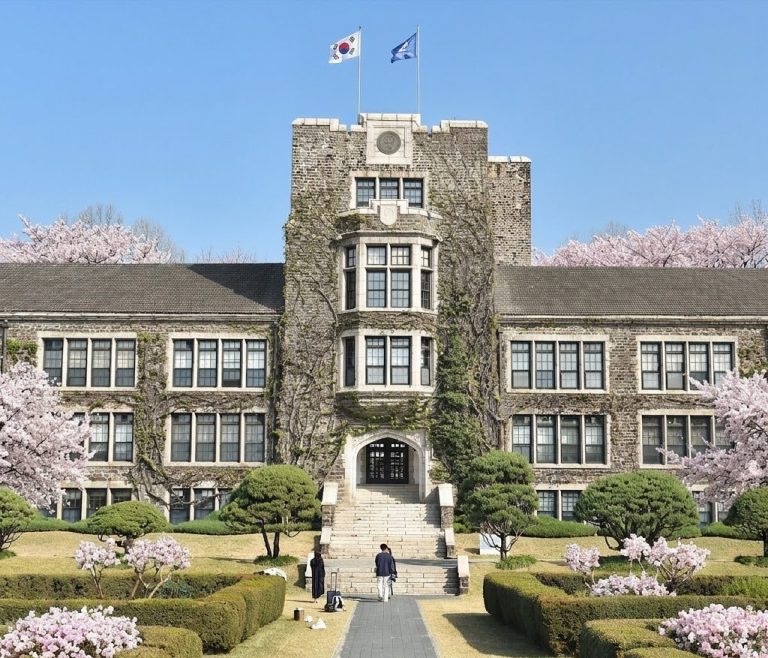

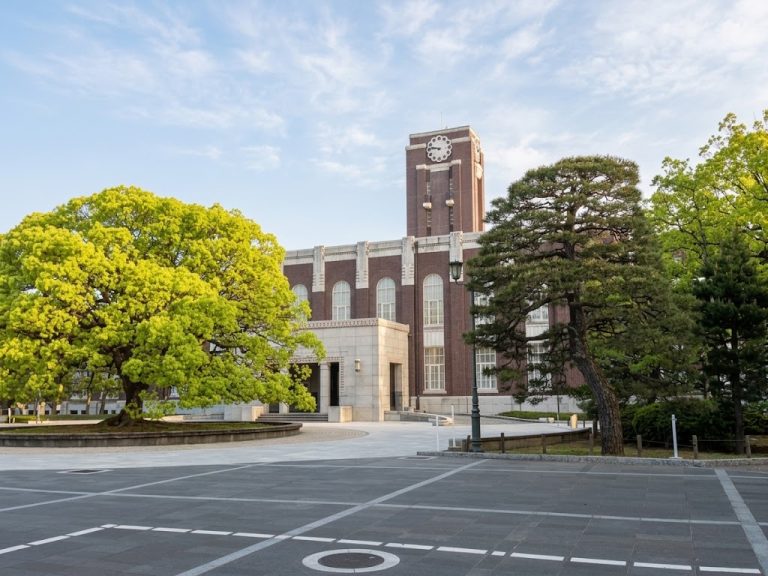
 China
ChinaChinese universities are rapidly rising in world rankings, and the country has turned into one of the largest educational hubs on the planet. Diplomas from leading Chinese universities are recognized by employers around the world, the cost of education is lower than in Great Britain or the USA, and the government actively finances foreign students. On this page - everything you need for admission: universities, cost, scholarships, documents and student visa.
 South Korea
 Singapore
 Japan
JapanJapan is one of the most unconventional destinations for studying abroad. Japanese diplomas are highly valued in the international job market, universities are ranked among the top in the world, and students work with technologies that have not yet been mass-produced in other countries. If you are ready to immerse yourself in a unique culture and a systematic approach to knowledge, this is the right choice for you.
Leave your contacts — our consultant will get in touch
