




 Studying in Japan: Admission, Fees, and Scholarships for Foreigners


Service payment
Fill out the form and continue to payment via Stripe


Scholarships in the region are divided into several types: government-funded (GKS, CSC, MEXT, MOE Tuition Grant), university-funded (merit-based and need-based), regional and city-funded (provincial in China, municipal in Korea), scholarships from private foundations, and research-based funding for master’s and PhD programs.
The conditions, amounts, and deadlines for each program are updated annually, and this material provides a structure and guidelines. However, it is essential to check the official websites of the programs and universities before submitting documents and figures.
When choosing a scholarship, check the following at the same time: the country and the specific university, the level of study (bachelor’s, master’s, or PhD), what the program covers (only tuition or tuition plus accommodation and a scholarship), the current deadline, language and documentation requirements, and citizenship restrictions, as some programs (such as ASEAN scholarships in Singapore) are only available to certain countries.
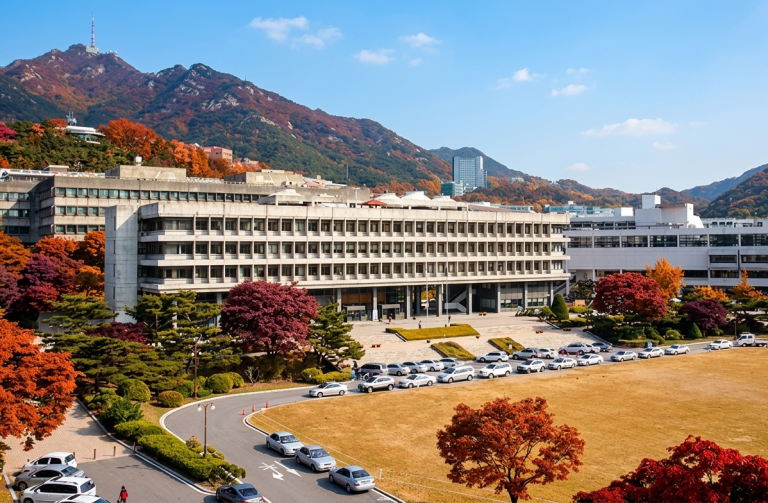
Korea combines strong universities with one of the most predictable government scholarships in Asia, the Global Korea Scholarship, and a well-developed university grant system.
GKS is a fully funded government program from the Korean Ministry of Education, administered by NIIED. It covers tuition, flights, annual language training, medical insurance, and a monthly stipend (about 900,000-1,000,000 won), is available for bachelor’s, master’s, and PhD degrees, and is served through the Embassy Track or directly through the University Track. The application requires a strong academic profile and a substantive study plan — we will discuss a detailed analysis of the conditions and strategy for applying for GKS in a separate article.
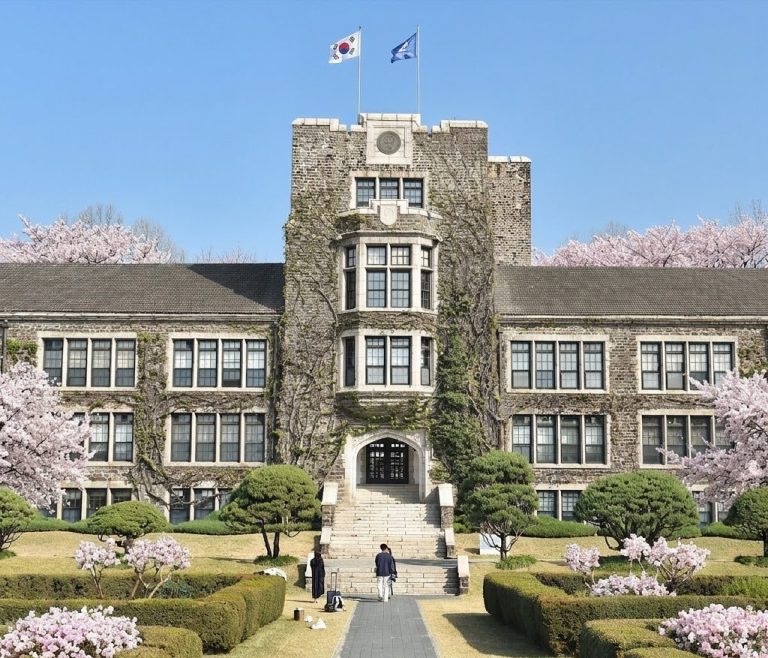
In addition to GKS, major universities offer their own programs: automatic scholarships that are awarded upon admission without a separate application, merit scholarships for high GPA, and specialized grants for specific departments. For example, Yonsei University offers the Admissions Scholarship for Underwood International College applicants, while Seoul National University offers the President Fellowship for PhD candidates from developing countries. These scholarships are typically less competitive than GKS, but they often offer partial coverage.
China offers one of the widest ranges of scholarships among the countries considered, from government programs to provincial grants and scholarships for learning Chinese.
CSC (China Scholarship Council) is a government-funded full-scholarship program that covers tuition, accommodation, health insurance, and a monthly stipend of 2,500 RMB for bachelor’s degrees, 3,000 RMB for master’s degrees, and 3,500 RMB for PhD degrees. Applications can be submitted through the embassy route (Type A) or directly through the university (Type B). The key factors for success include choosing the right university based on your profile, providing a well-written study plan or research proposal, strong recommendations, and a well-organized application package. For a detailed guide on CSC, please refer to the separate article.
In addition to the CSC, individual provinces and cities, such as Beijing and Shanghai, offer their own scholarships (Beijing Government Scholarship, Shanghai Government Scholarship), while universities such as Tsinghua University, Peking University, and others offer their own scholarship programs. The terms and conditions of these scholarships vary from university to university and from intake to intake, so it is important to check the specific university’s website rather than relying on general lists.
Japan combines one of the most generous government scholarships in the world with a support system for those who enroll on their own.
MEXT (Monbukagakusho) is Japan’s flagship government scholarship that fully covers tuition, entrance fees, flights, and a monthly stipend (approximately 117,000-145,000 yen, depending on the program level). It is available through the Embassy (Embassy Recommendation) or the University (University Recommendation) and includes several categories, ranging from Research Students to Undergraduate and Young Leaders Program. The competition is high, and the requirements for a research plan and a supervisor are particularly important for graduate-level programs. For more information about categories, submission routes, and preparation, please refer to the MEXT guide.
For those who apply independently, JASSO (Japan Student Services Organization) is an important alternative or supplement to MEXT. It is a scholarship for privately-funded international students with a monthly payment of approximately 48,000 yen. However, it does not cover tuition or flights, so it is often combined with university tuition waivers (national universities offer discounts of 50-100% for approximately 20-30% of international students). Additionally, there are private foundations with their own support programs, which should be checked separately for each university.
In Singapore, government grants for foreigners are structured differently than in the other three countries, and they operate primarily through two mechanisms.
Both programs cover the full cost of tuition after the MOE Tuition Grant, but the number of places is very limited. For example, the Goh Keng Swee Scholarship selects only 3-4 students each year. For PhDs in science and engineering, there is a separate SINGA (Singapore International Graduate Award) program with full tuition coverage and a scholarship.
It is important to distinguish between several concepts.
Full tuition means that only the tuition fees are covered, and the student is responsible for the rest of the expenses. Full ride (or full funding) refers to full coverage of tuition, accommodation, living expenses, and often flights, as in the case of GKS, CSC, and MEXT.
Monthly stipend refers to regular living expenses, which may be included in a full ride or provided separately, such as JASSO in Japan. Housing and travel allowance are separate expenses that are not always included even in strong programs.
No scholarship should be assumed to be “100% free” by default — the exact coverage should always be checked in the official terms and conditions of a particular set, rather than in general descriptions on the Internet.

The standard package for most programs includes:
Build on several criteria:

GPA and language level,

availability of research experience or publications for graduate-level, extracurriculars and leadership experience for undergraduate,

country and level of the program,

the real deadline for submission and, most importantly, the probability of the result.
A strong strategy almost always includes one ambitious program (for example, MEXT or CSC) and one or two more realistic backup-options – a university scholarship or a partial grant.
The most common mistake is betting on one of the most competitive programs without a backup option. In addition, there are often:
Weak or generalized motivation — it is not clear why this particular country, university, and specialty
The same essays for different scholarships without adapting them to a specific program
Late submission of documents
An incomplete package of documents, especially with letters of recommendation
Lack of strategy — “wherever it goes” instead of consciously choosing 3-5 programs that match your profile
Ignoring the requirements for language certificates — the score meets the minimum threshold for admission, but is insufficient for a scholarship
Recommenders who do not know the student well — the letters are formal and lack specific examples
Lack of a funding plan B — relying only on a full scholarship without considering partial grants or combining multiple sources
Underestimating the preparation time — a high-quality essay and a strong portfolio require several months, not weeks
How SelfStartGlobal helps you get a scholarship
We at SelfStartGlobal build a full-fledged scholarship strategy:
If you want to go to Asia with financing – come to a free consultation, we will analyze your profile and select a realistic set of scholarships.
Yes, there are thousands of students who receive full scholarships, such as the GKS in Korea, the CSC in China, and the MEXT in Japan, but the competition is high and the preparation process takes time.
At least 12 months in advance, and for MEXT and research programs, 12 to 18 months, especially if you need a research plan or a language exam.
It depends on the language of the program — for English-language tracks, you usually need IELTS or TOEFL, and for local languages, you need HSK, TOPIK, or JLPT, respectively.
Yes, if the deadlines don’t overlap and the requirements are feasible, it’s even a reasonable strategy to reduce the risk of running out of funding.
For most programs, a competitive level is a GPA above 3.5 out of 4.0 or equivalent, although the formal minimums are usually lower.
Both factors weigh together: A high GPA opens up access to the competition, but it is the motivation letter and study plan that often decide the outcome between candidates with similar grades.


 China
ChinaChinese universities are rapidly rising in world rankings, and the country has turned into one of the largest educational hubs on the planet. Diplomas from leading Chinese universities are recognized by employers around the world, the cost of education is lower than in Great Britain or the USA, and the government actively finances foreign students. On this page - everything you need for admission: universities, cost, scholarships, documents and student visa.
 South Korea
 Japan
JapanJapan is one of the most unconventional destinations for studying abroad. Japanese diplomas are highly valued in the international job market, universities are ranked among the top in the world, and students work with technologies that have not yet been mass-produced in other countries. If you are ready to immerse yourself in a unique culture and a systematic approach to knowledge, this is the right choice for you.
 Singapore
Leave your contacts — our consultant will get in touch
