




 Studying in South Korea: Admission, Fees, and Scholarships


Service payment
Fill out the form and continue to payment via Stripe


Studying in China is attractive for foreigners for several reasons:
A separate argument is government and university scholarships that cover tuition fees in full or in part for strong applicants.
The system includes a bachelor’s degree (usually 4 years), a master’s degree (2-3 years), a doctoral degree (PhD, 3-4 years), as well as language and preparatory programs for those who do not yet meet the requirements for the main course.
Some programs are taught in Chinese, while others are taught entirely in English, especially at the master’s and PhD levels. If the language level is insufficient, many universities offer a one-year Chinese language training program before starting the main course.
Popular majors include engineering, computer science, business, and international relations, as well as medicine (including MBBS programs) and Chinese as a separate major.
Engineering programs are particularly strong at universities such as Tsinghua, Zhejiang, and Harbin Institute of Technology, while medical programs often have additional requirements, such as entrance exams and longer study periods (5-6 years).
When choosing a university, it is important to consider the language of instruction, the city, the ranking position, the availability of a CSC or university scholarship, the requirements for documents, and the cost of living. Prestige should not be the only criterion.
Beijing, Shanghai, Guangzhou, and Shenzhen offer a well-developed infrastructure, an international environment, and proximity to the headquarters of companies such as Alibaba, Tencent, and Huawei. However, the downside is the high competition for admission and the cost of living, with apartments in Beijing and Shanghai costing between 2,000 and 5,000 yuan per month, compared to 1,000 to 2,500 yuan in interior cities.
Universities in inland cities such as Wuhan, Chengdu, Xi’an, Changsha, and Kunming offer lower living costs (around 2,000-2,500 RMB per month), comparable educational quality in many fields, and often higher chances of admission and scholarships due to less competition.
The admission process follows a general logic:
For a bachelor’s degree, you will need a high school diploma, a transcript with grades, and proof of your age. For the CSC government scholarship, the upper limit is usually 25 years old. The language requirements depend on the track: HSK for Chinese studies or IELTS/TOEFL for English. Starting from the 2026/2027 academic year, candidates for the CSC bachelor’s degree must also pass the CSCA (China Scholastic Competency Assessment) exam, which includes mandatory mathematics.
Master’s and PhD programs require a previous—level diploma, a transcript, a CV, two letters of recommendation, and a research plan or study plan – it is especially important for research programs. For PhD and master’s degree programs, it is additionally recommended to obtain the consent of the supervisor in advance (pre-acceptance letter) — this significantly increases the chances of admission and a scholarship.
Tuition fees in China vary by university, city, and program level, but remain markedly lower than in Western countries.
On average, a bachelor’s degree costs 20,000–40,000 RMB per year, a master’s degree costs 25,000–50,000 RMB. At top C9-league universities like Tsinghua and Peking University, undergraduate tuition is in the range of 26,000-30,000 RMB per year — the difference with regional universities is not as dramatic as in Western countries. Medical programs are usually more expensive, starting from 30,000 RMB per year.
In addition to tuition, there are also living expenses: a dormitory costs 400-1,500 yuan per month, and the total living budget is 24,000-48,000 yuan per year, which is approximately $550-1,000 per month. In total, without a scholarship, tuition and living expenses in China cost 50,000-100,000 yuan per year ($7,000-14,000).
Scholarships in China for foreigners are distributed at several levels:
You should check the conditions and amounts for each type of scholarship before applying, as they may vary from one set to another.
CSC (China Scholarship Council) is a key government funding program that supports tens of thousands of international students at more than 280 universities in China every year. It fully covers tuition, accommodation, and medical insurance, and includes a scholarship of 2,500 RMB per month for undergraduate students, 3,000 RMB per month for graduate students, and 3,500 RMB per month for PhD students.
Applications can be submitted through the embassy route (Type A) or directly through the university (Type B). A detailed analysis of the conditions, deadlines, and CSC application strategy is available in a separate article.

The standard package includes:
For programs longer than 180 days, you need an X1 visa, and for shorter programs, you need an X2 visa. To apply for a visa, you need an Admission Notice from the university and a JW201 visa form (for scholarship recipients who apply through the embassy route) or a JW202 visa form (for those who apply directly through the university, including self-funded students).
It is best to check the specific visa requirements and documentation requirements for each consulate separately, as this is a separate topic that we cover in a dedicated article about visas.
Start preparing in advance and choose universities and programs that really match your academic profile — this applies to both regular admission and CSC applications. The study plan should be specific and show why this program and this university are the right choice, rather than just stating your interest in China.
For master’s and PhD programs, contact your potential supervisor in advance — prior approval significantly strengthens your application. Don’t delay with your language certificate and recommendation letters: the deadlines for CSC and most universities are fixed and cannot be extended.
At SelfStartGlobal, we help you choose a university and program in China based on your specialty, budget, and real chances of admission, build a scholarship application strategy — including CSC — prepare documents, a motivation letter, and a study plan, and support you at all stages until you receive an admission letter.
If you are considering studying in China, come for a free consultation, we will analyze your profile and select a realistic admission strategy.
Yes, more than 2,000 bachelor’s, master’s, and PhD programs are taught entirely in English, especially at the master’s and PhD levels.
Yes, an X1 or X2 visa is issued at the Chinese embassy or consulate before departure, based on the Admission Notice and the JW201/JW202 form from the university.
Yes, primarily through the CSC, which covers tuition, accommodation, and a scholarship, as well as through university and provincial grants.
Applications for the CSC are usually accepted at the end of the year and closed in February or April of the following year, depending on the university and the application route. It is recommended to start preparing at least 6-12 months in advance.
Yes, a high school diploma is sufficient for a bachelor’s degree, provided that you meet the age and academic requirements of the chosen program.



 China
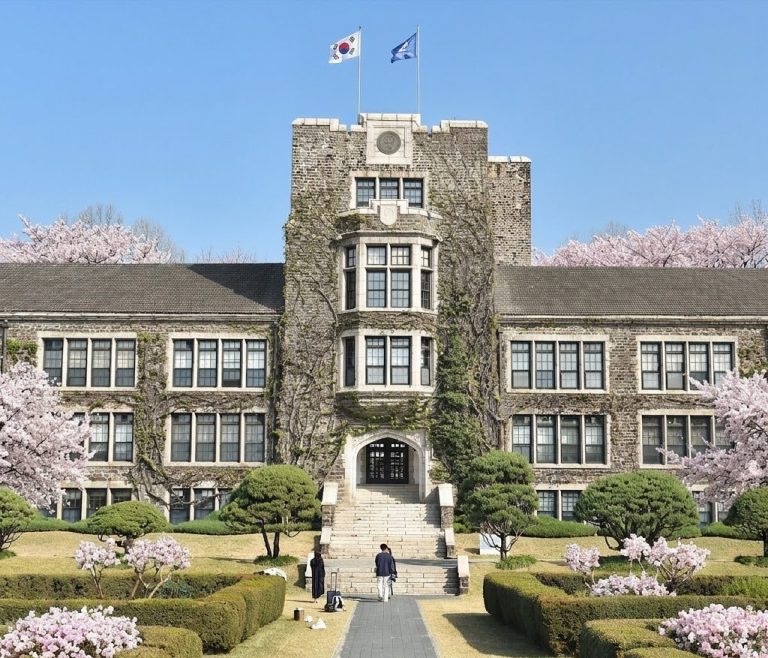
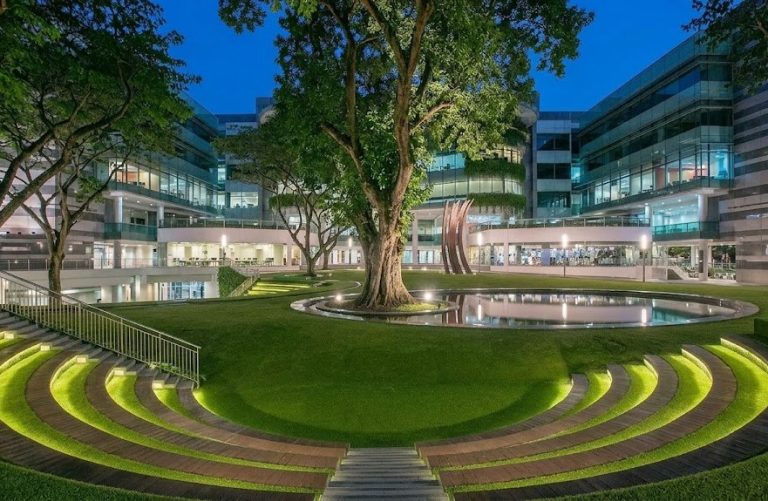
ChinaChinese universities are rapidly rising in world rankings, and the country has turned into one of the largest educational hubs on the planet. Diplomas from leading Chinese universities are recognized by employers around the world, the cost of education is lower than in Great Britain or the USA, and the government actively finances foreign students. On this page - everything you need for admission: universities, cost, scholarships, documents and student visa.
 Singapore
 South Korea
 Japan
JapanJapan is one of the most unconventional destinations for studying abroad. Japanese diplomas are highly valued in the international job market, universities are ranked among the top in the world, and students work with technologies that have not yet been mass-produced in other countries. If you are ready to immerse yourself in a unique culture and a systematic approach to knowledge, this is the right choice for you.
Leave your contacts — our consultant will get in touch
