


Guide: How to Choose a Country for Admission?

Choosing a country is the foundation of your future education, and it should be approached as a strategic task. When choosing a country to study abroad, it’s important to consider a combination of academic goals, your family’s financial situation, the availability of scholarship programs, language requirements, and, of course, your post-graduation career plans. Forget the stereotypes that studying abroad is expensive or difficult. With the right approach, you can find the perfect country that will open doors to universities in the United States, Europe, or Asia with the optimal financial burden.

Get a Consultation

How to choose a country for admission

Why choosing a country is more important than it seems

Many applicants make the mistake of choosing a university first and then a country. In fact, the country sets the rules of the game. It determines not only the cost of education and living, but also the availability of financial assistance (scholarship support), the complexity of the application process, the deadline for admission, and the likelihood of obtaining a student visa.

Moreover, the location of the university directly affects the adaptation process and long-term prospects. For example, the same IT or business degree can have different internship dynamics in Asia’s innovation hubs, Europe’s academic environment, or the US’s venture ecosystem. By choosing a country, you’re choosing the job market and the environment you’ll be growing in for the next few years.

Where to start when choosing a country to study abroad

Define an academic goal

Before looking at country maps and rankings, define what you want to achieve. Do you want a science-focused bachelor’s degree, a practical master’s degree, or a preparatory year? Having a clear understanding of your academic goals will help you eliminate countries where the educational system does not align with your ambitions.

Assess your family's financial capabilities

Be as honest as possible when calculating your budget. Include tuition fees, living expenses, insurance, flights, and personal expenses. If your budget is limited, avoid trying to “stretch” it by choosing countries with extremely high living costs. Instead, look for countries where public universities offer favorable conditions for international students.

Understand how important a scholarship is

If you need financial support to pursue your education, this narrows down your search options. Some countries offer a wide range of scholarships for international students, while others focus solely on paid education. It’s important to assess whether you’re willing to invest time in the complex process of applying for grants. This requires time and a strong academic portfolio.

Main criteria for choosing a country for admission

Quality of education and strong fields

If you are aiming for medicine or engineering, each country has its own strong university systems. Study local markets: where technology is actively developing, where strong business schools are located, and where the centers of humanities research are concentrated. The choice should be based on the strengths of a particular region in your industry.

Tuition fees and living costs

Remember that tuition fee is only part of the costs. When choosing a country, consider the cost of housing, food, transportation, study materials, and visa fees. In some European countries, public universities are almost free, but life can be more expensive than in some Asian countries.

The opportunity to receive a scholarship or financial assistance

Scholarship support can radically change the list of available countries. However, pay attention not only to the size of the grant, but also to the requirements: deadlines, academic achievements, the presence of leadership qualities or social projects. Competition for scholarships is high, so it is important to understand in advance whether your current profile meets the selection criteria.

Language of instruction and exam requirements

English is the international language of education, but conditions are different everywhere. Somewhere IELTS/TOEFL is enough, and in other countries specific exams (SAT, ACT, GRE, GMAT) may be required. Consider also the need to learn the local language if you plan to intern or stay in the country after graduating from university.

Visa conditions and the right to work

Find out in advance how easy it is to obtain a student visa and what rights it gives. Is it possible to work legally while studying? Are there postgraduate programs that allow you to stay in the country to look for a job? These questions are important for those who are building a long-term career strategy.

Career prospects after graduation

See how developed the internship opportunities (internships) are in the chosen country and how the networking community is set up. If you plan to build a career in an international company, choose a country that is a hub for your industry.

USA, Europe, or Asia: How to Compare Destinations

USA

USA offers the widest range of universities and programs, as well as a unique financial aid system. This is an ideal option for those who are ready for high competition and want to get a high-quality personal brand in their application. Be prepared for the complex preparation of documents and the high cost of living in top locations.

Europe

Europe has a huge variety of academic cultures. Here you can find affordable tuition fees and a variety of programs in English. But remember: the conditions of admission and employment in Germany, France, the Netherlands or the Scandinavian countries may differ.

Asia

Asia is a trend for those who are looking to the future of technology, innovation, and international business. The countries in the region offer unique scholarship programs and the opportunity to be at the epicenter of rapidly growing markets. However, cultural adaptation and a deep immersion in the local language can be challenging.

Common mistakes when choosing a country to study abroad

Select only by university ranking

A high rating does not guarantee that the program is right for you. Look at the course content and student opportunities.

Do not consider the full budget

Considering only the cost of education leads to financial difficulties in the middle of your studies.

Ignore scholarships and deadlines

Submitting your documents late will deprive you of the chance to receive financial assistance.

Not taking into account the student's personal readiness

If a student is not ready for independence or a change in climate, their learning success will be at risk.

Compare countries without taking into account specialty

Specialization determines where a degree will be most in demand.

Why you should choose a country not separately, but together with the admission strategy

Choosing a country is only part of the admission strategy. We at SelfStartGlobal believe that success begins when the country, university, scholarships, and your personal goals fit together like a puzzle. Without a strategy, you risk wasting time on the wrong universities or missing out on financial opportunities. We help applicants create a realistic plan that takes into account all the deadlines, documentation requirements, and visa nuances.

Want to know what actually fits you?

Leave your contacts — a consultant will review your profile and map out the shortest path to admission

Get a Consultation

How to Know Which Country is Right for You

Use this mini-checklist:

  • Which major is most interesting?
  • What is a comfortable budget for a family?
  • Do I need a full or partial scholarship?
  • Which language of instruction is most preferable for me?
  • Do I want to stay in this country after graduation?
  • How strong is my academic and extracurricular profile?

When to Contact an Educational Consultant

Self-searching can be effective, but it requires time and a deep understanding of the market. Consult an expert if:

  • You don’t understand which country is objectively suitable for your chances.
  • You are critically dependent on a scholarship.
  • Your preparation time is limited.
  • You have a non-standard academic profile.

You are facing a difficult choice between the US, Europe, and Asia. An educational consultant can help you avoid common pitfalls and save time, making your application process smooth and informed.

Universities

USA
A private research university in the United States, founded in 1636. Considered one of the most prestigious universities in the world, it is known for its strong programs in law, business, medicine, engineering, and social sciences, its high student selection rate, and its robust financial aid system.
Bachelor's degree: $80,000 – $87,000 per yearMaster's degree: $62,000 - $70,000 per yearDoctoral studies: from $30,000 - $60,000 per year
Germany
The Technical University of Munich (TUM) is Germany's leading public technical university in Munich, known for its strong programs in engineering, computer and natural sciences, high level of research and excellent graduate employability opportunities.
Bachelor's degree: semester fee €85 – €100Master's degree: semester fee €85 – €100PhD: semester fee €85 – €100
USA
The University of Michigan at Ann Arbor is the "Michigan" people usually think of when they think of one of the strongest public universities in the United States.
United Kingdom
Oxford University is one of the oldest and most prestigious universities in the world, founded in the 12th century. The university is renowned for its strong programs in the humanities, natural sciences, and social sciences, high-quality academic research, and international recognition.
Undergraduate: £28,000 – £45,000 per yearMaster's: £28,000 – £48,000 per yearPhD: £26,000 – £35,000 per year
USA
Bachelor's degree: $62,982/yearMaster's degree: $43,000/yearPhD: $40,000 - $60,000/year
Italy
Università Bocconi is located in Milan, Italy's financial capital and one of Europe's leading business centers. The university boasts over 120 years of history, approximately 16,000 students from over 100 countries, and a strong position in global rankings.
Bachelor's degree: 16,700 euros/yearMaster's degree: from 21,000 to 34,000 euros/yearDoctoral studies: upon request
Netherlands
Vrije Universiteit Amsterdam is a public research university in Amsterdam, the Netherlands, with approximately 25,000 students. Its strengths include economics, business, law, psychology, social and natural sciences, and medicine. It has a modern campus in Amsterdam-Zuid and offers a variety of scholarships for international students.
Bachelor's degree: €8,000 – €13,000 per yearMaster's degree: €22,000 – €34,000 per yearPhD: about €8,000 per year
USA
USA
A leading U.S. research university and a global leader in medicine, biotechnology, and international relations. Distinguished by a strong focus on research, practice, and interdisciplinary studies
Bachelor's degree: $63,340 per yearMaster's degree: $65,956 per yearDoctoral studies: about $65,000 per year
USA
A large public research university in the United States with a high academic ranking. Offers a wide range of programs, strong STEM fields, and more affordable tuition compared to private universities
Bachelor's degree: from $55,000 per yearMaster's degree: $15,000 - $40,000 per yearDoctoral studies: $10,000-$30,000 per year
France
Bachelor's degree: about $60,000 per yearMaster's degree: average $58,000 per yearDoctoral studies: free*
USA
The University of North Carolina at Chapel Hill, or UNC Chapel Hill for short, is one of the most renowned public research universities in the United States.
France
Bachelor's degree: about €2,770 per yearMaster's degree: about €3,770 per yearPhD: about 380–450 € per year
USA
Emory University is a prestigious private university in Atlanta, Georgia, founded in 1836. It is known for its strong programs in medicine, business, public health, science, and the humanities. The campus combines historic architecture, modern laboratories, and an active student life.
Bachelor's degree: ≈67,000 USD per yearMaster's degree: ≈50,000–70,000 USD per yearPhD: about ≈90000–110000USD per year
Netherlands
Utrecht University, or Universiteit Utrecht, is one of the most renowned research universities in the Netherlands, consistently chosen by international students seeking academic excellence and international careers. Utrecht University is attractive for its combination of a strong research foundation, a large number of English-taught programs, and a relatively transparent admissions system.
USA
Brown University is often called the most liberal university in the Ivy League—there are no required general education courses, and students design their own curriculum. This attracts applicants seeking not just a prestigious degree, but also the opportunity to pursue an unconventional academic path. The competition is also one of the most competitive in the…
Bachelor's degree: $74,568 per yearMaster's degree: from $9,320 per course (approximately $74,560 per year with a standard course load of 8 courses)Doctoral degree: from $9,320 per course (approximately $74,560 per year for a standard 8-course course load)
USA
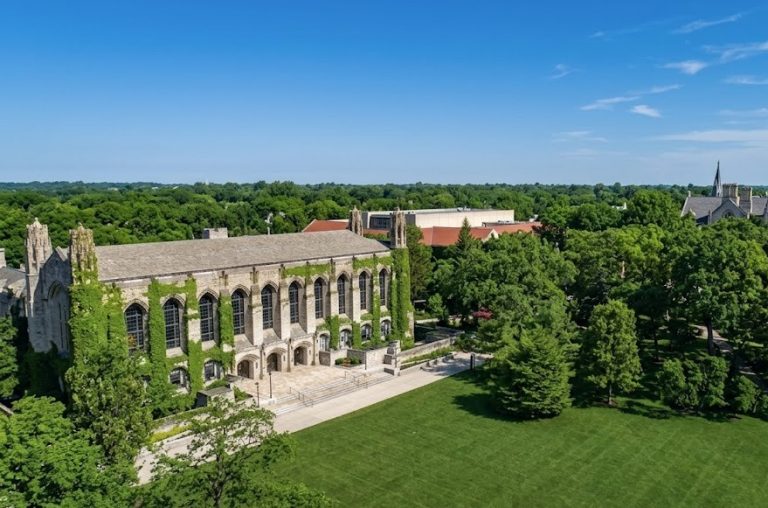
Northwestern University is one of the leading private research universities in the United States, located in Evanston, a 20-minute drive from Chicago. This combines a university environment with full access to the opportunities of one of North America’s largest business and cultural centers. Northwestern is particularly renowned for its programs in journalism, engineering, music, and…
Bachelor's degree: $69,375 per yearMaster's degree: from $62,000 to $82,000Doctoral studies: Most PhD programs are fully funded
USA
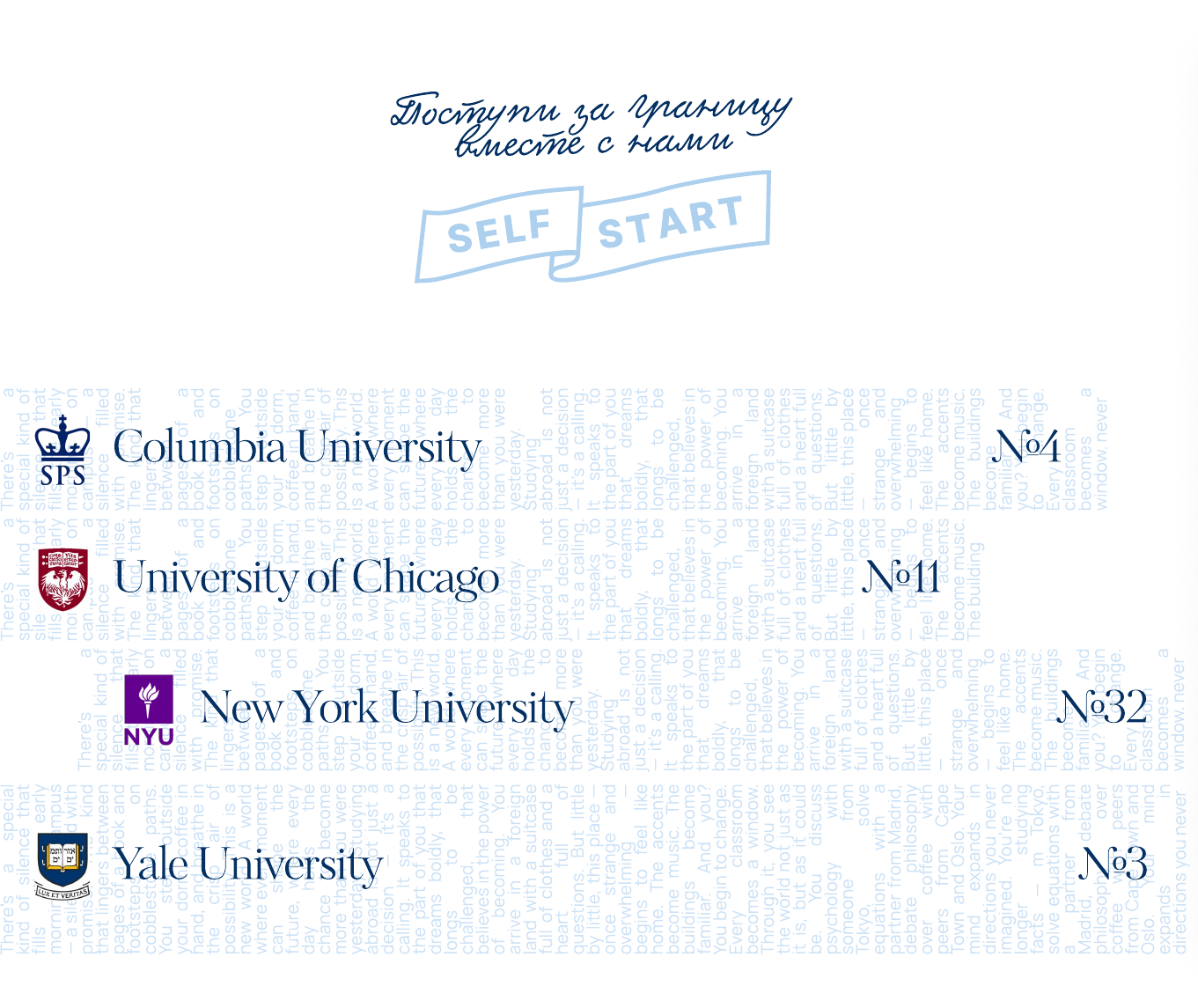
Yale University is one of the oldest universities in the United States, founded in 1701, and one of eight Ivy League universities. In US News 2026, Yale ranks #4 among national universities—higher than all Ivy League universities except Princeton and Harvard. Yale Law School is the #1 law school in the United States almost every…
Bachelor's degree: $72,500 per yearMaster's degree: from $44,000 to $88,000 per yearDoctoral studies: Most PhD programs are fully funded
USA
Vanderbilt University is one of the leading private research universities in the USA, consistently ranked in the top 20 of the US News national ranking. Located in Nashville, a city with a unique cultural identity and an actively developing technological and business ecosystem. Vanderbilt is known for its exceptionally generous financial aid system: starting in…
Undergraduate: about $66,000 per hourMaster's degree: from $22,000 to $67,000 per hourDoctoral studies: most PhD programs are fully funded
USA
The University of Saint Mary (USM) is a private Catholic university in Leavenworth, Kansas, a 45-minute drive from Kansas City. Founded in 1923. It is a small university with a strong practical orientation — about 1,500 students, a faculty-student ratio of 11:1, and more than 30 undergraduate programs. For foreign applicants, USM is a real…
Undergraduate: $36,936 per hourMaster's degree: $9,073 per hourDoctoral studies: payment by credit hours
China
Fudan University is one of the leading universities in China and Asia, founded in 1905. It is part of the C9 League, an elite association of nine leading Chinese universities, which is often compared to the American Ivy League. For foreign applicants, Fudan in Shanghai is a combination of a high academic level, an international…
Undergraduate: 23,000 to 40,000 RMB per hour (about 3,200-5,500 USD)Master's degree: about 28,000 to 50,000 RMB per hour (about 3,900-7,000 USD)Doctoral studies: about 30,000 to 55,000 RMB per hour (about 4,100-7,600 USD)
Singapore
The National University of Singapore is Singapore’s flagship university and the best university in Asia according to QS and THE. NUS is the only Asian university in the global QS top 10. Instruction is in English at all levels, from undergraduate to PhD. With 16 faculties and schools and 28 subject areas ranked in the…
Bachelor's degree: from 33,400 to 190,150 SGD per yearMaster's degree: from 37,900 to 75,210 SGD per yearDoctoral degree: from 40,300 SGD per year
USA
The University of Pennsylvania (UPenn) is one of eight Ivy League universities, founded in 1740 by Benjamin Franklin. It is the only Ivy League university originally conceived as a practical institution: Franklin created it to prepare people capable of solving real-world problems. In the US News Class of 2026 ranking, UPenn ranked #7 among national…
Bachelor's degree: $73,978 per yearMaster's degree: from $35,000 to $90,000 per yearDoctoral studies: Most PhD programs are fully funded

Countries

USA

A popular destination for studying abroad. Prestigious universities, a flexible education system, a wide selection of programs, and broad career prospects

Portugal

One of the most affordable countries in Europe for education. Comfortable adaptation, a growing number of English-taught programs, and good prospects for long-term residence

France

High-quality European education at an affordable cost. Attractive for strong programs in business, arts, and engineering, as well as the option to study in English or French

Japan

Japan is one of the most unconventional destinations for studying abroad. Japanese diplomas are highly valued in the international job market, universities are ranked among the top in the world, and students work with technologies that have not yet been mass-produced in other countries. If you are ready to immerse yourself in a unique culture and a systematic approach to knowledge, this is the right choice for you.

South Korea
Switzerland

A country of prestigious education and high standards. Especially strong in business, finance, hospitality management, and international relations

Germany

One of the most popular study destinations in Europe. Free or low-cost education, strong technical and engineering fields, and high demand for graduates

United Kingdom

Classical education with global recognition. Shorter study periods, strong humanities and business programs, and a highly valued diploma
Related articles

Get a free consultation

Leave your contacts — our consultant will get in touch